1 free read left. Create a free account for unlimited reading + AI research.
Create free accountArticle Journal of Games Criticism
1 free read left. Create a free account for unlimited reading + AI research.
Create free accountArticleJournal of Games Criticism
Distilling the key insights…
Video games currently operate under a dominant, market-driven paradigm that prioritizes Aristotelian verisimilitude, where the primary goal is to maintain a seamless, immersive illusion. This reliance on high-fidelity realism often fosters passive catharsis, which can obscure the political and historical implications of the software. To evolve beyond this commercial standard, game design must adopt avant-garde theatrical models that prioritize critical reflection over total immersion. By integrating frameworks from Bertolt Brecht, the Theatre of the Absurd, and Jerzy Grotowski, developers can transform games from mere entertainment products into sophisticated cultural objects that demand active, intellectual engagement from the user.
The application of Brecht’s distancing effect, or Verfremdungseffekt, serves as a primary tool for disrupting the immersive experience. By utilizing unstable scales, jarring perspective shifts, and absurd juxtapositions—as seen in the Katamari franchise—designers can force players to evaluate the mechanics and themes of a game rather than simply losing themselves in a simulated reality. This approach challenges the industry’s obsession with empathy-driven immersion, instead encouraging a reflective distance that allows for a more robust critique of the software’s underlying ideologies.
Furthermore, the adoption of Grotowski’s Poor Theatre methodology offers a path toward aesthetic asceticism. By stripping away superfluous high-fidelity graphics and production bloat, developers can intensify the core connection between the user and the software’s fundamental logic. Titles like Tetris demonstrate that minimalist design often yields a more potent and enduring experience than lavish, resource-heavy simulations. Embracing these experimental theatrical models provides a necessary framework for establishing a mature video game avant-garde, ultimately shifting the industry focus from the pursuit of perfect illusion toward the creation of diverse, artistically significant software experiences.
Each row is a game or company this document names, each column a document, oldest first. A mark means that document names it. Select a row to see those documents.
Journal of Games Criticism · 2026
Journal of Games Criticism · 2026
Journal of Games Criticism · 2025



Journal of Games Criticism · 2025
Journal of Games Criticism · 2025
Journal of Games Criticism · 2025
Journal of Games Criticism · 2024
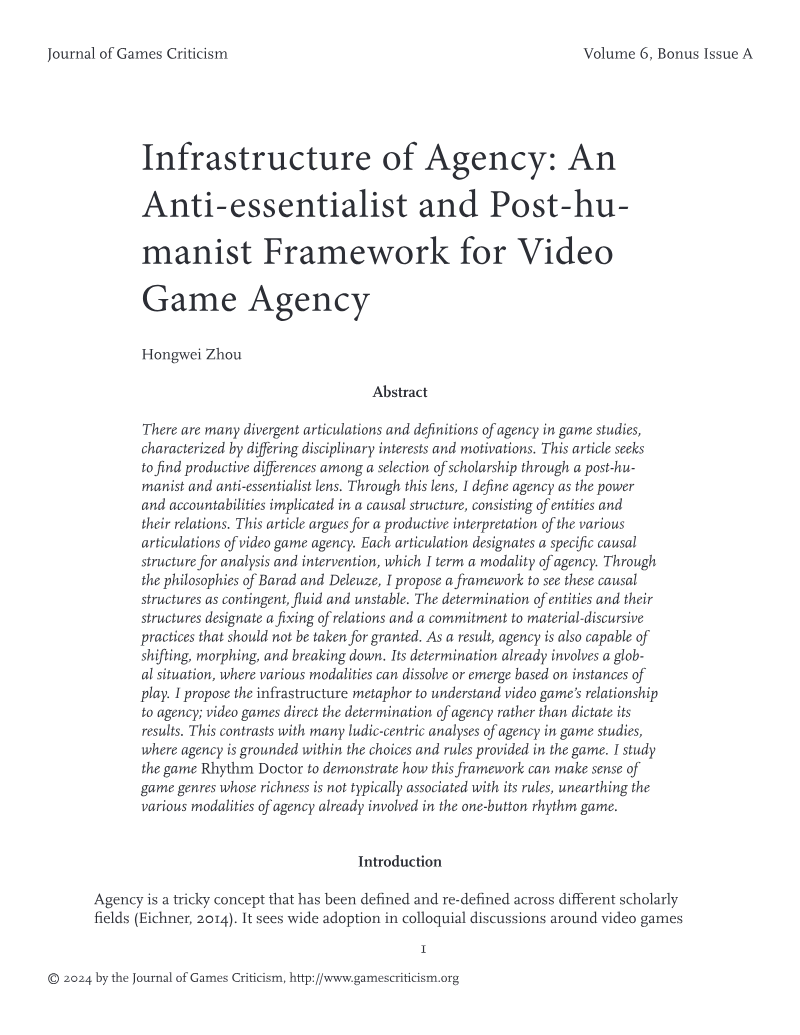
Journal of Games Criticism · 2024
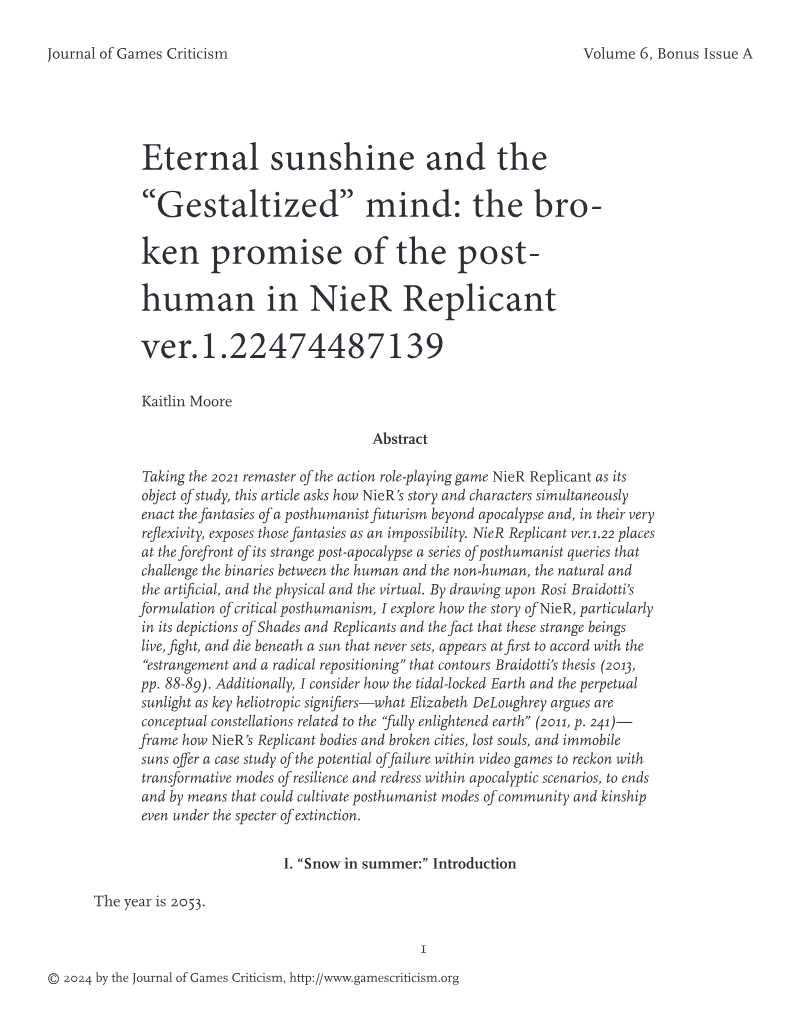
Journal of Games Criticism · 2024
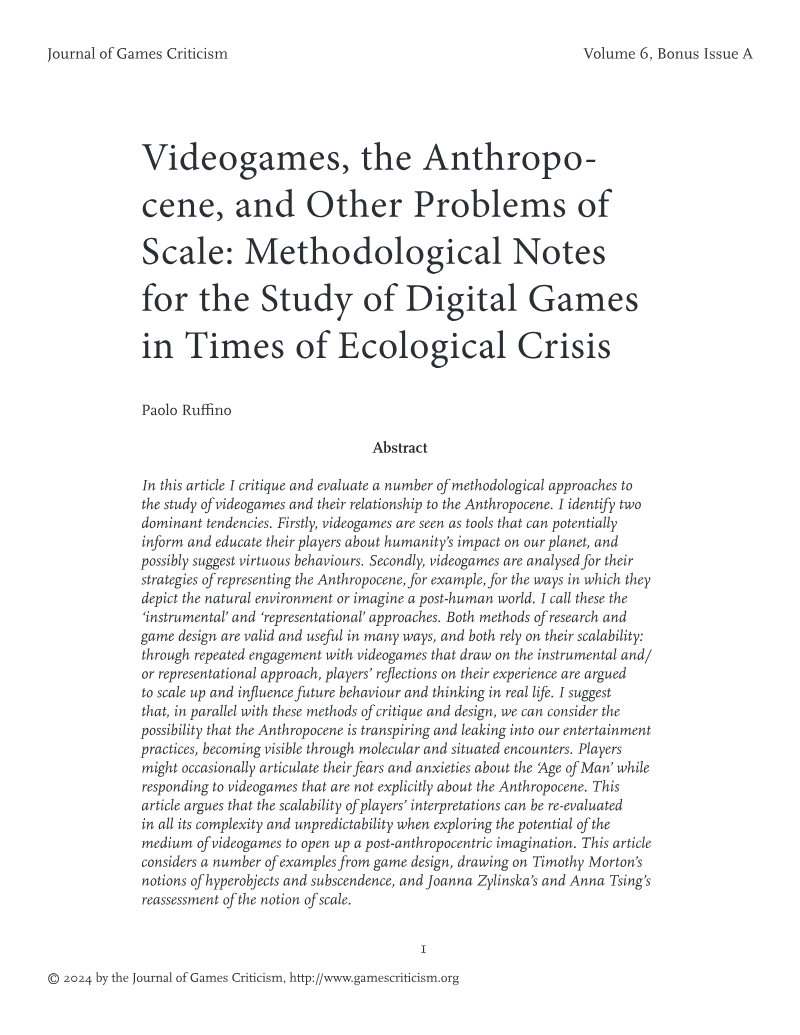
Journal of Games Criticism · 2024
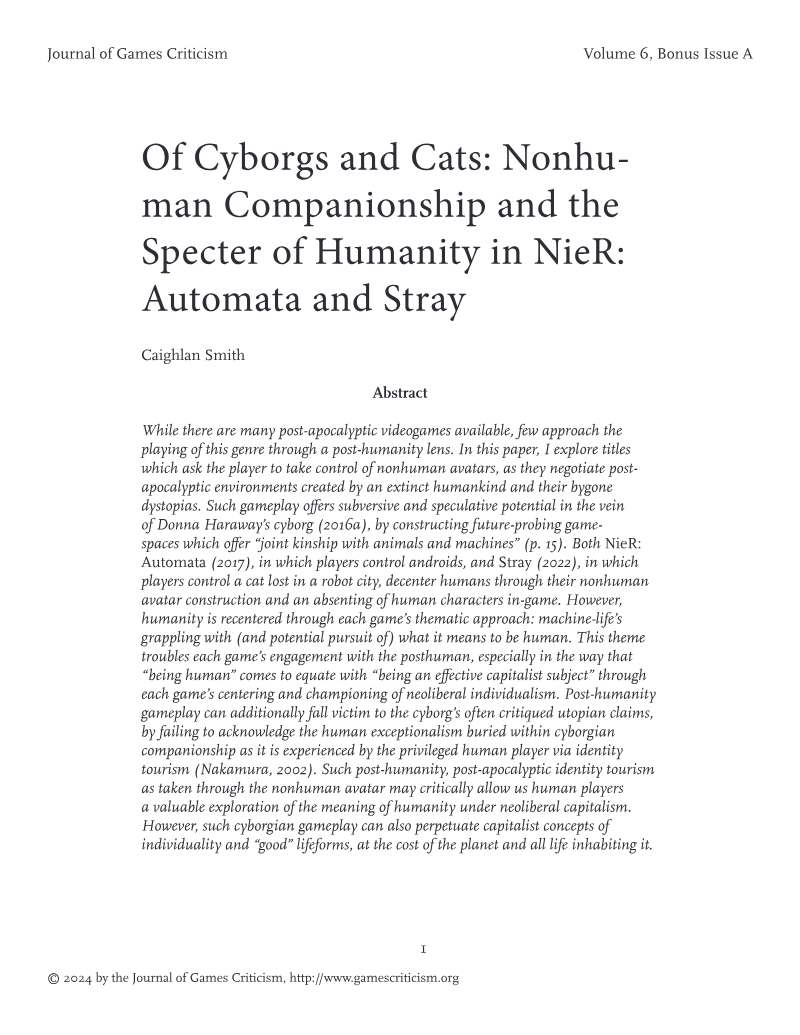
Journal of Games Criticism · 2024
Journal of Games Criticism · 2024
DiGRA · 2026