Loading the document
1 free read left. Create a free account for unlimited reading + AI research.
Create free account
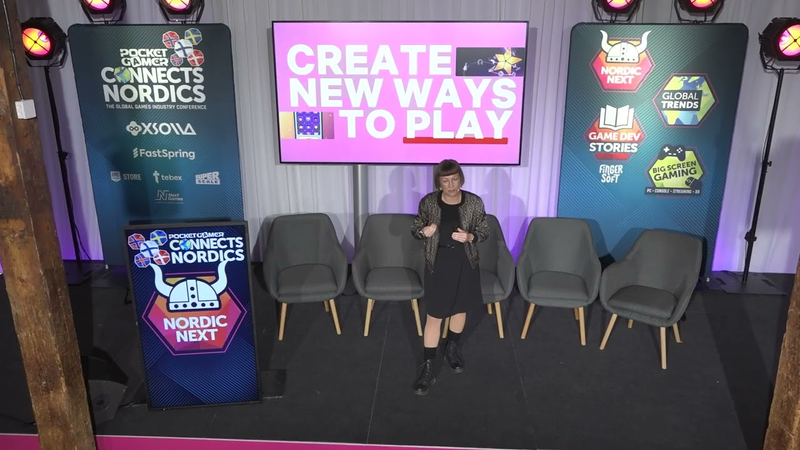
Superstar Session: Scaling Joy – Crafting Games for Everyone In The Room - Saara Bergström.
Key insights
Distilling the key insights…
Ask AI about this video
Transcript
We're here to celebrate what we're calling Nordic next. So, um I will uh be your compere for today introducing the the speakers. We have our first speaker, I believe is here ready to go. Hello. Uh so, I'll just bring things in. I should say again, uh we've literally just looked at the sponsors, so I won't uh repeat those, but we're very very grateful to them all including our diamond sponsor Exola. Um We'll start in a moment. Remember, if you're going to take photographs and things you want to share on social media, we're using the hashtag PG Connects. So, let's get started uh and uh with our Nordic next track. So, we've got three sessions here starting with a with our keynote speaker that will take us up to the global trends. And does it go here? There we go. Right. I'd like to then invite to the stage to talk about scaling joy, crafting games for everyone in the room. Please welcome Sarah Borgström from Next Games. Thank you very much. And nice to see you. Uh this is
All right. Thank you. And good morning. I hope you're all appropriately caffeinated this morning. Ready for an exciting and fun and productive Pocket Gamer Connects. Now, Next Games has been a bit quiet over the past 4 years. Uh we have a good reason for it. We've been focused on our first priority, which is making games. And uh surprisingly enough, they don't pay me for conference talks. They pay me for the games. So, that's what we've been working on. But now, 4 years after the acquisition, I figured this would be a good time to share a bit more of what we've been up to since we've actually made some games. Now, a very very brief look into the historical facts before we go so that you all have the context even though I'm sure a lot of you are familiar with what Next Games has done over the years. The studio has been around for 13 years. We were founded in May of 2013. I've
been around for almost the entirety of the journey. I joined 6 months after the company was founded. We were all crammed in a tiny shoebox-sized office space. Uh it was very crowded at the time. Um the founders were already working on Compass Point West, which was a mobile free-to-play battle builder game inspired by spaghetti westerns. But then we started also working on The Walking Dead No Man's Land, which was our first um third-party licensed game. Um and a fun fantastic collaboration with AMC. This game really was obviously our first, but also the most successful free-to-play licensed-based game. And we had such an amazing collaborative partnership with AMC that carried us all the way through the years, all the way through the Netflix acquisition. Some firsts also along the way. We IPO'd as the first games company in Finland in 2017. We launched our second Walking
Dead game with AMC in 2018. And soon enough started discussing with Netflix on what we could do together. And that discussion turned into Stranger Things Puzzle Tales, which was a mobile free-to-play game based on the Stranger Things universe, a puzzle RPG, launched in '21. At which point it was abundantly clear also publicly that Netflix was going to get into games in a bigger way. And we had an existing amazing working relationship. One thing led to another. And in March of '22, we joined forces with Netflix. Now, if we think about what we're here to do today and in the future, we're a first-party studio, which means that we're fully integrated, part of the Netflix family, uh working from within Netflix. Um and to really put it simply, our job as a first-party studio is to reimagine what play means in the Netflix context.
Both of these things are very important. Um And so, the job is really not to continue from where we left off as a free-to-play mobile developer, and it is certainly not to port existing concepts from PC or console or any other platform onto the plat- Netflix platform. It's a very exciting job, in my opinion also a big privilege to work on something that can be at best business defining and platform defining for Netflix, and even if we do do it right, uh can be industry defining for games. Doing it right is of course the hard bit, which we're working very hard on. But, we'll get there. Um if we drill a bit deeper into what we imagining play means, um our job as a first-party studio is not to fill a catalog. It is not to fill the shelves with lots of product. Our focus is really on the quality, not the
quantity. And um every single game that we make of course needs to be a delightful, fun experience that serves the purpose, uh serves the audience that we're creating these games for, but it also has an ulterior motive. So, we always take at least one or two or sometimes three of the hardest problems that Netflix needs to resolve to make games work for Netflix. Whether that's a technology challenge, whether that's a you know, new type of collaboration in between different teams at Netflix, whether that's engineering, transmedia, creative, and so on and so forth. So, there's there's two reasons for games to exist. Some of our games, or most of our games actually, seem probably pretty simple on the surface, but I can assure you there's a lot going on behind the scenes and under the hood. We're also making games that are native to the Netflix ecosystem. Our job as a first-party studio is to
really spearhead the gameplay and controller innovation, especially when we talk about our party games, the games on TV, the interplay in between the controller, the mobile controller, the TV, and the interplay among the people in the room who are playing the game. It is actually more tricky than you would imagine. Um we also help build the platform. We work across different teams at Netflix. And what's good to remember when I always when I talk about it is Netflix isn't a games company. So a lot of the assumptions that you you all might have as game developers who work from within the industry with existing platforms and tools, that doesn't exist in a non-games company. So so we'll we're building a lot of that together with Netflix. We're also eventually looking to blur the boundaries in between different entertainment formats, between film, series, games, live, you name it. Everything that Netflix is is stepping
into. And this of course needs to have a very deep internal alignment between teams. This is not something that you can do from the outside. A third party couldn't help help us get there. Um and of course what we aspire to do is to create worlds where these different entertainment formats eventually blur and they're additive and they evolve across formats. We're very early days into this journey and we can't claim that we've figured it out. But what we're experimenting with and where we're headed is very exciting for me. And I can't wait to share more, of course. Um generative AI, I'm sure like a big, you know, discussion point and a focus area for all of us here in the room. From a first-party development perspective, we're really looking to we're looking at it from a productivity perspective as is everybody, but we're also looking at unlocking things that previously were impossible or immensely difficult at least or
time-consuming, took a very long time to achieve. And we we find a lot of positive in it, um, but there's a lot of mindset shift that needs to happen, uh, across different crafts and disciplines from within the studio and at Netflix as well. But we're a very AI-leaning studio. We are using all of the state-of-the-art tools across all the crafts. We're building our own on top of the commercially available tools. But what AI won't replace is taste, judgment, and creative vision, which is something that we're always always going to keep within the human influence, supported by AI at best. And so, in a nutshell, we're creating new ways to play that are fitting into the Netflix context. And what we create as internal first-party studios in turn become proof points for third parties to build upon.
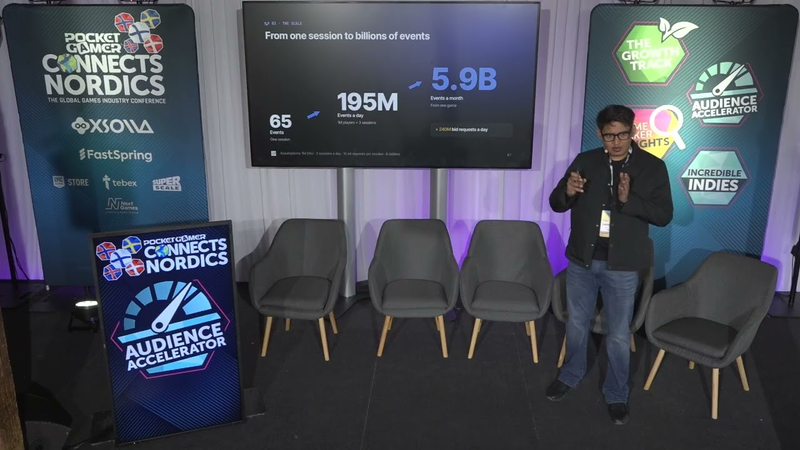
To then build up the catalog, to fill the shelves, and and create a bigger and more, um, more fuller slate. And hopefully, eventually down the line, we're going to have a lot of finished game developers involved in this, too, uh, in working with us, uh, towards, um, building the slate for Netflix. If we go If we then drill deeper from the philosophy into what we're actually doing, uh, and some like facts and figures. So, Next Games today is about 150 people, um, I took over the studio in '23. We were hovering around 90 to 100 at the time. So, there's been, you know, a good amount of growth, but still thoughtful and and moderate, uh, and fitting, um, to the purpose that that we are uh, here to do. We have 36 different nationalities represented across the studio. This figure is here just to represent the ongoing have in the studio. We're making global entertainment for every Netflix member
in the world, and we couldn't possibly do it with just Finns alone. So, this is a very important point for us that we bring in different perspectives, whether that's nationalities or otherwise. Our studio focus specifically within the first-party context is to focus on working on frictionless play. I'm sure friction is, you know, a thing for everybody regardless of where you work. It is true for Netflix as well, uh and it and any games company. We are bringing people together, especially on the cloud games side, the games on TV. We're solving for the challenge of how do you create that perfect really fun interplay in between the controller, the TV, and the people in the room. And then, of course, we're building on on top of IP, whether that's Netflix IP, Netflix mini golf being a good example of like really almost narrative-like um um execution on on on a mini golf context uh for different Netflix IPs.
And it can also mean external IP, such as the Pictionary game we, for example, created on how we took a board game classic and brought it onto the TVs and really the team modernized and and made it very fitting to the Netflix context. Um we started our journey into the games on TV, the streaming games, late '23. Um we got very excited about the opportunity because that to us felt like a very natural way to put games in front of the Netflix member member base. Netflix owns the living room, the big screen. So, I think so we figured this is a good way to to get in front of that. We very quickly started working on Underwater Melon. It's a delightful two-screen upside-down Suika game. It's also on mobile, by the way, so it's available on the app stores if you want to try it out. Um and to just really see how how it
works, you know, to get something in front of the members to see see what happens and and uh what are the expectations of so and so forth. Fast forward to today, and especially over the past 12 months, we've been very busy. We've launched six games on top of this one simple game. Um we have um Netflix Star Daily Trivia, which is this uh very interesting experiment into how to build these experiences directly on Netflix. So, this is not a cloud game. It is not a mobile game. We're deeply collaborating with the internal engineering teams at Netflix to bring this trivia simple trivia experience uh directly on the platform. It's available only in the US for now, uh but the experiment continues. So, hopefully soon enough we're going to expand. Netflix Mini Golf launched last July. Uh Netflix Puzzled last November, about a year ago. Uh Boggle, Pictionary, and Party
Crashers around the same time last Thanksgiving. And this has really been This has kept us busy and away from the conference stages for now. So,
[sighs and gasps]
so [snorts] um we've had our hands full. Um currently we have five development teams in the studio, internal teams. Uh we have a live operations team, which is relatively new, uh that's supporting our live live ops live service. We have a platform team who supports all of our games across from concepting all the way to launch, live maintenance with tooling, um and and all of that. And then the newest thing for us is we're working with two wonderful local co-development partners here in Helsinki, who are supporting the three three of our live titles with content and um um development further. So, that's been a really delightful new new thing um that
hopefully also grows the local footprint here in Helsinki. But what did it take? I have like three conclusions in hindsight, of course, cuz that's always, you know, uh the best best form of uh being very smart. The four years have been eventful. Uh we've gone from a publicly listed free-to-play mobile games developer um with a like kind of like a knack on RPGs uh into a fully Netflix owned uh fully part of Netflix family uh totally different business model, completely different context, a full 180 on our creative direction in terms of like who who we make these games for, much more casual audience. Um and all that while we've actually created some actual value and tangible results. Meaning not only the number of games, the seven games that we made, but the actual numbers that these games bring in, which I'm not able to disclose, so
you have to take my word word for it. Um but the first thing and kind of like the kind of like hindsight learning is the open mind that we created from the get-go. Getting through the integration, which is always tricky no matter what, uh required an open mind especially from the leadership team to really embracing being a part of Netflix and really taking this opportunity with open hearts and minds uh and really take this studio very fast and very quickly through this journey. We needed to shed our skin uh from a lot of the old ways we had as free-to-play developers, a lot of assumptions that we had in terms of like how how do games work, especially when you're working in a non-games within a non-games company. There's a lot of education that we we set out to do internally at Netflix and that sometimes takes a bit of patience if you come from an environment where you're used to taking all of this for
granted. Um we also needed to put our own egos aside uh to to a large degree and this really is my leadership philosophy. There's really no place for I in a team and uh egolessness leadership is really the cornerstone of this studio and there's no room for for an ego in the studio. So, the other point was courage. We needed to have a lot of courage when we're work we were working through this transition. The teams were very courage in killing their darlings along the way. Not everything that we set out to do worked out. Um the the teams were very thoughtful in thinking about the the new audience that they were to serve the new context. What does native on Netflix even mean? And then drew a lot of conclusions based off of the concept that they were working on and eventually this turned into the seven games, but there's uh many casualties in the process
uh which were very all very proud of. Uh another courageous move was our um move from mobile to cloud and streaming games among the first at Netflix. We were we got really excited about it and post-through and uh with underwater melon and I'm very happy we did that and were uh just fearless in making that move.
[sighs]
And then boringly enough discipline is very important. Um discipline permeates through the studio. You can imagine that 150 people in a corporate context and seven games it's it's quite a lot over a span of of a year. Um there's a lot of discipline that the studio and the teams uh exhibit. Whether that's discipline in scoping, whether that's discipline in you know all sorts of production aspects. But discipline permeates through to creative as well.
I'm very happy to have teams and leaders leading their projects who are very disciplined about holding on to their creative vision and their creative gut feeling when you know I for example have questioned or or you know challenged some of those assumptions. So so that's really shows a lot of courage and discipline from the teams as well when we're talking when we're facing new things in an ambiguous environment. I'm very excited about the future. We have may or may not have a game launch coming up towards the end of the year. You never know, of course, with this stuff, but something's definitely cooking. Going on to '27, we have a lot more on our slate. I'm very excited about some of the things that we're working on specifically on the party party game side, which is a bigger focus for the studio nowadays. And I can't wait to share more maybe next time at Pocket Gamer Connects Helsinki. I'll
take the stage again. All right. Thank you all. I hope you're going to have a wonderful conference.
[applause]
Amazing. Thank you very much for that that that great overview of what you've been working on. Are you We maybe have time for one question?
I have time if you have time.
Does anyone want to ask her a question where here? They've got one in the front row. If I actually try I should have had my mic with me. There you go. I couldn't see anyone else behind you, so do dive in.
Is this on? I don't want to take the stage from someone proper. That was great. Thank you so much. Really happy to to have you here and and and sharing that. I I I think it's super exciting. One of the things I talk about when I'm coming on stage is a bit about new platforms and opportunities. And obviously Netflix is a massive platform and and has a massive audience. And I think you you you obviously you have in-house you're making some great games, but you talked about the vision of there being third-party and I know obviously you already have third-parties, but I'm sure you can't say too much, but is the idea that people be able to put more
casual games on the Netflix platform in the near future?
Or like self-publishing is that what you're talking about?
Well, you were saying you were saying that that you want to bring other people into You're setting a a store for other people could follow. You you That's what you said, I think.
Well, that is not actually what I was saying like self-publishing or setting up a store. We are working through kind of like the traditional licensing and buying games model. So, in in addition to first-party, we're buying and or licensing games off of third parties.
Okay.
You know, you never know, right, what the future brings.
Fair enough. No, okay, fair enough. Okay, Mr. Sen.
Thank you very much. I think we'll we'll leave that. Um, sir, thank you very much indeed for your for your talk. Thank you. Thanks, Chris, for your question. Thank you.
Summary
Saara Bergström, Managing Director of Next Games, presents the studio's journey from a free-to-play mobile developer into a first-party studio within Netflix. Founded in May 2013 and IPO'd in Finland in 2017, Next Games was acquired by Netflix in March 2022. Her central thesis is that first-party studios should not fill a catalog or port existing PC, console, or mobile concepts. Instead, they should reinvent play for Netflix's context, creating quality games that solve the platform's hardest technical and collaborative problems while serving as proof points for third-party developers.
The studio has grown from roughly 90 to 100 people when she took over in 2023 to about 150 today, spanning 36 nationalities. Its focus is frictionless play on TV, combining the controller, the big screen, and the people in the room. Since launching Underwater Melon in late 2023, the studio has released seven games, including Netflix Mini Golf, Netflix Puzzled, Boggle, Pictionary, and Party Crashers. It has also experimented with Netflix Star Daily Trivia, a US-only experience built directly into the platform. Figures on revenue were withheld.
Bergström attributes the transition to three lessons: an open mind embraced by leadership, egoless leadership, and the courage to abandon failed concepts. Discipline in scoping and production is also highlighted. She describes the studio as AI-leaning, using generative tools for productivity and new capabilities while keeping taste and creative vision human. Future plans include a possible launch later this year and a stronger party-game focus. In the Q&A, she clarified that third-party participation will come through licensing and purchasing games rather than self-publishing or a separate store.







Comments