Loading the document
Key insights
6 slides
The problem
Popular children's apps use multiple deceptive design patterns.
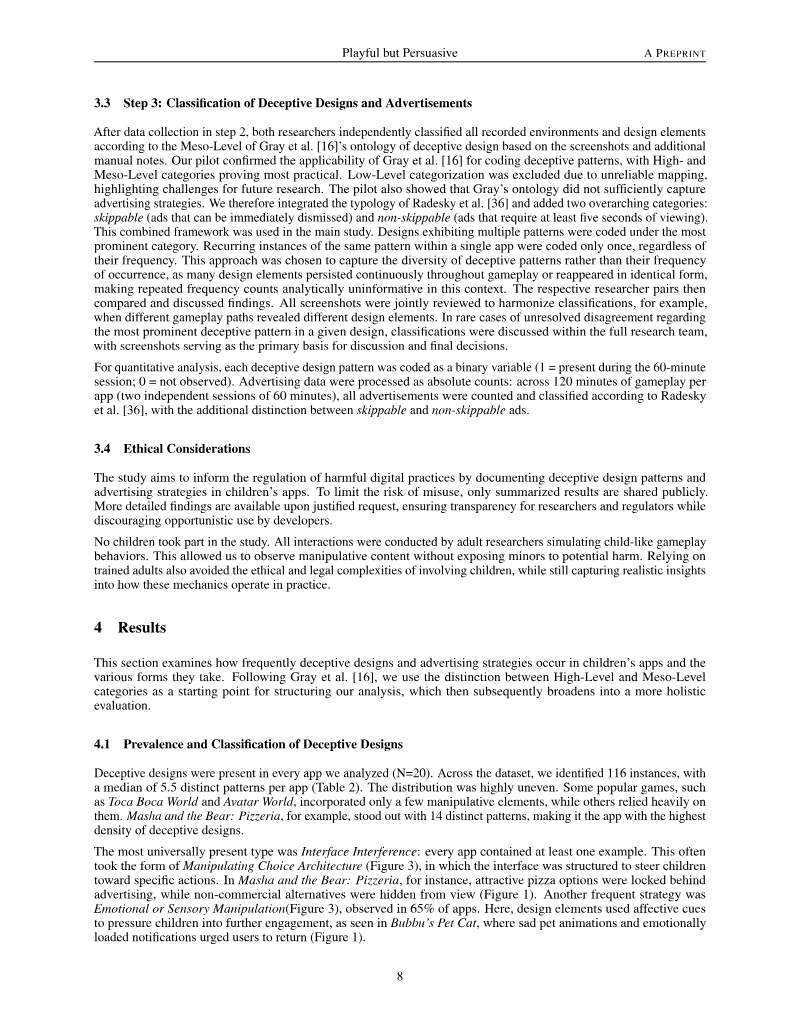
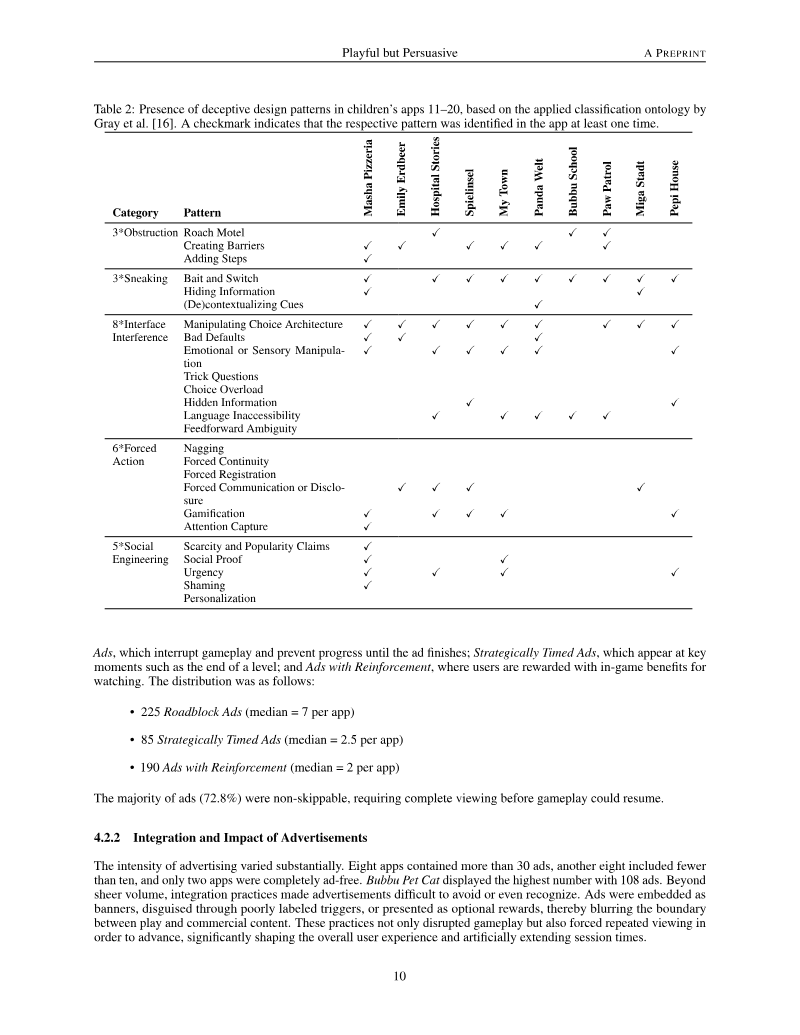
Every one of the 20 'Teacher Approved' children's apps analyzed contains multiple deceptive design patterns. These apps feature a median of 5.5 manipulative strategies per title.
1 / 6
- 01Every one of the 20 popular 'Teacher Approved' children's apps analyzed contains multiple deceptive design patterns, with a median of 5.5 manipulative strategies per title.See it on page 8
- 0290 percent of the studied applications contain extensive advertising, totaling 500 identified ads across the sample.See it on page 10
- 03Nearly 73 percent of the advertisements identified within these children's apps are non-skippable, forcing user engagement through sensory overstimulation.See it on page 10
- 04The 20 apps analyzed collectively feature 116 instances of manipulative architecture, including interface interference and bait-and-switch tactics designed to prioritize commercial gain.See it on page 8
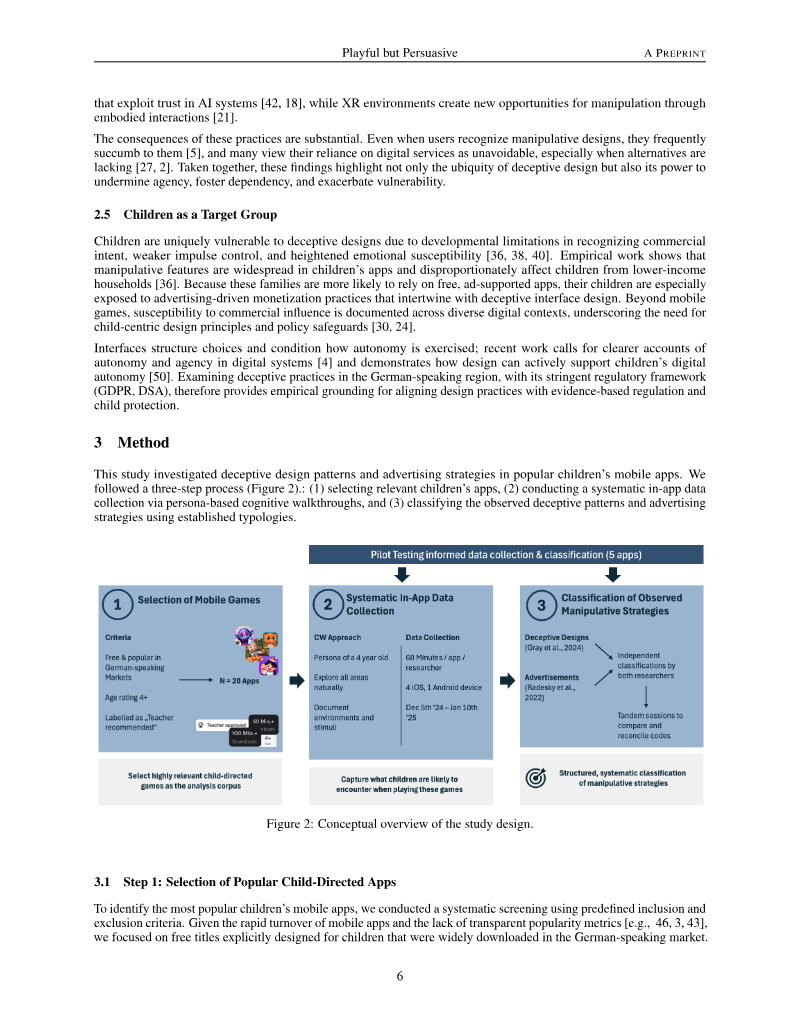
- 05Current self-regulatory frameworks are insufficient, as existing moderation mechanisms fail to prevent the integration of deceptive choice architectures into digital experiences for children.See it on page 6
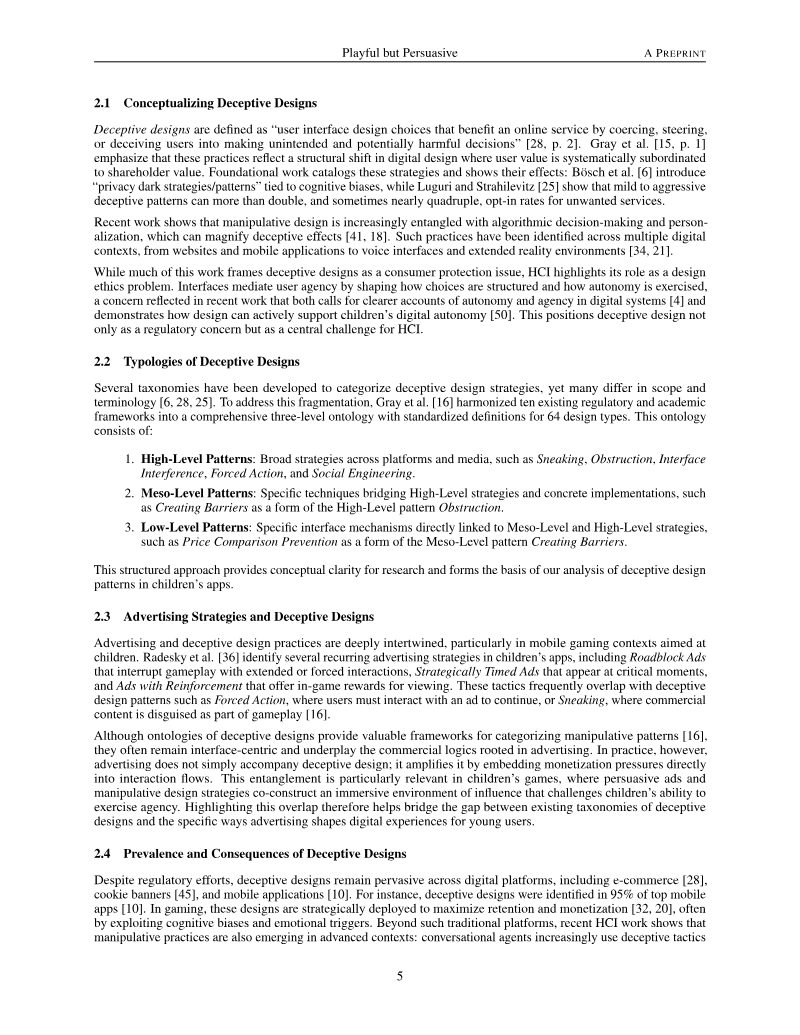
- 06Mitigating these risks requires a formal ontology of deceptive practices—categorized as sneaking, obstruction, and forced action—to improve industry accountability and parental digital literacy.See it on page 5
Ask AI about this report
Summary
Popular mobile games marketed toward children frequently employ deceptive design patterns and aggressive advertising strategies that exploit the cognitive and developmental vulnerabilities of young users. An analysis of 20 popular, "Teacher Approved" free-to-download applications reveals a systemic failure in current safety standards, as every examined title incorporates multiple manipulative interfaces. These apps feature a median of 5.5 distinct deceptive strategies per title, totaling 116 instances of manipulative architecture, such as interface interference and bait-and-switch tactics, which are designed to influence user behavior and prioritize commercial gain over child safety.
The commercial environment within these applications is characterized by pervasive, often non-skippable advertising, with 90 percent of the studied apps containing extensive promotional content. Across the sample, 500 advertisements were identified, of which nearly 73 percent could not be bypassed. This saturation of forced engagement and sensory overstimulation creates a persuasive ecosystem that risks fostering emotional dependency and compulsive usage patterns among children. These practices effectively bypass existing moderation mechanisms, suggesting that current industry safeguards are insufficient to protect the digital autonomy of younger demographics.
Addressing these challenges requires a shift toward more stringent industry accountability and the adoption of child-centered design standards. The prevalence of these manipulative choice architectures highlights an urgent need for transparent labeling systems and enhanced digital literacy initiatives for parents. By establishing a formal ontology of deceptive practices—categorized into patterns like sneaking, obstruction, and forced action—stakeholders can better identify and mitigate the risks inherent in modern mobile gaming. Ultimately, the findings underscore that current self-regulatory frameworks fail to account for the sophisticated ways in which commercial interests are structurally intertwined with the digital experiences of children.