Loading the document
1 free read left. Create a free account for unlimited reading + AI research.
Create free account
Session: The Rulebook Is Being Written: Building a Direct-to-Consumer Strategy That Lasts.
Key insights
Distilling the key insights…
Ask AI about this video
Transcript
[music] [music]
So, let's keep it going. Now, this next session, um it's going to I hope that other session wasn't too dense. It was a fireside chat, but this is going to get a little denser. Um and uh we we want to be able to answer a complex question, but keep it as simple as possible um on how you build a direct-to-consumer strategy that actually works and lasts and and how do you do this successfully navigating such a fragmented global
regulatory landscape. So, we're going to be diving a little deep into regulation in this one. So, you haven't had your coffee yet, I apologize. Um we will broadly cover how we got here um and why the ground shifted. We're going to also talk about what the economics look like. We're going to talk about what that looks like across major markets and and how that continues to evolve with regulation. And really concisely, we're going to get into what it takes to go from building just a web shop to a real D2C business cuz there is a difference. Uh and and we'll let those elements be something that you walk away with. Now, the App Store changed the way games were distributed uh almost 20 years ago. It's been almost two decades. And the iPhone came out and disrupted how we communicate with one another and how we interact digitally. And so, we basically are re-living through that uh
shift again 20 years later. And in this current chapter as game developers and publishers, we are now really pushing for having direct relationship with our players as opposed to being behind the platforms on that. So, really quickly again, just to make sure I've captured your attention here, this is what we're going to cover on the agenda. We'll talk a little bit about the history without going into a history lesson. We'll talk a bit the about evolving regulation across the different major markets. We'll talk about what the current landscape is informing, and then we'll talk about what you need in order to build something that is successful and how to navigate the landscape. Now, having a web shop is not the same as having a D2C strategy. Like that is super important for everyone to know. We'll walk through the insights and you'll understand why. And we have to understand that we are coming from a place that has moved so much over the past 15 to 20
years in order for us to understand how to strategically position ourselves for the future, it's important that we walk down memory lane a little bit, right? So, let's start by going back 20 years ago, right? The iPhone was born and the walled gardens came up. And instantly Apple's ethos was vertical integration and it worked for them. They did not become an over trillion dollar market cap by sharing, right? And so, this became the standard and the App Store followed, Google Play. Centralized distribution became the model and 30% platform economics was made a default. Now, show of hands, does anyone understand why it was defaulted to 30%? This is This is essentially like the baseline of what we are contesting here. Why is it Why was it 30% by default? Nobody knows. So, this was inherited from retail,
brick-and-mortar legacy has been 70/30, and that was put in place because of inventory risk. And so, they just adopted it regardless of the scale. And so, the standard 30% was put in place. And after the scale happened, a lot of sentiment from developers began asking fundamental questions like, "Why are the platforms both the toll booths as well as increasingly becoming a competitor?" at 30% at this scale. Now, this was something that did not go away. The walls continue to get higher, mandatory building, mandatory billing, distribution restrictions continue to put be put in place, increasing platform control. And companies like Netflix and Spotify did something so fundamental, but so basic. They said, "You don't necessarily need to transact inside the store to
have a digital business." And this has really kind of shifted the mentality on it. Now, the antitrust sentiment continued to grow, continued to simmer, and anti-competitive and gatekeeping practices led to government scrutiny around the globe. And then in 2019/2020, we all knew what happened with Epic. Epic puts alternative payments into Fortnite. The platforms dropped them from the App Store. Epic sues Google and Apple. Google and Apple countersue Epic. Litigation follows. This was not a one-time event. This was 15 years of pressure building towards a digital mobile economy that we are now in. All right? So, a bit of history lesson for everyone in the room to understand how we got here. So, it's directionally accurate to say that regulation is pushing towards a
lower fee payment path. But, it's important to call out that actual structures are increasingly nuanced by markets. So, we'll walk through that. In the US, we've seen major changes through litigation and court orders that are still ongoing. In the EU, we have seen major markets change through DMA, the Digital Markets Act. In Japan, the Japan Mobile Software Competition Act is now fully in force. And several other markets have shifted. South Korea, Brazil, India, the list continues to go on. Right? And so, I won't get too deep into the weeds here. We'll make sure that this is readily available to everyone so that they can understand how to navigate such a fragmented space across markets and across platforms. But, I think what is important to put quite simply, and all you need to know,
is the commercial implication on Apple. External web commerce and link outs have fundamentally changed the economics of direct purchasing in the US. While this is still being litigated, there is a stay on the 0% that's currently in place. We're paying very close attention to this because most of our partners, publishers and developers, are capitalizing on this and taking advantage for however long they can and building habituation in order to continue to make this work for them. Now, on Google, developers can link out to external content and offer alternative billing under the current US framework. The rules, however, remain tied to ongoing litigation and implementation change. Now, we do think that these two commercial structures that you see differing currently will eventually merge, but that is still to
be determined. So, one walk away point on this is don't build your D2C strategy around today's fees that are influx. Leverage the opportunity, obviously, where it exists, but build a long-term strategy around your ability to change paths when the economics change. You want to be able to be nimble, and you want to be dynamic. In the EU, this is where the model has become a bit more sophisticated. As we mentioned earlier, like this continues to be influx. As of October 1st, which is just a few weeks ago, Apple moved EU developers onto a unified business term. The previous core technology fee that was replaced with a 5% core technology commission for qualifying digital transactions associated with apps distributed outside of the App Store. While alternative payments and link out transactions within the App Store have
their own commission structures, this is now reflected in this view. Again, we're going to make sure that you guys have access to this. The EU isn't simply cheaper, it's more optional. The opportunity isn't finding one magic fee, it's again having the flexibility to choose the right commercial path for players, segments of players, market, and moment. Japan mobile software competition act. This went into effect December 18th last year. With Apple and Google designated as operators. Emphasis on regulated. Japan is now a major market that the distribution and payment architecture is opening up. The global pattern is clear. More choice is moving towards into moving into the ecosystem. Simply put, the winners are companies that are going to be able to build and operate technology that can be dynamic,
flexible, and make sure that they are taking advantage of the element of choice. So, instead of thinking about this from a one platform, one store, one payment system, we are moving towards multiple distribution paths, multiple payment paths, and multiple economics. The takeaway here is in that the biggest change isn't that the platform fee disappears. It doesn't, right? It is that the platform no longer gets to be the only path. You now have agency. You now have the element of choice. Now, the cheapest transaction isn't the best D2C strategy. Again, as mentioned earlier, that's just price arbitrage. Different markets now offer low-cost paths. But, if a player never knows about your web store, that is 0% platform fee that will generate $0, 0 euro, 0 yen, 0 till.
The problem you're trying to solve for is not a direct commerce payments problem. It is a discovery, CRM, player relationship problem. Now, 2 years ago, the question was largely does my genre justify for a web shop? All right, the answer varied dramatically by genre based on the numbers that we were looking at. Like, social casino moved early. Strategy wasn't too far behind. Action followed, and casual lagged. But, why? It's cuz the economics were easiest to justify when ARPU, average revenue per paying user, was high and the revenue upside was immediately visible. But, that was then. Now, what is the data telling us? What predicts adoption? Genre isn't the story anymore. The market has moved from should we have a web shop to how good is our direct business?
Now, maturity is fairly uneven. Many studios recognize that they're behind their peers. While relatively few consider themselves innovators, regulators have removed another excuse. Personalized offers are where the real opportunity emerges. That changes the conversation from how do I get a player onto the website, web store, web portal, web hub, whatever you want to call it, to why would this player choose to come back? And that's the bridge into the D2C strategy. The web shop is a destination. Your D2C is capability. The real question you and your product team and your engineering team and your data and analytics team need to answer is what do you build underneath the store? Now, I'll give you a cheat sheet here, but I think what's super important as an ethos to build first is for you to put yourself in the player's shoes.
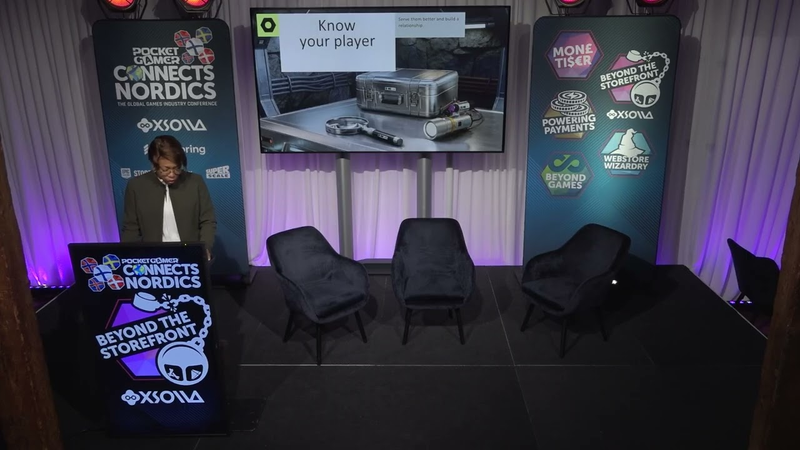
You ought to know who your players are. No one can know your players better than you. No one should know your players better than you. And then you serve them and build a relationship. And that is the long-term strategy. Lots of companies outside of gaming have done this really well. Personalized experiences that make you feel seen, make you feel like you are part of the ecosystem as opposed to just a consumer and a number. And you have to think about it through that lens. So, we'll walk through essentially ways to secure and expand your conversion funnel but by building an experience that matters to your player and building trust. So, first you want to make sure that you are turning your data into decisions. And you want to get as real-time as possible. Experimentation, AB testing, AI, ML, personalization, shared reporting, all of this matters. Now, the goal isn't to collect more data because bad data is actually really,
really tricky. And so, you want to make sure that you are leveraging your insights in a way that makes the next offer that you give to your player smarter than the last one. You want to make sure that trust is part of the equation. This is such a regulatory hyper evolving field. GDPR, CCPA, PCI DSS, consent, tax, security, the list goes on. The player is giving you something more than just a transaction. They're giving you their trust. They're giving you their information, their credit card data, their Apple Pay, Google Pay, PayPal, whatever regional payment methods are available to you. And so, you want to make sure that you are not taking advantage or losing that. No fee optimization will save the relationship if you break that trust. So, you want to make sure that everything you do is compliant.
You want to know who the player is. And you can only do this by building a profile. Frictionless login cuz you need to authenticate the player to know who the player is. SSO, first-party identity. A seamless app-to-web, web-to-app journey that takes the player outside of the game, transacts, takes the player back to the same starting point that they were in once they've transacted. Super important because if you don't do this, then you don't know who the player is. If you don't know who the player is, you cannot possibly personalize the relationship. So, that is super important. It was is very akin to what I mentioned as a primary key earlier for the technical folks in the room. This is your identifier. And then you want to build experiences that make the player keep coming back. Right? And so, the experience is ultimate. Personalization, community, CRM, loyalty. These are very critical experiences that
give the player a reason to come transact with you as opposed to just transacting in the App Store. Relevance earns the next one. Then you can get into optimizing the economics, right? So, what web exclusive offers are you putting out? What bundles? If you have subscription plans, what do those look like? Loyalty rewards, regional pricing that's intelligent enough to mitigate player arbitrage. Cuz that's something that's super important. As you are also thinking about price arbitrage, players can also be thinking about player arbitrage when you do regional pricing. So, how do you build technology that's super intelligent enough to mitigate that? Don't just move the same transaction from app to web. Create a better transaction. And then lastly, think about the commerce infrastructure. What do you build versus what do you buy? We talked about that a little earlier in the last session. What reach could you possibly have as game developers and publishers? And how do you balance that with some of
the ten pole priorities that you have in building the game versus in operating a web store? As a game company, where do you prioritize your efforts? With internal execution versus outsourcing. How are you managing redundancy, routing, fee optimization, reconciliation, alternative distribution? Because DDC at scale is an infrastructure. It's not just a landing page. The key here is to focus on the most meaningful opportunities to drive value in each of these verticals. Understand your capabilities in-house versus where you outsource and what the right vendors are that fit the footprint and the culture of your company. Now, platforms and regulation will continue to change the economics. This is going to continue to be in flux. We talked about this earlier. It's taken 15 to 20 years to get here. It's not
going away overnight. So, straddle up and and understand that we're in for a long ride, but if you build technology that is dynamic enough, that's nimble enough, you're able to navigate whatever tides come your way. DDC changes the relationship. The opportunity isn't simply to pay less. It is to know your players. It is to serve them better and it's to build a relationship. The future of direct-to-consumer isn't about taking transactions away from the App Store. It's really about giving the player a reason to choose you. All right. With that, I will open it up to questions and I hope that that wasn't too dense of uh content for everyone in the room. I know it's still a little early.
Uh does anyone have any questions?
Hola. Yeah, we got one over here. Mr. Chris James.
Hi there. Sorry, I missed the very start of that. So, I'm I'm not And there was a lot taking. I was trying to make notes and take pictures. So, one of the things you said which is about the the global picture is quite complicated and I'm presuming people partnering with the likes of Exola, you just take care of that for them. So, I'm coming with a game, you're advising me what to wear. Is that Is that right?
Absolutely.
need to know all that. Although, it's good to know, but
[laughter]
that's kind of the that's the thing, right?
Absolutely. I think one thing that's super important is that you have to get to a point where you're looking at partners that provide both a product and a service. Yeah. Right? Some partners will give you a gateway to go and transact, but they won't really necessarily guide you through such a fragmented regulator ecosystem.
Yes. And so, depending on how much agency you want to have or or how less you want to have, um there's a flexibility for that.
Okay. Cool. No, that's fine. I I mean, the EU position seems very complicated, but that's standard, I guess.
Yeah. And part of it, you know, there's there's a school of thought here that it is fragmented because it's it's intentional to set the tone of confusion and a lot of small developers will just say, "Ah, this is too much. I'm just going to walk away from this." Or the market doesn't even make any sense, you know, for me to have to navigate such a complex and fragmented space. Um and I want to go back to the the the comment I made earlier in the previous session is when you think about this beyond just the fee structure, you think about this from a relationship perspective and knowing who is transacting with you, who is playing your game, who's coming to you every day and giving you their time and their efforts. Um that changes the perspective. And so, you want to build a destination that allows you the agency to manage that with more autonomy than you currently do within the mobile ecosystem.
Understood. Thank you.
Does anyone else have any questions? Uh one thing I wanted to ask cuz I know that Xsolla do work on PC web shops as well. What what is the general landscape like over there compared to mobile?
I would say and I'm a little biased cuz I've come up in the mobile world that you know, the the world has shifted since the advent of these devices, right? And it's it's done so because of convenience, right? We Someone once said to me the other day um while traveling, like I'd rather lose my passport than lose my phone.
[laughter]
Um because I could get home without my passport. It's going to be relatively difficult to get home without my phone. Like I use the phone to control my all of my sensors in my home, my garage opener, my and so these things are with us 24/7 and being able to play a game on mobile
has instrumentally changed the way gamers think about things and and and over the years the design framework and and the quality of design with mobile gaming has just exponentially um gotten so much better. I would say that PC is still very much an art form and some of my PC colleagues, if they were in the room here, would probably argue with me. Um but if you look at it from a numbers perspective, right? Um and the revenue share perspective, uh mobile is really the leading platform.
Brilliant. Thank you. Um before [clears throat] we wrap up, yeah, I'll I'll give one more opportunity for for questions. Um otherwise, you can catch up with the Xsolla team at at their booth and throughout the rest of the event. So I'll just quickly, 1 second.
Again, we'll make sure that the content is available and we're happy to do follow-up calls and and chat with you through your strategy on
uh how to approach things. It's very nuanced and it's not a one-size-fits-all and depending on we're happy to dive deeper.
Cool. Can we give Anna a round of applause, please?
[applause] [music] [music]
Summary
Ola Dokun of Xsolla argues that direct-to-consumer (D2C) strategy in games is now less about avoiding platform fees and more about building lasting player relationships. He traces the origin of the standard 30% app store fee to retail's 70/30 model, framing it as an inherited default that has become contested as platforms grew into both gatekeepers and competitors. Antitrust scrutiny, Epic's 2020 litigation, and Netflix and Spotify's proof that digital businesses need not transact in-store, have shifted the landscape.
Regulation is moving toward lower-fee paths, but the structures vary sharply by market. He cites ongoing US litigation affecting Apple and Google external links, the EU's Digital Markets Act, which replaced Apple's core technology fee with a 5% commission on qualifying transactions outside the App Store, and Japan's Mobile Software Competition Act, which took effect in December 2025. Other markets, including South Korea, Brazil, and India, are also changing. He warns developers not to build strategies around today's fees, since those rules remain in flux.
Dokun emphasizes that a web shop is only a destination, while a D2C business is a capability. Two years ago, genre determined web shop adoption, with social casino moving first and casual lagging, but he argues the question has shifted to how mature a studio's direct business is. Success depends on knowing players, using real-time data and personalization, maintaining compliance with privacy and payment regulations such as GDPR and PCI DSS, and building frictionless identity and app-to-web journeys. He advises choosing partners that offer both products and regulatory guidance.











Comments