Loading the document
1 free read left. Create a free account for unlimited reading + AI research.
Create free account
Session: Engineering For The World's Biggest Audience – Building Games For TV On Netflix.
Key insights
Distilling the key insights…
Ask AI about this video
Transcript
[music] [music] [music]
Up next, I would like to welcome Tero to the stage who is going to be talking about engineering for the world's biggest audience, building games for TV on Netflix. So, please give a huge round of applause to Tero.
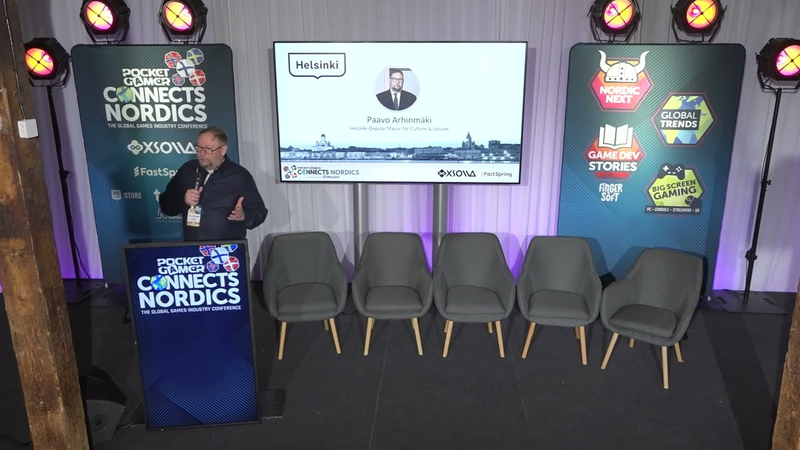
Thank you and hello everyone. So, I am Tero Teelahti. I am the studio technology director here for Next Games here at Helsinki. And today I'm going to give you a brief overview what it is like to develop games for Netflix's half a billion
people audience. So, if you were today in Sara's talk in the morning, so Sara gave the long version of this. So, I will just give a bit of framing what we are actually doing here before going to the actual topic. So, of course we are making games, but as I mentioned we have like addressable audience of half a billion people, which means that that our games need to be really low barrier, like low friction games because anyone can play them. We might have a grandpa from Brazil opening their first game in their life or we might have one of you who have probably played a lot of lot of more games. We also bringing people together. So, in many of our games you will see it soon. We are doing like party games, which means that people are playing in the same like like place. But on some other games we are just using like uh social features like sharing and stuff uh so that that people can
configure that they're playing together. And finally, because we are on Netflix, of course we are using the Netflix's IP to uh like use them on game or even build on top of them our games. We operate in so-called party and puzzles vertical within uh Netflix. That means means that that that our games are currently mostly party and then we have one clearly puzzle game which is called Puzzled Surprise uh and it's basically a a hub of your daily like like brain tickling uh puzzles, but the other games here they are uh on the party side. And you might see some of the like like familiar names there, Pictionary for example, or if if you've seen Boggle as as a board game, that's also something that we brought on the Netflix TV side. But then what is a TV game? So, we used to call these cloud games. Now at least I'm
like using more TV game. There are reasons for that you will soon see uh but but of course they run on TV. And this is TV and you probably know that nowadays TVs are technically computers. So, they have an operating system and within that operating system we as Netflix we actually deliver uh part of our own own code there. You could think that as a computer driver. And if we need to change something on that level, it will take a long time because we have to wait that the uh TV manufacturers they uh like deliver operating system updates and with that update they also uh like like uh deploy our code to the TV. But that's luckily a small part of of the systems we need. Everything else runs on top uh as as an app just like everything all the other apps on TV. So, that is the Netflix streaming app and our games also use
that same app to run run our game client. So, when we make that TV a gaming device if we do it via streaming, then of course we run the game somewhere else. Netflix has a thing called Open Connect Network and that is a network of our own like content delivery servers and services and and the gaming side runs on that same network. So, there is a computer in cloud that runs your game. It actually runs lots of games the same computer, but but let's say that let's think that it's one computer. Then our like like subscribers, they don't have game controllers. So, we use our phone as a controller and and and it's not only a bad thing because we actually can't do like cool things with that,
but we connect that mobile phone to the same server in in the cloud, of course. And in in the simplest case which I just drew here, it actually goes through the same like network than the TV's. Let's say that it's the your home Wi-Fi. That's the absolute simplest case we can have. Then when you click something on your phone, that action is sent to the server. Server does something for the game and and the video stream changes and and you see what happened on your TV screen. And this is the like like the most important thing for the experience for our games is the glass-to-glass latency. So, how long does it take from you to tap this the screen uh actually that being seen on the other screen which is the big TV. And and that affects the experience a lot. But then, what if we make it a party? Everything gets more complex. So, we can typically have two to eight
mobile phones connected to the same game. And they might be different operating systems. Here I put like three iOS devices, three Android devices. They might have different screen real estate. You might have noticed really is like the folding phone. It's a mess to try to make like that the the views work well on all kinds of different devices. On top of that, now these devices that that connected to your game, they might be on different networks. Some of them might be on your home Wi-Fi. Some of them might be on one mobile provider, some on other mobile provider. And yet, we somehow have to make all of them behave exactly the same. So, so everyone feels like they are in the same gaming experience. Then, what if we include more households? Like one way of doing that, there are
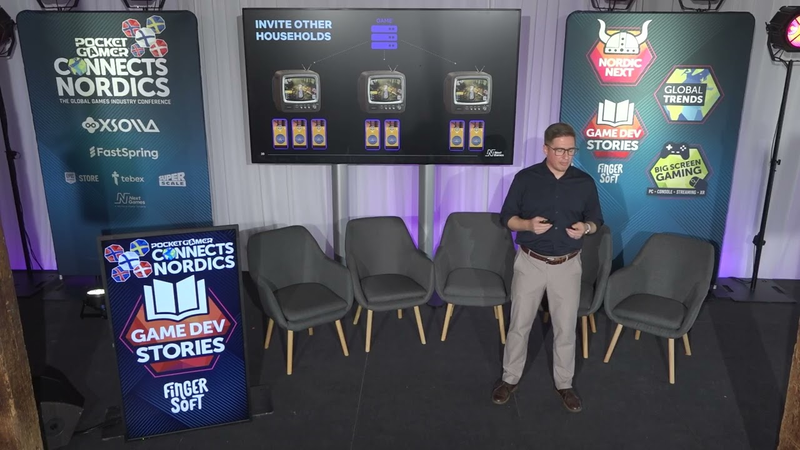
multiple ways of doing like multiplayer, but but one way of doing that is that that we just like fork the stream on the game server so that that multiple different households get the same content. So, they basically see the same same live video stream. Uh and now on each of these households, you might have one to many devices connected to that local session even though it's not actually local, it's in the cloud. And I didn't even try to draw all the different lines that would go on here that with the networks, but but this is basically currently the the most complex scenario we are we are doing. The other complex thing is that that Netflix is a business. So we actually want to provide also shareholder value, which means that that when we deliver games, they need to have really good like like like value versus cost balance. And
it's it's tough to make make this like like like cheap enough but look really great at the same time so that the quality bar is high. One like really small decision might be for example like if you switch from 720p to 1080, it's more than two times the amount of resources that are needed to run run that game because there are more pixels, you need more memory, more everything. And of course simplified, you can say that the cost is also at least two times the cost when you make this small small change. The other really big complication is that that we are making like two different applications. So we have the game that it's typically created with like your traditional game engines. We usually use Unity. We also could use Unreal or web-based engines, but that's the one that runs on the cloud that you see on the TV. Then we create the other
app, which is the the controller app. And that's typically a web-based framework. We use different frameworks like default or just like React apps just like your your website would be. And and and just like like transferring the state between these two different applications and trying to reuse something or at least make them look at at the same is lots of work. And typically the applications they they are they don't look the same. So in this like like image I have here, it looks deceivingly same because both of them have the Boggle grid, but usually the mobile application shows something com- something completely different from the one you see on the screen. But, that's the technical part. Then, the human part is that that when people have phones and on their hands, they want to look at phones, but at the same time we want people to play together. So, we want them to look at the screen at the same
time. Like, let's say that we like have result like points calculation in the end. So, we have to control that attention for the players. And and it's something we've been now learning for 2 and 1/2 years, and we're getting better and better at it. So, we might make your phone buzz when you need to do something on the phone and and different kinds of of actions we we can do there, but it's still somewhat hard to do. And then there are small things like like people with eight sight like me. Like, when you watch on the phone and then you watch in the in the TV, uh like like it's it's really hard if you have to do it too often. Additionally, because of course, we want to make as great game as possible. We leverage all the options you have on the controller, which is your phone. So, we might use accelerator or or gyroscope or camera or microphone. And all of that adds on top of the the tech stack we have to support.
Then, in the beginning I said said that TV is a computer. So, why would we stream because we could run the game on the computer? I'm glad you asked. Of course, we are doing that also. Uh this is a a like like relatively small like quiz game like trivia game, which we run only in US market at the moment. So, within the Netflix TV UI, we have some game game elements which you play with your remote phone and then you can opt in to go into the full experience after. Works great. Until it doesn't. Uh so, this is the old joke, the whole Rammageddon title, but it's still ongoing. It's still existing. Uh so, there was a time when TVs got better year over year. Like you got better TV, more memory, more everything, and it was better for us developers. Since a couple of years back, they've
been stagnating. So, some TVs are even getting worse. Uh they have less memory than they used to, or they keep having the same amount of memory uh than they used to, which mean means that the the wiggle room we have to actually run our own code in the TV is is relatively small. And And that means that that we cannot run as complex games, as good experiences as we would like to uh direct on the TV. There are also other problems. One is that that that you have the so-called Android problem. You have so many different kind of TVs. We have a TV test lab, but still testing everything there uh is is lots of work. Then when we run something on TV, it's exposed uh that that uh code just like uh it is on your phone, which means that the security model is different. We have to do it slightly differently. If we do multiplayer games, also that has to be done differently uh when if we go into this model
more. And I just showed some pictures where we connect the controller to the cloud server, but now if we don't have that cloud server, where do we actually connect your mobile phone? Like you would somehow need to get that connected to the TV app, and not trivial, unfortunately. Then I've been complaining about the complexity. So, of course we don't just accept that as is. We are We are trying to work on it and and like like thrive on this environment. And we have. And and some of the ways we have been doing it I have three different ways listed here. So, first, AI is answer for everything. Uh it's partially answer for this also. So, when I mentioned that that that designing these games is hard, like like how the interaction works between the mobile phone and the big screen, uh with AI we have tooling, of course, that that we can really rapidly test.
So, if you have an idea, we have a web-based uh platform where we emulate these cloud games. And now we can test how it feels to play a game with your phone that you also have the big screen. That's been been a success for us. Then uh the other success is, of course, because we can use our size. We are not huge by any means, but but we are sizable. We have uh many to game teams and we have some central teams. So, for example, we have one central team that is dedicated just to get learnings from these cloud or TV games, so that every time we start a new game, that game has more base to start from and it's easier. And also, if we roll out any changes, we can roll roll out the same changes for all the games. Then we are a live service studio. So, so we uh live operate our games. Uh we like add more content monthly or weekly or quarterly, depending on the
game. Uh we, of course, have lots of lots of tool set for that. And uh so, that's our game platform team. That also includes tools like like player support tooling or telemetry or how do we do multiplayer and whatnot. And and now, especially when our number of our games is getting bigger, like like we are seeing lots of success with this this model. I wouldn't do it when you have one game or maybe even two games, but when you have 10 games or 20 games, this actually starts to pay back. Then the final thing If you know anything about Netflix culture, it's somewhat demanding, I would say, or or harsh some people would say. So so something we do is that that we ensure that we have the best talent on every position and that unlocks that that we can let those people make the decisions close to the metal. We can be fast
like and nimble there where needed and and the quality stays up. And when we get those people in we don't settle with that situation. We keep like like developing those people to be even better month over month. And finally we don't really do silos in Next Games, so that also helps in this conversation. So, what's next for us? We are doing more games. We are doing even better games. We are doing more ambitious games. We are doing like like this is the fun part of of our job, getting to do this and and getting to do something that that some other many people never get to do or and doing it on Netflix scale. So so it's pretty exciting at times.
[music]
Follow me. Follow me. Follow me.
Follow me. Follow me.
Summary
Tero Teelahti, Studio Technology Director at Next Games, explains what it takes to build games for Netflix's TV platform, which reaches a potential audience of roughly half a billion people. Netflix games must be low-friction and accessible to casual players, often party-style titles played together in one room, with some using social features for remote play. Netflix's current catalog sits mainly in its party and puzzle verticals, and Next Games' titles include Pictionary and a Boggle adaptation.
Technically, TV games are cloud-streamed rather than run natively on the TV. Netflix runs its game client through the existing TV streaming app, while the game executes on servers in its Open Connect network. Phones serve as controllers, and the key metric is glass-to-glass latency. Party play multiplies complexity: two to eight phones across different operating systems, screen sizes and networks must behave identically, and extra households add forked live streams. Each game effectively requires two applications, a Unity-style game client and a web-based controller app, making state synchronization costly. Cost is also a constraint, since moving from 720p to 1080p roughly doubles resource needs.
Stagnating TV hardware, with flat or shrinking memory, limits how much code can run natively, and fragmented TV models and different security models add further difficulty. Next Games responds with AI-assisted emulation for rapid prototyping, a central team that shares learnings across titles, and shared rollout of changes. Its live-service model with regular content updates becomes economical at around ten to twenty games. The talk concludes with a focus on hiring top talent, empowering decisions close to the technology, and expanding into more ambitious titles.


Comments