Loading the document
1 free read left. Create a free account for unlimited reading + AI research.
Create free account
Fireside chat: Winning the Player Relationship Through D2C - Inês Ramalho, Ola Dokun & Jussi Enroos.

Key insights
Distilling the key insights…
Ask AI about this video
Transcript
[music] [music]
And to launch into uh the Beyond the Storefront track, I would like to welcome Ines, Ola, and Yussi, and they will be talking about Beyond the Platform, owning the player relationship through D2C. So, please give a round of applause.
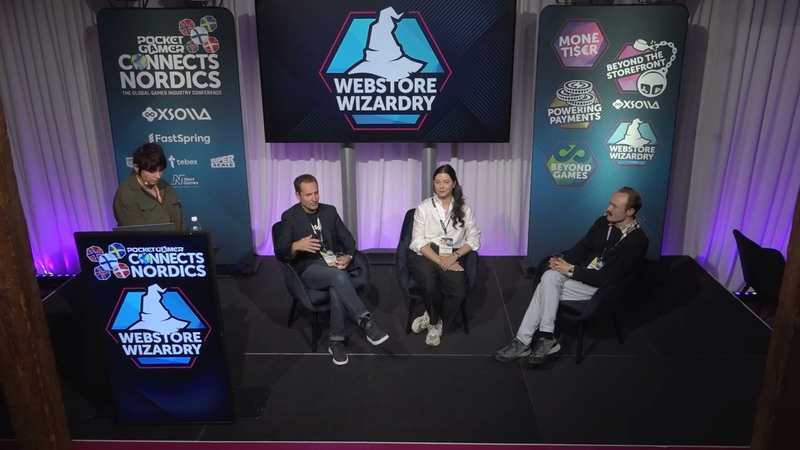
I think we are good to start. So, thank you for being here. Good morning uh you all. My name is Ines Ramalho. I am country manager um of Southern Europe at Xsolla. With me, I have Ola Dokken. She's the VP of strategic intelligence
and marketing intelligence at Xsolla. And Yussi Andrews, lead developer at uh Reactor. So, today we are covering a very hot uh topic, which is um winning the relationship, uh the player relationship through direct to consumer. And I would like to start Yussi by uh asking you. So, when we uh usually uh approach direct to consumer, the headline uh is the 30% cut, but actually there are uh other points such as um data and pricing, the control over data and pricing, and obviously the player relationship. So, I would like to start. So, beyond that 30% uh cut, what are the real issues with depending on traditional platforms?
Thank you. So, uh with uh traditional platforms, we we can ask a bunch of different questions like who gets the data and and who owns the direct relationship to the player, who has the right to contact the player at at which times. So, if we look at the device itself, so I have like an iPhone, there's the iPhone built by Apple and then there's our game that we have built and on top of that, Apple also wants to have the overlay of their like in in-game stuff and things like that. So, the game is kind of sandwiched within the platform in in a way. So, what we would want to do often is to have a direct relationship with the player outside of the game as well and not be like pushed in uh betw- between between the platform layers. So, so we would want to like you said, have more pricing power, so we would want to be able to change
the prices more often at will and then there's like the the fact that in some regions, uh the payment options differ. So, there might be some some region where the local uh uh local mobile provider has their own payment system that the locals want to use, but we cannot use it because say Apple or Google doesn't doesn't apply. So, they don't have that available, for example.
Yep. Um about so, platforms, uh web shops, uh live ops tools, each and the studios, each part each one has uh owns a part of um the players um relationship. My My question for both of you now is which part should the studio owns?
Okay. Um I'll take a first step at I [laughter]
think directly manage what you will regret losing if terms were to change. And what does that mean practically? I think let's first do away with the the phrase own the player. Nobody wants to be owned. I don't want to be owned. Players don't want to be owned, right? Studios should want to directly build the relationship, absolutely, through player identity. I think this is the primary key. And for the database folks in the room, you understand what I what I mean by that. It's the foundational element that everything else attaches to. Studio should decide the entitlement, the inventory ledger across platforms, mobile and web, what to offer to whom and at what price. This is where the D2C margin actually turns into strategy. It shouldn't live inside any vendor's black box. The player data and consent, first-party purchase behavior, the preference data plus consent records that makes it
usable under GDPR, CCPA, all the regulatory acts. Consent record is tied to the player ID. Who agreed to what, when, under what policy, which version, what region. Your direct communication channels, push, email, get to the players without any platform in the middle. The brand experience of the web store, now even if the plumbing is not the studio's, the experience look and feel should be owned by and managed by the studio. Now, what you want to outsource, payment processing, tax, fraud, all the non-sexy stuff that can get you in trouble. The merchant of record is the right call, right? Like, if you do that yourself, you're going to own tax, refunds, consumer protection, that exposure is risky, high liability. It's a regulatory burden. You just want
to build your game. And so, that piece could be rentable. Now, live ops tooling, I think depending on the enterprise level, you could probably build this build this in-house, but you can use another vendor's tool for execution, your segmentation, your AB testing. That could be run through third-party tooling, but you should keep the data and the logic exportable. You should be able to leave a tool without losing your segments and and the history behind it. Um, I think platforms are still better at distribution. I think discovery and device level trust still sits there. The goal is to stop depending on them for the relationship, but not to leave the stores.
Okay, that was a thorough answer. I would like to add that uh the areas where you want to have control, like like you mentioned brand, for example. If you want to have your brand visible at at certain places, those are the places where you where you
want to be. And the places where you want to have the data from. So, if you want to have the data from the store, then you probably should have more of the store for your for yourself. And uh when it comes to data, there's also the other side, which parts of the data you don't want other people to have or other companies to have. I don't know what Apple or Google do with their data, but right now, often if if they have the purchase data even, then they know who are your most valuable players. Who are They already know the retention value there and then they also know the monetary value of the players. I don't know what they do with it, but I remember back in the day when Facebook was a very large player in in the identity field, most of the players had Facebook accounts. It was possible to purchase the audiences from almost directly from specific games. You could buy the high-value players from that game. So, always consider who gets access to your most important data.
Mhm. Absolutely.
So, if by tomorrow Apple and Google cut their um cut their um margin, let's say, for 5%, would building a first-party relationship in the first place would matter still?
I think absolutely. Like um yeah, like I think the rules differ by region, right? Um and they and they keep moving and will continue to. In the US, the link out is unsettled. In the EU, it varies by payment path from 15 to 26. And Google's differ. I think fees are the most visible reason to build D2C, but it's not the most durable one. Um much of the business case at this point is the gap between 26 and 30% and web checkout at 5% or lower.
But I think the main argument here is when the gap shrinks and depending on your volume,
[snorts]
particularly for smaller studios, it outweighs the savings, right? 100%. But if the strategy only works when fees are high, it's price arbitrage. It's not a strategy, right? So, you want to think about building a lasting relationship around identity, data, pricing, and communication. The platforms are lowering the cost of living right now because there's a war going on. But they're not guaranteeing the terms are going to remain favorable. Right? And so, it will continue to shift for a very long time. This has been going on for 15 to 20 years. Um it is not a one-time event. A first-party relationship is the hedge against
both outcomes. If it shrinks, if it shrinks, choose the cheapest outcome. If it rises, you won't stuck. What doesn't change though is, as Jesse says, the data and identity. Your platforms are still going to hold the purchase history. You see only what they share. A cheap intermediary is still an intermediary. And pricing and regional pricing, particularly, um personalizations, it's going to be limited by the platform. But your communication is also restricted. You don't have reliable direct contact with your players. And all of these things matter. And so, irrespective of the commission rate, um you want to be able to be a bit more independent. Two companies will set your terms if you don't. And that 5% hypothetical could change at any point in time. And
so, the point of building this relationship is that your business survives any version of whatever the rules are.
Yeah, in case that would happen, it would actually be an opportunity for for the game teams to build more because a lot of the games would just just stay within the platform at at that point. But building the relationship outside the game after that would be possibly even a bigger opportunity.
Yep.
I have another question for Hollow, which is are studios just trading a dependency for another when they move to a web shop provider?
Technically, yes.
[laughter]
But, I'd like to be very frank. But, it's a different kind of dependency, right? Um And true independence is being able to leave whenever you want in any relationship, right? And what's most important for this is being
able to negotiate the terms. With the platforms, it's take it or leave it. With D2C, depending on the provider that you choose, um you're able to negotiate terms. Uh you're able to create flexibility around that dependency. No business can exist without partnership. You have to work with vendors. And it's all about how you set it up. It's all about how you leverage um some of the angles that you take with dependencies. And with D2C, it's just more flexible.
And about inner purchases, what can a web shop do that inner purchases can do, and how can um how do you make login and purchases feel more seamless to the players?
Flexible pricing and offers. I think IAP is limited to what the platforms enable. A lot of constraints there. With web shops, you can do regional pricing, bundles, time-limited deals in a more flexible way, right? You can somewhat control the approach that you take, and you have a much richer merchandising strategy. You can control the storytelling, the layout, the AB testing, um opens up for you than it does with just IAP. Um, there there's less constraints. More payment methods, as Yossi said earlier, that's so impactful. You have to understand that not everyone around the world can pay with Google Pay and Apple Pay and cards, right? And so for you to reach some of the players in in different regions around the world, um, this enables you open up that opportunity. Um, your direct customer data,
you can see the full purchase record that gives you a feedback loop on how to continue to optimize the approach that you take. A single purchase can follow the player across platforms. A lot of players can play on mobile and web and PC for true cross-platform experiences. I think the receipts themselves as well allow you re-engage, um, with consent, of course. Um, and you can really influence the policy around refunds and fraud and support that you naturally don't have with just IAP. And so there's so many elements that allow you have agency that you just don't necessarily have, um, as a publisher or as a studio.
Okay. And you see, um, in your experience, how do email and combination of, uh, game and store analytics fit in? And
what do what can they unlock?
So, I mentioned earlier that it's also about who can contact the player and when. And email is probably the key way to contact the player when they're outside of the game, even when they have uninstalled the game. So, Uh of course, the main benefit of email is retargeting. So, it's a lot cheaper to get back your existing players who have stopped playing than it is to get new players in into the game. And even if they haven't given you marketing permissions, there are like still some things that you can do. Like I swear that some companies change their terms and conditions just so that they can send the email with their logo to me. Uh even if I haven't haven't agreed to the marketing. That those are the kind of messages that they And And some of the messages are things that you want to have. So, for example, if I haven't
played a game for a long time and due to some regulation they have to delete the account, they're going to give me an email that okay, your account is going to be deleted. And then that is something that I can decide to act act on. And of course, combining the analytics from in-game to to out of game makes a lot of sense because they you know, if if you have any services, stores, or whatever outside the game, you can connect them that data into the player who is inside the game as well. If you have a forum, you know who this player is. If you have some some other kinds of stuff that you do outside of outside of game. Like some Some companies have merch stores and and loyalty programs and having that in-game data combined to those accounts makes a lot of sense.
Yep, agreed. I I I think that there's so much you can do with connecting your data from game and and web stop and web
shop, but also where you see your player across other ecosystems. And this is something that we've been exploring a lot um in a transmedia perspective. Um it's just really important that you're able to build that trust um first and foremost, with the player. But, ultimately, yes, there's so much you can do when you connect the data.
And do you guys believe that loyalty programs can work outside the game?
Yeah, definitely, cuz uh let's say you have a store, like D2C store, you want to connect if you have a loyalty program, you want to connect that to to the D2C store as well. So, that's like already a given. But, if also if you have other places where the players interact with your content, then it would be awesome to have that information that who is this player. So, giving them an incentive in the loyalty
program to connect their account to, let's say, uh a forum or or a merch store or even what what else that that might be, then it it gives you more data on them. And then it also allows you to do different kinds of promotions. So, so it's super effective to say in the game that now if you join this loyalty program, and and then if you purchase some stuff from the D2C store, then you're eligible to get some vouchers or coupons to purchase merch because the players often love the merch or even like may sound uh not not familiar to us, but you might even have live concerts of the like uh voice actors from within the game, and and you can give out tickets to those. This is like an actual thing that happens in Asia. So, maybe someday here as well.
Yep. Absolutely agreed. I think it's one of
the better uses of first-party relationship. Loyalty programs that live outside of the game has so much more. In-game is very limited because it sits across platforms, right? Web store, community, other third-party spaces where the player show up, other titles. Um it gives players a reason to buy on the web store. Um I think when you think about it from an exclusivity perspective, from web purchases, it makes the web store more attractive than IAP. Um you can I think you can credit engagement such as logging in, completing events, referring friends, joining a community, cuz that makes the program feel less than less than a pay-to- earn scheme because it rewards spend new only, right? So,
as you're able to continue to create and curate it in a more um rich experience, it incentivizes the player. Now, I think the idea of like statuses that expire or point balances allow email re-engagement something concrete to offer, right? For your lapsed players in bringing them back. Um Some of the data you get from it shows you how the player engages and it creates a feedback loop into, you know, your analytics as well. So, so much you can do with it.
Right. And um how should you use organize uh around uh direct-to-consumer and what changes uh depends on whether you own the game IP?
Right. So, that if you build a DTC store, it might eventually mean that the company structure has to change a bit. Like to get started, it's of course possible to
just take some like ready-made product and and then like personalize that to your game. Uh but uh or or you might use contractors for building the first version if you want to just try it out and see how it goes. But eventually you probably want to have that within the company to to control fully what happens within the store. And uh one thing that I have seen that is beneficial is to have like separate store pages for each different game. Often times it's just confusing for the player if you have multiple games that probably don't even relate to each other that they are like mentioned there on the store page. It might sound like uh cross promotion opportunity, but often times it's just more confusing.
[snorts]
Uh So, over time I would say that if you if you have the possibility to keep the uh store build building the store within the game team, then then that would be awesome. But most likely it's going to be a
separate thing within that within the company. So, maybe there's uh like game teams and then a team that handles the stores or separate store teams within each each of the game teams and so on. But I would keep it somewhat separate, but the visual language and the branding, like you mentioned that earlier, that has to be exactly the same. So, the player feels that okay, now I'm in the same universe still. So, this this is connected.
Agreed, 100%. It has to feel like an extension of of the game. I think depending on the scale of the studio, it's about what you can afford to carry on versus what you can outsource. Um I think even large studios shy away from the merchant of record responsibility.
Mhm.
Um
[laughter]
the cost and the risk far outweighs the benefits. Um I think the further down the the size scale you go, the the more of the plumbing you're likely going to rent. You can probably get up and running
quickly. Um the player relationship should stay at the studio level at any size, though.
Yeah, but in the case that you don't hold on the IP, which was part of the question, then the players are probably going to interact with the IP in other places as well that are beyond your control. So, that might mean that some decisions come come down handy to you. So, you have to accommodate that. But that doesn't mean that you can't try to push changes upwards as well. Because if you have good ideas, then it's often possible to lead also upwards the chain of command and and give some kind of uh feedback to the IP holder and and and tell your learnings, and that might give you more control of what you can do with the IP.
Yeah, agreed. Yeah, if you're licensing the IP, there definitely constraints that you have to like live under. Um I've lived it quite extremely.
[laughter]
Although, picking up on what you were saying about resources, um what do you
consider being the biggest differences between mid-size studios enterprises, and where does the merchant of record fit in?
Mhm. I think one thing that's important is that you're all working towards the relationship with the player, right? So, [snorts] product management could sit as a skill set within the studio developer. Like, who's taking care of like end to end until the checkout, right? And the metrics behind it. And not just the store UI. There needs to be an owner, right? Whether it's in partnership with the studio elsewhere. Engineering core, like the the plumbing on the infrastructure across platforms, super important. Um in-house, perhaps. Payment strategy, that could also live across
um in-house versus outsourcing depending on the size of the studio. Um usually small studios outsource this. Um analytics centered on the player ID irrespective of the scale, that should live at the studio developer level. Um I think for smaller teams it can often overlap with the product management role. You have CRM and marketing. Um that could also overlap with live ops and content and how you work through segmentation, testing um depending on the size of the studio. Um how you run your offers, bundles, events, store merchandising that matches the game calendar. Obviously legal and privacy. Uh that's super important, age gating, like tax, fraud. Very critical. Um It needs a named owner. Customer support for refunds, fraud,
purchasing disputes. This now lives within the studio, right? It's no longer an IAP, and so this is something that the platform used to handle, but no longer does when you move outside of of mobile. And this is often outsourced to the MOR provider regardless of the size of the studio. Now, small studios won't have one person for each of these roles. Um fewer people cover each of these roles, and the rest comes from the vendors. I think what matters is that every skill has a named owner irrespective of the size.
Okay. And from a product point of view, um which core skills does the team need, and who owns each uh touch points?
Well, that's what I just covered, right? So, we went through the list of the skills. Um Perhaps So, perhaps I jumped ahead of your question. The The skill sets were product management, payment strategy, engineering core, game
team analytics, legal, CRM, um support again could sit with cross-functional roles, could live in-house depending on the size of the studio. I've seen hybrid structures that are shared responsibility between the vendor and the studio and developer itself, depending on the size of the studio. Yeah.
Okay. And how do how do we keep the message and the look uh feels consistent uh in each channel of communication with with players?
Right. Uh probably the there needs to be some kind of brand owner as well. Like you mentioned a lot a lot of roles, somebody has to be in charge of of the game brand, and and they need to have a connection to all of these. Probably also some kind of brand QA for all of these features as well,
because a lot of them might be and and often are outsourced like like say player support, then you want that to still look and feel like your game and also the store and and all the all these other different parts. So, you have to have a clear brand strategy for that. Things need to be at least to some extent planned beforehand for for that to work. And and then somebody to look after it. I think it's hopefully just a single role, but
Yep. Yep.
might might be a team as well in in a bigger production.
Yep. And and that's so somewhat difficult when you think about it from a legal ease perspective when you even attach it all the way down to the receipt, right? So, beyond just like the player leaving the game to go make a purchase within the web shop and then going through the checkout flow and all of that is aligned with the design framework of the game but down to the receipt that the player gets. Um and ultimately the merchant of record
is whose name is on the receipt. So how do you work with your partner, your vendor of choice to be able to customize that receipt in a way that still is compliant to what's necessary for the merchant um legally as well as making sure that the player can still look at this and feel like they've interacted within just your ecosystem at the same time. It's a bit of a nuance to that when you throw the receipt in as part of one of those touch points, too.
Yeah, and on the other other end of that you also have to think where the art comes from. So you might have an outsourcing company that creates the 3D models and then they are in some form used in the game but to turn that into marketing art or turn that into the images that need to be down to the receipt in in every place and at at the player support and all that somebody needs to do that work as well. Somebody needs to feed that in into the UI and and and so on. So that needs to be accounted for.
Yep.
Okay, one last question for you both. Uh next quarter if a studio wants to build a direct relationship with their players, what is the first thing they should do?
I'm thinking like
Uh I think they should start small like something practical, something that you can measure. So it doesn't have to be like a full-blown store or whatever. You can just do a single promotion where there's a single purchase that that you test that this works or it might be uh something if you have a forum you or you can try that out or you can try a live session with the developers or whatever and and try to try out different things that are easy to do once and then if that sticks then you can you can scale it up and and see if you can get more traction with that.
Yeah, agreed. You want to be able to iterate quickly. You should start with that primary key
though that I mentioned earlier, your identity. Like this is your foundational element. You want to get your players authenticated and this is different from most free-to-play games. Like the standard is like you could get to play without authenticating. Now you you should. Um some of the hardest things to retrofit. But this ID is important. Everything [clears throat] works around this. Um you need to know who the player is. And it is something that you should not outsource. Um creating the identity piece is super important. Doing that after the fact makes you put players in a position that they want you now want them to do something that they didn't sign up for. Um [snorts] you don't want to do it at checkout. That is where most of the dropout drop-offs happen. Um it's the foundation for consent for any other signals that you need for entitlement in the ledgers
um and all the other compliance sensitive parts. I think what it looks like in in the next quarter for most studios is to pick um how you get your players authenticated, right? As seamless as possible so that players are not able to um go through that friction. Avoid password heavy flows. I lived through that. Does not work. Very painful. Nobody remembers their password.
[laughter]
Um so being able to get authenticated um is super important. Collect consent, store the record um and and carry an A signal under 13, under 18. Um super important depending on your game. And it's very important to collect a head than to infer. Um incentivize authentication. Like um give the players something for for actually putting in that effort. Um and they can actually do the linking.
Like please create an account prompt that's poor uptake. Like give them something for their effort. Um I think that's super important. And as you just said, um test it out. See what's working, see what's not working, and continue to iterate and scale it. Um And I think you want to make sure that you're tracking the right KPIs. And primarily the share of active players with a verified email. Um And that way you can sort of set yourself up for a reasonable target. If you're able to get a meaningful share of your active players have an authenticated account and a verifiable contact, that's an asset that you can build on top of.
Yeah, I'd quickly want to add you mentioned that don't do that registration at checkout. Also don't do it at game start. I like the first launch because you actually have to earn the trust from the players first before
you can ask ask for that commitment from them.
100%.
[music] [music]
Summary
Direct-to-consumer (D2C) selling is presented here as a strategic hedge for game studios, not a simple way to dodge platform fees. The panel argues that the 30% platform cut is only part of the problem: app stores also control player data, pricing flexibility, regional payment options and direct communication with players. Their recommended model has studios own player identity, entitlements, consent records and brand experience, while outsourcing payments, tax and fraud handling to a merchant of record. The speakers note that platform terms keep shifting, with EU fees ranging from 15 to 26 percent against roughly 5 percent for web checkout, so the value lies in more negotiable terms, regional pricing, bundles, payment methods and complete purchase records.
The panel identifies email as the key out-of-game channel, mainly because retargeting lapsed players is far cheaper than acquiring new ones. Combining in-game data with web store, forum and merchandise data strengthens personalization. Loyalty programs work best when tied to the D2C store, using incentives such as vouchers or concert tickets. Studios should keep store teams aligned with game teams while maintaining identical branding. Every core function, including product, payments, analytics, legal, support and brand quality assurance, needs a named owner regardless of studio size, and smaller studios can lean on merchant-of-record vendors, provided receipts still feel on-brand.
On execution, the speakers advise starting small with one measurable test, such as a single promotion, a forum or a live developer session, then scaling what works. Player identity is the foundation for consent, entitlements and compliance, so it should be built in-house early, using seamless authentication that avoids password-heavy flows, along with consent records, age signals and sign-up incentives. The key KPI is the share of active players with a verified, authenticated account. Sign-up should be separated from checkout and game start, since trust must be earned before asking players to buy.









Comments