Loading the document
1 free read left. Create a free account for unlimited reading + AI research.
Create free account
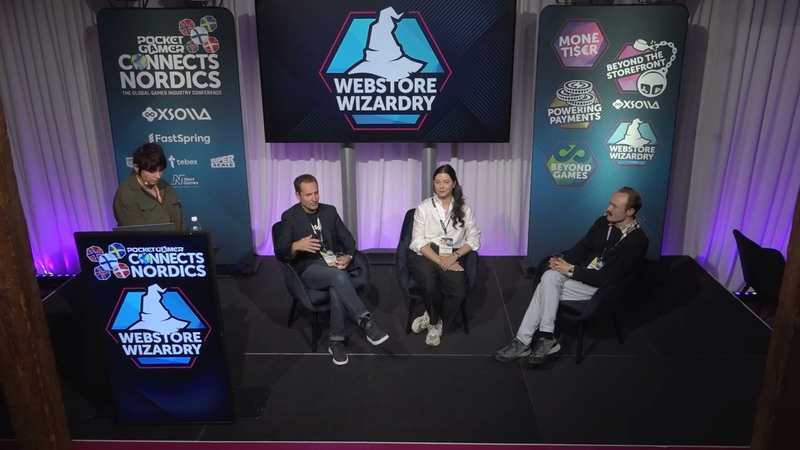
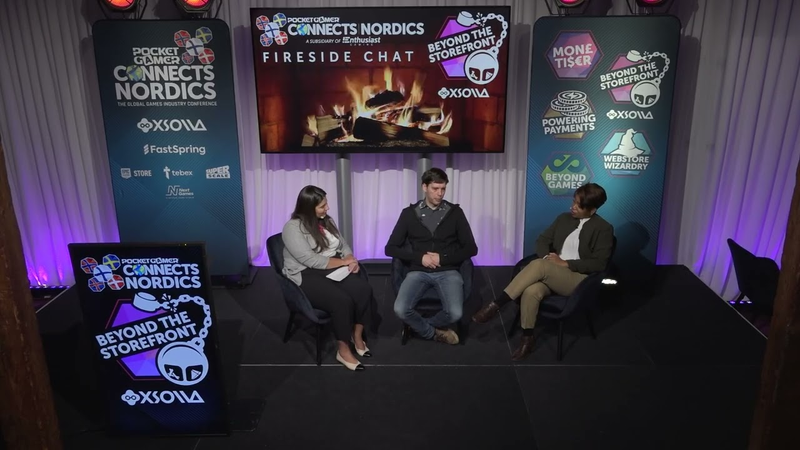
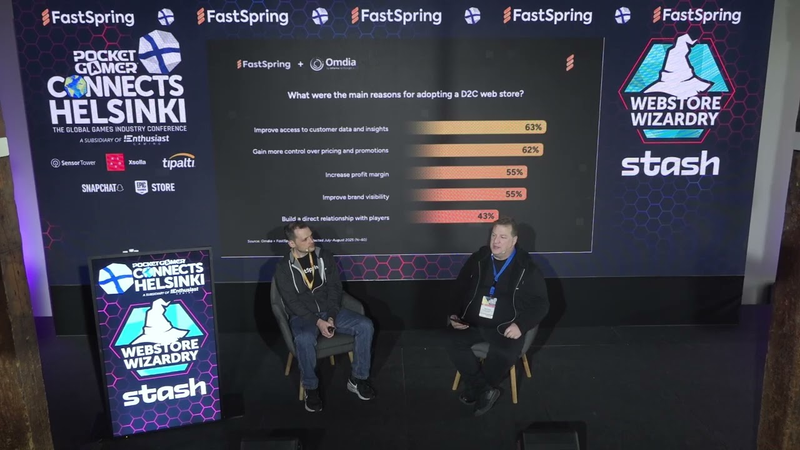
Panel: Reallocating Growth: The Business Case For Direct-To-Consumer.
Key insights
7 takeaways- 01Margin recovery is the primary publisher motivation for direct-to-consumer (D2C): studios regain revenue and margin that platform fees such as Steam's 30% cut would otherwise take.
- 02Regulatory changes, including the US allowing link-outs to web stores after Epic's legal battles, have opened additional margin for studios, though operating a web store still requires significant effort.
- 03Steam's discoverability algorithm is hard to rely on, so some studios are exploring alternatives such as WeHype, an influencer engagement platform, to address discoverability instead.
- 04For casual games with few paying users, link-outs inside the app (for example, cheaper bundles of lives bought outside the app) suit the audience better than a full web store, which typically attracts high-spending players.
- 05D2C enables personalised offers and loyalty programmes that deepen the direct player relationship, and the panel expects it to become almost mandatory as a distribution channel in coming years.
- 06A mobile-app-to-web-store flow in the US, such as a free-gift pop-up that opens Safari, reportedly brings around 60% of users back to the web store within 30 days to make a real-money purchase.
- 07Building a web store is easy, but operating it is hard: successful stores run content calendars updated every 3, 6, or 12 months, synced to in-game events like Halloween and Black Friday.
Ask AI about this video
Transcript
[music] [music]
a panel. I'll be modding this one, so I'll be up here on stage for a little bit longer. Um if our panelists want to make their way up, so this one is reallocating growth, the business case for direct-to-consumer. If you want to welcome our speakers up on stage. Right, so even though I have been on this stage so much already today, um I'll do a quick reintroduction just in case you trickled into the room. So, I'm Paige Cook. Um I'm deputy editor on pocketgamer.biz, so you might have come across something I've written at some
point, or you might not. Um so, yep, it's kind of a D2C uh discussion that we'll be having. Um you know, with platform we'll be talking about things like, you know, platform fees, you know, with user acquisition costs rising and things like that, you know, we see a lot more of D2C right now. Um and we'll be having a chat about why it is that we're we're doing that. Um just so just to lead straight into it, if we could all just go along, if you want to just introduce yourselves, um say a little bit about what it is that you do, um just so everyone knows who you are.
Yes. Uh nice meeting you. I'm Cédric Mesonnier. I'm the gaming and strategic sales director at FastSpring. We enable games publishers, studios to sell their product direct-to-consumer all over the world.
Um my name is Daria. Um I lead EMEA publisher partnerships at Coda. We work with gaming companies and help them reach paying audiences worldwide through D2C solutions.
And I'm Shawn. I'm the at KaiBot, which
is an Irish game studio, and I'll be sharing a little bit about why going D2C first is a strategy that we're looking at and approaching.
Amazing. That's kind of a a perfect segue into my first question. So, sort of getting started, I wanted to go into why exactly are a lot of studios and publishers looking at D2C now? You know, what in the market has changed that has made it this bigger priority? Um and yeah, you know, is it to do with you know, obviously there's a part of it that's to do with margins, but is it also about, you know, owning more of the player experience? Um so, yeah, what why is this such a big thing right now? Um maybe starting with you, Daria.
Yeah, sure. Um I think we have to be honest about what gets the primary interest from the publisher about when we talk about D2C. And I think the number one reason is obviously getting back uh that that revenue and the margin that you can recover because of the D2C. So, instead of
paying the 30% fee, you pay something like 5 to 7%. Obviously, this is what gets uh gets providers like us in into the door. And when we when we start talking with gaming companies, um but it's definitely deeper than that. It's not just about recovering that margin. It's also what you do with with that margin afterwards. Uh do you reinvest it back into the game and uh the live ops and uh how do you what basically you do with uh owning that player relationship and what comes as a as a benefit and added benefit on top of that.
[snorts]
Yeah. That's a big
Um so, on our side, yes, definitely gaming publisher studio, they come to us because they want to own the relationship with their players. Uh it's uh it's an additional distribution channels to have your direct to consumer. They have been working with third parties for a long time, like uh Steam if it's a PC game, Apple Store, Google
Play. And uh and it's important for them to have a direct to consumer stores, to own the relationship with the clients, to to be able to monetize them long term. And all players wants to have the direct relationship with the gaming studio the with the game develop. So this is importance to have this additional distribution channel.
But you surely might have a bit of a different perspective on it as as well from your point of view.
Yeah, I think what Tariq is saying is so right about wanting to of course reclaim margin and use that to build momentum. And additionally, owning that relationship is so important, especially when you might want to leverage that relationship for other things you want your consumer to buy. So that can be really powerful. I think we're an unusual case study to take a look at here because we're a So for a little bit further introduction, so I'm running a small game studio and we are making a competitive multiplayer game that is inclusive, nurturing and a
non-toxic game. That's a bold claim to be making at Pocket Gamer Connects, but it's also what we're aiming to do. And we've got a lot of thought behind what goes into that. And we're making a game for PC. The standard distribution channel for PC is of course Steam. And Steam has a lot of strengths, a lot of things to admire about it. And one of the challenges for us is that we're making a game for an audience of players who believe that spontaneity and fun can coexist with maturity and respect. And that's a audience of players who don't want toxic experiences. If you go to Steam right now and put a game like that on, you know, up on a page and you tag it with things like multiplayer, PvP, competitive and so on, what you're going to get is a flood of players from existing games which are competitive and multiplayer and have a lot of players who have you know, habits around toxicity. So if we were to take a Steam first approach in bringing our game to market, we would end up in a pretty serious difficulty around community management
and making sure that we actually are reaching the audience that we want to serve. So, our approach has been to say, "Actually, the audience that we serve lives on Discord and Twitch, and they like the communities who believe in our values that are out there, and we should take an approach which is about reaching out to them, getting them involved, getting them involved early, growing with those communities, and if we want to be in a position where we can explore monetization, we're going to need to have a DTC solution to facilitate that. So, it's not just about some of the things that have been envisioned already. There's also these ideas of, well, we can use DTC to be creative, and we can maybe reach new audiences who existing platforms might not serve.
I would like to add something. Actually, there's an very interesting parallel in to mobile gaming, obviously. You've mentioned Steam, right? Steam famously has a very similar problem to Apple and Google Pay, Google Play, which is basically the the payment options that are available for the users of for the users of Steam are
not really localized, right? So, when you are a Japanese user or a South Korean user, you still have the access primarily just through paying with a credit card or just PayPal, right? Which is not something that local audiences use to make purchases in those markets. So, I think you you do have also a limitation while just being on Steam because you are missing out on that huge chunk of users that simply can't use Steam as as the platform. So, yeah.
Yeah, I know you mentioned earlier in your talk earlier about in Japan and them using TapTap. Like, I I I also didn't know that, but yeah, it totally makes sense. You know, if they're using a a payment method that the traditional stores don't even allow, you're you're already locked out of, you know, so many players that you could potentially be reaching. Um, and it's something I want to go into as well, you know, how do teams and Tron, this might be a good one for you to lead with as well, cuz obviously you've decided to, you know, from the get-go with your game to have a DTC sort
of that's what you wanted to go with. How do you weigh up the sort of, you know, is it worth the investment of that? Because obviously, especially from the get-go, it's it's maybe quite a risk. Um so, how do you weigh that up?
So, for us, I mean, our studio has a a quite an interesting challenge to face. So, my experience wouldn't represent how every studio founder would approach it, but we're making a game in a genre that would be typically a free-to-play genre. Um so, think of League of Legends, Dota 2, Heroes of the Storm. So, we're making a lane-pushing game, and we have to think about that as free-to-play as baseline because that's the standard, that's what players tend to expect. And one of the things that I've been encouraged to really think about, so there's a book written by Choice um Wyman, and he put out a book called uh I Told You So, which is a book about free-to-play, and it came out a few months ago. And one of the things that he really recommends is before you turn on the monetization or before you turn on payments, you should really have your in-game economy up and running, and
there's already the virtual currencies there, you're testing out everything, and making sure that it's working the way it should. You just don't turn on payments until either the players are begging for it or you hit your launch date, and it's time to go. And for us, I think the opportunity to be testing and learning from that as early as possible is really important. So, I wouldn't want to defer that until a much later stage in our growth where perhaps we might be going to Steam at that point to get the expansion audiences. Having DTC in early makes a lot of sense. And uh yeah, I think the the opportunity there for us is one that made a lot of sense, and so that's the way we're thinking about it.
Darth, you might have you both might have more up to add on sort of, you know, the the weighing up the risks of the investment of starting with, you know, DTC, or even if, you know, you're a company that, you know, you've got an established game, and you've just been using the traditional methods, and now we see DTC is becoming this big thing, and it's like, okay, well, now we need to explore this whole new avenue. Um how do you weigh up those risks?
[clears throat]
Yeah, that's why merchant of records provide a essential for for for developers like you launching a games because it's so complicated. And so it's very important to outsource this. And because it yeah you need to have the right local payment methods. You need to have the right tax management. You need to have the right compliance. You need There's so many things during your checkout page. So come Natural Africa, spring and orders, we shield your business from risk and we give you access to players all over the world in in few weeks. And if you wanted to do it on your own by having a different contract vendor contract with payment provider, fraud provider, tax management provider, it would take you months.
A studio of our size would have no interest in that, I can tell you.
Yes, and you will have the financial and the tax liability. And so with the
Natural Africa, you don't have this. And so we simplify the go-to-market all over the world and we optimize everything like you said or other local payment methods are key are very important. You give the choice to the players in Japan, in the US to pay with their preferred local payment methods, in wallet, in credit cards or other other payment solutions. So um it's I would say it's the easy route if you want to go direct to consumer.
Did you have anything you wanted to add? Sorry.
Agreed.
[laughter]
I mean Um so another thing I wanted to touch on just you know briefly a little bit. I think a few of the sessions we've had in here today have kind of touched on this anyway and that's you know a big part of this is also to do with regulations and regulations that have changed. It's different for different countries. You know we've got different rules in the EU. You know America maybe over there there's you know some different things going on. Um how do the changes of regulations impact DTC? And if you are
doing DTC and you're not really aware of what regulations are going on is that something you need to start being aware of? Because obviously you know you you could be getting started on all of this and but things are they're still changing. This isn't something that's just set in stone, and you can go away and do it. It's progressively changing. So, um yeah, if we wanted to uh Dori, I think you know, you you mentioned in your chat earlier a little bit about regulations on this.
Um yeah, I can share share some light on this. So, what Cedric was just mentioning about merchant of record, I I think it's a very important work that this service is doing. Essentially, it lets publishers and I mean, honestly, any gaming company to to focus on what on what they do best, which is making games, and outsource all that I don't want to say annoying stuff, but the stuff that takes a lot of effort to to someone like Coda or FastSpring. And you know what we what we suggest our clients and and publishers that we talk
to often times is to start small because what you have to understand about, you know, building web stores or implementing payments is that it is still an effort required, you know, on both sides. So, for example, on on Coda and on the publisher side for the integration, right? And you need to justify that effort. And most of the time, it's not about just justifying effort of implementing it. You often times compare it with what else can you do with that engineering effort instead, right? This could be Actually, you can you can put a number behind it, right? Let's say it takes it takes me 20,000, let's say, euros to implement that Would I rather do that or would I put these 20,000 in in paid ads, right, to promote my game or something like this? So, it's always an effort that is required there. But what I wanted to say is that it's easy to reduce the scope a bit, understanding where your players are. For example, you
pick US, Europe, Japan, and South Korea as as the first four markets where you can launch that web store, and then you test, and then you learn. And the web stores and honestly did to see is a very iterative process. It's not something that you can just launch and drop. Um and um yeah, just speaking a bit about the regulation. Um yeah, there's been a lot of uh these battles recently because of like Epic made it happen for all of us that in the United States you can simply link out right now to the web store and uh grab that uh user base that was otherwise not even aware that you had one. Um so, yeah, regulation has definitely paved the way for uh for a lot of the studios to to gain that additional margin. And um yeah, I think that's uh that's great for the industry, but it's also it's a real effort that is required. But again, payment side of it is at least handled for you guys. We are here to help out. Um but the rest of course, when it comes to actually operating the specific offers on the web store, understanding
what would you like that web store to have is something that we need to work on together. Did you have anything you wanted to add?
Uh on the regulation is mainly for mobile games. Uh obviously, I'm not the the right persons to speak about this. We've got a head of gaming for this, but I know that we can uh yes, steer steer from Apple Store and Google mainly in the US, but it's going to expand in uh I'm sure all over the world. Uh but uh in term of PC games, uh you can have your web store, you can have your buy direct from you with just a link. So, they they can bring you to a checkout page, pop-up, or embedded and uh you can uh you can yeah, obviously, have a direct-to-consumer store quite quickly. And um that's important. I just have one numbers. It's in I think it's about 90% of
people buy on online. They they buy regularly at least once every 90 days, 3 months. So, they are regular buyers. So, instead of them buying regularly on Steam and uh Apple and they they take a 30% of of your margin, they'll be so happy to buy directly from you on a regular basis every month, every 3 months. And this is I think that's important to build that from now and not to wait too long.
Yeah. Um another thing was obviously like regulation has helped open a lot of this up, but do we think D2C now helps, you know, more innovative revenue streams? What does this now open up because this is a thing now? Um you know, uh Shawn, you were saying obviously, you know, like being on Steam, why was this the route that you decided to go? Even though it is this changing thing, why why was that the route? What does this What do you feel like this offers that traditional platforms didn't?
Sure. So, I think Steam is well uh
renowned for its uh being a solution to the discoverability problem on PC. And of course the algorithm changes from time to time and there's uh ebbs and flows with it, but generally speaking, a lot of games that are shipping on PC wants to be on Steam because it addresses discoverability. If you've got a great game, if you play your cards right, you can do really really well off that algorithm. And for us, we know that that algorithm isn't uh likely to be favorable to us for multiple reasons. And so, rather than thinking about it just strictly in terms of well, it's a 30% cost, we're thinking more, okay, we do need to solve discoverability. We kind of need whatever revenue we're getting or that cost to go towards solving discoverability a different way. And one of the platforms that we've been looking at is called WeHype. Uh WeHype is a influencer uh engagement platform. So, a lot of larger studios and publishers would use WeHype as a way to uh find content creators and incentivize them to play your game on stream. And
you know, you give them money, they run campaigns, or they can directly incentivize streamers and so forth. And because they're in a position where they have the payment details for so many streamers, they're now able to do a thing where they can set up a kind of a shop for the streamer, and the streamer can say, "Oh, my audience can go to my shop. They can buy things in the shop to get in-game items." And in this situation, it's a way of saying, well, maybe we could give the percentage cut over towards WeHype and say, this is a different discoverability mechanism that is much more closely tied to the creator channels that we're actually trying to reach. Now, there's an interesting thing that they're experimenting with there, which is you'll all remember the Humble Bundle and the idea that you can buy this bunch of games at incredibly good value and there's a little slider that you can move back and forth to say how much goes to Humble, how much goes to charity, how much goes to the developer. So, they're experimenting with saying, okay, you can have a slider to say how much goes to the developer versus how much goes to the creator. And that's an interesting way to say,
um, get the creator community maybe incentivized to engage more with our game, maybe improve longevity, um, maybe in the short term, and this is very speculative territory, okay? But maybe in the short term you would say that while we're in alpha, you can move that slider to 100% and you can give the entire portion of the funds over to the creator and that might let us turn on the tap for monetization and payments, like actual real money payments earlier because it can be framed as, well, actually these people are just donating to their favorite streamer. But they still associate the in-game currency with the value that they paid for it and so that might give us a more accurate read on the in-game economy. Maybe people are less likely to charge back their favorite creator. I don't know. You guys would have the numbers on this stuff. But it's interesting. It's interesting to explore this stuff and look at D2C as a a means to be more innovative around how we construct a revenue model, how we do this at early stages, and how we do it outside of a traditional platform. Uh, yeah, it's a it's a space where there's
a lot of lessons left for us to learn.
All right. I was uh, mentioned of record provider that they provide uh, yeah, creator codes. They can use that and you can then do the checkout on the on your on your direct-to-consumer store. So, we have the technology and we are really pushing the creator codes and definitely and uh, D2C when uh, games publisher developers set up their D2C store, It's uh it's a growth by uh, uh yeah, at least two digits per year. So, it's definitely growing growing and uh and uh the big guys like uh EA, Ubisoft, uh Supercell, they're making uh a huge part in D2C and it's growing uh every every year.
Yeah. Um we've got like a a good range of sort of experiences on the stage. So, you know, I think again, this is something like I'm sort of hearing, you know, in sort of smaller conversations of, you know, with D2C, it's is it a fit for me? You know, it's knowing like, is this the right fit for me? But, you know,
whether it's mobile, console, PC, um I feel like I hear it quite a lot of it on mobile. So, you bring like an interesting perspective with having that on Steam. Um yeah, like I don't know if we could talk a little bit about just the idea of who is it a fit for and how do you know if it is a fit for you? Because I guess you don't really know until you try it, but, you know, I guess you know, what kind of research, market research do you need to do beforehand before you really figure out if this is right for you?
I think you um we've talked about this before as well. Uh I think you need to understand your your player base really well in order to uh to design essentially the uh the D2C strategy. So, you need to understand where your players are most most of the time, where your paying players are, right? So, the ones that are willing to pay for the content. Uh for example, a very a very a very good example of that is um and there's a lot of casual games uh here today. I I've spoken with a couple of studios. With casual games, you know, you need to optimize for the intent. Um casual
people play casual games uh kind of sparingly, right? And the you have a very small percentage of paying users, um which means that a D2C or actually having a web store is probably not the right fit for your whole audience, right? What you can do though uh is optimize for for link outs. So, again, the moment when you are out of lives or out of moves in in your game, you can place a link out inside your app and say, "Hey, you can actually buy this you know, a bundle of five lives now cheaper or you can get 10 lives instead of five for at the same price if you go and make a transaction outside of app." So, for this you can definitely optimize. Now, the web store is typically something that grabs a lot of whales, right? Or the players that transact a lot in your game because they're always on a lookout for good offers, for interest something interesting that they cannot maybe get inside the game.
They always are on a lookout for a better value. So, I think understanding your player base and then going from there building your D2C strategy is something that's going to help you set it up in the right way and understand if this is a fit.
I think today every games publisher developer should have a direct-to-consumer store. Uh, it's an it's an additional distribution channel. It's great to You need to work with all the distribution channels available. You have third parties, but then your your direct-to-consumer store should not compete with the third parties, but it should exist. And then you have the flexibility with pricing, promotion, packaging that you cannot have with third parties. Uh, and you can test some some some products. You can test some some new ideas. And and what is important, you own your
distribution channel, you own the players. So, I think it's a no-brainer. Everyone should have a direct-to-consumer store and it will grow year after year. And it's the reality today. It's e-commerce. In the past, even watch company just were just selling their watch in retails. Now, they all have their own online store. So, I think it's a must-have. And then depending on the internal resources, how many people should manage this web store? And and definitely the the beginning of your journey you should use a match on a free card and then you'll see how it it grow. Then you might do it by your own in the future, but yeah. We are here for the to simplify to make it happen in a very quickly. So you can carry start the the journey.
I imagine there's a lot of opportunities to cross promote products where you know if you're thinking about building a studio and you've got multiple games or maybe there's merchandise for those
games or there's other things that you want to sell. It's very helpful to get your consumer used to that funnel.
Yeah.
So that was again another really good segue into what I wanted to talk about next which is kind of like just the player experience and I think one of the appealing things with D2C is you have that more direct you know relationship with your players. They're not just playing your game or something pops up okay I'll buy that and you know it it kind of is just this autonomous thing. Whereas with D2C you can personalize it a lot more you know again we've heard a lot about you know loyalty programs and even like personalized packages that are sent to people. So I feel like that's you know that's something that you know would appeal to me. You know if there was something that popped up just at the right time and it feels personalized to me and then I go on this you know the web page and oh because I did that I got a loyalty thing for it. Next time I make a purchase it's going to ping in my head that oh well if I go back there I it kind of feels like you're getting more for your money. So yeah I wanted to speak a little bit about you know just the relationship with the player and Sean maybe again
starting with you and going along you know in is there any sort of what experiences have you had with that with the players cuz obviously you said your game is it's been in alpha for
Yeah we've had them closed alpha for about 2 years and so we haven't flipped the switch on payments yet. But it's one of those things where obviously if you've got players who've been around for a while you want to make sure that the people who are in early do feel that they belong there and they have that sense of uh small sense of kind of prestige of having been there from early stages. In terms of personalizing I think Kickstarter is an example which really shows the value of things like early birds or being able to fill out a form to get a custom something. And of course a web store is much more efficient way of doing that than taking a transaction on a external platform and then sending someone off to a third-party survey platform or whatever it is. So there's definitely opportunities to get creative there. And I imagine both of you have seen some examples of this with various people you've worked with. Please share.
Yeah, absolutely. So first of all, we like to start with a
player motivation, right? When it comes to web stores or any D2C basically funnel, you start with a player motivation. A simple question to ask is why would I go to that web store and why would I buy something instead of buying in app? And again, I you know, I I lived in Germany, so I know that pretty much 100% of Germans that have an app on their on their phone, they would simply do the Apple Pay, right? It's just very easy. It's how we used to pay. It's It's convenient and I would probably not look out for any special offer somewhere. However, I am not 100% of players. There are players that are looking for a better price or a better value at all times. And one of the ways to capture these users is to offer something in return of them going through the let's say hustle to to get that special item or to get on to transact on the web store.
And what we've seen working really really well in practice is for example, imagine you've got a mobile app, you can show in the United States at the moment that's allowed. You can show a pop-up that says "Hey, here's a free gift. Go and claim it on the web store." You click on that button, it pushes you to Safari and in Safari you are basically looking at the web store where you can claim that free gift. What this does is it builds trust. So people are like, "Okay, that's a real thing. I can transact on it now." Around 60% of these people are coming back to that web store within 30 days, right? And they make an actual transaction with real money. So, that's one of the ways to bring the user to the web store and build that trust with the end customer.
Any thoughts add on that one?
Definitely it it has to be a seamless solution and it has to be a local local
buying experience and with a direct to consumer store you can have the local local currency, the local languages, the local payment methods. So, you are selling global but with a localized solutions everywhere in Japan, in the US and I think that's very important as well. So, they they can feel it's easy to buy from from the store which sometimes is not the case on the on the third parties because they dictate the language, the payment methods. So, you can extend this and as you said you can uh package this differently with pricing and and promotion and that's very important and sometimes to have exclusive offer is fantastic. If you have uh digital content but also physical contents physical contents it's if can push some
exclusive contents on your web store that your clients cannot find anywhere else. This is very powerful.
We've heard a lot today about, you know, positives of D2C. We've had a little bit of skepticism as well of things that might not be. Is there anything would you say is a major sort of misconception that some people have about D2C?
Oh, yeah. I've got I've got one. I think you know, again that the whole day today is so full with D2C talk, right? And uh, it might seem like building a web store is, uh, basically, um, a given, right? You just have to do it. And I agree with that, by the way. What I, um, don't agree with is the fact that the the existence of the web store is is enough, right? So, existence [snorts] does not really mean performance. Um, you cannot just launch a web store and then just kind of drop it and keep the content the same as when you launched
it. So, what we, uh, talk with our clients very often about that we we've got calendars that are running basically every and are updated every 3, 6, and 12 months, uh, on the type of content that they have to have on the web store. And most of the time it is synced to in-game events in, uh, you know, there's, for for example, some Halloween special, some Black Friday special, right? They they make sure that that web store is constantly updated. And this is what we mean by, uh, operating the web store, right? Just building it is not enough, and I would argue with the existence of AI and clouds and, uh, all these kind of guys at the moment, it's quite easy to build one. But it's very hard to operate it to operate a web store. And this is essentially what moves the needle.
And a obviously launching a direct-to-consumer store can be very risky for you, uh, because, uh, you have the financial and the legal responsibility of of the sale. Uh, so,
uh, when you launch a direct-to-consumer store, either you you go to do it yourself solutions, and but you take all the the risk on financial and legal. And that's also Merchant of Record, we take the financial and the legal liabilities of the sale. So, we make sure, uh, yeah, we know what we do, and we, uh, we shield your business from risk. So, it's important to understand which route you want to do. Uh, either do it yourself or Merchant of Record. Uh, it's, uh, yeah, it's a questions to ask in the beginning.
I can maybe, uh, make just very quick, uh, very concrete example, um, of what Cedric is talking about. When you want to sell in the US and you launch your web store in the United States, um, and you start selling content on it, uh, the problem with operating, uh, that web store is that, again, every single state in the US has a different tax, right? There's a sales tax, there's a withholding tax, and operating it as a,
you know, a smaller studio and a smaller team is is actually quite a lot of effort. That's why merchant of record services are, um, yeah, are very important and they're doing a a good job of making sure you guys are focusing on making games and, uh, we are focusing on taking care of, uh, taxes and, uh, all of the things that are that need to be done on the compliance side.
And in your experience, Shonda, you know, with how we're saying about, you know, um, what was I saying? With, uh, like where D2C is sort of going, like where do you where do you see that? I suppose like we're getting on the times, maybe we'll shift it onto a wider question for everyone. Sort of the evolution of D2C, where do you see that? And again, this might be like a nice range of opinions because that that we're coming from different places in this, so, yeah, if we we start on your side.
I'll keep people quick and simple and say that I think the opportunity for studio like ours to serve an underserved audience is an important thing and there's going to be a bunch more underserved audiences out there for
whom, maybe that audience doesn't exist on Steam or they just don't have that game on Steam that anchors them into the algorithm or equivalent on other platforms. So, I'd like to see more studios taking that leap and obviously D2C has a role in that for helping support early revenues.
And for you, Dara, where do you see D2C sort of going in the next few years? Or is it hard to say? Because there is there is so many moving parts in it, so is it hard to sort of look
that far forward?
Yeah, I would say regulation is very hard to predict, so I will I will not be commenting on that one. It changes so often. Uh, we are, uh, obviously watching the space, uh, very closely because this is this is the business that uh that we're in. But uh when the D2C will go, I do think um it will become almost mandatory to have D2C as one of the channels that through which you distribute your content. Uh no one is talking about, you know, the app store is non-existing anymore or uh just
completely shutting down that as a channel. It will still remain in Steam as well, right? It remain a major discoverability uh platform. But when we talk about, you know, margin optimization and making sure that uh there are some channels where you own the player relationship, that is only uh this business is only going to become bigger and uh more studios will will jump on it and uh start, you know, owning that relationship and uh building the community around their games.
And you, Cedric? Anything sort of forward-thinking on it?
Come on, Jess.
It's It's too hard to say, I know. Um we've only got a couple of minutes left, so I'd rather check is there anyone in the audience that maybe has a question for anyone in our panel list or just general questions on D2C while we've got people here that are a lot more knowledgeable than I am. So, um do we have any questions? No?
Can't see everyone behind the pillars. No questions? Okay. Um I think we'll sort of round it out quickly then. Um maybe just one very quick What's a challenge of D2C and what's a, you know, sort of a high praise for D2C? Like how do you balance it out? Just a quick sort of maybe one thing each to round us out. Like a final takeaway.
Well, I think yeah, yeah, in the audience if anyone's wants to uh start their D2C journey, uh you've got two people here in the room that can help you. Uh yeah, if you want to go uh direct-to-consumer within weeks, uh we are here to help you. We help a big, small, medium, big companies. And we'll be happy to start the journey with you.
Yeah, maybe very very similar thing. Again, we we can help you launch a web store within 5 minutes, right? This is what we do and this is not a sales claim. We've got uh tools that can basically check all of the SKUs that you're
currently distribute on Google Play, for example, and just just launch it, right? Now, the problem is not with launching it, as I mentioned before, it's about running it. So, after you launch it, we can sit down together and we can tell you what will work most likely and what will not, right? If you have the same same set of SKUs, you don't have exclusive bundles, you don't have free gifts, you don't have first purchase discount on the web store, it's very likely that it's not going to work as much as you'd like. But again, we are here to to help you guys out if you have any questions, very happy to to answer them and model the D2C strategy.
Yeah, I think it's a great opportunity to get creative with the kinds of things that we can offer to our players and their stakeholders and everybody else who's involved in an ecosystem and maybe that extends beyond players at some point and you start to see more people getting involved and buying packages of different things and I'm just so excited for where it can go.
Amazing. Thank you. I think that pretty much wraps us up perfectly on time. So,
big round of applause for our panelists, please.
[applause] [music] [music]
Summary
Direct-to-consumer (D2C) sales have moved from experiment to necessity for game publishers, according to this panel discussion. The core argument is economic: platform storefronts typically take around 30% of revenue, while D2C providers charge roughly 5 to 7%, and the difference can be reinvested in live operations. Panelists also emphasize that owning the player relationship, rather than relying on a storefront's discovery algorithms, gives publishers more control over pricing, promotions, and long-term engagement.
The discussion covers practical examples. One studio behind a free-to-play competitive game found that Steam's audience was prone to toxicity, so it reached players through Discord and Twitch instead, while noting that Steam's limited local payment options in markets such as Japan and South Korea make direct channels attractive. Speakers also cited influencer-linked storefronts, such as WeHype, as an alternative route to discovery, and noted that roughly 90% of online buyers purchase at least once every 90 days, which supports building repeat-purchase infrastructure. Link-outs from US mobile apps reportedly brought back about 60% of users who had claimed a free gift within 30 days.
Panelists recommend that studios start small and weigh engineering costs against alternatives such as paid advertising. Merchant-of-record services are presented as a way to offload tax, compliance, and local payment complexity. Rollout is expected to be iterative and regional, typically beginning with the US, Europe, Japan, and South Korea. The scope centers on publishers, with examples drawn from free-to-play and live-service titles, and the overall conclusion is that web stores are now essential for publishers seeking better margins and stronger player ownership.




Comments