Loading the document
1 free read left. Create a free account for unlimited reading + AI research.
Create free account
Session: One Game, 100 Markets Why Global D2C Is Harder Than It Looks - Daria Berdnikova, Coda.

Key insights
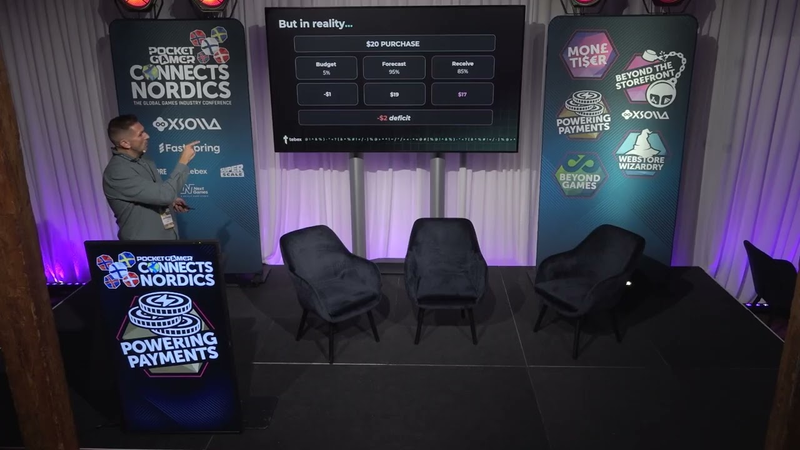
7 takeaways- 01Publishers typically keep only about $14 of a $20 battle pass sold through app stores, while D2C can recover roughly $19, and publishers reinvest these savings into live operations.
- 02Most web stores underperform because they are built as static projects rather than optimized, conversion-focused products, so teams should treat them as products in their own right.
- 03Design web stores for moments rather than journeys, with exclusive content and frequent updates tied to in-game events.
- 04Localized payment options matter greatly: a Japanese publisher offering only card payments missed a large audience, and adding the PayPay e-wallet moved about 80% of users to it and brought roughly 40% new buyers.
- 05Link-outs sent from high-intent moments, such as running out of lives, produced a reported 78% first-purchase rate, though they are straightforward in the United States and need more regulatory work elsewhere.
- 06Distribution through about 100 partners, including e-commerce resellers, super apps, telcos, banks and physical retailers, extends reach, with some publishers reporting revenue increases of 200 to 300 percent month-on-month.
- 07When entering a new region, examine payment preferences, digital purchasing habits, and whether players respond more to value or lower prices.
Ask AI about this video
Transcript
[music] [music]
game, 100 markets, why global D2C is harder than it looks. We welcome our speaker upon stage.
Hi everyone. Can everybody hear me well? I assume so. Then let's start. Um So my name is Daria. Today we're going to talk about triple play for revenue growth, which is a title to explain the framework that we use to talk about D2C in a strategic way.
Now maybe a first I'll I'll talk a little bit about my intro, right? So where I'm coming from. I spent around 10 years in payments at companies like Wirecard, Klarna, and Zalando, which meant I was talking with not just gaming brands, but also all kinds of digital brands and helping them grow internationally. Most of the time, you know, when you're in an international brand, you have a local team and not a lot of resources to of course localize all of your experiences, so these are the learnings that I'm bringing also to the gaming industry. Now at Zalando, I was actually on the buy side and in your shoes talking with different payment providers, so I know first hand what it's like to talk with payment vendors and what is important for you guys. So maybe a quick show of hands, who here has knows about Coda? Just raise your hands. Okay, nobody knows about Coda. Let me then the next 30 seconds are for you
guys. In a nutshell, what Coda does, we we help your players reach we help your games reach global audiences. So we make sure that players worldwide have an ability to pay for your content exactly the way they are used to pay for it using their own payment methods, using the services where they typically shop for digital content. And this could be anything from a local reseller, maybe even a streamer in their websites. So we've been around for a very long time now. You might know us from running web stores like Call of Duty Mobile and EAFC along with other titles. We've been around since 2011. We're 600 people company and we work with more than 300 publishers worldwide on developing their D2C strategies. We help you reach more than 80 markets worldwide, which you can see on the slide here through payments or web stores or something called third-party
distribution. You will see this slide here, which is an overview of our solutions and I promise you this is not a sales slide even though it looks like this, but it does set the scene for what I'm about to talk about today. In a nutshell, we do payments. So we help your your players pay in their preferred way and we also help you to reach all the paying audiences worldwide, which could be reached through the web store or through third-party reseller networks. And we do that to make sure you get more out of each player and more revenue than you currently do through the app stores. Now I will not speak too much about why do does D2C matter. I do think the whole track today is about D2C. So everybody knows the math quite well, but just to reiterate it on a $20 SKU, the the bundle, let's imagine a battle pass, you
only get back around $14, which is of course not ideal. Uh with D2C you can recover way more than that, so you get back around $19. And what a lot of uh publishers that already run D2C do, they reinvest these earnings back into the game, back into the live ops, the offers, uh the team. And you can uh quite frankly uh frankly do a lot with that money.
[snorts]
But what I want to spend a little bit more time about today is uh talking about why most web stores in existence today plateau or do not work that well.
[snorts]
Um we've noticed that a lot of different studios are launching the web stores. And then the the real uh work is basically done on their side. But what we also notice that the right web stores that generate up to 50 or 60% of some publishers' um overall revenue, they are built for conversion. They are built to
um to localize the experience for player in each individual market. They are also um operated maybe not daily, but weekly and sometimes uh monthly. What What we mean by that is that we optimize uh or our publishers optimize the content and make sure that it is in sync with what is happening inside the game. Now, um what we also realized quite quickly is that existence does not mean performance. If your content is not interesting enough for the player to come back to, you will simply uh not convert that user uh in the next stage. Now, that's why we came up with something called triple play, and it's very conveniently maps into three solutions that we offer. Um and that is web stores, link outs, and Coda distribution. So, I will spend a bit more time on um what we consider to be an effectively operated web store
and how everything uh works together with uh Coda links and distribution. Now, again, we talked about this uh already, but the right web store is always built for conversion. You have the right bundles, you've got exclusive, you've got the right content mix to make sure the player either reaches the web store or keeps coming back to it. Now, of course, the hardest dollar that you will ever make when it comes to the web store is the first dollar uh from the from the user who just discovered that web store. So, um it's important that your content is interesting enough and it's optimized for the local audience. Now, some Western uh markets would prefer the content that gives them more value for for their dollar. Now, when we talk about emerging markets, for example, LATAM or Southeast Asia, this is where it's important to make sure that uh some of your offers are actually cheaper um and more interesting for the user to
actually convert. Now, uh when I say operated day-to-day, we've we spent some time on this already, so it has to be uh constantly renewed. You need to make sure that the offers are interesting. When it comes to localization, localization is not just about the language, right? To give you a very specific example, and for a lot of publishers today, uh Japan is one of these markets where they either try to get into or are trying to crack and or already operate in and have a big player base. In Japan, people do not pay using uh cards as much as they do in the US or Europe. Uh in Japan, people pay with something called PayPay. It's a local e-wallet that people really uh use quite a bit when it comes to digital content. So, we work with a publisher uh that already has a web store, uh but they were working with a provider that only offered cards. Now, the problem with that is 100% of their checkout was just card-based, so um they were missing out on a lot of player base
that just simply does not use cards. Uh we enabled PayPay for them, and around 80% of these users migrated to the in wallet. Now, it's not just about the migration. What this also brought is about 40% net net new new users on the web store, which mean meant the users who never transacted on the web store before. This is what we call a real incrementality and why the D2C story in emerging markets actually makes a lot of sense. But, web stores do not convert in isolation, right? The number one problem with web stores is that your players need to know about them in the first place. You can run marketing campaigns. You can do paid ads. You can work with with streamers and creators in order to make sure that your user base knows you have a web store, but one of the most effective tools for that is actually a link out. Now, how that looks in practice and we've got a video for that
one. I will show you in a second. So, imagine you've got a game, right? Where you can present the following thing, right? You can visit the web store. Let them know that you have a 20% off first purchase on the web store and it can lead them actually directly to your existing web stores. Now, the interesting thing about this one is that by the way, you can scan here to explore one of the web stores that we operate. Um but the interesting thing about that is that you can link out not necessarily to the payment page all the time, but you can also link out to the web store. It will depend on the market because of the regulation, but it will also depend on the type of game that you have. For high intent moments or at the point of reward or at at the scarcity event, for example, your player is out of lives or out of moves. I do think link out is a great way to
capture that demand and make sure that someone transacts. As an example, you can say, you can buy in app one life right now for $1 or you can transact and get two lives outside of app for the same $1. So, you get more value out of the same uh offer essentially. And again, when it comes to uh Link Out, it is a conversion play. It helps you to get that first dollar of um of revenue from the users who never transacted on the web store before. Um and uh as you can see here, one of the number looks particularly interesting, which is a 78% first purchase Uh this is basically showing you that this um uh the Link Out itself as a product helps you convert users that never transacted on the web store before. Uh so, together with the web store, this works really well. Again, there were a lot of talks today about regulation. Uh our clear recommendation is that you can currently do this in the United States
quite easily without any um you know, entitlements that you have to sign up or something like this. So, you can clearly do this in the United States without any breaks. So, a clear go ahead. Um and in a couple of other markets, it's a little bit more complicated with that. But again, there are companies like us that can help you get get around that and um help you establish this uh D2C lever. And what happens when it's done right, you convert that high intent traffic into the web store or actually directly into the purchase as well. And essentially, what I mentioned is that you get the savings that you can otherwise um invest into better offers and better better live ops, too. Now, the last thing is uh the pink uh basically bullet that I share shared before. It's quota distribution. And this is something that is quite uh rare to see at this stage, uh but you are all quite familiar with it. So, we work with a lot of different
partners to make sure that your web store and that your game performs really well and that you can capture any user in the world that otherwise either doesn't even know that your game exists or does not uh know that your web store exists. And we do it by helping publishers and different studios to partner up with the following kinds of companies. So, we will talk about payment partners. To give you a very concrete example here, imagine you run a marketing campaign where you say, "Hey, if you make a purchase using your MasterCard or using a PayPal, you get 10% back as a cashback, right?" All of these, let's say, marketing levers are available as part of what Coda does, right? So, you can think about different campaigns with different payment channels. And oftentimes they're willing to also help you with promoting your
game in their in their marketing channels as well. Now, when it comes to industry partners, a great example here would be Unity. For those who build their games on Unity, we are one of two payment providers that are available and in in-app payment SDK at the moment, so you can easily test Coda as one of your payment providers and link your users outside of the app. There's also voucher voucherization. This is something we help publishers do in order to enable gifting experience. So, how many people I know that give their kids like a Brawl Stars gift card or something like this. This works extremely well for for that use case. And then we have something called distribution. And to give you an idea what distribution means at in Coda context, we work with around 800, sorry, 100 partners worldwide. And these could be anything from e-commerce merchants, like you can see here G2A and
Lazada, for example. Those are resellers of gaming and generally speaking digital content. You have super apps and e-wallets. You've got telcos and that are huge channels in Southeast Asia. You've got physical stores. Imagine all the times when you were close to the checkout and you saw some gift cards or vouchers that you could purchase there. We are integrated with all of these guys and of course banks, rewards, loyalty programs, influencers and all that. This combined network is allowing you to get the reach of up to 800 monthly active users. So you can imagine when you have a a game or a voucher that you would like to distribute throughout this network, it can reach players that would otherwise never even knew about your web store or the game. So the value of this network and the work with partners is is quite quite big.
Now, again partners partners unlock what you cannot build alone. Um, some of our publishers saw over 200 and sometimes even 300 revenue increase a month-on-month before and after enabling distribution because you can imagine when you are present in more services, this brings you a lot of reach that you otherwise would have never gotten. So, yeah, that is what I have for for today. Just maybe spending 1 minute here again. One of the ways your voucher for example, imagine you are you have a voucher product or a gift card that you can basically create and distribute through the network. What is very interesting about how all of this works together is that this vouchers typically need to be redeemed somewhere. And if you have a web store, this is something that can bring you that first dollar of of what we call TPV
right or first dollar of revenue and feed into your web store. So the next time that user will come back, they will come back to your web store and not to that voucher website where they actually got that content in the first place. Now, if you leave today with three ideas or three main points from today's session is that you should treat your web store like a product and not a project, right? Always think about why would anyone come back to it and why would anyone transact to it? Add it. You have to design for moments and not journeys. What we mean by that is that you can remove or the friction for the user by offering them the best offer there is possible and you can also remove that friction of him or them even finding the web store by using the link outs. And as a third lesson, you can use partnerships to supercharge your growth
and allow that reach to to reach your game essentially. Um yeah, this is a link to our web to to our white paper about D2C in general, but I will be here for the remainder of the day and if you have any questions, I am ready to answer them today. Thank you.
[applause]
Do we have any questions? Any questions? If not, I do. Um Uh can you hear me okay? Yeah. Um so like just out of curiosity um oh, thank you. Just out of curiosity um you mentioned obviously like Coda has helped a lot of different studios, a lot of different publishers. Where like when you work with somebody new, where do you sort of start because you said obviously it's you know, it's D2C web stores, it's building a a product. So what is the starting point? Do you look at you know, is it a mobile game? Is it a PC? Is it console? Does the genre matter? Like where
Yeah. Where do you start with that sort of product research that would usually go into something like this?
Uh thanks for the really really nice question. Um so we we actually started with a goal, right? The goal of the web store is almost um you know, I I would be definitely uh wait a minute. I would be lying if I said that the first uh idea of many studios is uh not the revenue that they can recover through the D2C. Uh so this is definitely number one um goal, but essentially, you know, there should be a strategy that um that you run and even before you launch a web store or any kind of D2C, you have to think about um what what is it that you want to reach? Do you want to own a player relationship? Do you want to establish basically a strong channel, a strong loyalty sort of club, so people would come back and transact on that web store. Is that uh going to become a whole ecosystem of things, right? Like a great example uh of existing publisher would be uh obviously Rovio, right, with Angry Birds
and with the Red Club. This something that works really well, so people know this is a destination where they can um buy uh the best possible uh content from the player, but where do you start? Definitely, the genre is number one thing. Uh not uh web store will not work for everyone, in my opinion, right? Uh link outs will also not work for everyone, so you need to pick the right D2C um lever to use, depending on the type of game you have. So when you when we talk about something casual, right? You are optimizing for moments, you're optimizing for high intent uh moments in the game where the player is out of lives or out of moves and they are very likely to transact. So uh for that, link outs are working really really well. Now, we work with a lot of uh FPS type uh titles, right, which have quite a lot of different content types. They have battle passes, they have hard currency, they have points and coins and all of this. Um even, you know, the the in-game items or or gifts. For so for them, web store makes obviously a lot of
sense because players are always on the lookout for something special um to buy, right? For some, maybe collectibles as well. This is uh very very interesting way um to promote also the web store, right? There should be something exclusive there and there should be a reason to uh for you to come there in the first place. So, the goal uh I will start with the goal and what kind of genre do you have and um also where your players are. Where is your the majority of the paying audience everywhere for the majority of publishers worldwide would be US and Europe, right? But what is happening after that, right? Do you have players in Japan? Do you have players in South Korea, Brazil and stuff like that? So yeah. That's that's the framework.
Yeah, that was a great response. Thank you. One of a really really quick question. It kind of ties into what you were just saying anyway and you mentioned earlier. I think you made a really good point about localization because I think sometimes when people think of that, you do just think of the
simple thing of like, you know, currency. Okay, make sure we can, you know, have our product work in a different in a different place. But again, in terms of that localization, is is that just again, if someone is thinking of branching out into different territories, what would you say they need to understand most? Because obviously there's regulations in different places that you need to be aware of. But you made the really good point about Japan. I didn't know that about the the PayPay thing. So as soon as that store started offering that, the the numbers went up. So what would you say to anyone sort of looking at different regions? What are the main things that they need to be looking at?
I would say so one thing is payment preferences. So how people pay. Second is how they shop for digital content. So most of the time, you know, in Indonesia, not a lot of people actually go directly to the App Store because they simply don't have the access to Apple or Google Play. And the yeah, the payment preference and and the digital content preference. And the third and last thing I swear is what is the offer that the users in
that country are the most responding responding to. Is it a better value offer or is it a cheaper offer? And that that informs your D2C strategy.
Amazing. Thank you.
Thank you.
[music] [music]
I'm falling. I'm falling.
[music]
Summary
Daria Berdnikova of Coda argues that direct-to-consumer (D2C) sales are harder to execute globally than they appear, and that most web stores underperform because they are built as static projects rather than optimized, conversion-focused products. She frames Coda's approach as "triple play": web stores, link-outs, and distribution through partner networks. She notes that publishers typically keep only about $14 of a $20 battle pass sold through app stores, while D2C can recover roughly $19, and that publishers reinvest these savings into live operations.
Berdnikova stresses that successful web stores need localized payment options, exclusive content, and frequent updates tied to in-game events. A Japanese publisher offering only card payments missed a large audience; adding the PayPay e-wallet moved about 80% of users to it and brought roughly 40% new buyers. Link-outs, which send players from high-intent moments such as running out of lives to the web store, produced a reported 78% first-purchase rate. She notes they are straightforward in the United States but require more regulatory work elsewhere.
Distribution extends reach through about 100 partners, including e-commerce resellers, super apps, telcos, banks and physical retailers, with some publishers reporting revenue increases of 200 to 300 percent month-on-month. Her advice for entering new regions is to examine payment preferences, digital purchasing habits, and whether players respond more to value or lower prices. She closes by urging teams to treat web stores as products, design for moments rather than journeys, and use partnerships to scale.






Comments