Loading the document
1 free read left. Create a free account for unlimited reading + AI research.
Create free account
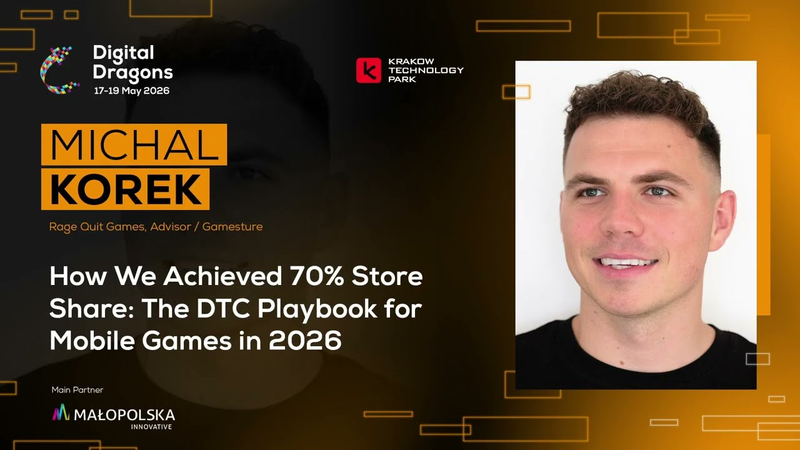
Session: Behind The 26%: How Payment Links Turn In-Game Offers Into DTC Revenue - Miikka Luotio.
Key insights
Distilling the key insights…
Ask AI about this video
Transcript
[music] [music]
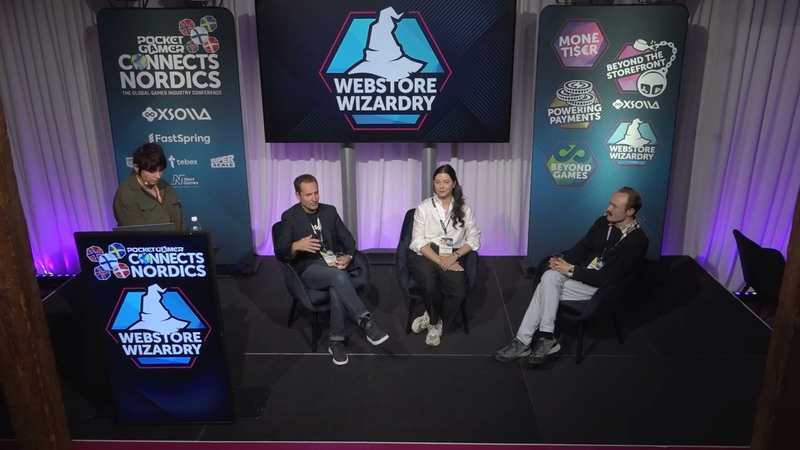
Uh next session with our next speaker. So, this one is behind the 26% how payment links turn in-game offers into D2C revenue. If we could welcome our speaker up on stage everyone with a round of applause.
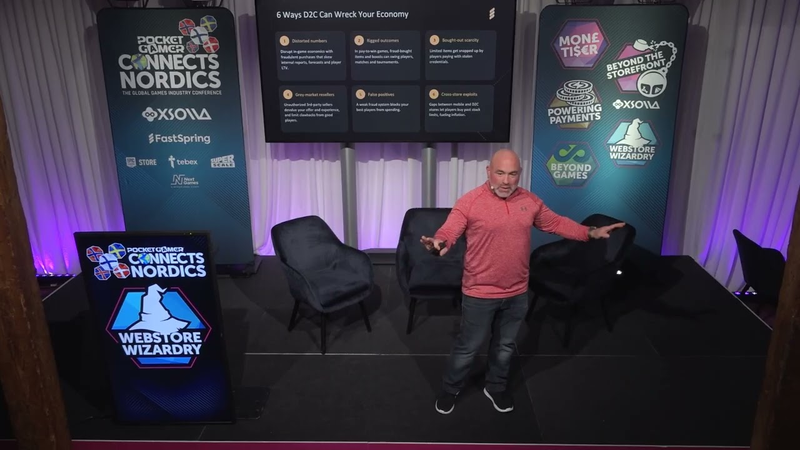
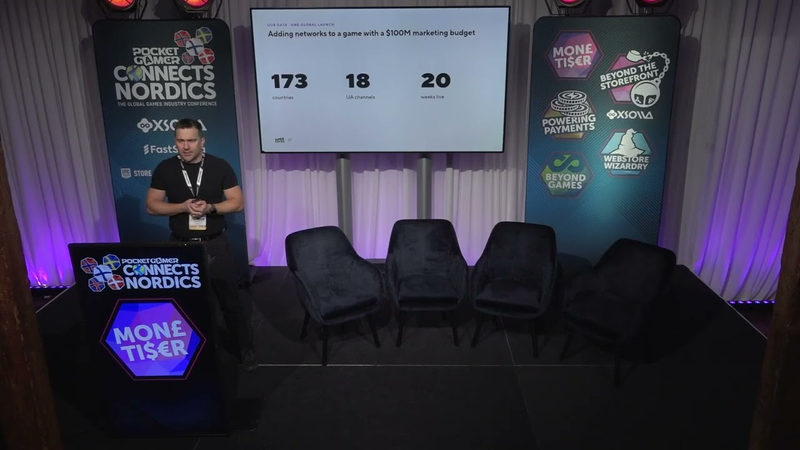
Hello everyone. Hopefully everyone can hear me. So, nice to see some familiar faces in the crowd today. Um amazing talks about web stores today. So, uh that's a good follow and and uh today's topic we're going to be talking
a bit bit more about direct payment links. So, this is not a web store, but it's essentially uh going around the the App Store fees and doing direct uh off-platform payments in your games. Um and I'll take you through some numbers and learnings that we've already published via individual case studies earlier this year. So, check them out in our blog at appcharge.com. So, I'll be referring to a lot of those case studies that you can just go there and check it out for yourself. A little bit about me. So, my name is Mika Luoto. Um I work as VP Europe for Appcharge. Um I've been working with mobile games for 20 years or so. Uh a lot of it here in in Helsinki. So, it's always good to be here. Uh come back and do a talk and see some some familiar faces. Uh whenever I get a excuse to come it's good because I live in Barcelona. so not so many awesome saunas there. So, happy
to be in Helsinki this week. Beautiful weather. Um Yeah. So, let's move on. All right. So, a little bit about App charts. So, we are a mobile gaming only focused direct consumer platform. We raised about 89 million dollars to date working with some of the biggest players in mobile gaming today. Um and latest news actually from Gamescom. Um we won the best payment provider award 3 years in a row last August. So, that's awesome. Um that was Pocket Gamer Awards. So, that was great. Really excited about that and proud for the effort that our team put in. All right. So, let's dive in. Uh today's topic, payment links. So, how many here in the audience is familiar with the concept of payment links? I know some may use some different wording. Some use direct payments, pay on web, and so on. But, hands up who knows what is a payment
link. All right. Okay, one. That's great. So, I'm actually uh you guys going to learn some new stuff. So, that's awesome. Great. So, to put it in a nutshell, it's quite simply payment link is a offer inside the game um where the player pays on a third party checkout instead of Apple or Google's checkout. And quite often publishers show added value or discount to incentivize the players to make that purchase. So, essentially, this is a way for publishers, you know, to save margins. So, normally they pay 30% on Google and Apple, right? So, since earlier last year, it's been possible to do direct payment links and direct checkouts from your game offers directly. Um and that's been an effective way for a lot of larger publishers and smaller ones to scale um their revenues beyond the the platforms.
Okay, so um I want to take you through some some of the key learnings here. Um so first of all, this is one case study just referring to one of those uh that you can find in our blog. So we have multiple ones about payment links that were released this year. So it's a it's a mix of those numbers here. Um but if you want to check the individual one case studies out, go ahead uh upcharge.com. So the recent example here that I'm referring to is basically a decade old game um and they managed to bring new life, new revenue source by using payment links. So they launched payment links, they managed to hit 26% within just 2 weeks of launching. Um and I want to kind of explain how how did what was their approach and why I think it's interesting. And there's some learnings out of that. Um they also doubled the conversion rate within the first month and nearly 60% of their players made a more than one purchase, which is very encouraging. Um
Okay, so launching is the easy part. The interesting story here, in my opinion, is how a lot of our publishers that we've seen is in particular in this case, they went all in with the exposure. So they were basically showing the payment link offer to all of their players at day one, right? So so let's zoom in that story because there's a lot to learn out of it, I think. Um how did they do it? So besides exposing that those offers to all of their players, they added a 15% value proposition to the players. So it's like they they were getting 15% more value uh when they were choosing to pay on the payment links and not through the the the platforms Google and Apple. Um they wanted to see rapid rapidly whether the payment links convert and it's kind of like a proof case for them whether their title uh is going to sustain
direct-to-consumer in a long run, right? So, it was like, "Well, first of all, it's an old game. We want to see if our players are willing to convert in direct-to-consumer before we engage and start building a web store." So, this was really like dipping your toes in the water kind of experiment for them. So, I think it's exciting. So, level of direct-to-consumer exposure is the real decision. So, I want to be clear here. There's no right or wrong way to do this. So, it's just a perspective. So, we've seen both. We've seen publishers gradually ramp up the exposure of those direct uh link offers. And then some go all in, basically showing it to their whole player base right away. So, those are like vastly different decisions. And we see like a mix of publishers doing either they do it over period of couple months, couple weeks. And then some do it like all in, almost like a
burst test campaign just to see how they're throwing spaghetti in the wall and and seeing how it sticks. Right? So, it really depends on your game, the age of the game, the demographic, and much more. Okay, so there's three ways to introduce payment links that I think three key ways. There's There's more. You can do variations of all of these or try bunch of them together. Um and we see publishers do that. So, first of all, I I'd say the most popular one is using an existing offer pop-up, adding a second call to action with an added value prop or discount. And that's quite often publishers test that they they test basically usually they start by testing whether the discount or added value is going to convert better. That's usually one of the first things that you want to check out. Um and it really depends on the game. Like discount versus added value can be just genre specific, can be based
on your game demographic. So, this changes a lot and it's something that I would say unless you test it, you won't know. So, second, most of the publishers test the toggle uh in the games, in the in-game store itself. Inside the in-game store, they test the toggle where you click that toggle which is basically turning all of the in-app purchases within the store to direct payment links. Um and that's really built for repeat buyers. So, it's optimizing for repeat buyers. Third, um after buying an in-app purchase, the player gets a second after they engaged to buy an in-app purchase, they get a second pop-up. And that second pop-up shows a payment link offer, right? So, that's also another way we've seen publishers do that. And it again, between publishers and between games varies a lot. So, I'm just trying to give you guys a picture of how our publishers experimenting because I think that's the that's the key here. Like there's a lot that we've learned
out of these experimentations and overall, I think it's interesting to see how it's going to evolve going forward. All right. So, in this case that I'm referring to, settling into the quarter of the wallet, uh how did that look like? So, like I said, it was a very fast ramp up since they showed those payment links offers to all of their game population. Um in iOS US in this particular case, um they reached 26% and stabilized very quickly. Right? So, all the players seeing the offer helped the publisher validate the full potential of their player audience being, let's say, ready to convert to added value proposal and use additional friction, which is direct to consumer always has additional friction. So, this told them that, hey, well, if we invest a little bit of time and effort building a web store later on, it's going to make sense.
Um and for them it was like a good way to also understand what the value proposal was and the ideal way to trigger people's purchase behavior within the game. All right. So, the real habit. 93% payment success, 70 or 57 bought again, and zero chargebacks. So, that's really that was really encouraging launch because nobody was thinking it's a oh, I I lost money. I want my money back. No, people were happy and we saw they even saw like um an 11% of of whales just doing a lot of repeat purchases. So, it's definitely a whale channel even though it's just payment links because they're more value sensitive players. So, to hook up into the web store conversations, that's definitely the audience that you might want to push later to a web store, right? So, that's getting those people into a web store might be very lucrative at a at a at a at a scale.
All right. So, what did payment links teach us in 2026? So, first of all, launching is the step one. Like using payment links as a way to dip your toes into direct to consumer is a easy, quick way to understand how and what sort of value propositions you could drive potentially in a web store as well down the line. Um and how how how you can scale that. And second, make the path simple and familiar and the option can happen within weeks. If you go all in, you have those two choices. You go all in or you you do it slowly by particular cohort. You just Some publishers choose to only show those direct links to the whales that are like on on a level 300, while some show it to everybody when they want to make a purchase. So, you have to choose that starting behavior, but you can also test that later. You can say, "Oh, well, the initial results were interesting, but we also want to see how
specific player cohorts behave uh if you give them even higher value proposals." Um and give the players an incentive to change. So, that's I think important is that the player clearly feels there's an added value um that you're not going in with like, "Hey, it's 5% extra." Like that. You have to find the sweet spot for the game. Every game is different in that sense, but usually, actually, we're seeing an average range of 15% to 20% seems to be like the Goldilocks zone for the value proposal, at least for payment links. Um and that's completely different for the web store, like uh the gentleman here before was mentioning. Um And the first purchase is only the beginning. So, that's where the the the the data gets interesting when you start going deeper into different player cohorts and groups by spender level. That's where you get really interesting data.
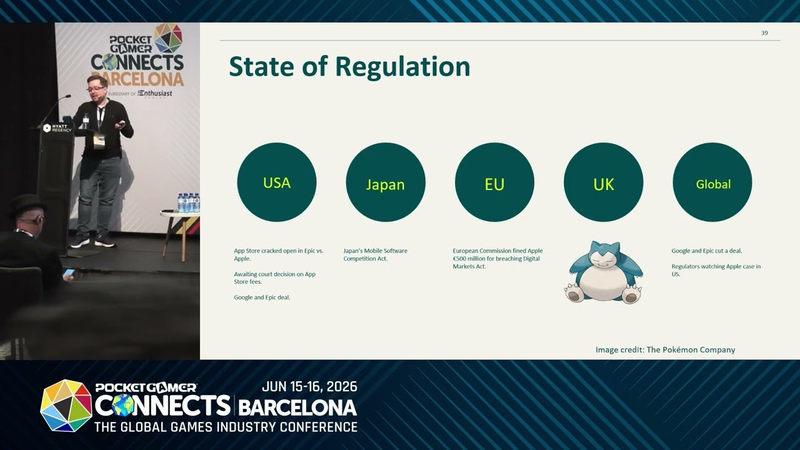
Okay, so I think the burning question a lot of people are asking me, mostly I talk to publishers, they're like, "Well, everything's changing a lot." So, it's still new. A lot of changes. Keeping up with those changes can be tough. Uh so, obviously, like I got to insert here like read our blog because we're trying to keep up to speed on on all those changes as well. And read LinkedIn, like check couple bookmark couple websites of uh providers and then try to try to follow the regulatory change updates because it can be complex if you go through court documents yourself with I don't know AI and try to analyze those changes but there's a lot of companies in this business that are trying to make sense of it for you so you know that's my recommendation. To recap the situation today payment links is currently a 0% commission from for the platforms or iOS US and um due to recent change actually on on Google they're taking I think roughly around 20%
um where it used to be 0% earlier and they have this ECL program that you have to enroll to if you want to try payment links. It may still make sense I mean is this a far tougher margin to work than zero but uh at the same time iOS still open but the jury's still out on the court case with Epic and Apple of course so you need to keep a close eye on that. I don't think the party is going to last forever. It's going to change. If the party is going to keep on going it's not going to be the same it's probably going to change. It's hard to speculate. Uh so my only advice is keep up to date on the news. And finally I think the most important link here is once you gain that 26% you don't want to get you don't want to lose it like your your company board your leadership your investors they want to see that revenue not decline if you gain that with payment links for example. So the way to lock that in is using a web store long term because if you get your players
into the web store the earlier you get them while it's still possible to directly link to the web store especially in the US iOS you can also do that and you can really get your players to understand that there's a destination where no matter what happens they will get better value propositions discounts more interesting bundles that are personalized to their offers. But that's another talk. There's a lot of great talks about web stores, so I won't steal that thunder. But really, I feel like payment links is a way to look at this. Direct to consumer is a way to test and understand how your how your players are potentially going to behave. What are the value propositions? What's going to trigger them? And what's going to make them come back for more? And that'll help you build a better web store. Thank you very much. Any questions?
[applause]
Yeah, it's hard to hear. Thank you.
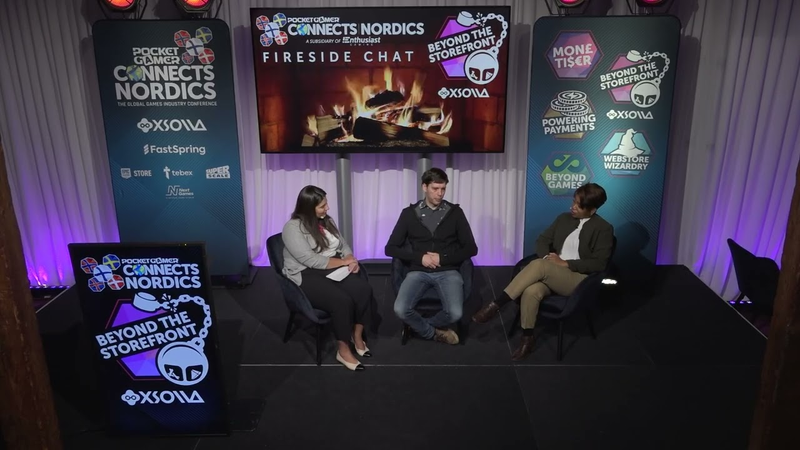
Thank you for the talk. Uh so, I wonder how you market the links for the special offers. Uh let's imagine we have a game where most of the revenue is from the from the special offers, not from the gem packs and all those base things we have in the store. How you would approach that to to to show them the value? Just give the uh the 20% you mentioned in the hard currency value or maybe some other way around. What's the best practice you saw?
I think like I think there's two things like we see payment links perform super well with in-game events. Like if there's a special special event or something. What I would propose to do is that you amplify an existing campaign by an extra added value. Like let's say you
have I don't know, a Christmas special. Uh so, there's a Christmas bundle, right? Um so, using the payment links you can do is you can give like 15% added value or 15% discount. I think you just always test both, discount versus added value because you never know which one's going to convert better, but I feel like one of the things we didn't have I didn't have in this presentation is really the events. How those are like perfect entry points to amplify existing in-game events because you're increasing the ticket size of those players and then you can learn more because you usually get just more spending during those peak events, different holidays for example. And that basically gets you more data. So, you get to statistical significance easier and it'll be easier to see how do you milk the most out of your your game events.
Okay, great. I will see that with them.
Thank you. That was good great question.
[music]
Summary
Miikka Luotio, VP Europe at Appcharge, explains how payment links let mobile publishers sell in-game offers through third-party checkouts instead of Apple's or Google's, bypassing the standard 30% platform fee. Publishers typically add a value incentive, often a discount or extra in-game currency, to encourage the switch. Appcharge's case study of a decade-old game shows the approach working: the publisher exposed the payment link offer to its entire player base on day one with a 15% added-value proposition, reaching a 26% share of revenue within two weeks on iOS in the US. Conversion doubled within the first month, 93% of payments succeeded, nearly 60% of players purchased again, there were zero chargebacks, and about 11% of whales drove repeat purchases.
Luotio outlines three common ways to introduce payment links: adding a second call to action on an existing offer pop-up, a toggle in the in-game store that converts all purchases to direct links (aimed at repeat buyers), and a follow-up pop-up after an in-app purchase. He stresses there is no single right exposure level, since publishers choose between gradual cohort rollouts and all-at-once tests depending on game age and demographics. He suggests an average incentive of 15% to 20% as a sweet spot, and recommends testing discount against added value.
Looking ahead, he notes that payment links currently carry no platform commission on iOS in the US, while Google charges roughly 20% under a new enrollment program. Because the iOS opening depends on the ongoing Epic v. Apple case, he advises publishers to build a long-term web store to retain gains. Payment links are best viewed as a low-risk test of player behavior before that investment.








Comments