Loading the document
1 free read left. Create a free account for unlimited reading + AI research.
Create free account
Session: What $100M Of Measured UA Spend Says About Where Profit Lives - Ivan Trancik, SuperScale.
Key insights
Distilling the key insights…
Ask AI about this video
Transcript
[music] [music]
Up next, I would like to welcome Ivan from SuperScale, who's going to be talking about what a hundred million dollars of measured UA spend says about where profit lives. So, please welcome to the stage Ivan.
[applause]
Thank you.
[snorts]
Thank you very much. Uh So, thank you very much everyone for coming on a PGC Nordics. Uh Although, used to be Helsinki sometime
ago. Uh and yeah, let's talk about what we've learned in the past year of over a hundred million uh spent, where the profit lives. Uh I'm Ivan Trancik. I'm a founder and CEO of SuperScale. Uh actually, we've been around so a founding company uh about ten a little over ten years ago. Uh and the mission, although the tools changed, was the same for the whole time. Uh our goal was to help gaming publishers to understand and unlock the full business potential of their titles. Uh we've done it what we call holistically or a full funnel. Uh we've looked at ad monetization, in-app monetization, distribution, marketing. Basically, anywhere where games makes or spends money, how to find these lower hanging fruits or these untapped unrealized potential that could be unlocked and focus on those which with the least amount of efforts brings
the highest profit returns and doing so. And obviously the industry in the decades changed quite a couple times. And about 3 years ago, 3 4 years ago as you know we've seen all the COVID kind of die down, the the the IDFA and the whole privacy data efforts took place which shook the whole remarket. We start focusing more and more on the marketing and the user acquisition side. And and we discovered what what may be some less obvious way how to really boost profits for a mobile game is yeah, look at these alternative UA channels. So, let's go into it. So, uh in if you look at the market, uh it's about we're talking about 25 billion in mobile marketing spent spent on games only. Uh It can vary a bit. These these are numbers from AppTweak.
But out of this 25 billion over 80% again, vary a bit but this is kind of consistent with our data as well. Uh more than 80% is spent only on top five networks. Uh obviously the big two, Meta Google, but TikTok mobile app loving. This is where most of the spend lives right now. And the the rest 18% which we're still talking over 4.5 billion is spread across more than 35 uh alternative networks which apply. So, obviously from the pure spend perspective they seem much smaller. And what's also interesting if you look at the data from MMPs and also from from our own data, it's about like average publishers or medium publisher spends on a little bit over five networks at the same time. So, again, just just kind of kind of confirms the the usual case uh that these top five networks are very much dominant in the space and the rest
of them seem to be almost like afterthought. What was even more interesting that it seems the number went down last year like from the adjusted data but more or less it stays consistent about five networks. Most of the spend most of the company just spend on this top five. So, what are these alternative networks that we call them or those that are not top five? Uh there is actually quite a few of them but we can pick them in different categories like from rewarded offer walls, in a bad networks, programmatic DSPs, retargeting, OEM, connected TVs, some smaller social networks, search and what not. And what's even more maybe kind of a confusing is that many of the networks offer different services and products in different categories as well. So, it's a it's a quite a quite a bit challenging just to just to map this space as as a publisher
from the get-go. Um when we asked our clients and also through some marketing execs on LinkedIn like why they are not really spending even at the substantial levels on more than five networks, there are some of the reasons that that kept repeating over and over. So, first of all, Google and Meta already covers it all like, you know, why should we bother? Uh the inventory is too small, you know, if we target the same players over on the on the bigger more established network, you know, why to target target target them again on the small ones? Uh surely there's a reason why they're small because not only they have small inventory but also the returns will be smaller and it may not be justified. So, long story short, seems like a too much of a hassle for too little of reward. Um anyone else in the audience that feel feel similarly about networks?
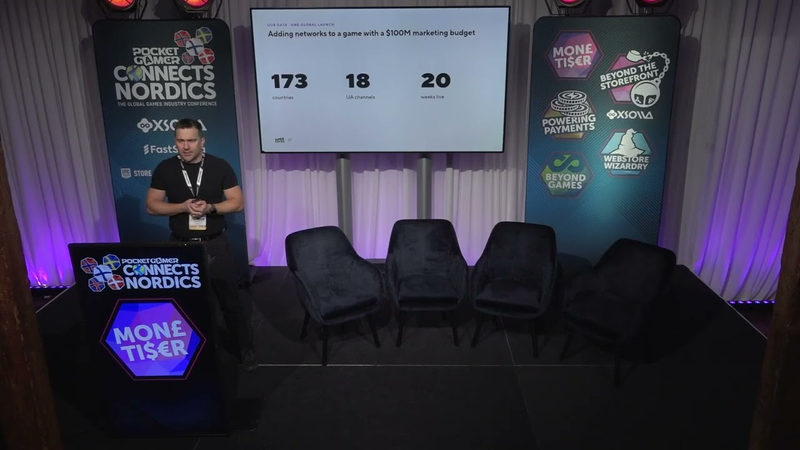
There's at least one. So So, yeah. And obviously for those even brave enough to start start testing some new ones. Oh, yeah, we tried one or two. The results were not there. So, again, it just confirms that, you know, it's not not much to do here. Well, this is the part which got us very intrigued because when we start looking at the space about 3 years ago, we see something quite different. And again, across the genre, across across level of spend. But we've seen And again, we'll we'll we'll take a look at one one particular example already very much established product over 100 million of yearly spend. And we'll look at the kind of a worldwide launch across basically all the countries. 18 year channels and basically 20 weeks of data. How what's the what was the
split? And essentially, uh the first month when we start adding these alternative networks compared to top five, out of And it was just 4% of the particular monthly budget. We basically posted a profit of at our 36% of the expected profit came just with this 4% of overall budget spent. It was like, okay, sounds sounds encouraging, but I know what's Let's let's transfer some more budget next month see where it goes. Next month, just 8% of budget was responsible over 50% of the global profits across all the board. Um right now, uh like when we look like little bit deeper, like what performed really well. Uh and we took my time Google performance as a benchmark. Uh for example, for this particular
title, connected TVs and programmatic deals these at scale out performed my time Google almost 2x on return on investment basis. Uh obviously retargeting when it was plugged in later uh did its heavy lifting as well. Uh although on a much lower budget, but again, just an example that that this notion of uh yeah, I'm spending only top five and and there's not much for me to do anymore. Uh maybe maybe little little not reflecting actual state of the market. So, uh if you look at the overall overall spend like we we we start we launched uh SuperScale Media in early access with some of our larger partners about a year ago. And in a year's time, we consistently obviously this was one of the uh what I showed was one of the let's say more extreme examples, but even across the board what we've seen about 20% increase in budget on top of top five networks can essentially bring anywhere
between plus 50% or even double the existing profit on your marketing. So, again, we see this this disproportionate return on these alternative networks when executed right. So, this is about 80 180 million of annualized spend. So, the question is why? If you think about it, uh you know, all these all these reasons that we've showed couple of times that they weren't from like people who didn't know what they were talking about. They were like experienced industry execs and you know, I I would agree with them before we see the data similarly well. But when we were digging deeper and together with uh with the network partners and and with our own data, uh there's one underrated basically uh property of these alternative networks. You know, these big five networks obviously there are reasons why they're big five and we're spending on them, but this is also kind of their weakness in a
sense because who is spending on Meta, Google, TikTok like everyone and your grandma as well. Like we're talking not just all the gaming publishers, all the app publishers, all the e-commerce businesses, all the you name it, influencers, political parties, whatever. Literally everyone is spending there. So also you're getting squeezed as a publisher, you're competing with your bids against literally everyone. So there's something to be also noted that this is where where we see really big opportunity in this alternative networks because they may have more inventory, but this can be also and not everyone is spending there, but this is also a competitive advantage who figures it out because you're competing against less publishers. So if you find a good fit for traffic, you can disproportionately get higher returns. And this is where the whole kind of a idea behind having a proper
strategy on trying this alternative networks taking space. And by the way, you can see it in the industry like we're talking new I'm not even talking small, but I say medium-size ad network announcement almost every other month. If you see like a big publishers, anyone from Outfit7 and Wooden Spoon, they want to go out of basically doing reselling their traffic through a main through the main channels and rather sell directly through our own ad network. So I think what we're going to see is more and more fracturing the space and basically more and more these alternative networks available. So we do believe that every publisher should have some kind of strategy how to how to grow on these channels. But again, what is the what is the reason
[laughter]
why why still disproportionately few few publishers are using this to their maximum potential compared to what we think it's their actual value. Well, how how would you even start? Like okay, so it's nice that there are 35, 40, maybe 50
in a couple months of really like a kind of a solid mid-size plus I'm not even talking about some random startups with our inventory. How do you start? So again, number first thing, paralysis of choice. Like,
[laughter]
many publishers look at it I don't know if like I don't know, pick random, oh, doesn't work. Forget about it. Um so, that's a step one. How do you pick? First, friction. Second, okay, whatever, you picked one. Now, again, start engaging. It's a business relationship. You want to spend a lot of money. So, it's a back and forth. Uh you need to start with some with some form of IO. You need to set up some kind of contractual and commercial relationship. Takes time. Uh email first. Small company, but especially for the large ones. Uh third one, you know, credit lines and billing. Like, uh you can see some of this friction in a big networks like when they are kind of finally enable you to not to uh not to spend through a credit line uh through the credit card billing to your
credit line. Again, with these alternative networks, same stuff. Uh minimum commitments as well uh compared to some of the bigger ones that allow smaller spend. Uh a lot of these alternative networks require you to actually uh 500, 1,000, 1,500 a day as a minimum commitment even to start with. Now, technical integration. Everyone loves this before he wants to start spending. That's again, spend a lot of time and not doing marketing, but technical integration figuring out uh the the data performance, the creatives. Whatever is working on the social media on meta and whatnot may not work on some of these alternative channels or need to be adjusted. So, again, something to to think about. Reporting, data quality, and running it day-to-day. So, ultimately, repeat it for 35, more than 30 networks. Like, it's a it's a really really big big of deal. And uh this is one of the reason we've bet uh basically heavily on our new service
uh Super Me Super Scale Media, uh which uh which addresses all of these in one single package. You can start spending literally in a matter of days on any number of of networks you find fun. We have a lot of know-how already like which of them could be fit uh based on a simple export from your MMP on your past usually quarter of the data. We can already whitelist and shortlist and pre-assess what would be the best strategy for your game to start with and what should be the budget and what should be the goals to go forward. And again, it could be as little involvement as required. So, just budget, goals, and increase profits. So, have a look at if you're if you're interested into this space and we're wondering like what would be the good good way how to start to going scaling the spend beyond the top five, please check out us at the booth of Gamelook. We have two more colleagues somewhere
lurking around here. Oh, here.
[laughter]
Jamal and Sean is I guess at the at the booth. And yeah, let me know if you have some questions. Thank you very much.
[applause]
Does anyone have any questions for Ivan? We get a Is there ooh There's one over here. Yeah.
Hey, Frederick from Multilayer. I'm curious if you've done any tests on utilizing these different platforms except the top five. So, did you do a run where you essentially only did the alternative platforms? And what results did you see?
Mhm. So, great question. Again, we did not. And this is also what I'd like to emphasize. We're not telling anyone that
oh, please ignore the top five and just do the other ones. There's definitely some reasons why why we consider this as a topping up the existing strategy because again, whatever I showed here actually, these uh these parts uh or uh basically the the process of of onboarding new network Yeah, I'm not going to lie, it's really annoying.
[laughter]
So So uh more annoying than just to start spending on Meta or just to start spending on Google and so on. Also, there are higher initial budget requirements to even start with. So, for example, you can get some uh you can get some like reasonable results or early results from Meta or Google on much lower spend, maybe like maybe for some for some games or some application of games uh 500 or maybe 100 bucks a day. You cannot do it on most of networks. They won't even talk to you. So So uh so I'm not saying don't use the top five and just go on the small ones. Uh what we're more saying like yes,
first of all, figure out the top five and scale to reasonable level, but keep in mind that being stuck there, you're leaving a lot of profits on the table. Does it make sense?
Does anyone else have any questions? We'll get a mic over to you pretty quick. Our volunteers are very fast. Anyone have any questions? Don't be shy. Yeah, there's one over here.
Hi. Uh when should you start considering adding adding uh those other networks? Like uh should I go as a small um publisher with uh top five first and spend some amount and only then hit those other networks or just you know, go ahead right away?
Uh yeah, so that's a great question. So, I uh so I think the least reasonable budget for testing on these networks uh that
we're seeing is about maybe 15K a month or maybe 500 a day. Uh some require more, some some little bit less, but average like you should budget for one network uh maybe 10, but I would reasonably say about 15K a month uh to start with. So, generally, we see like a good point to be looking at it once you're spending about uh if you're going to to this uh to this kind of a 50/20 ratio that we discussed before, it's like when you're spending about 50k a month on a doesn't need to be all all the five. It could be just just meta magic the same and so on. It already shows like hey, there's some potential in this title. And and again, it doesn't mean that rest of the five could be a good fit. Some games which work well on meta won't work on TikTok at all. But I think about you know, scaling about you know, between 1 to 2k a day on one of at least one of the top five networks as a baseline to figure out if the game what's the what's the return. That's that's like a good that's like a good first step. So we have some data
and can start even figuring out what would be the good fit to test. Unless some very specific circumstances that we know that some network has some really really good inventory for this particular game. Um we still recommend to get some initial data points from these bigger networks. So then we have a higher chance to picking the right ones going forward. Uh does that make sense?
Cool. Can we give Ivan a lovely round of applause, please?
[applause]
Thank you very much.
[music] [music]
Summary
Ivan Trancik, founder and CEO of SuperScale, argues that mobile games leave substantial profit unrealized by concentrating user acquisition spend on the top five ad networks. He frames the market as roughly $25 billion in annual mobile game marketing spend, with more than 80% going to the top five networks (Meta, Google, TikTok, and similar), while the remaining 18%, over $4.5 billion, is spread across more than 35 alternative networks. Medium publishers typically use about five networks, a pattern he says has held steady.
Publishers avoid alternative networks for familiar reasons: the big platforms already cover the audience, inventory is small, returns seem weak, and testing has disappointed. Trancik counters with a case study of an established title with over $100 million in yearly spend, launched worldwide across roughly 180 countries and 18 channels. Shifting just 4% of budget to alternative networks in the first month delivered about 36% of expected profit. In the next month, 8% of budget produced over 50% of global profit. Connected TV, programmatic deals, and retargeting outperformed Google as a benchmark, with connected TV and programmatic roughly doubling return on investment.
He attributes the opportunity to competition: top networks are crowded with every type of advertiser, so publishers bid against everyone, while smaller networks let a well-matched game face fewer rivals. He says SuperScale's managed service, launched in early access about a year ago, shows that adding around 20% budget on top of the top five can lift profit by 50% or more. He cautions that alternative networks should supplement, not replace, top-network spend. Onboarding involves contracts, credit lines, minimum commitments of roughly $500 to $1,500 a day, and technical integration. He suggests a practical starting point of about $15,000 a month, or $1,000 to $2,000 daily on a top network.











Comments