Loading the document
1 free read left. Create a free account for unlimited reading + AI research.
Create free account
RuneScape's Rule: 70% Player Approval or It Gets Cut
Key insights
Distilling the key insights…
Ask AI about this video
Transcript
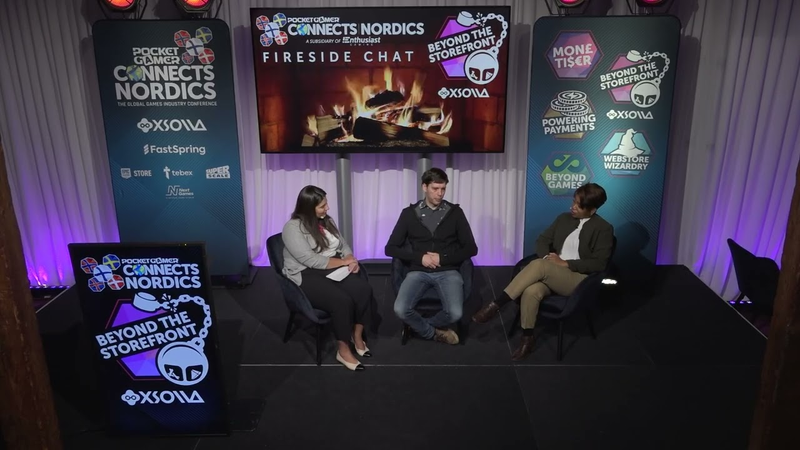
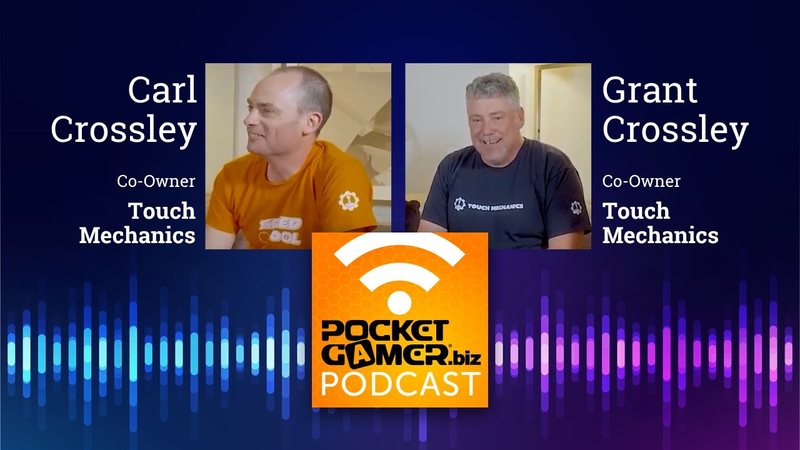
Welcome to the Pocket Gamer .biz podcast. I'm Peggy Anne Sauls, and we have with us Neil Neil. Um before we get to critique and how you're doing that, you know, Jagex, RuneScape, you know, it's important, I think, for publishers to have someone that when they're asking advice, someone who also knows it from their perspective.
Yeah, and thank you for having me, Peggy. Blessed to work on such an amazing game franchise with RuneScape for so long. I was there for almost 20 years, worked all the way through, you know, payments and pricing up to marketing, product management, analytics. I really was lucky to work with some great people, some great teams, and an amazing product and community. People say, oh, you've been in one one place for 20 years, you know, but I've worked on 10 games, 200 updates, you know, thousand people that I've interacted with. Blessed to have stuff like RuneFest, big fan conventions where we ran that for over a decade as well. Had
taken a family break with my children and wife, doing a bit of traveling, and now back with critique and really wanted to help other teams, other studios to make good decisions about the games that they're building, at the beginning of the journey or games that are already live that just need a little bit of extra support to last thing forever, right? RuneScape's celebrated its 25th year this year. Wouldn't it be great if there were more like that?
That's all about live ops and services and and continuity and not just content. Most companies, small, medium, and large, you're advising building rather than a hit machine service.
Everything starts with trust, and you know, whether it is trust with your friends, your family, that comes not something overnight. I think in the industry we're taking a little bit of that for granted over the last few years, and I what I really want to do is encourage more teams to really nurture that that behavior so that they really are not just selling a good dream, but they're actually delivering on it as well. If I look back at that and I'm like, okay, how could we have done better? Maybe I, others could have helped.
Just make the teams, make the studios think a little bit more longer term and provide as well for a bit a bit more space, a little bit more optionality so that they can have more ways to move around, make different decisions. We see downstream from that, right? People will play more, they'll stay longer, they'll be your marketing for you. We want more of that kind of relationship with our players. So really want critique to be that kind of crux to studios for one reason or another, you know, their head down, they're running spinning plates all the day and you know, to be able to have a ready-made something to plug in and support those teams that really get it and have been there with them and understand the challenge that they have. It's something I wished there were more as that when I was keeping a room scape. There's some fantastic little teams that are coming out of that, predominantly development groups that maybe don't have that experience of really leading the game all the way through kind of the cycle rather than getting a full publishing partner to do that. Maybe they just need
some better guidance here and there to kind of help them make the the right decisions at the start.
I thought that was also very important because that's something also small dev teams Indies it's hard to validate ideas. It's hard to kill ideas if the data doesn't back them up and that's what you're doing at critique. How are you making data backed decisions but still plugging into what small studios do best, which is make the games they love.
I think that there are a bunch of great data tools out in public and great research agencies, but not necessarily all of those are available to these smaller teams. There's the access, but there's also not knowing necessarily the questions that you should be asking, right? What we can do is provide tools which just be asking the right questions to kind of provoke the right responses. A lot of times they do know their stuff, they know what their game is. Maybe they just need to frame it in the right way and this stuff is important to better data because in such a competitive market investment is going to require that it's validated,
right? understanding the game, more picky. You've got opportunities to go work with much more different teams and games. So what can give you that little extra edge to be the game that you want to be published with?
So some of this whole questions that publishers are misunderstanding or not even seeing or for that matter, you know, the toughest questions that they need to be asking because they don't maybe see at the moment and that's like noticed with publishers.
Publishing gets misinterpreted as just marketing. When that kind of blanket assumption is just marketing, it really is missing quite a lot of steps and stages that publishers go through in order to give those games the best chance of success that they can. The bits that I'm finding is less about kind of, hey, we need some finishing money or we want some kind of marketing budgets or UA. They're asking, I've got a game and there's these different options. I could go bigger, go into a full live service. They're
really not sure which direction to take. I think for the smaller teams where the leaders are probably looking around like who can I talk to or just bounce ideas off to be able to kind of work these through, work through where we are and help me to bottom those out so that I'm making good decisions with my studio moving forward, right? And that might have been historically something that you would have got from a say traditional publisher, but reluctant maybe to kind of get fully partnered in with publishers. I think what we can do is advise those kind of advice like in fraction support in a different way for the studios that they need them.
I guess of like fractional live ops support and just solid advice. What are the options for small teams state of gaming summit? I heard you speaking. You were the champion for the small mid-sized indie developer.
I think that with teams breaking up and studios breaking up, out of that comes
these new fledgling groups of different skills, whether it's development teams or little pocket publishing groups. That there are big advantages of being a little team. It's great to be a big big team where you've got, you know, one of everything, but sometimes that brings some difficulty to make decisions. These nimble level groups that can really test it out, fail fast, learn, go again. They need to be leaning into that a lot, embracing AI which we you know for me it's a fantastic tool. It's not something that we should be scared of because you do see teams, particularly the little teams should be looking to utilize other players would utilize as a tool for them to be able to kind of get to the heart of some of these decisions and give yourself a leg up and we're trying to work out how we're going to find the right relationship with it, but in my mind the sooner the teams can kind of like validate and say they've got something special, the better.
There was a time it was like, yeah, you can do live ops sales like no, you have to have a live ops
team. You have to be thinking about that. Thinking about extending the life your game. What is it that they can be doing differently or thinking differently to extend the life of the game that will be sort of true to a small studio can do.
There's a little bit of an identity crisis of live ops because if I speak to people about live service and live ops, some people default we go straight to a kind of free-to-play model. I would say live ops and live services is much about a mentality and a culture that the team nurture. Double Tell Games, they do an amazing DLC content strategy. Now they're not free-to-play. That's a premium game. If they run their train game of Warframe have a free-to-play approach to it, they're doing that as a much longer iterative way. So the innovation is to come from the teams thinking a little bit more longer term. Focused maybe on the kind of boom bust spikes of events which you know is created that spike. If they just leave, how valuable was that? I encourage the
teams to really think about, you know, what are you building that creates steps on a ladder as opposed to kind of spikes. We want kind of system wedges over a consistent period to really kind of stepping your business and your games and the kind of growth over a much longer period.
The community is one of the managers of the senior studio by far creatively community.
100%
That builds a brand lover of games for us.
We're blessed now to have lots of ways in which to communicate the players. You know, it's it's not just collect an email and send out a mail. We can jump onto a Discord channel and we can talk live in a direct conversation with we can do that on Reddit, poll. There's so much options now to kind of have genuine dialogue with players.
This is how a studio kicks out. I'm even looking at RCS because now it's available on Apple phones. I got people saying, get to send a newsletter out with RCS. It's going to be multimedia. It's going to be interactive. It's on your phone.
You're talking about where opportunities
live relation. Mobile teams have been fantastic at live do you think it's probably areas where they think learn from some of the more traditional ways of managing communities and bringing those over to I still think many mobile games for however large they are are generally quite solo experiences and they don't have that kind of natural coming together of players either on Reddit or Discord for example. In old school RuneScape, we really kind of tried to give the players as much control as that every single piece of content had to be voted on by players. If it did not pass a 70% poll, it did not get added to the game. Right? So you have the as the kind of community there to be able to kind of say what they do and they do not like. Thousands of polls, 90% of the time they went through, but there were some big things which they said no to. The team would have to go away, think about how they wanted to take the feedback on, revise the design document, share with the community. So it was a real kind of back and forward. What it does is they feel involved and
you know really when you come to launch day that you've already got very strong approval for this idea because it's gone through. That's not something like I've seen done on on a larger scale. So I think the more that mobile games can take, their great playbook the live ops and then maybe some more of the kind of long-tail community management we see in kind of larger kind of the traditional MMOs. If those two things you are smash heads together, that would be quite a powerful combination.
So do you find when you go into studios that you're talking about strategy or do you find that you're talking about leadership and incentives?
If the leadership don't are part into it, if the leadership don't believe in in that live ops mantra, it's tricky. It's hard. It normally doesn't stick. It probably lasts for a little bit while these teams normally they probably get naffed off, it will go away. It does need to be a kind of consistent between the two. Stuff that I'm looking at we critique is how could we even provide In UK we have like an MOT like there's a check on your car like a health check. What's the
equivalent of a health check for live games? Like a regular evaluation of your your team of gain, your structure. Maybe someone leaves, someone else messes it up. There's a miscommunication between kind of do they do the responsibility. You know it starts maybe quite small and then two years later it's completely I mean and it's no one's fault. This happens over time running these things. I think we've got these games now with Ritz Clash Clans I think we just celebrated 13 years. We're living you know a time now where these are long-standing games. Where can we provide health checks for those that are independent from either the team that can kind of give them the made of the blind spots that kind of snuck in. When it's leadership things one thing and the team are thinking something could be different and yes hidden if they were not coming through. How can we bring that out and then help these studios close those gaps or kind of stay on the track and stay on the path.
What are some of the areas in the health check that publishers, devs, teams might kind of surprising that that season something
you would check?
Here on your purpose and staying at your customer, clear strategy but I think the one that maybe is kind of is understanding your limitations, right? Your ability to execute. So, it's one thing being able to sell a dream, but if you can't actually realize it because of the limitations and your ability to execute, then coming back to that trust as you can sell it as much as you want, but if you're not delivering on what they're promising, that trust is not going to come. Which is you're going to disappoint your players or your customers. So, spend a lot of time with teams on your limitation. You know you've got some gaps in the technology group. Or it could be that you've got some um uh kind of a misunderstanding in terms of your ability to execute a particular skill set for a code. Maybe you need to hire. Or it could be that you have an ambition, but you know already that we're too small or we're too ill-equipped. We need
to change our structure in order to do that. So,
Yeah.
it's studios that are actively managing those limitations as opposed to them almost like digging their head in the sand and kind of like plowing on regardless. It's kind of like holding a mirror and saying like, okay, well, look, these are these are real
leadership and come out with something that will help forecast, something that will help execute, something that is a strategy where in a way you have to go even further than the health check.
I carry the kind of car analogy of the kind of MOT. You then kind of health check. You then have the service plan of the car. We identified these maybe four or five areas that we you know would be things we want to work on, things we may want to fix. How can we none of change the responsibilities? How can you work that kind of through the critique of partner with you to kind of be that crux to support that stuff? Bring my extended network of specialists
into support you with that. Every studio will be different. Studios may choose to just be quite happy with kind of getting an assessment and then handle themselves. They might not be ready to pick the the bones of what they've just found as well. These are the problems. And you brilliant. Now now I'm going to find how going to get all those done alongside my day job.
Yeah.
And then it'll be like, thanks very much. If you need anything else, let us know. And a lot of this time you've got to go back to what you were doing before or your day job and all the other challenges. So I want critique to help you understand where you are, but also there's the partner to kind of get out of some So I would partner directly with your teams over a six 12 month period even to bring on some of those pieces. The more that we can help nurture that way of thinking so can step away and and those studios can independently on their own.
When I met you, I was thinking it popped in my head it might be an overestimate of what you would do, but I was thinking like a growth therapist.
[laughter]
Well, I hope therapy I mean you probably would be quite There is a lot of therapy needed running games a lot of time, lots of dark rooms and shutting the doors screaming into the pitch dark. Absolutely.
You're telling them about community, how to build what they have. You've built you're like multi-talented in the communities that you've built. So I think that shows something for lateral thinking.
There are very many, actually, fantastic specialists, whether that's in economy design or crisis monetization. I pride myself on being that more kind of broad holistic kind of T-shaped, more general but I think honestly we need more of in the industry because these new teams coming out now they're in these management roles for the first time and they're learning on the job. More of us should be trying to help them kind of get ourselves up to that level where they are be able to look at the whole engine and the whole the whole machine, not just on the income.
We need a finance function. You're the one who just look at You're CFO and grow into those jobs. It's it's challenging, it's interesting. I love the fact that in a sense you're giving back. We meet maybe next year. What are you going to be telling me that surprised even you?
I would love to say that Critique have helped a number of games really kind of come through to market and they are thriving and successful. I love to see success stories of longstanding games that have been phenixed and and are back into growth.
I think that's a great story because I think it starts with just realizing what you need to ask and what you need to change. How can people get in touch with you because you are like yeah give me a call.
Well you can find Neil McClarty on LinkedIn uh Critique with a K and a Q critique.co and reach out to me and see if we can help.
And even some therapy.
Even some therapy.
Even some therapy helping us out. You you're a rock star. Thank you so much.
Summary
RuneScape veteran Neil McClarty, founder of the advisory firm Kritiq, argues that live operations is a mentality and culture rather than a free-to-play monetization model. Speaking with PocketGamer.biz host Peggy Anne Salz at Gamescom, he contends that most teams mistake publishing for marketing and that sustainable games are built as steps on a ladder rather than as boom-and-bust event spikes. He points to Dovetail Games' premium DLC strategy and Warframe's long-running iterative approach as examples of longer-term thinking.
McClarty draws on his nearly 20 years at Jagex, spanning payments, pricing, marketing, product management, and analytics across roughly ten games and 200 updates. A central example is old-school RuneScape's rule that every content proposal required a poll, and anything below 70% player approval was not added. Of thousands of polls, about 90% passed, and rejected ideas went back for redesign and re-consultation. He argues that this approach builds player investment and launch-day support, and that mobile games could combine it with the community management common in large MMOs.
On the business side, McClarty proposes an "MOT" health check for live games, an independent evaluation of team structure, leadership alignment, and strategy. He highlights the ability to execute as the most frequent blind spot, where studios promise more than their skills, staffing, or technology can deliver. He also describes fractional live-ops advice, typically a six to twelve month engagement, as an alternative to a full publishing deal. He sees AI as a useful way for small studios to validate ideas quickly and fail fast, provided they know which questions to ask.




Comments