1 free read left. Create a free account for unlimited reading + AI research.
Create free accountWhitepaper DiGRA
1 free read left. Create a free account for unlimited reading + AI research.
Create free accountWhitepaperDiGRA
Otome games have grown popular across Asia.
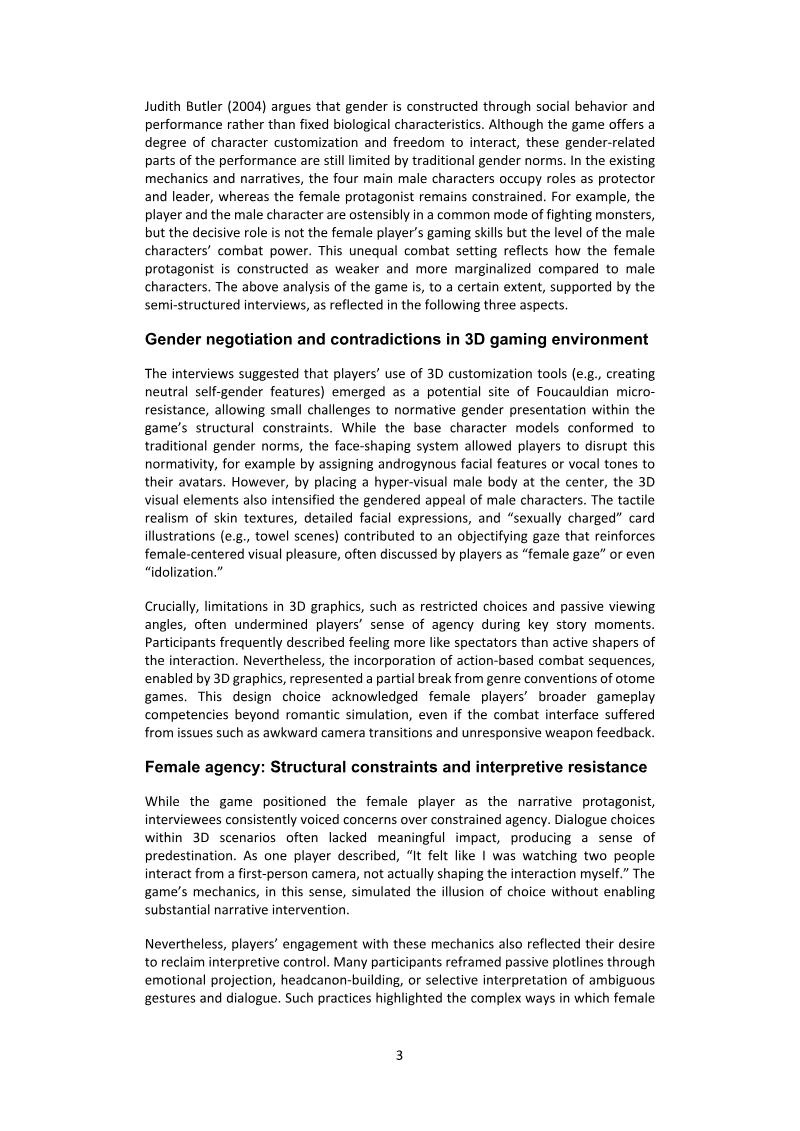
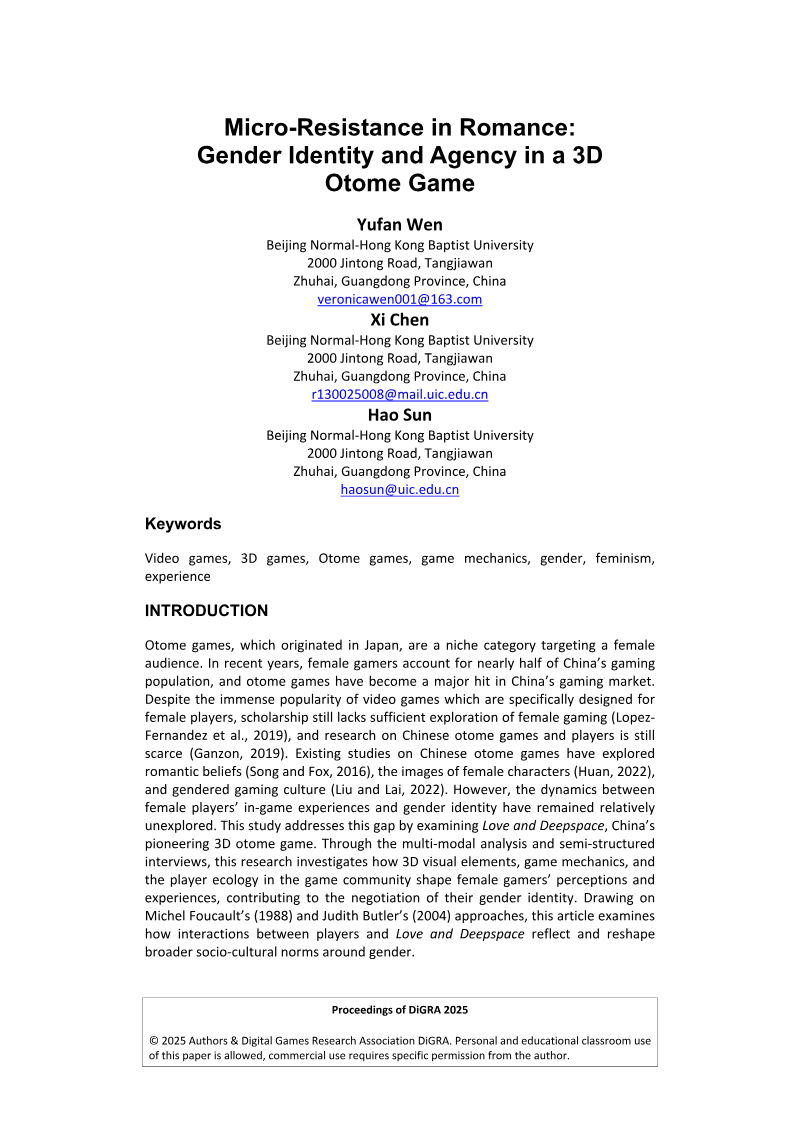
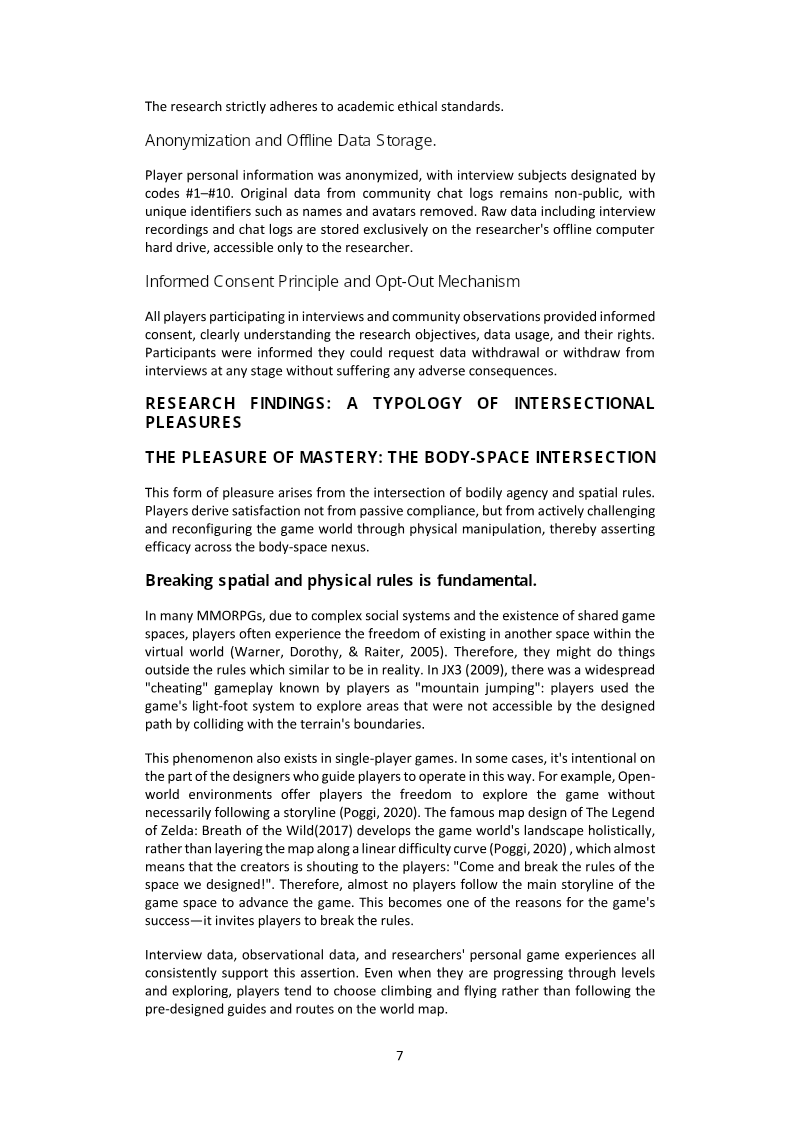
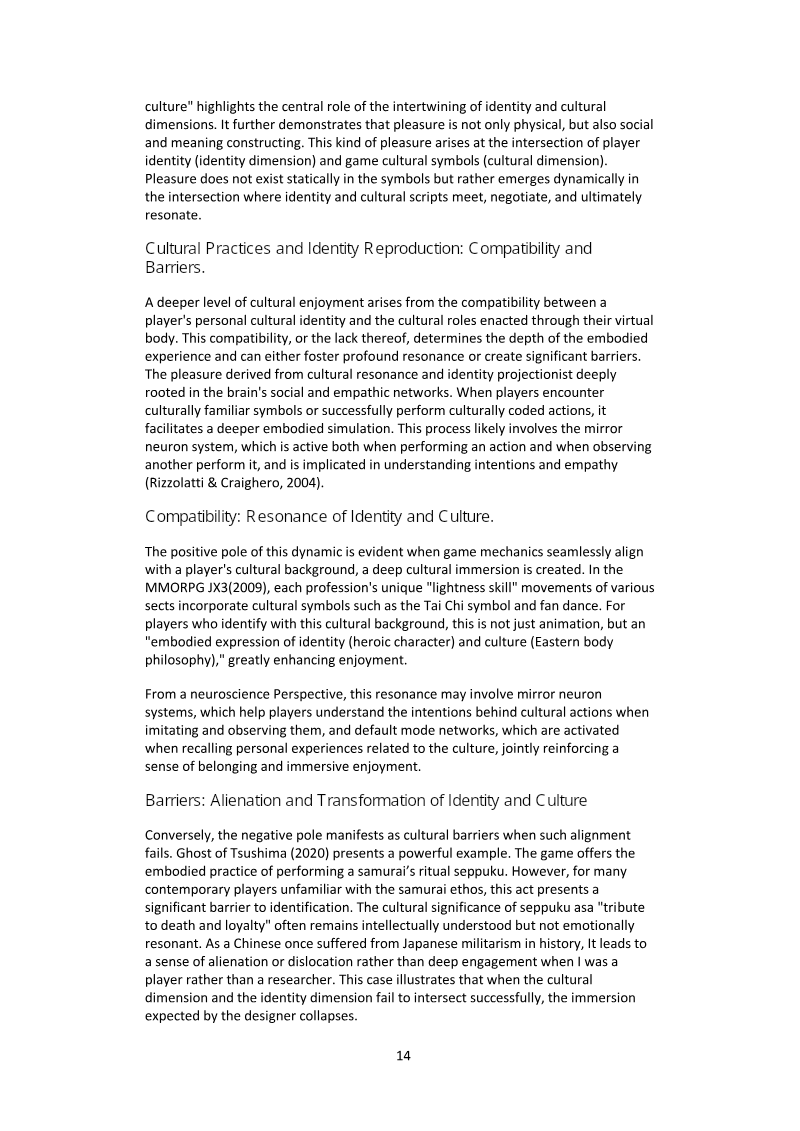
This paper examines how 3D interaction technology shapes players' perception of anthropomorphism in female-oriented romantic video games, using the newly released Love and Deepspace as its case. It is motivated by the observation that otome games have grown popular across Asia and that prior research on their psychological effects has largely focused on 2D titles, leaving the implications of more advanced 3D embodiment underexplored. The authors frame anthropomorphism as a social inference that fulfills needs for connection, and they pose two research questions: how players perceive the 3D characteristics of the game, and what mechanisms link those characteristics to anthropomorphism and other outcomes.
The study uses an exploratory sequential mixed-methods design. A pilot phase consisted of semi-structured interviews with four experienced players comparing 3D interaction games with traditional romantic titles, and the preliminary themes from these interviews are reported. Players described 3D technology as giving male characters more embodied movement and detailed expressions that convey personality, and as enabling intimate physical interactions such as changing clothes, listening to heartbeats, and touching, which were perceived to reduce psychological distance and heighten a sense of presence and companionship. Participants also identified challenges, including uncanny valley effects that disrupt human-avatar interaction and a mismatch between fixed scripted content and the immersion that 3D visuals create.
The planned second phase will build a structural equation model from the interview themes and test it with purposive-sample survey data analyzed in AMOS. The authors anticipate contributions to research on romantic games and women's virtual intimacy, to the understanding of non-human actors in relationship formation, and to the design of female-oriented romantic games. Because the findings currently rest on only four interviews, the preliminary themes are best understood as hypothesis-generating rather than conclusive.
Each row is a game or company this document names, each column a document, oldest first. A mark means that document names it. Select a row to see those documents.

DiGRA · 2026

DiGRA · 2026



DiGRA · 2026



DiGRA · 2026



DiGRA · 2026



DiGRA · 2026



DiGRA · 2026



DiGRA · 2026

DiGRA · 2026



DiGRA · 2026



DiGRA · 2026

DiGRA · 2026
DiGRA · 2026