1 free read left. Create a free account for unlimited reading + AI research.
Create free accountArticle Journal of Games Criticism
1 free read left. Create a free account for unlimited reading + AI research.
Create free accountArticleJournal of Games Criticism
Distilling the key insights…
Pause menus represent a critical, often overlooked interface that reveals the complex computational temporalities governing digital games. Rather than functioning as a simple suspension of activity, these menus serve as essential spaces where players engage with the underlying algorithmic structure of the software. By shifting the focus from diegetic game space to the technical mechanics of the interface, it becomes clear that navigating menus constitutes a distinct mode of play that operates alongside standard temporal frames, effectively bridging the gap between human experience and machine processing.
While traditional game design often utilizes pause states to provide a brief respite from narrative pressure, many modern titles integrate these menus as active, strategic components of the gameplay loop. In these instances, the menu acts as a transparent window into the game’s database, allowing players to manipulate systems at speeds that approximate the machine’s own logic. This interaction is particularly evident in the practices of speedrunners, who utilize techniques like pause buffering to exploit frame-perfect inputs and navigate game memory. By treating time and memory as a navigable database, these players bypass the intended narrative shells of a game to interact directly with its core computational architecture.
Ultimately, the study of pause menus necessitates a shift in scholarly perspective, moving away from viewing these interfaces as mere paratextual interruptions. Instead, they must be recognized as vital sites where the representational world of the game and the raw, underlying machine logic collide. By analyzing how these menus facilitate the manipulation of game systems, it is possible to better understand the dual nature of videogames as both immersive narrative experiences and rigid, algorithmic structures. This analytical framework highlights the necessity of considering computational temporalities as a primary factor in the broader study of digital play.
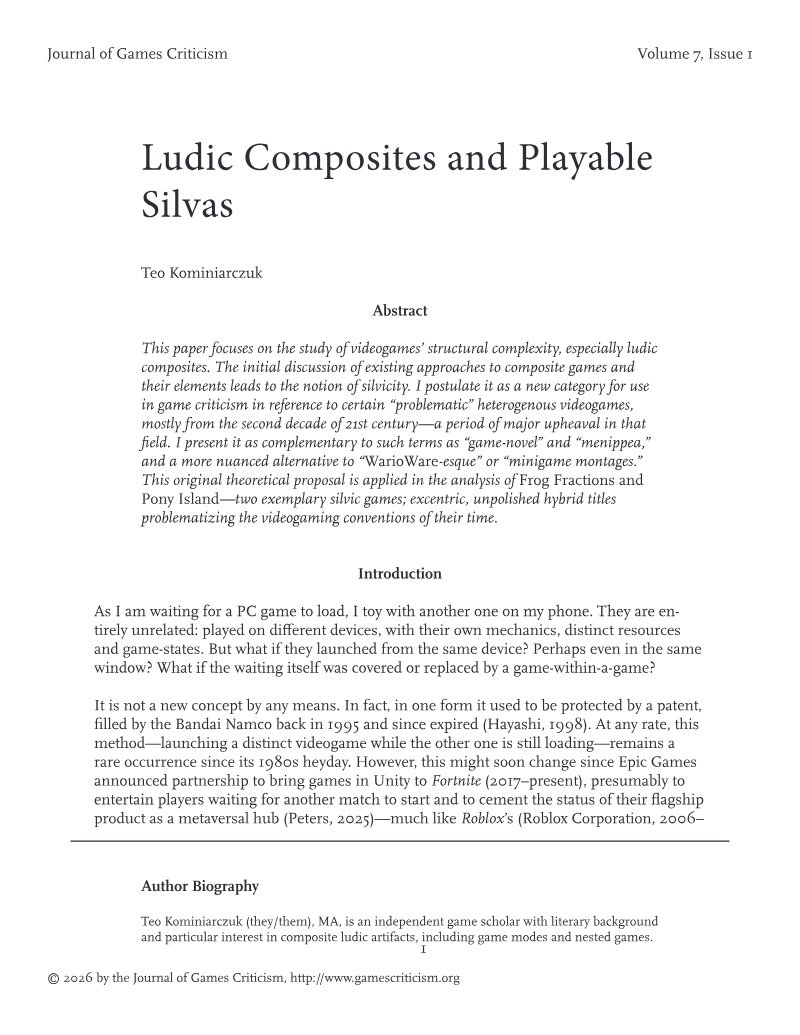
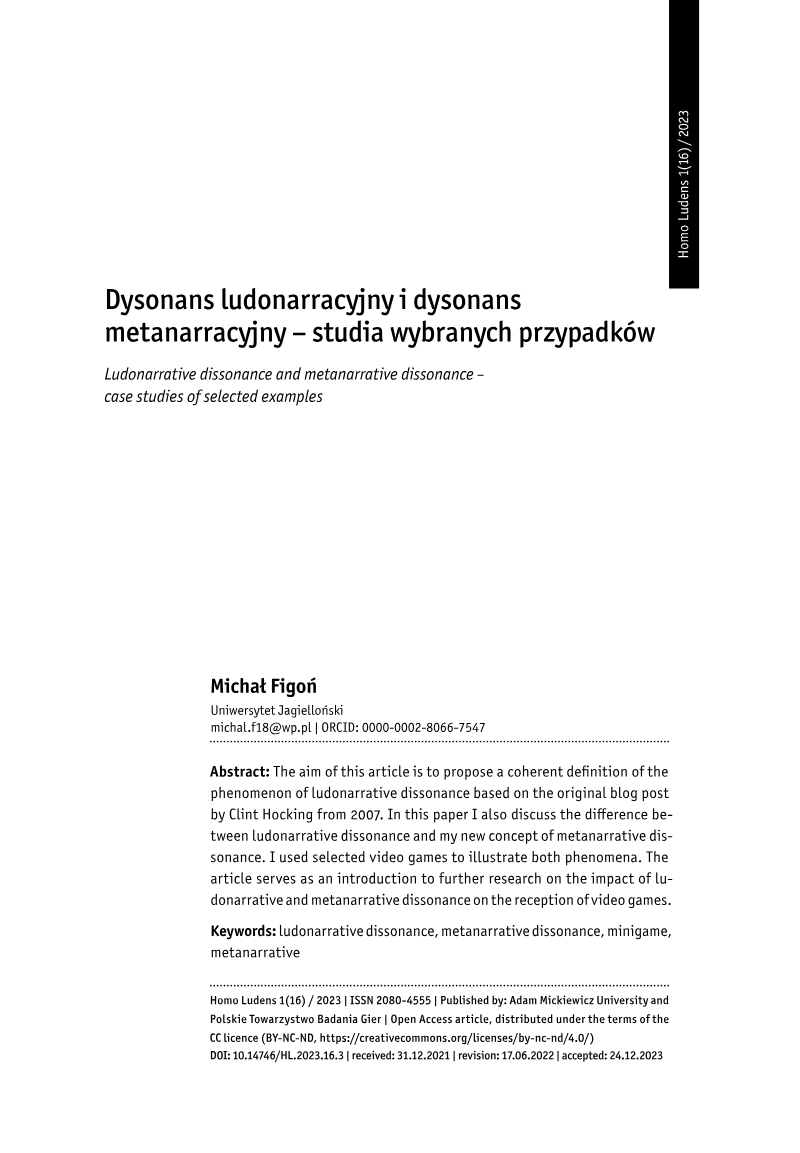
Journal of Games Criticism · 2026
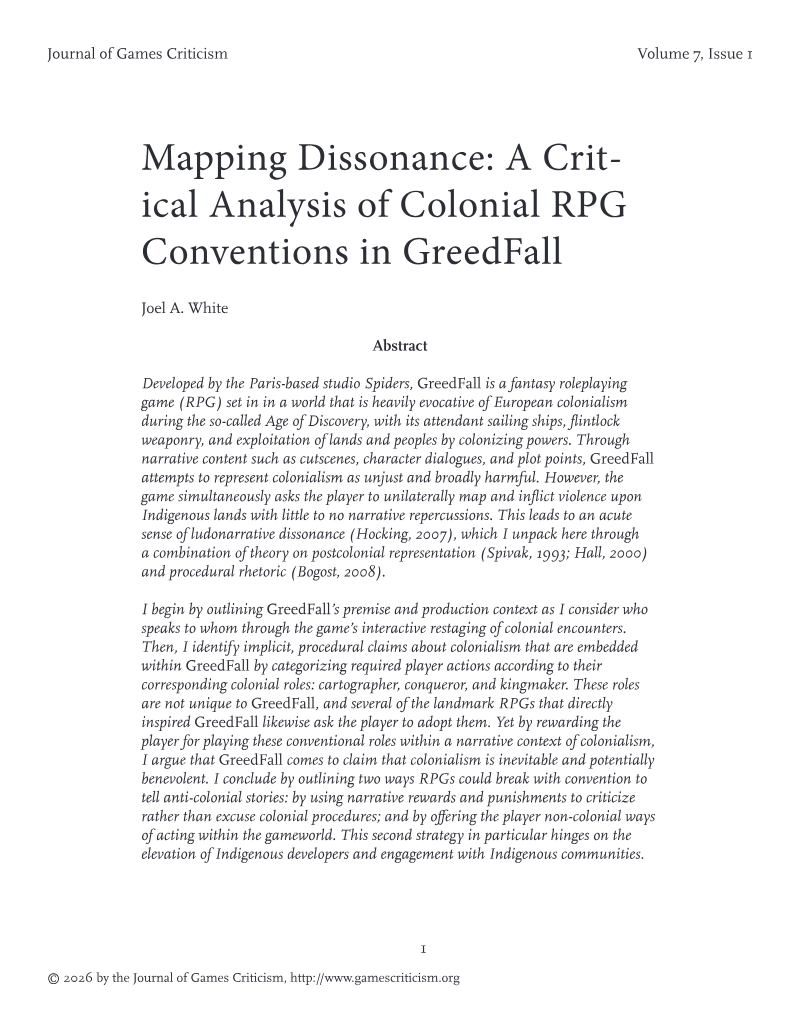
Journal of Games Criticism · 2026
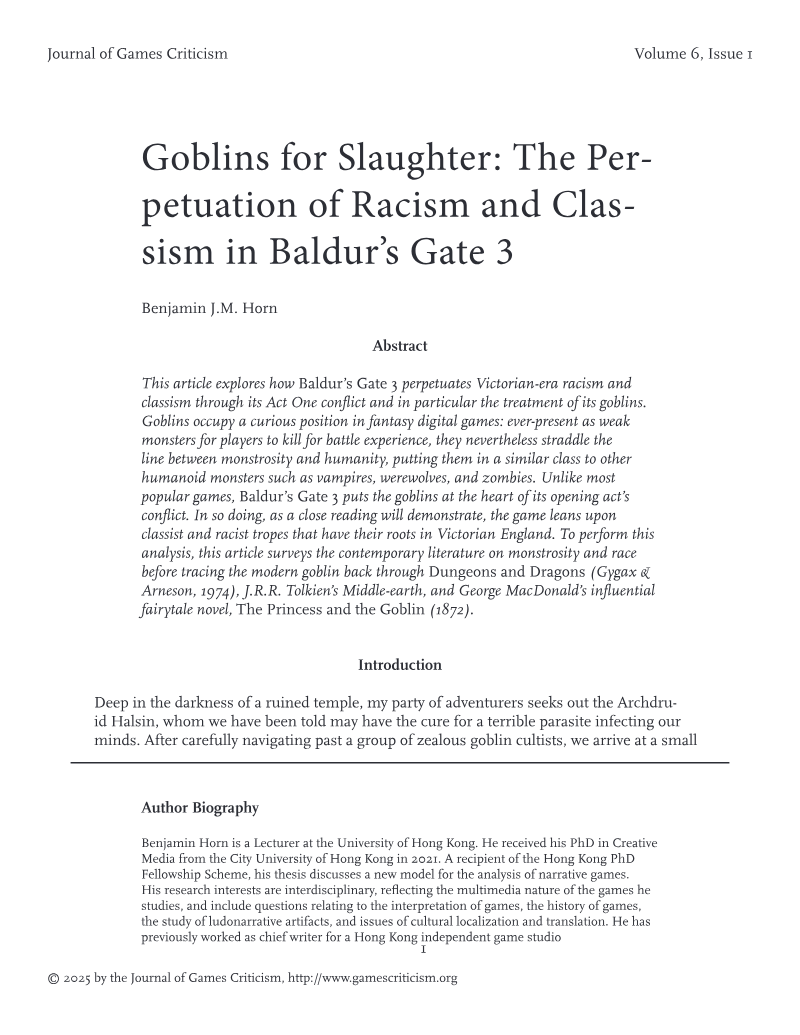
Journal of Games Criticism · 2025
Journal of Games Criticism · 2025
Journal of Games Criticism · 2025
Journal of Games Criticism · 2025
Journal of Games Criticism · 2024
Journal of Games Criticism · 2024
Journal of Games Criticism · 2024
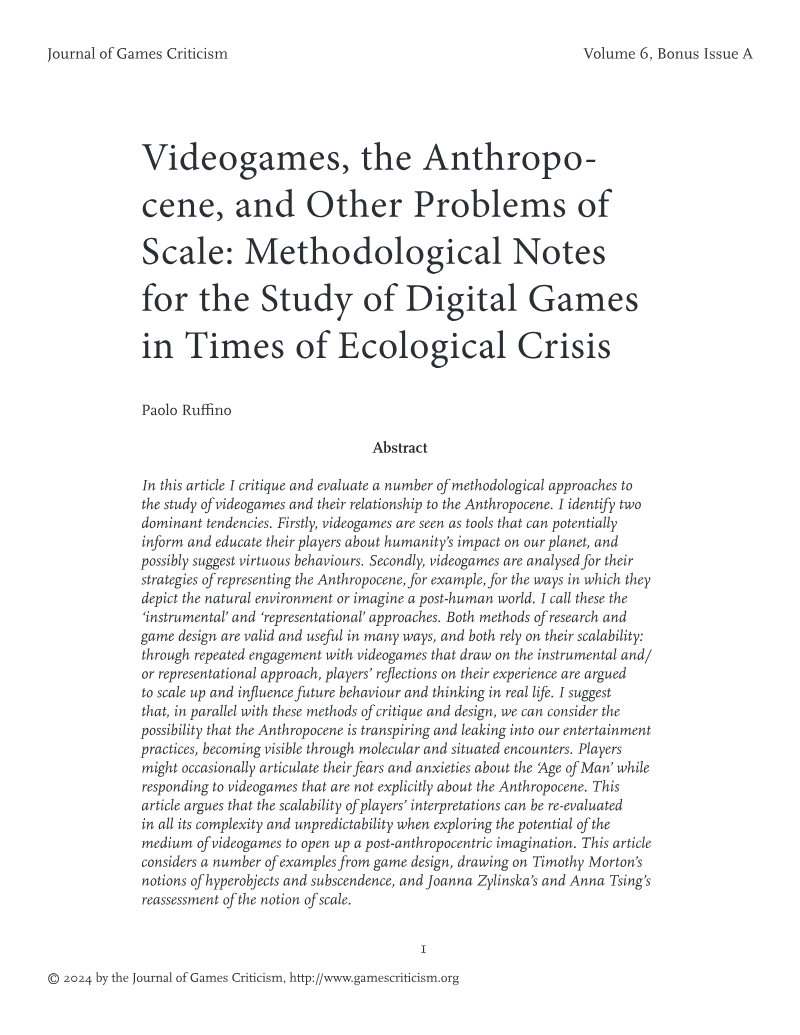
Journal of Games Criticism · 2024
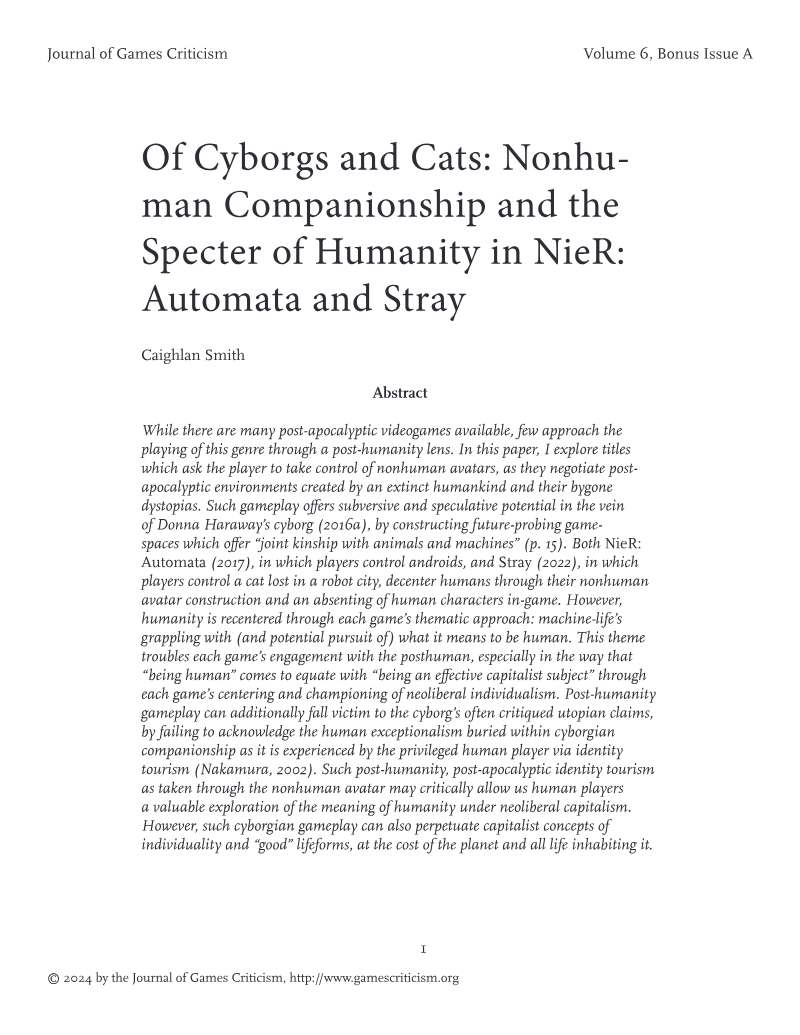
Journal of Games Criticism · 2024
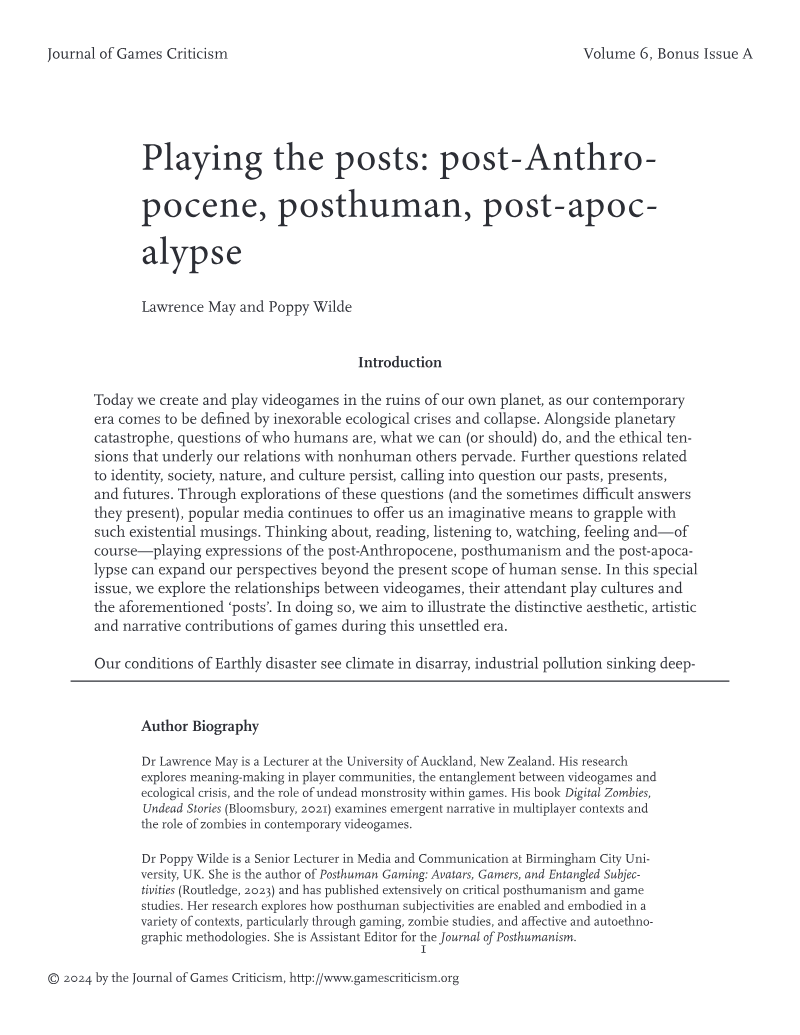
Journal of Games Criticism · 2024
DiGRA · 2026