1 free read left. Create a free account for unlimited reading + AI research.
Create free accountArticle Journal of Games Criticism
1 free read left. Create a free account for unlimited reading + AI research.
Create free accountArticleJournal of Games Criticism
Distilling the key insights…
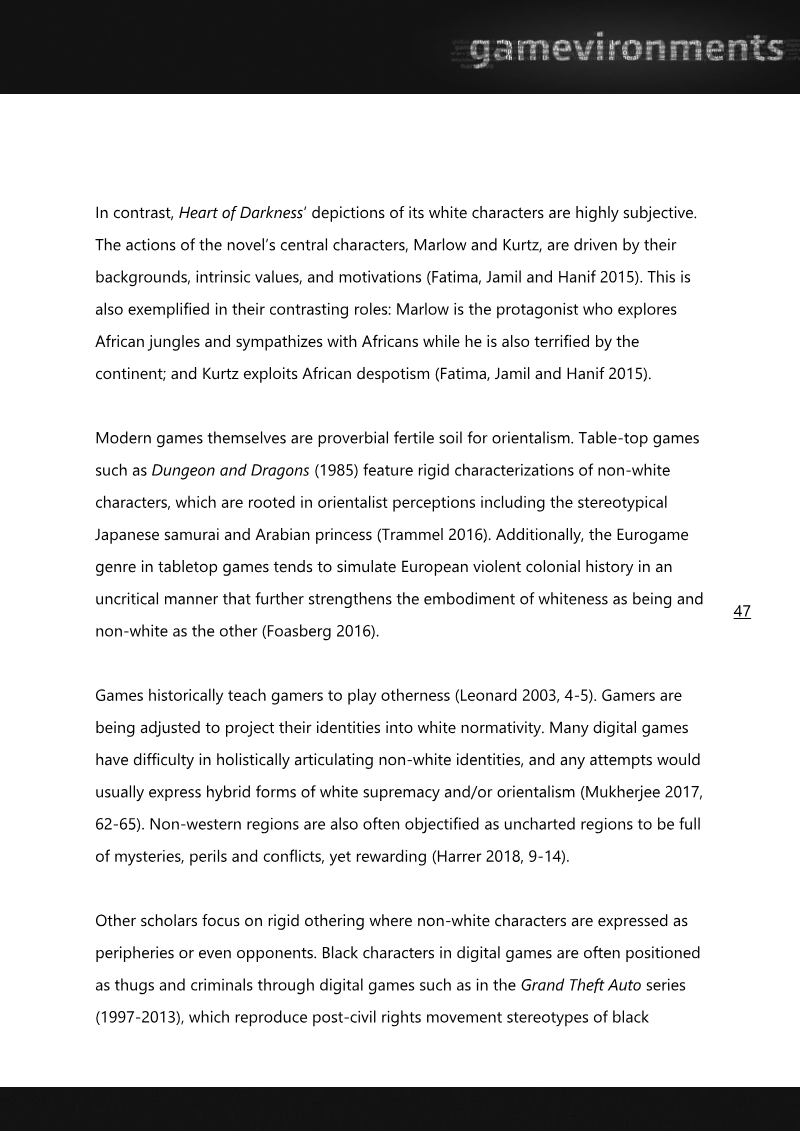
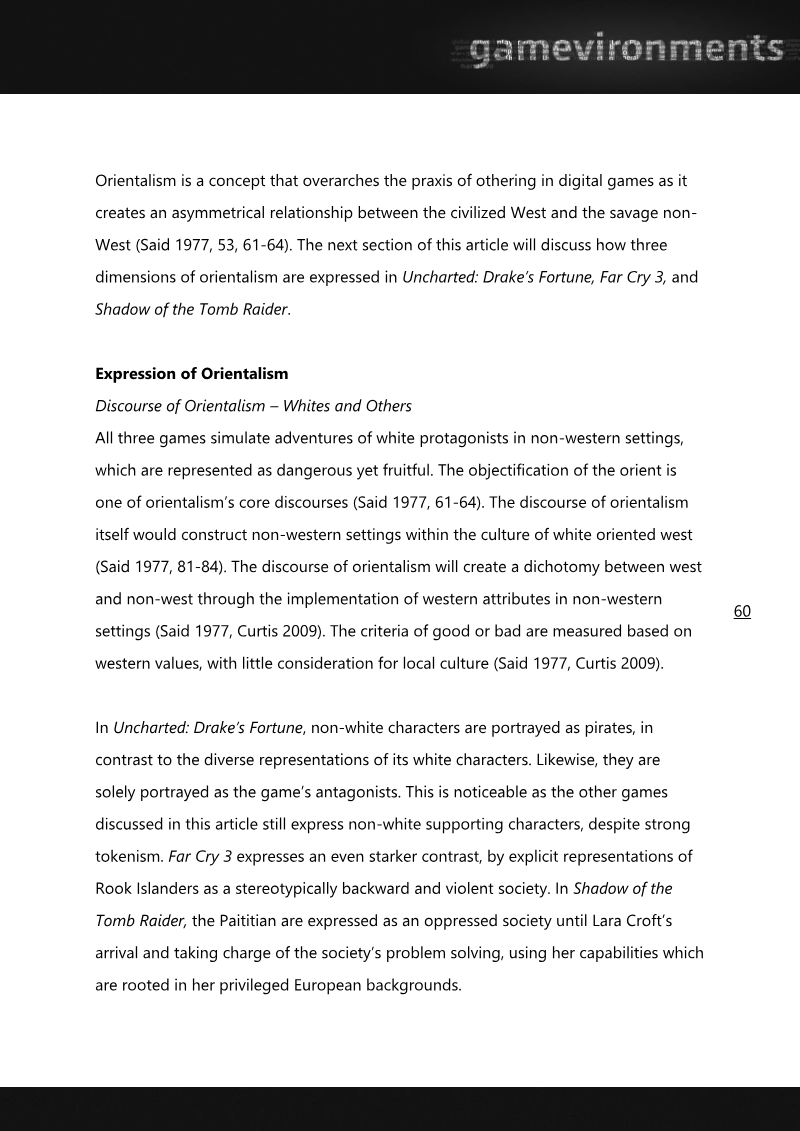
Structural whiteness functions as a pervasive episteme within game studies, dictating the boundaries of legitimate knowledge by prioritizing technical production over critical inquiry. This framework reinforces a default user identity that is inherently white and male, effectively marginalizing non-white perspectives and labor. Within academic settings, this ideological hegemony manifests as significant student resistance, where critical scholarship is frequently dismissed as subjective or secondary to the perceived objectivity of game development. Such hostility serves as a form of institutional gatekeeping, preserving traditional power structures by framing the gaming industry and its associated technologies as neutral, apolitical entities.
These pedagogical encounters reveal that student contempt for critical pedagogy is not an isolated phenomenon but a symptom of broader systemic biases embedded in the field. By equating technical proficiency with value, curricula often inadvertently validate the exclusion of diverse gaming experiences. To dismantle these entrenched norms, academic practice must shift toward centering play as a multifaceted concept rather than focusing exclusively on the digital product. Reframing critical analysis as an essential, caring form of labor allows for a more profound engagement with the political dimensions of technology.
Ultimately, challenging structural whiteness requires a deliberate pedagogical praxis that integrates diverse lived experiences and alternative logics into the classroom. By rejecting the reliance on a singular, white-centric gaming capital, educators can create spaces that move beyond traditional gatekeeping. This approach fosters a more inclusive academic environment, transforming the study of games into a rigorous, reflective practice that acknowledges the power dynamics inherent in both the creation and consumption of digital media. Through these shifts, the field can begin to move past the influence of white supremacy and embrace a more equitable understanding of gaming culture.
Journal of Games Criticism · 2026
Journal of Games Criticism · 2026
Journal of Games Criticism · 2025
Journal of Games Criticism · 2025



Journal of Games Criticism · 2025



Journal of Games Criticism · 2025

Journal of Games Criticism · 2024
Journal of Games Criticism · 2024
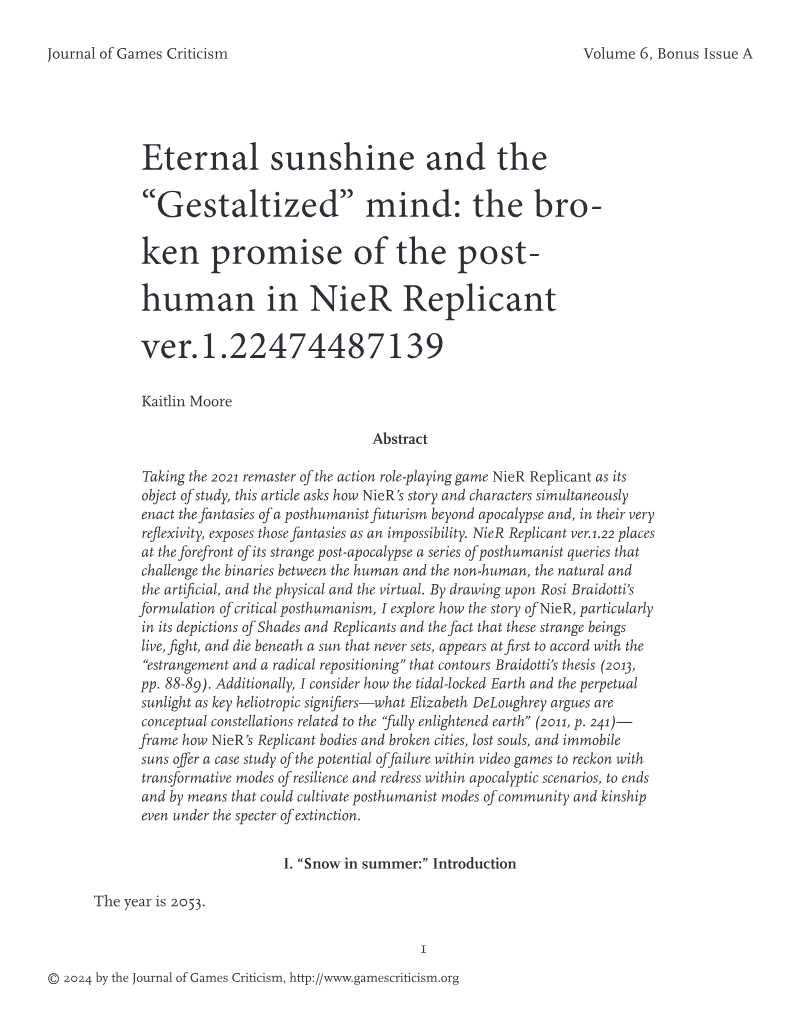
Journal of Games Criticism · 2024
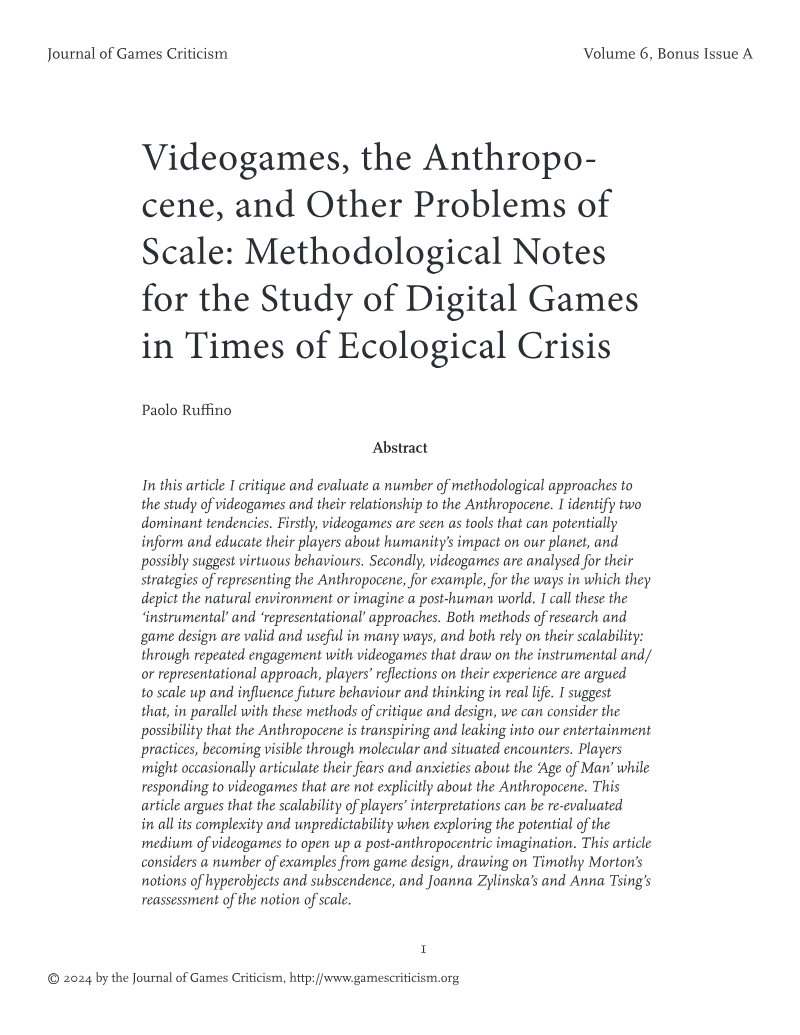
Journal of Games Criticism · 2024
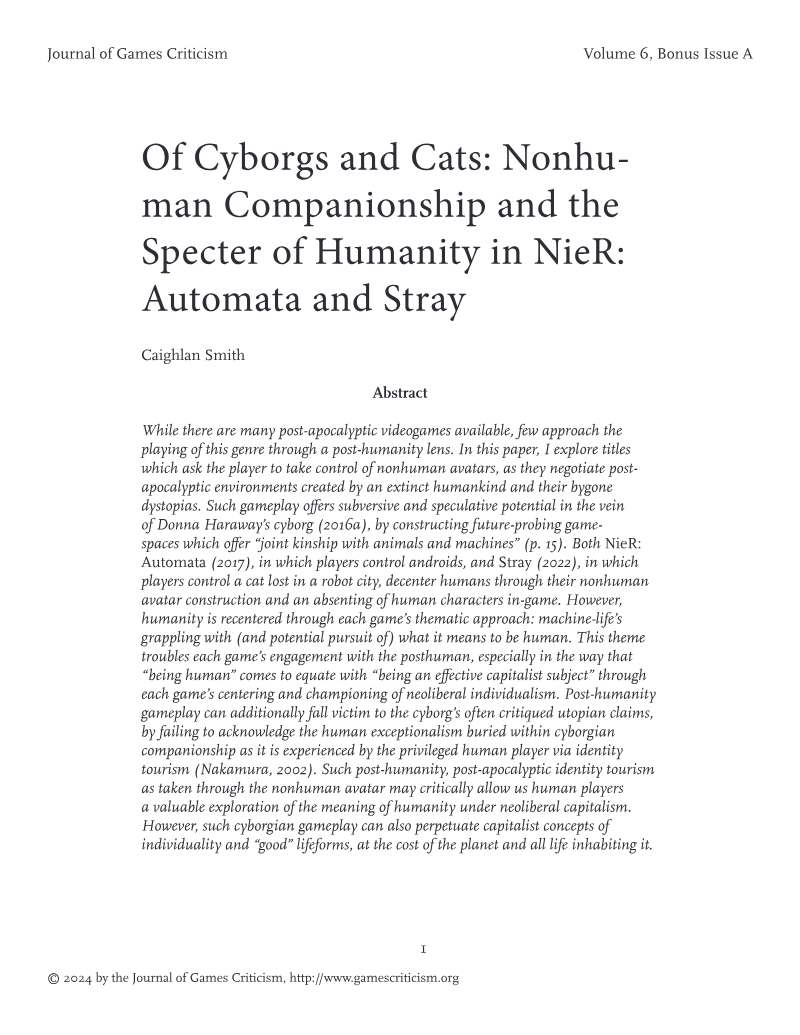
Journal of Games Criticism · 2024
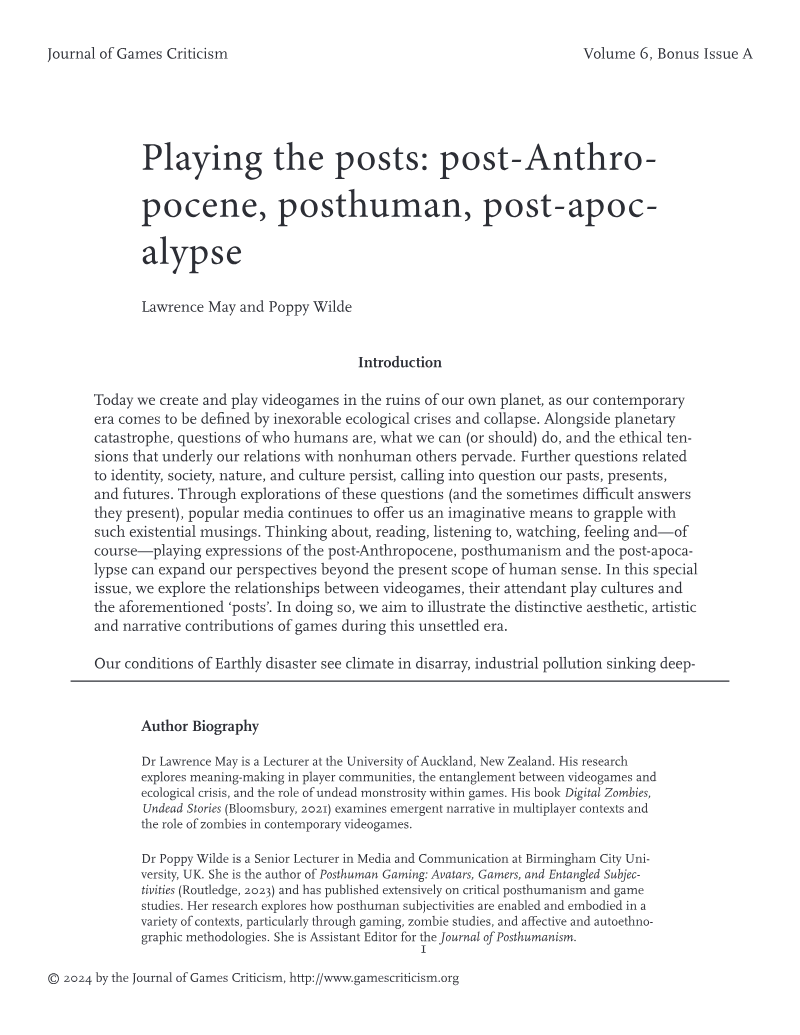
Journal of Games Criticism · 2024
International Journal of Role-Playing · 2026