1 free read left. Create a free account for unlimited reading + AI research.
Create free accountWhitepaper Journal of Games, Game Art, and Gamification
1 free read left. Create a free account for unlimited reading + AI research.
Create free accountWhitepaperJournal of Games, Game Art, and Gamification
The integration of digital tools into primary education serves as a vital strategy for enhancing student engagement and overcoming the limitations inherent in traditional textbook-based learning. By employing a Design Thinking framework, developers can create interactive, multilingual educational games that facilitate animal recognition for third-grade students. This approach prioritizes user-centered UI/UX design, utilizing intuitive navigation, engaging animations, and bilingual content in English and Indonesian to foster a more immersive and effective learning environment.
The development process relies on iterative prototyping via platforms like Figma, which allows for continuous refinement based on direct stakeholder input. Testing conducted with 60 elementary students and three teachers demonstrates that these digital interventions significantly improve student motivation and comprehension. Participants consistently report high levels of satisfaction regarding the visual appeal and accessibility of the interface, confirming that interactive digital media functions as a superior alternative to static pedagogical materials.
While current prototypes have established a successful foundation for educational technology in the Indonesian primary school sector, future development must prioritize the expansion of adaptive evaluation components. Enhancing the software to include personalized feedback mechanisms and broader content libraries will be essential for long-term efficacy. By grounding these design choices in established academic research on primary school pedagogy, developers can ensure that digital tools effectively promote student autonomy and academic success across diverse learning populations.
Journal of Games, Game Art, and Gamification · 2026
Journal of Games, Game Art, and Gamification · 2026
Journal of Games, Game Art, and Gamification · 2025
Journal of Games, Game Art, and Gamification · 2025
Journal of Games, Game Art, and Gamification · 2025
Journal of Games, Game Art, and Gamification · 2025
Journal of Games, Game Art, and Gamification · 2025
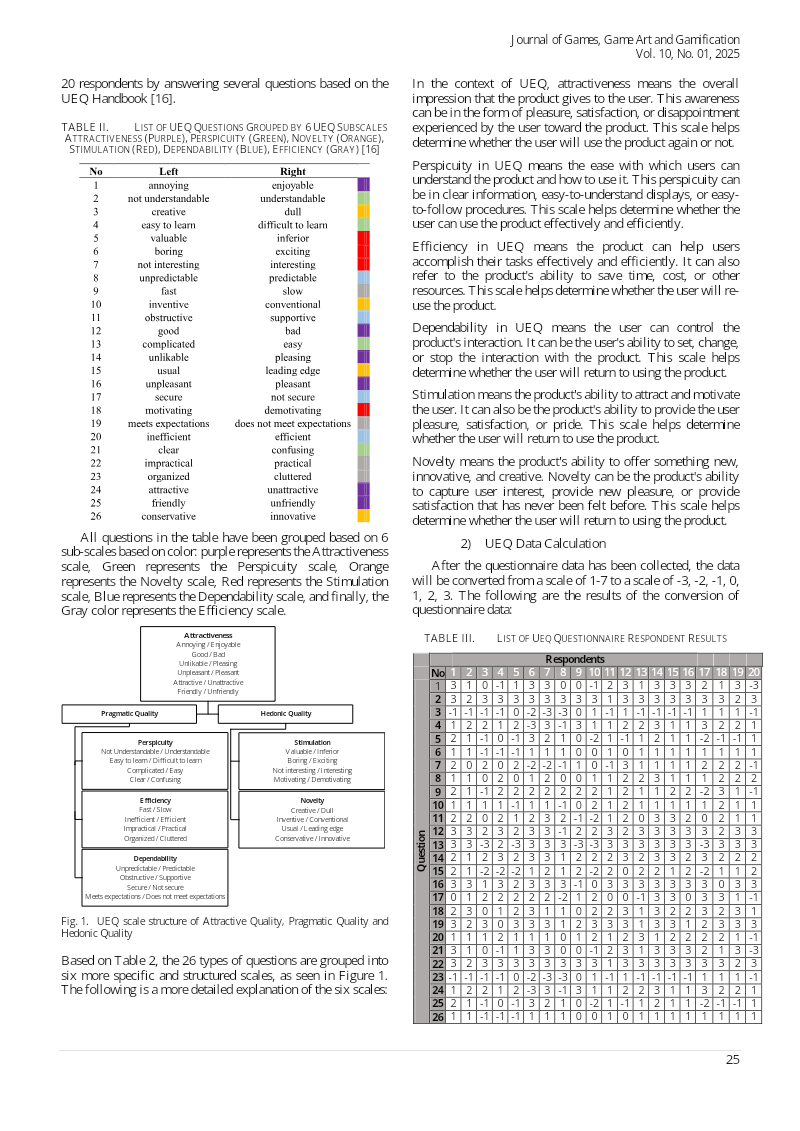
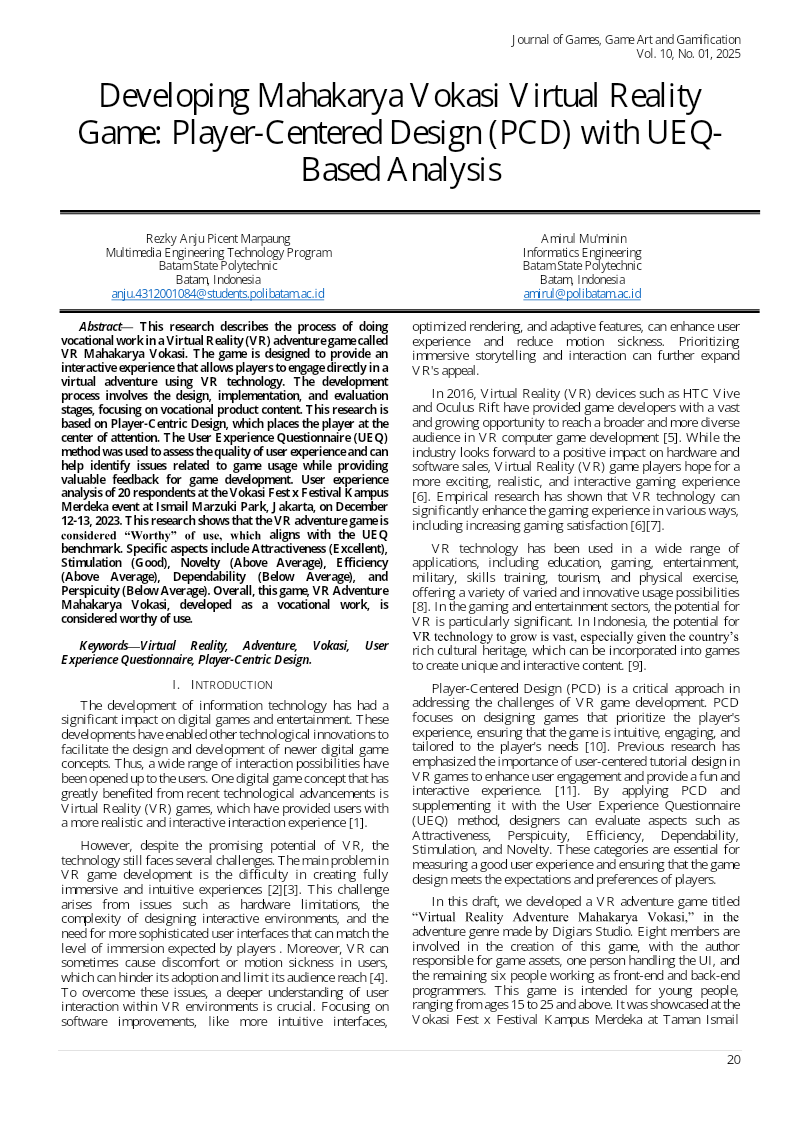
Journal of Games, Game Art, and Gamification · 2025
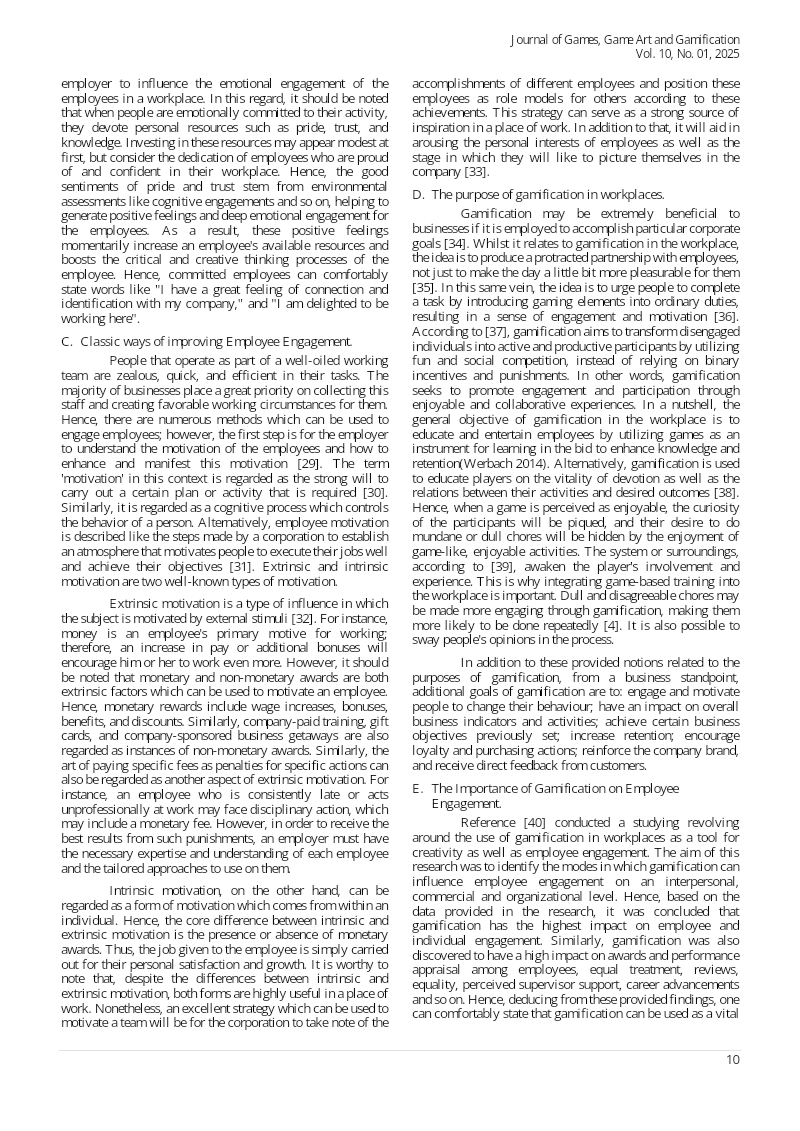
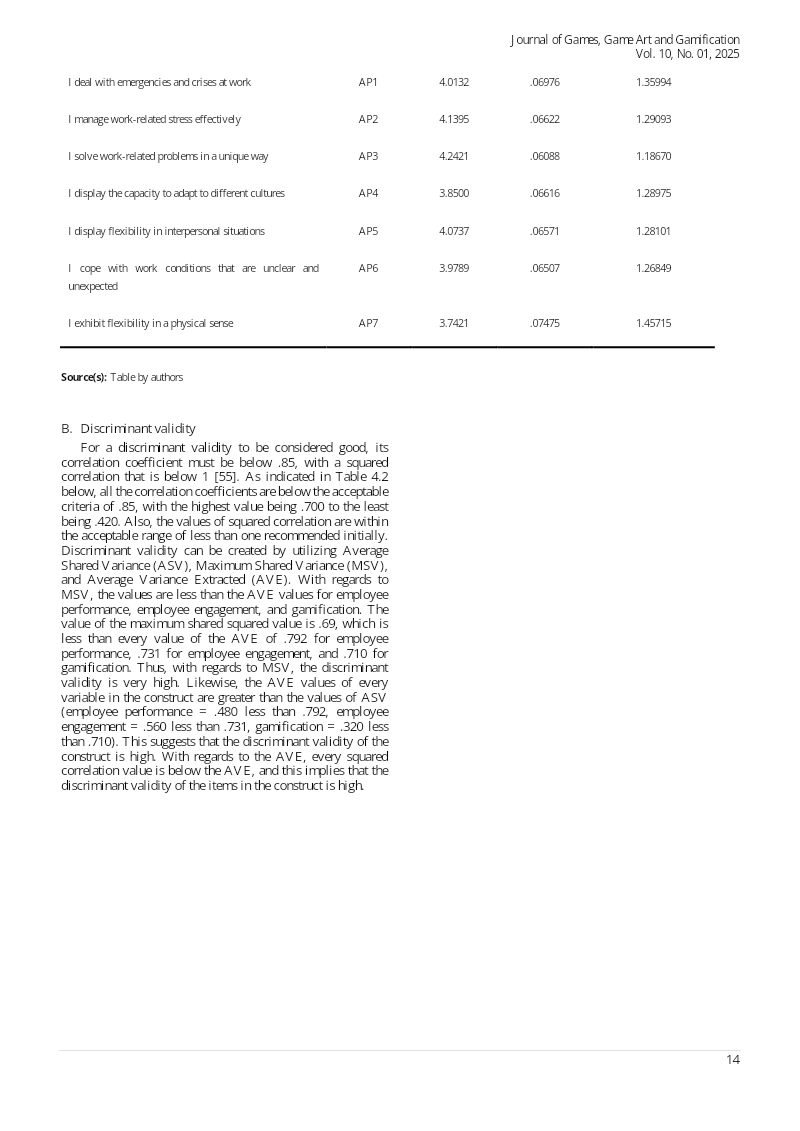
Journal of Games, Game Art, and Gamification · 2025
Journal of Games, Game Art, and Gamification · 2024
Journal of Games, Game Art, and Gamification · 2024
Journal of Games, Game Art, and Gamification · 2024
Bina Nusantara University · 2019