1 free read left. Create a free account for unlimited reading + AI research.
Create free accountWhitepaper Journal of Games, Game Art, and Gamification
1 free read left. Create a free account for unlimited reading + AI research.
Create free accountWhitepaperJournal of Games, Game Art, and Gamification
This research details the design and development of a 2D educational computer game, titled Trash Invaders, intended to foster environmental awareness regarding plastic waste among children aged 6 to 9. Developed in Indonesia—a nation facing significant challenges with marine plastic pollution—the project utilizes gamification to teach young users about the consequences of waste and the importance of environmental stewardship. By simulating real-world waste management challenges, the game aims to cultivate proactive, sustainable behaviors in its target demographic.
The development methodology followed a structured process including problem identification, research, ideation, prototyping, and implementation. The game was built using the Scratch platform, chosen for its accessible visual interface. The gameplay mechanics require users to intercept falling trash before it reaches the seabed, with a scoring system that penalizes players for missing waste or harming marine life. These mechanics are designed to reinforce cognitive processes related to waste categorization and responsible decision-making, moving beyond theoretical education toward interactive, habitual learning.
The study concludes that interactive digital media serves as a potent tool for environmental education, particularly when tailored to the developmental needs of children. While the current prototype demonstrates the feasibility of using gamified experiences to convey complex ecological issues, future iterations will focus on enhancing graphical immersion and conducting rigorous user testing across diverse age groups. By integrating entertainment with critical environmental messaging, the project seeks to empower the next generation to adopt sustainable habits and contribute to a cleaner, more balanced relationship with the natural world.
Journal of Games, Game Art, and Gamification · 2026
Journal of Games, Game Art, and Gamification · 2025
Journal of Games, Game Art, and Gamification · 2025
Journal of Games, Game Art, and Gamification · 2025
Journal of Games, Game Art, and Gamification · 2025
Journal of Games, Game Art, and Gamification · 2025
Journal of Games, Game Art, and Gamification · 2025
Journal of Games, Game Art, and Gamification · 2025
Journal of Games, Game Art, and Gamification · 2025
Journal of Games, Game Art, and Gamification · 2024
Journal of Games, Game Art, and Gamification · 2024
Journal of Games, Game Art, and Gamification · 2024
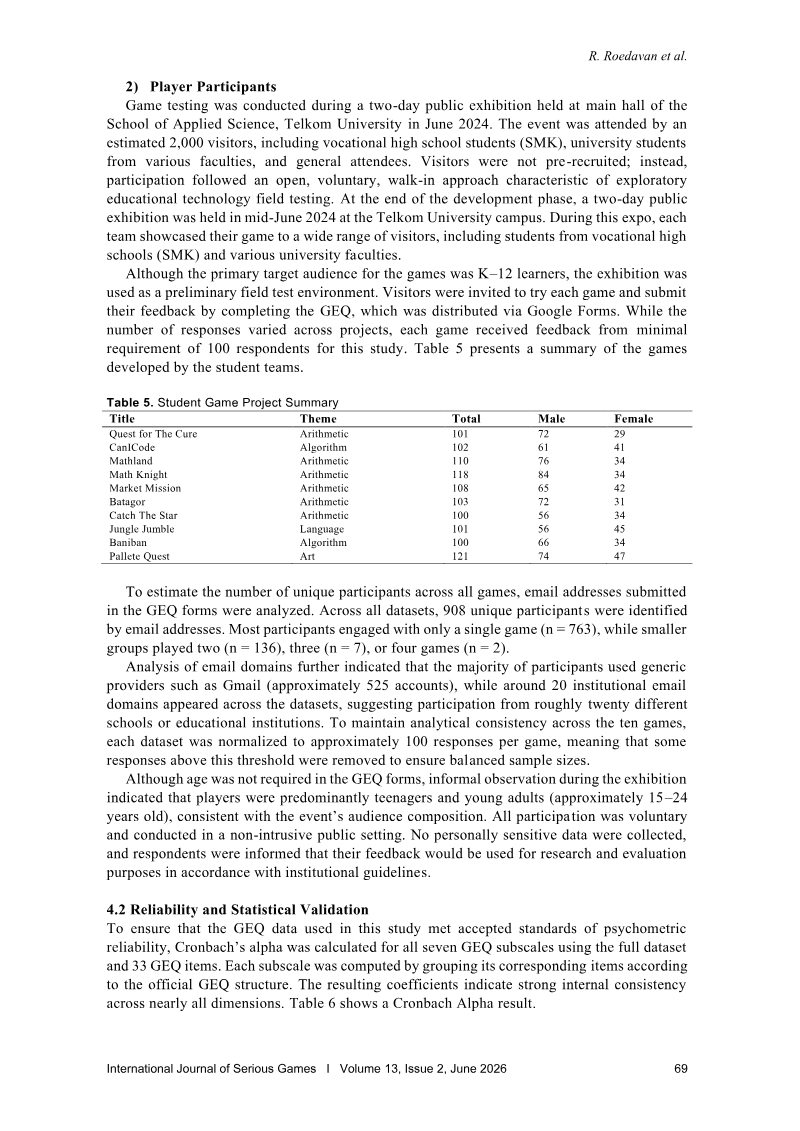
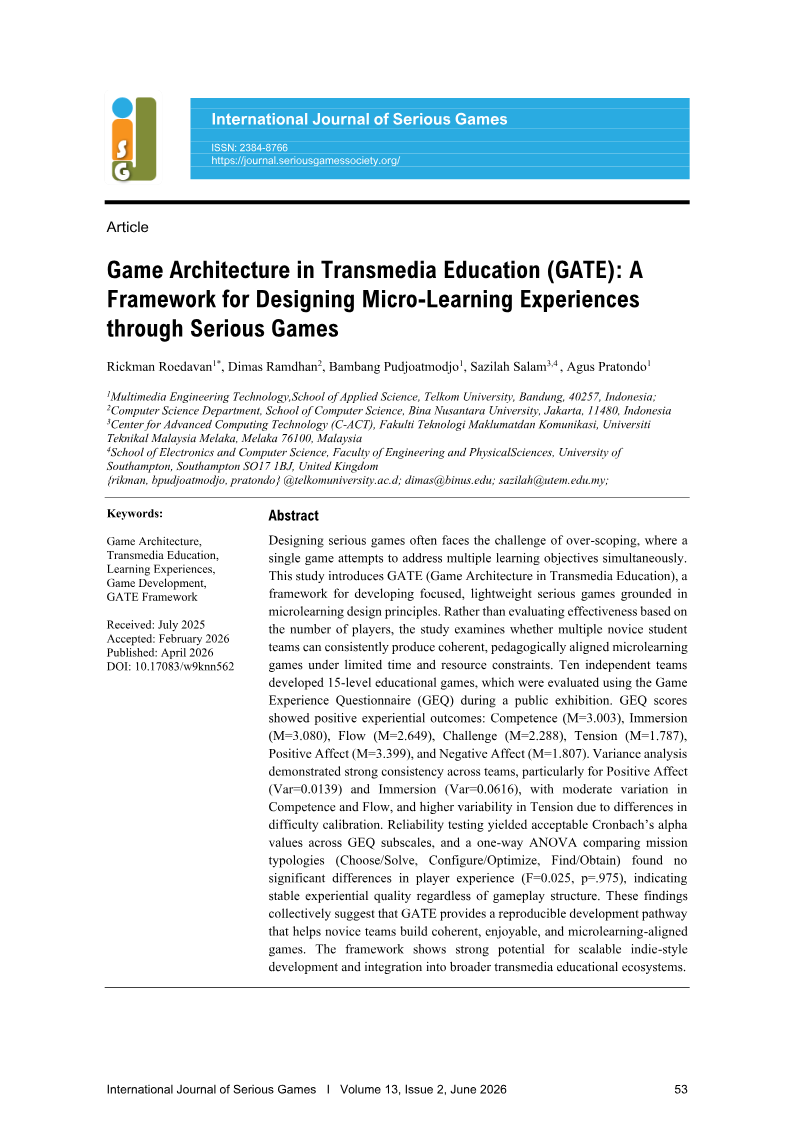
Serious Games Society · 2026
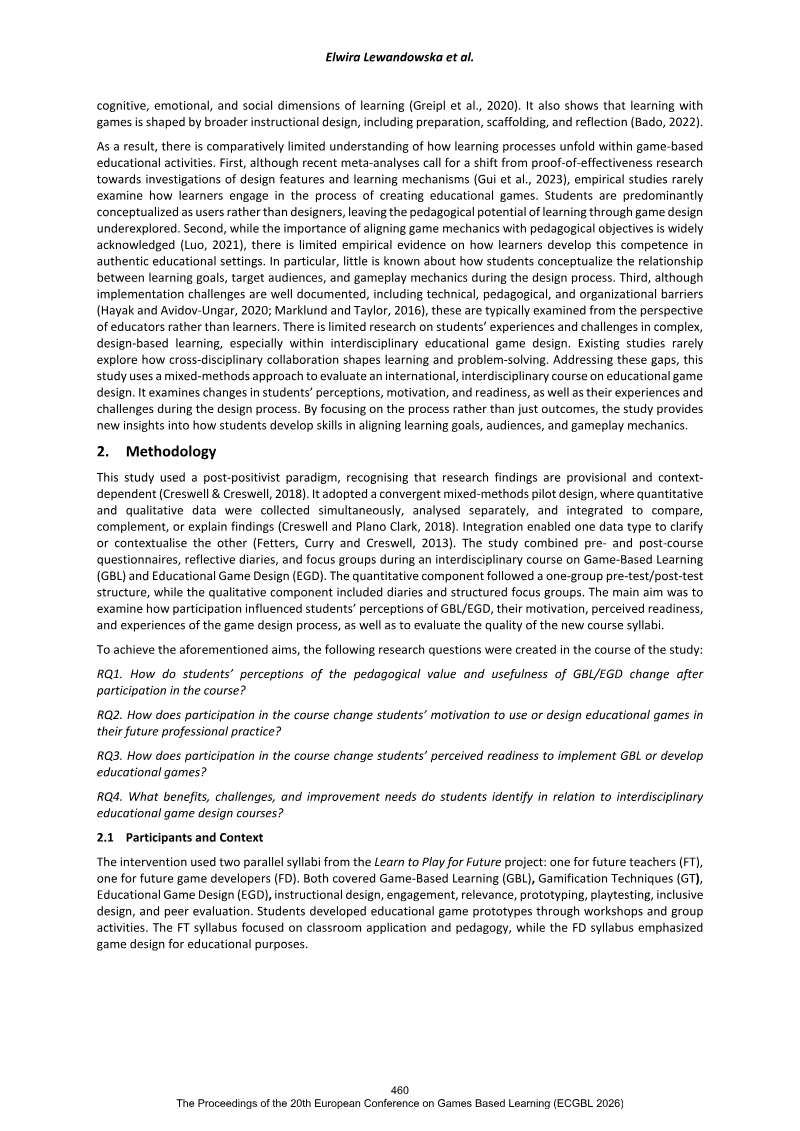
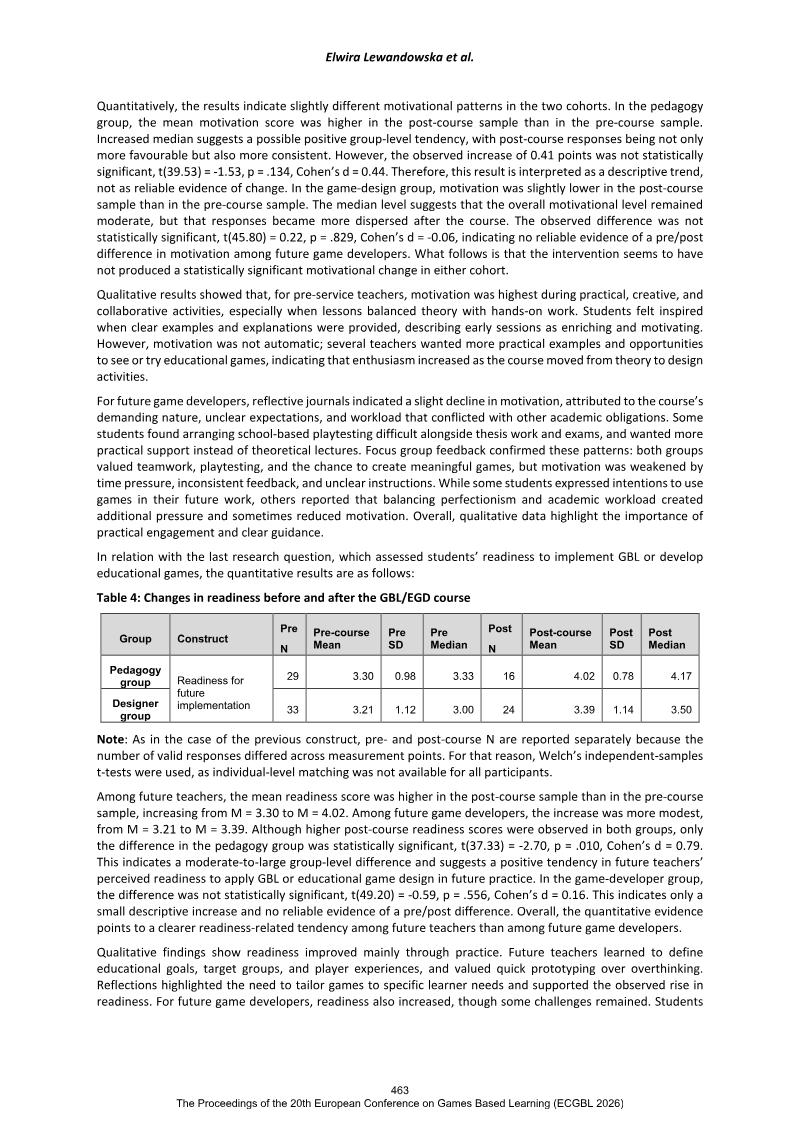
European Conference on Games Based Learning (ECGBL) · 2026
Serious Games Society · 2026