1 free read left. Create a free account for unlimited reading + AI research.
Create free accountArticle Journal of Games Criticism
1 free read left. Create a free account for unlimited reading + AI research.
Create free accountArticleJournal of Games Criticism
Distilling the key insights…
Video arcades in 1980s America functioned as complex, contested social environments defined by a fundamental tension between the commercial mandate of coin-operated play and the informal practice of loitering. While operators viewed the arcade primarily as a site for revenue generation, the space was equally defined by the presence of hangers—individuals who occupied the premises to socialize without consistently engaging with the machines. This dynamic created a persistent conflict between management, which employed disciplinary labor and surveillance to enforce active participation, and these social actors, who utilized tactical navigation to maintain their presence within the arcade.
The arcade served as a vital, albeit unauthorized, urban refuge where the social allure of the environment often outweighed the specific utility of the games themselves. By distinguishing between the docile, paying player and the non-paying hanger, operators inadvertently highlighted the importance of these social actors in sustaining the arcade’s cultural vitality. The practice of hanging out was not merely a form of loitering but a central social activity that transformed the arcade into a unique physical hub for community interaction.
Ultimately, the decline of the arcade industry can be attributed to more than just the technological shift toward home gaming. The loss of these physical, contested spaces represents the erosion of a specific type of social environment that digital platforms have struggled to replicate. Understanding the history of the arcade requires shifting the analytical focus away from the solitary player and toward the diverse, often marginalized, social actors whose presence defined the arcade experience. This perspective reveals that the arcade was as much a site of social negotiation and resistance as it was a commercial enterprise.
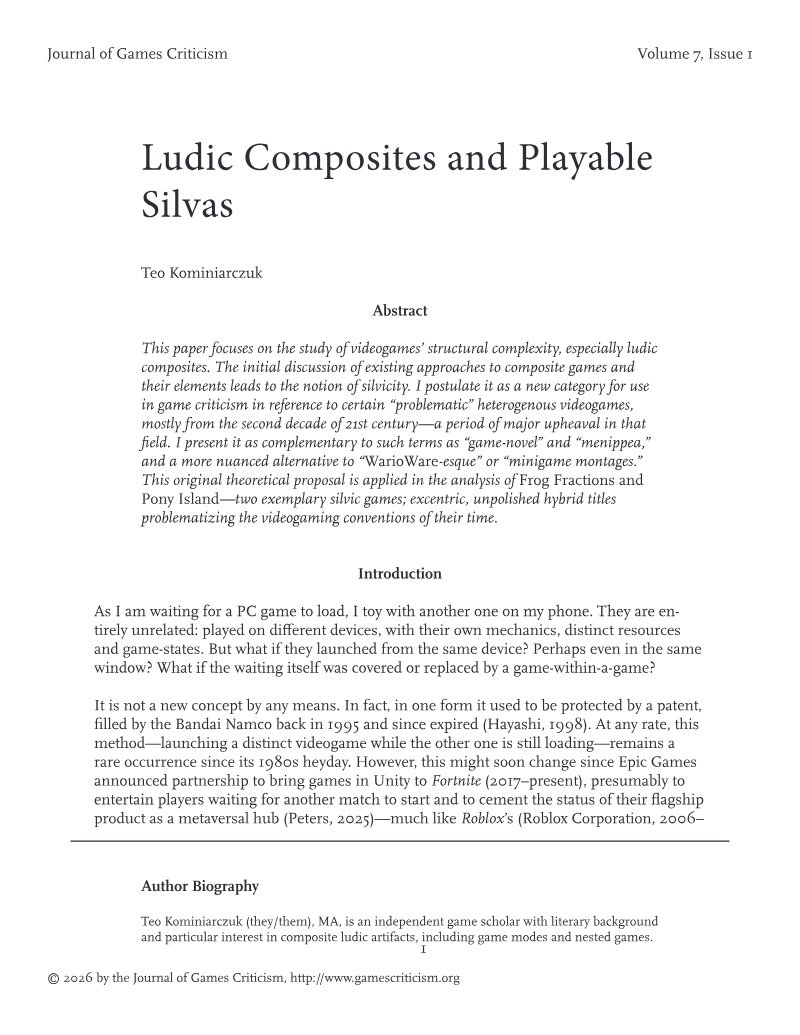
Journal of Games Criticism · 2026
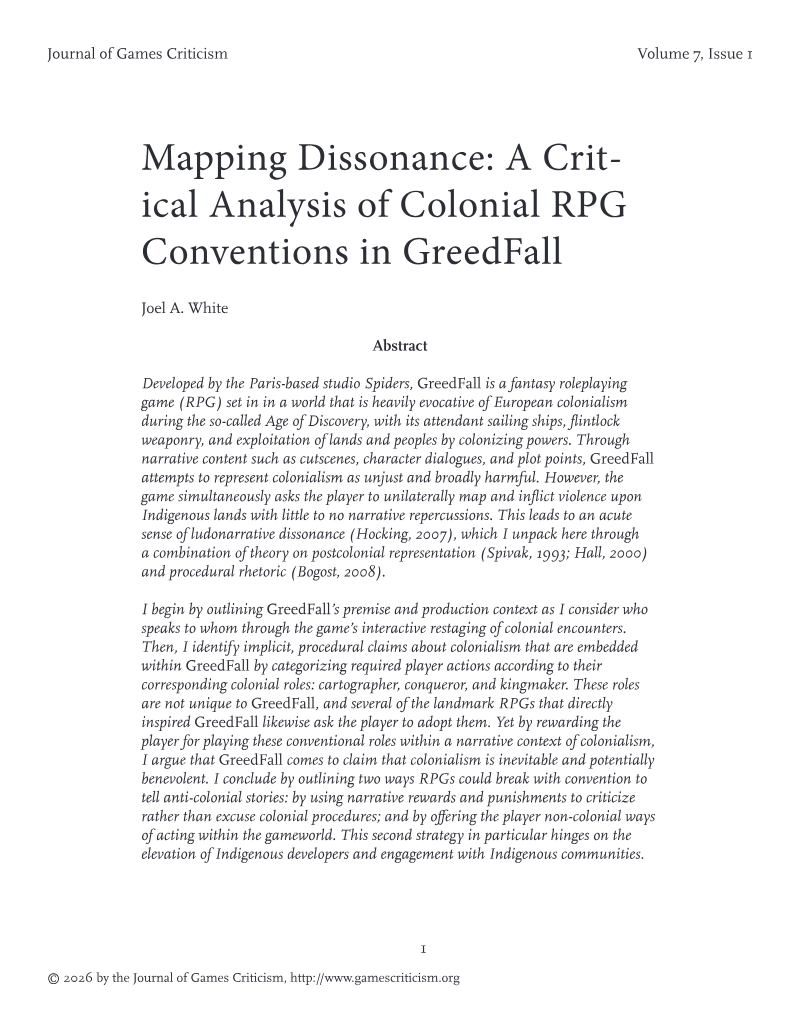
Journal of Games Criticism · 2026
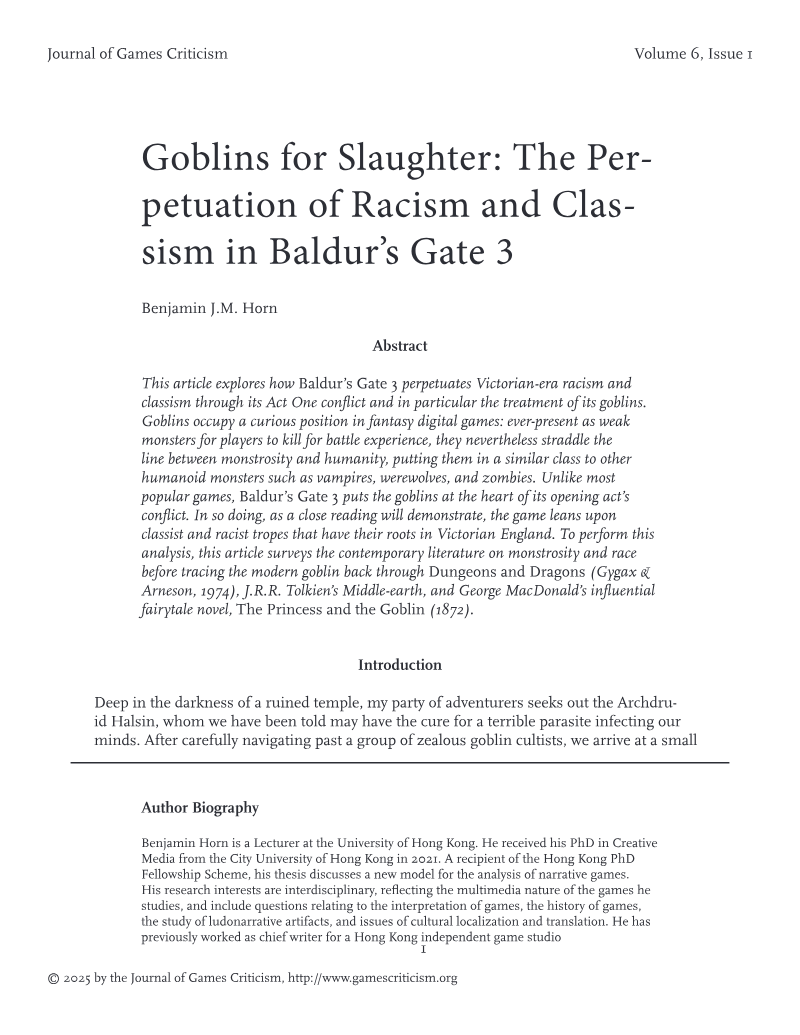
Journal of Games Criticism · 2025



Journal of Games Criticism · 2025
Journal of Games Criticism · 2025
Journal of Games Criticism · 2025
Journal of Games Criticism · 2024
Journal of Games Criticism · 2024

Journal of Games Criticism · 2024
Journal of Games Criticism · 2024
Journal of Games Criticism · 2024

Journal of Games Criticism · 2024
International Journal of Role-Playing · 2026