1 free read left. Create a free account for unlimited reading + AI research.
Create free accountWhitepaper Journal of Games, Game Art, and Gamification
1 free read left. Create a free account for unlimited reading + AI research.
Create free accountWhitepaperJournal of Games, Game Art, and Gamification
Mobile augmented reality (AR) translator applications were developed to facilitate communication between Banjar and Indonesian speakers. These applications aim to address the decline of the Banjar language and assist tourists in South Kalimantan.
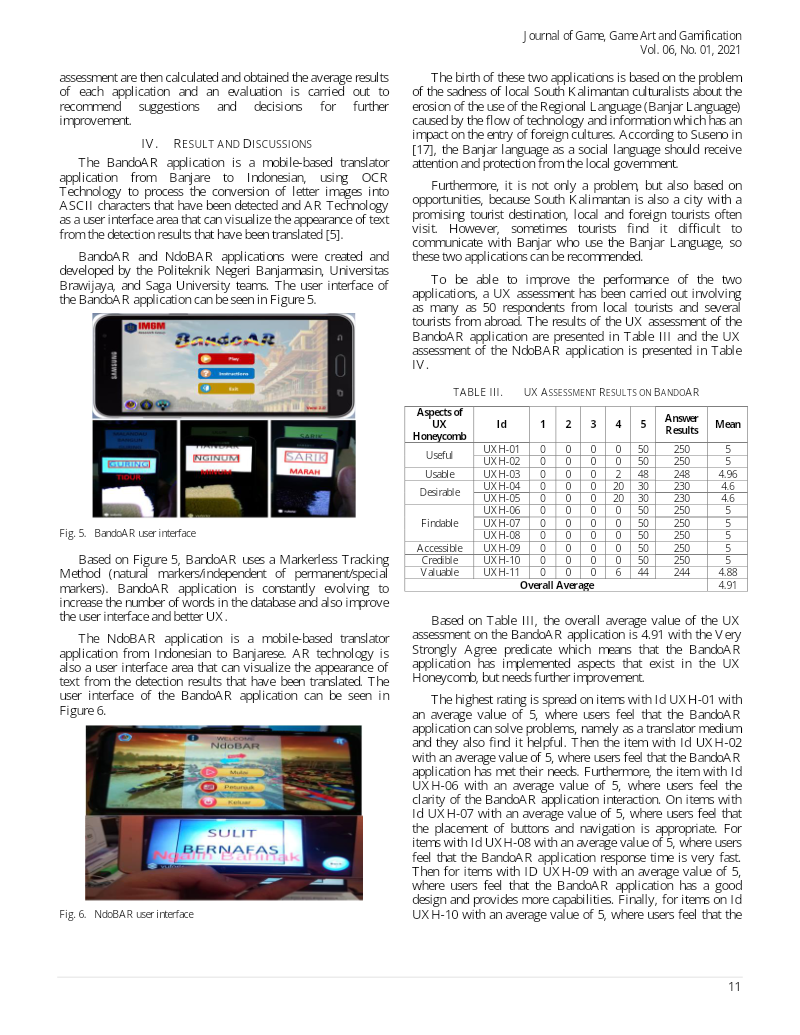
Core Function. The applications effectively utilize optical character recognition (OCR) and markerless tracking technology to provide real-time translation for Banjar and Indonesian speakers.
This research evaluates the user experience of two mobile augmented reality (AR) translator applications, BandoAR and NdoBAR, designed to facilitate communication between Banjar and Indonesian speakers. Developed to address the decline of the Banjar language and assist tourists in South Kalimantan, these applications utilize optical character recognition (OCR) and markerless tracking technology to translate text in real-time. The primary objective is to assess whether these tools meet user needs and provide a high-quality, intuitive interface.
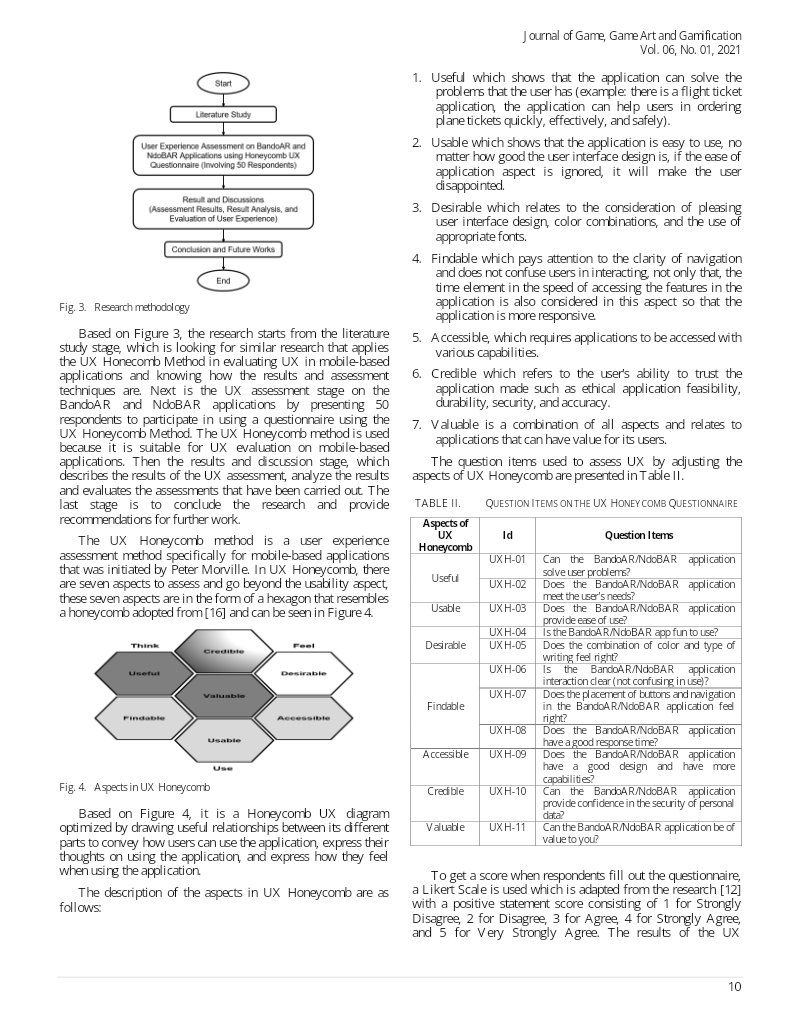
The study employs the UX Honeycomb methodology, which evaluates applications across seven dimensions: useful, usable, desirable, findable, accessible, credible, and valuable. Data was collected from a sample of 50 respondents, including both local and international tourists, who assessed the applications using a five-point Likert scale. The analysis focuses on identifying strengths and weaknesses in the current design to provide actionable recommendations for future development.
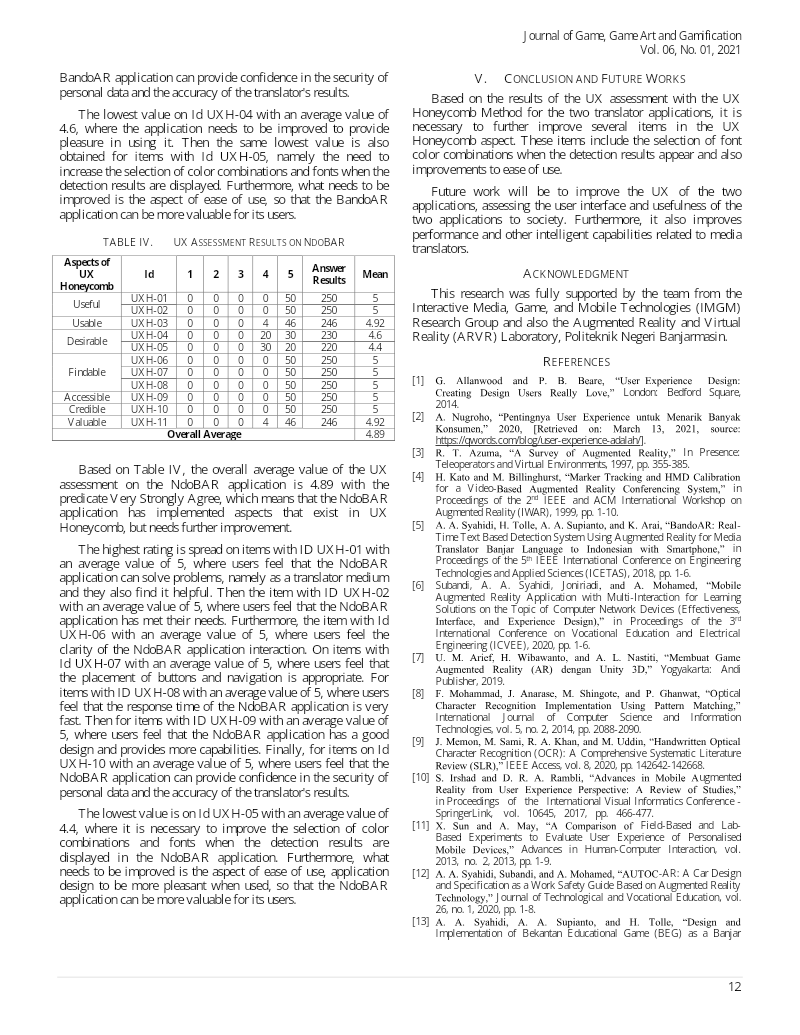
Findings indicate that both applications perform exceptionally well, with BandoAR achieving an average score of 4.91 and NdoBAR scoring 4.89, both earning a "Very Strongly Agree" predicate. Users consistently rated the applications highly for their ability to solve translation problems, provide clear navigation, and maintain fast response times. However, the results highlight a need for refinement in the "desirable" aspect, specifically regarding font selection and color combinations used during text detection. The study concludes that while both applications successfully fulfill core user experience requirements, further iterative improvements to visual design and ease of use are necessary to maximize their long-term value and accessibility for the public.
Journal of Games, Game Art, and Gamification · 2026
Journal of Games, Game Art, and Gamification · 2026
Journal of Games, Game Art, and Gamification · 2025
Journal of Games, Game Art, and Gamification · 2025
Journal of Games, Game Art, and Gamification · 2025
Journal of Games, Game Art, and Gamification · 2025
Journal of Games, Game Art, and Gamification · 2025
Journal of Games, Game Art, and Gamification · 2025
Journal of Games, Game Art, and Gamification · 2025
Journal of Games, Game Art, and Gamification · 2025
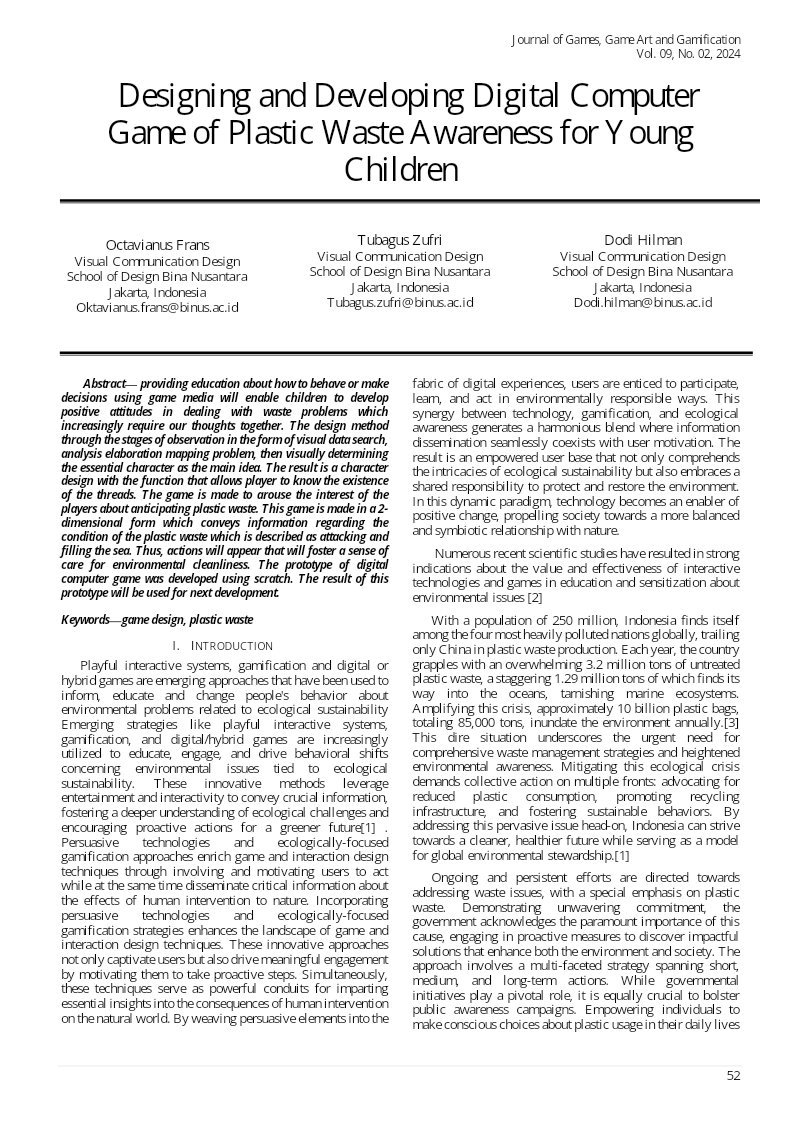
Journal of Games, Game Art, and Gamification · 2024
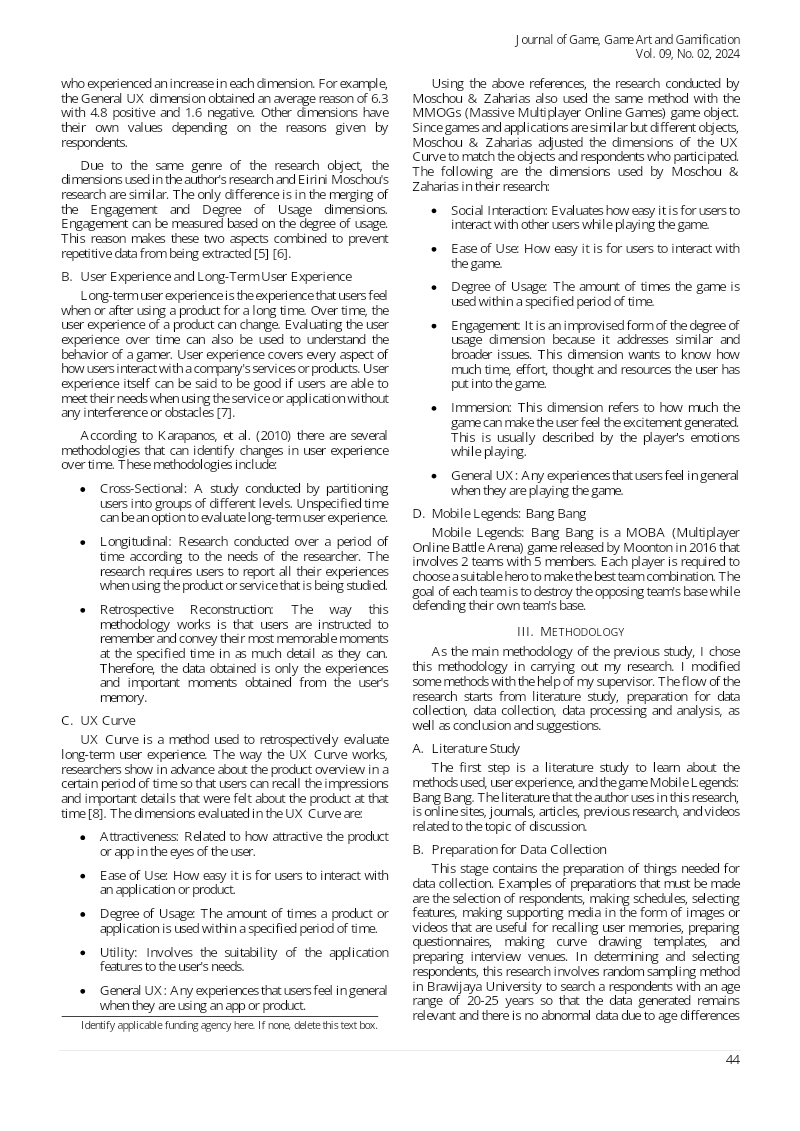
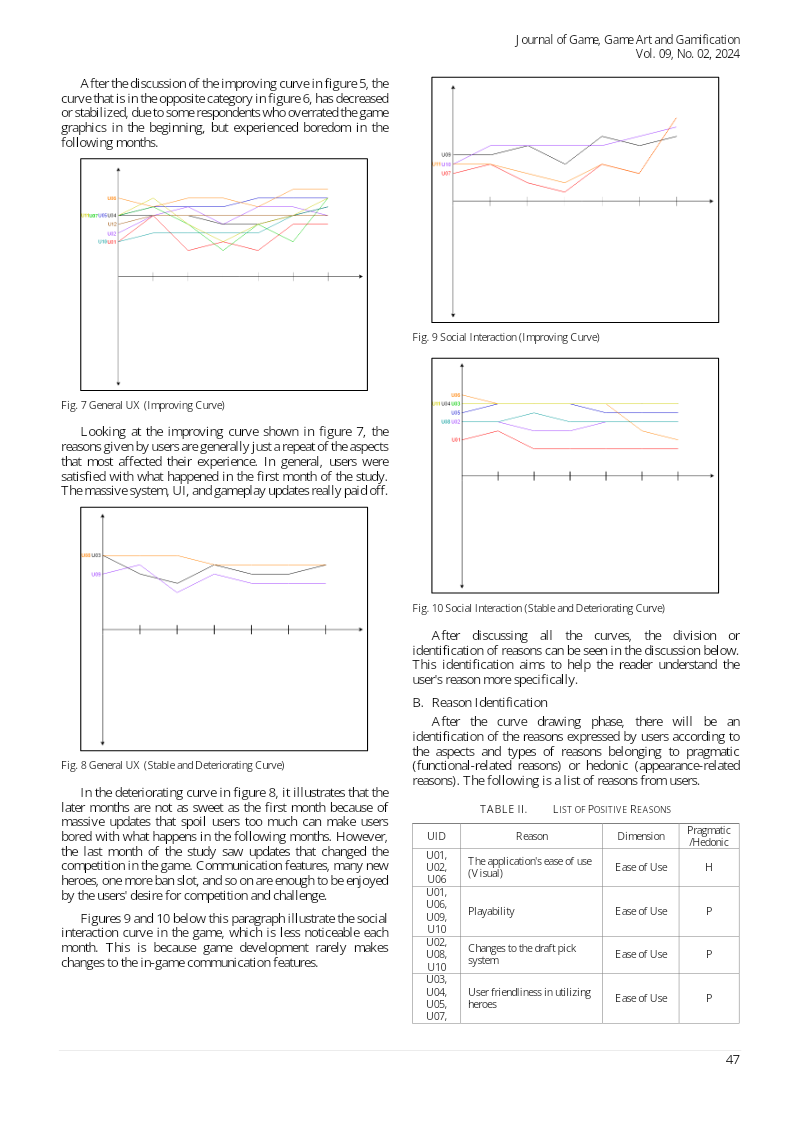
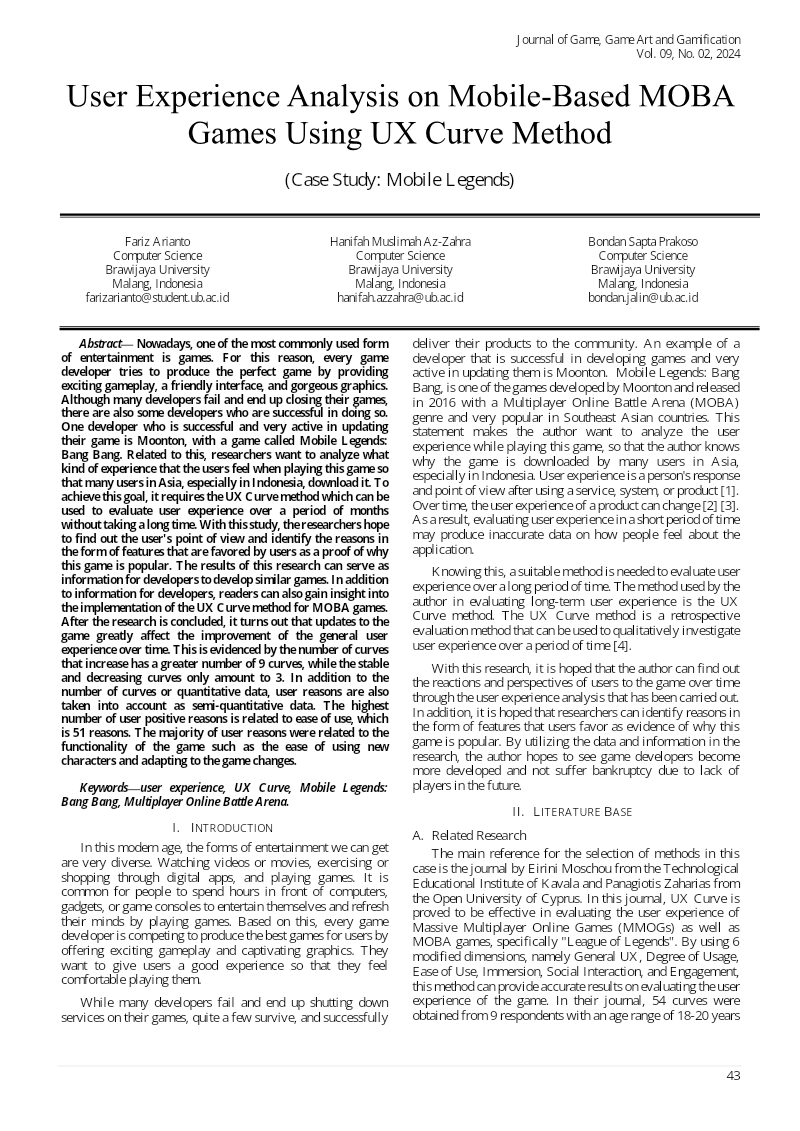
Journal of Games, Game Art, and Gamification · 2024
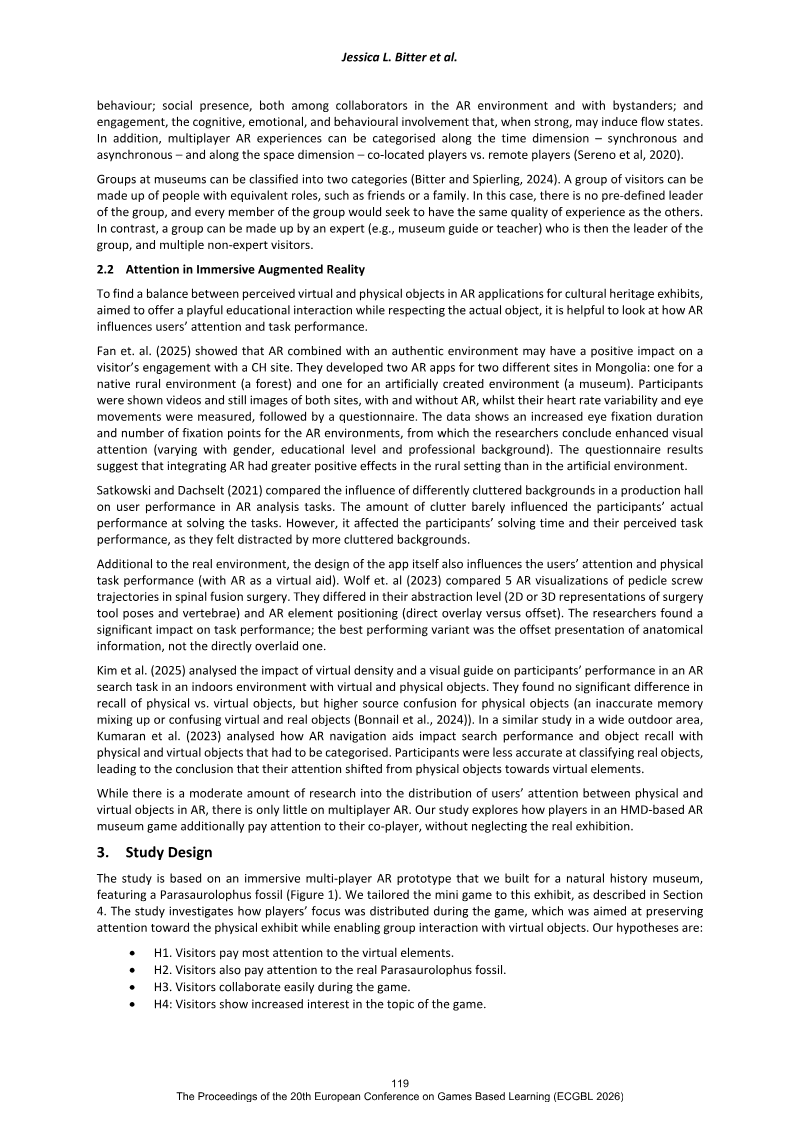
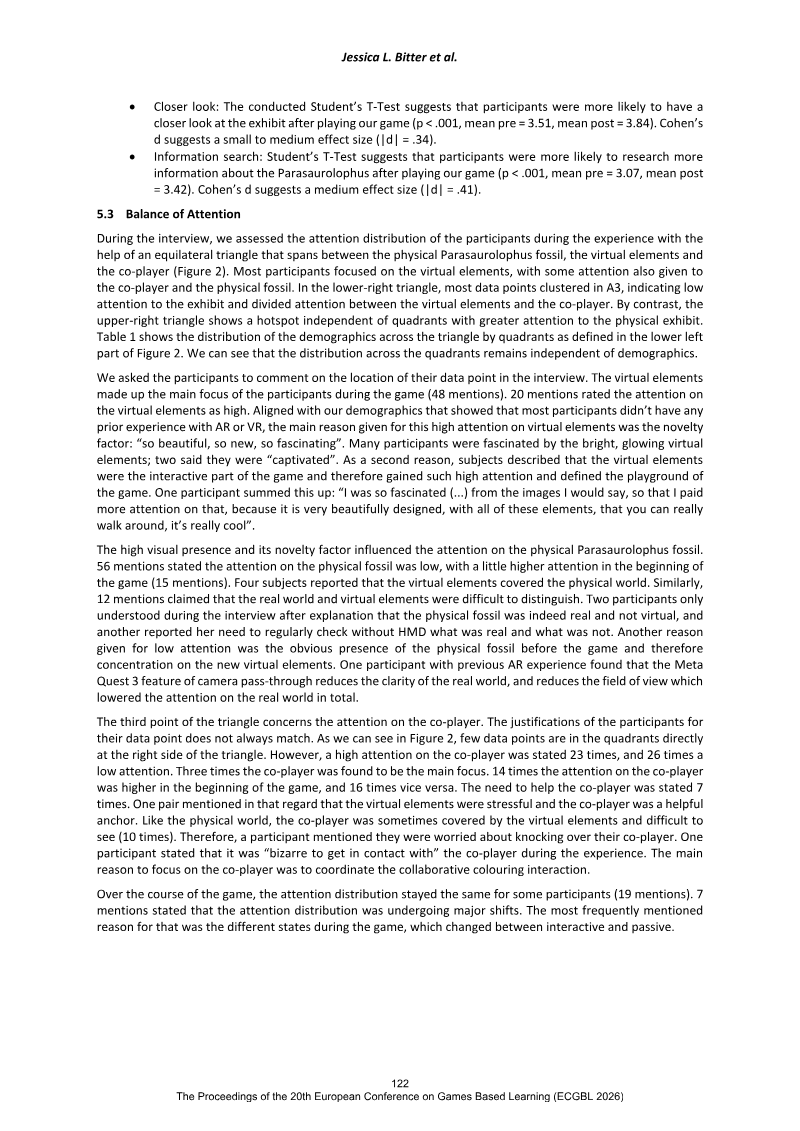
European Conference on Games Based Learning (ECGBL) · 2026
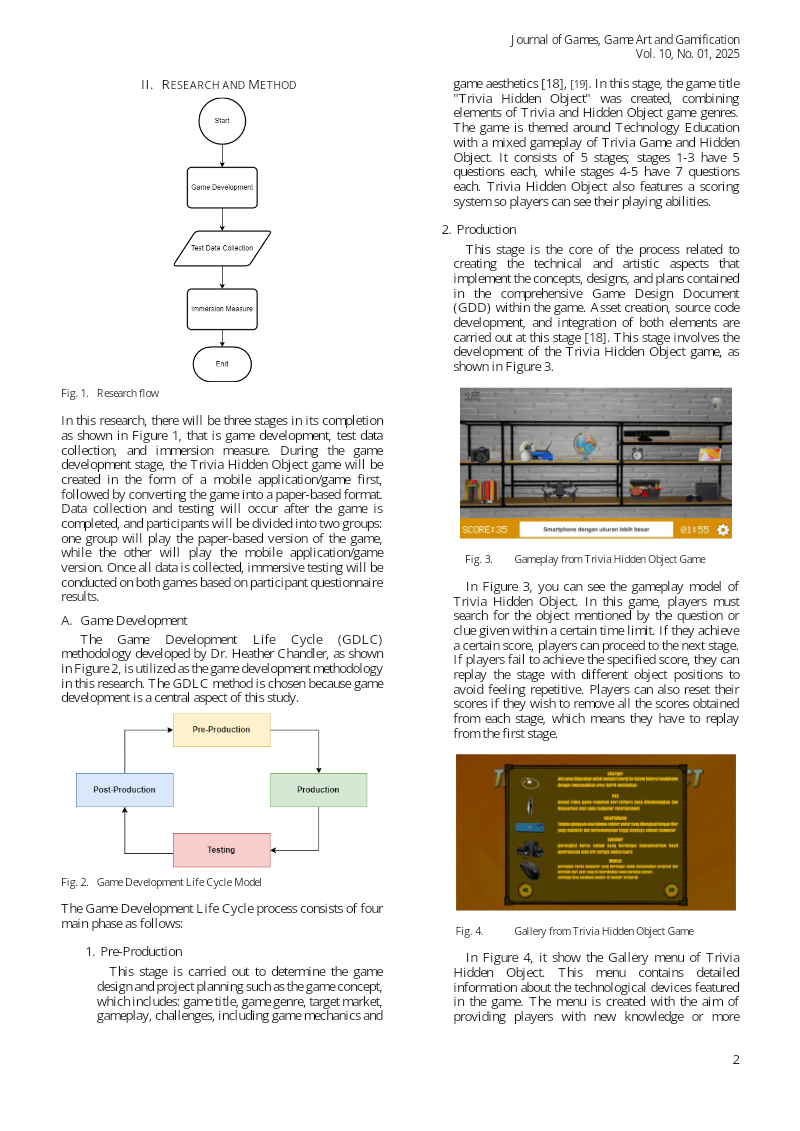
Universitas Muhammadiyah Malang · 2025
European Conference on Games Based Learning (ECGBL) · 2022