1 free read left. Create a free account for unlimited reading + AI research.
Create free accountWhitepaper Journal of Games, Game Art, and Gamification
1 free read left. Create a free account for unlimited reading + AI research.
Create free accountWhitepaperJournal of Games, Game Art, and Gamification
This study explores the development of a cost-effective teleoperation system that utilizes standard, consumer-grade virtual reality (VR) hardware to control a mobile robotic platform. The primary objective is to overcome the high implementation costs and accessibility barriers associated with specialized telepresence technologies while mitigating common issues such as latency-induced simulator sickness and diminished spatial awareness. By integrating a head-mounted display (HMD) with a virtual environment that features a floating video feed and orientation-tracking visual cues, the system aims to provide an immersive and intuitive user experience.
The methodology involves a comparative analysis between the proposed VR-based interface and a traditional keyboard-and-monitor control scheme. Testing was conducted using a ROSbot 2R platform across three distinct experimental categories: basic system navigation, fine motor control in confined spaces, and situational awareness. The system architecture utilizes Unity 3D and ROS 2 to facilitate communication, with the VR environment designed to maintain a consistent 90Hz refresh rate to minimize user discomfort, regardless of fluctuations in the robot’s video feed latency.
Findings indicate that while the VR system introduces a slight learning curve, users successfully achieved competitive performance levels by their final trials. Specifically, the VR interface demonstrated superior situational awareness, with users showing a 20-minute improvement in spatial accuracy compared to those using a keyboard and monitor. Although the VR system showed a minor loss in precision during fine motor tasks, the results confirm that accessible hardware can effectively support immersive teleoperation. The study concludes that the integration of visual feedback loops—such as floating indicators for orientation and latency—successfully bridges the gap between affordable hardware and high-fidelity robotic control.
Each row is a game or company this document names, each column a document, oldest first. A mark means that document names it. Select a row to see those documents.
Journal of Games, Game Art, and Gamification · 2026
Journal of Games, Game Art, and Gamification · 2025
Journal of Games, Game Art, and Gamification · 2025
Journal of Games, Game Art, and Gamification · 2025
Journal of Games, Game Art, and Gamification · 2025
Journal of Games, Game Art, and Gamification · 2025
Journal of Games, Game Art, and Gamification · 2025
Journal of Games, Game Art, and Gamification · 2025
Journal of Games, Game Art, and Gamification · 2025
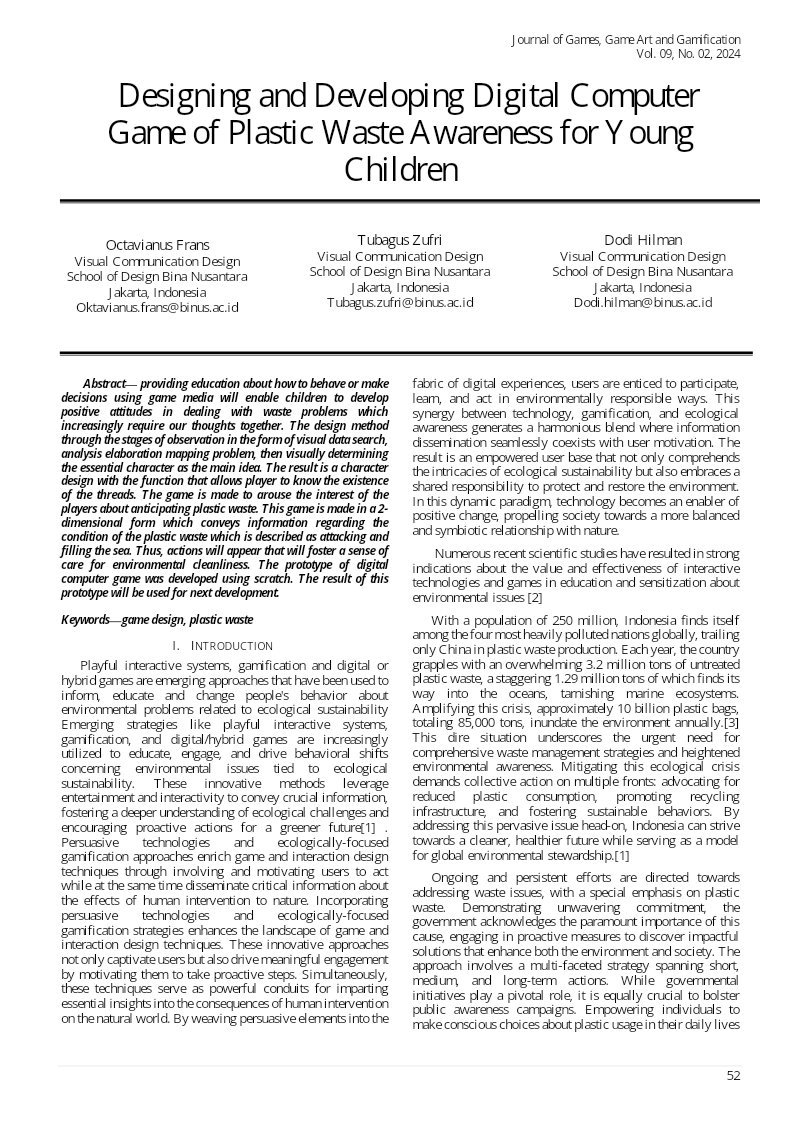
Journal of Games, Game Art, and Gamification · 2024
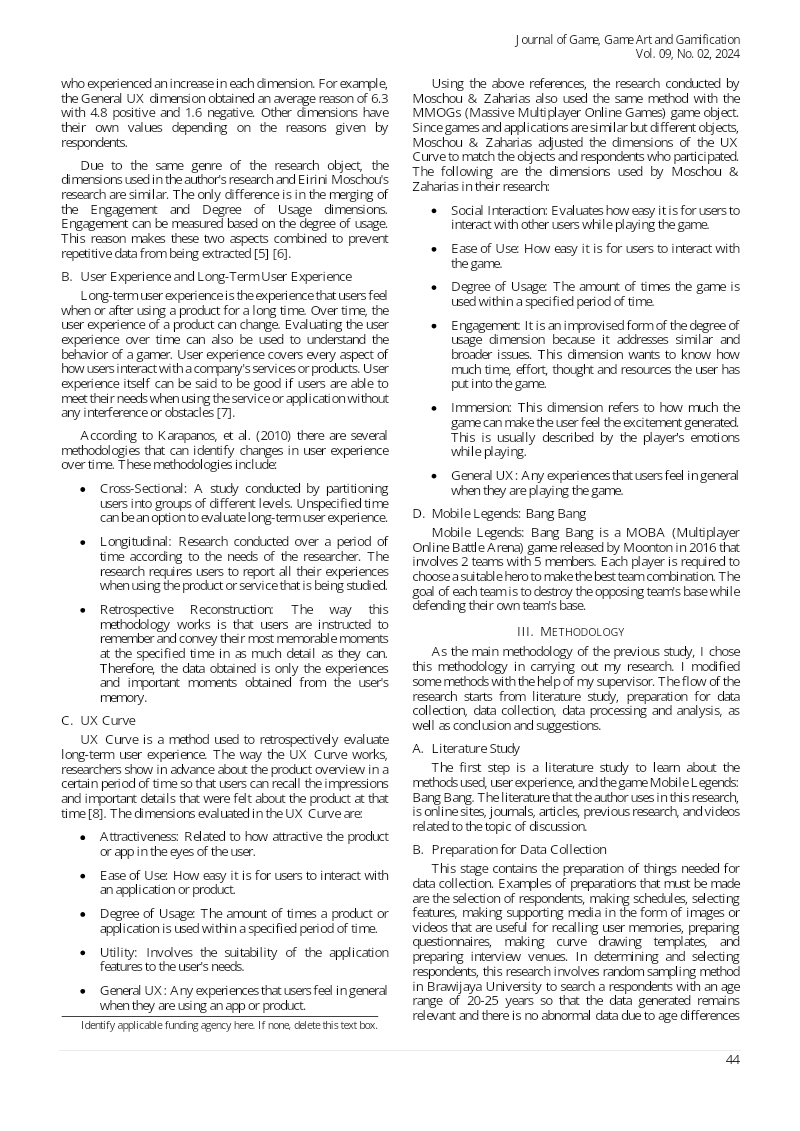
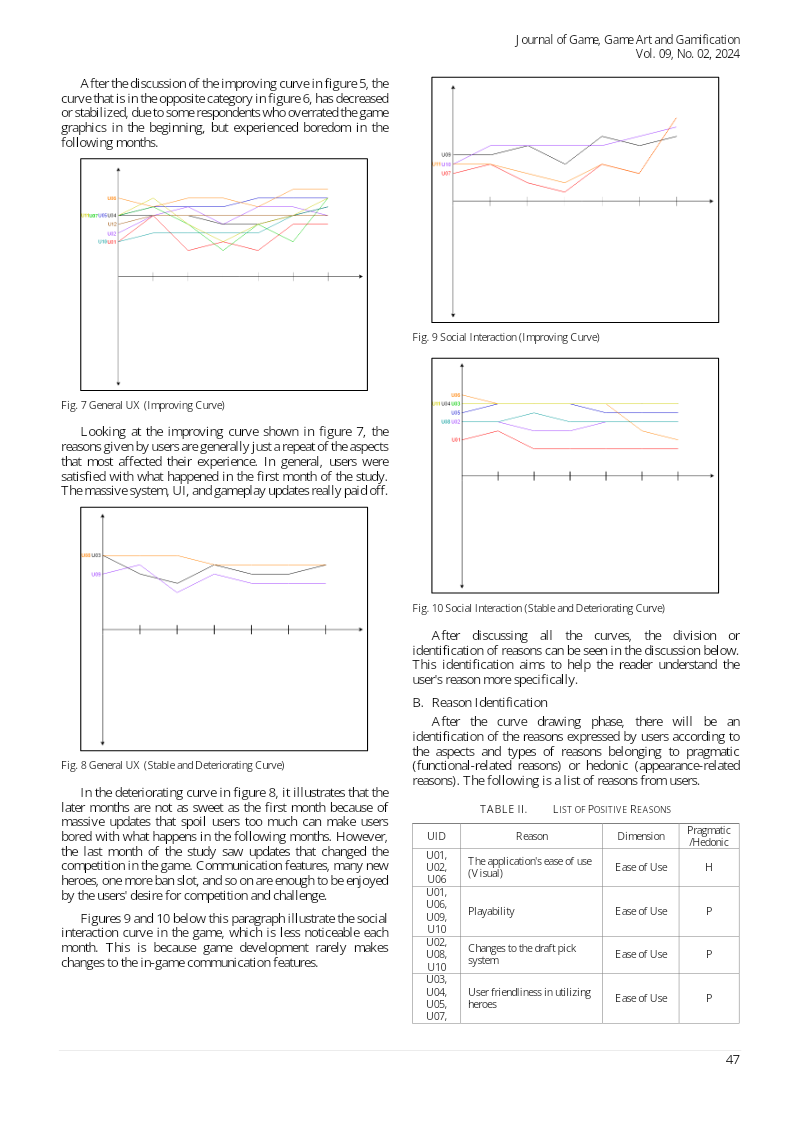
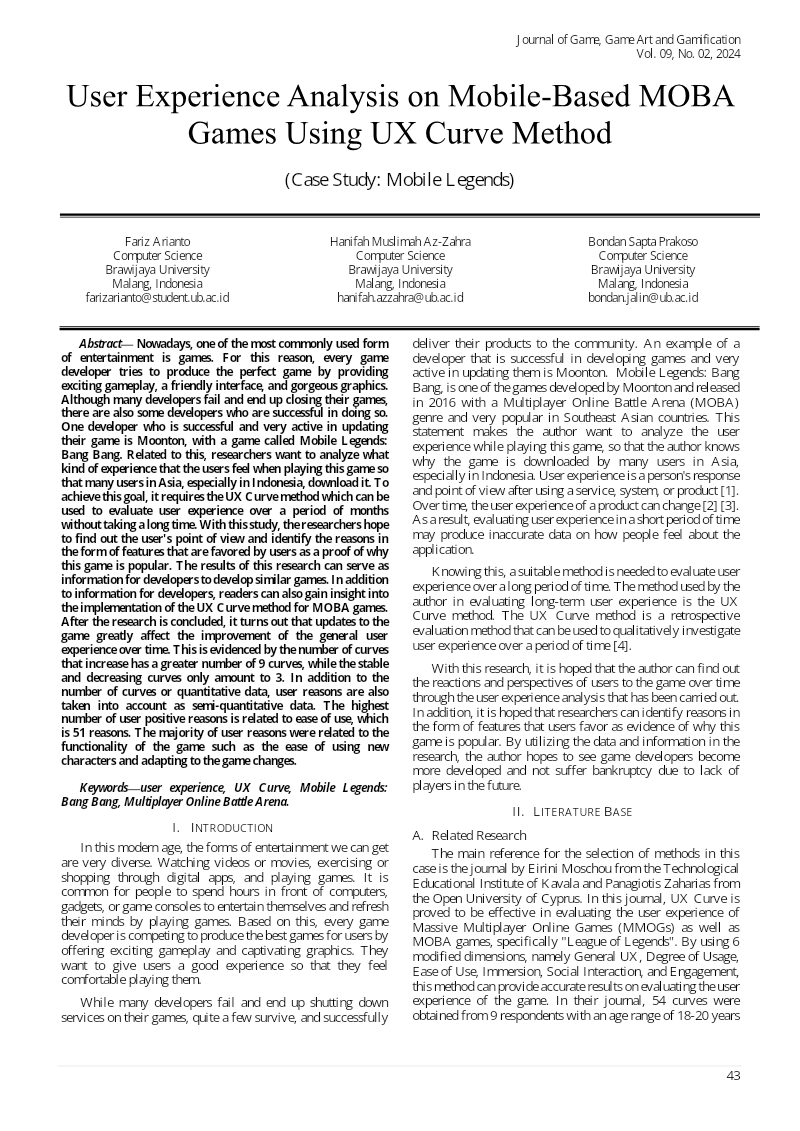
Journal of Games, Game Art, and Gamification · 2024
Journal of Games, Game Art, and Gamification · 2024
Naavik · 2026