1 free read left. Create a free account for unlimited reading + AI research.
Create free accountWhitepaper Telkom University
1 free read left. Create a free account for unlimited reading + AI research.
Create free accountWhitepaperTelkom University
This approach bridges historical biography with fantasy-based game aesthetics. It evaluates how historical figures are adapted into interactive media.
This study examines the visual character design of Akutagawa Ryuunosuke in the digital collectible card game Bungou to Alchemist, utilizing the Manga Matrix method to evaluate how historical figures are adapted into interactive media. The research aims to uncover the deeper narrative and emotional significance embedded in artistic choices, demonstrating how deliberate design decisions shape player perception and contribute to a more immersive gaming experience. By analyzing the character’s form, costume, and personality, the study highlights the intersection of historical biography and creative fantasy.
The methodology employs a descriptive, qualitative approach, combining gameplay observation with a comparative analysis between the game character and the real-life Japanese author. The Manga Matrix framework, developed by Hiroyoshi Tsukamoto, is applied across three stages: the form matrix, which assesses physical structure; the costume matrix, which evaluates clothing and accessories; and the personality matrix, which maps behavioral traits and narrative roles. The findings reveal that while the character retains core historical markers—such as his traditional kimono and status as a writer—the design incorporates stylized elements like navy hair and specific accessories, such as gear-shaped pins and spider-web belts, to reflect his literary works and the game’s fantasy aesthetic.
The analysis concludes that the character design effectively bridges historical authenticity with modern game design, serving as a tool to foster player interest in classical literature. The study suggests that such meticulous design processes not only enrich the gameplay experience but also encourage broader cultural engagement. Limitations include the game’s relatively small player base and the challenges of accessing historical data, leading to recommendations for future research to incorporate direct player interviews and more extensive field observations to refine the understanding of character adaptation in the gaming industry.
Journal of Games, Game Art, and Gamification · 2021



DiGRA · 2026



DiGRA · 2026
DiGRA · 2026
DiGRA · 2025

Hong Kong Baptist University · 2024
Japanese Association for Role-Playing Game Studies (JARPS) · 2023

UIN Syarif Hidayatullah Jakarta · 2023
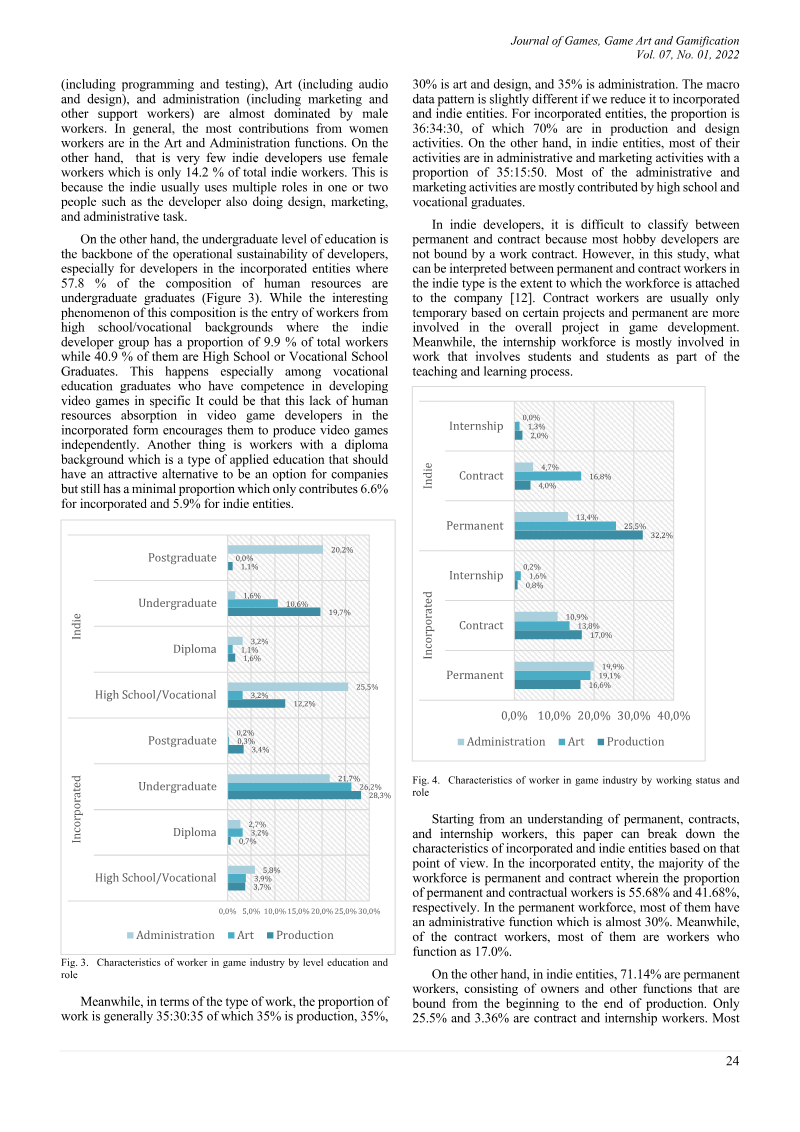
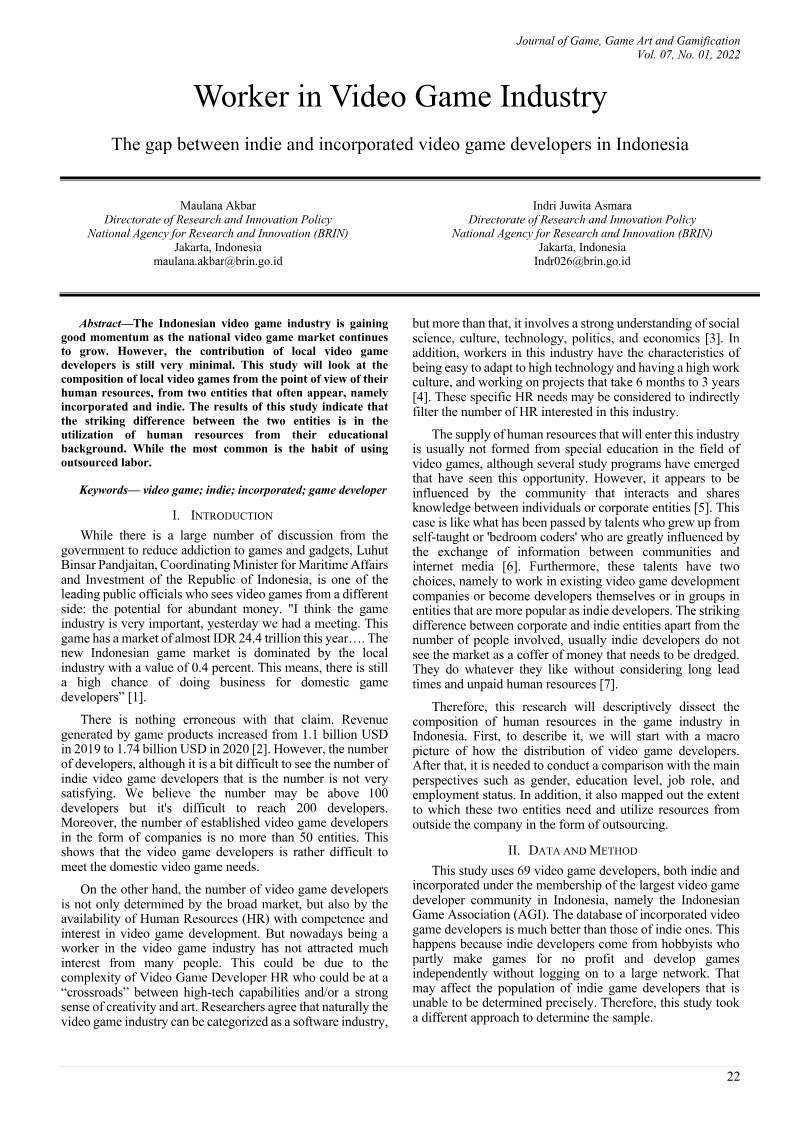
National Agency for Research and Innovation · 2022
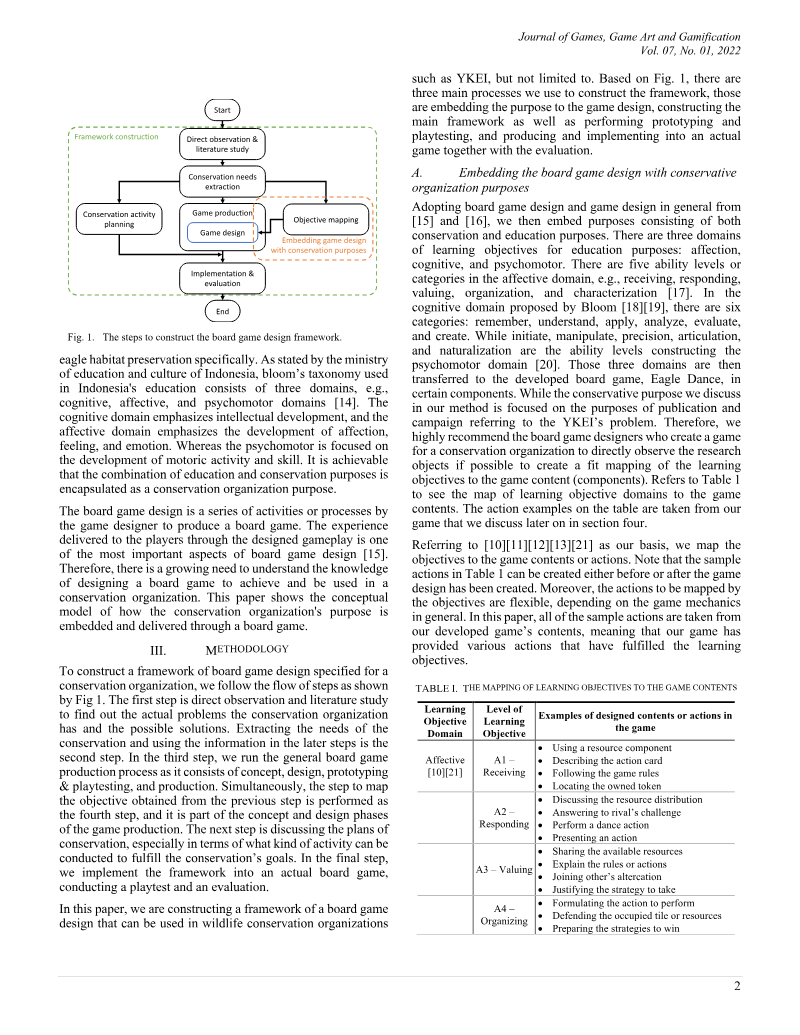
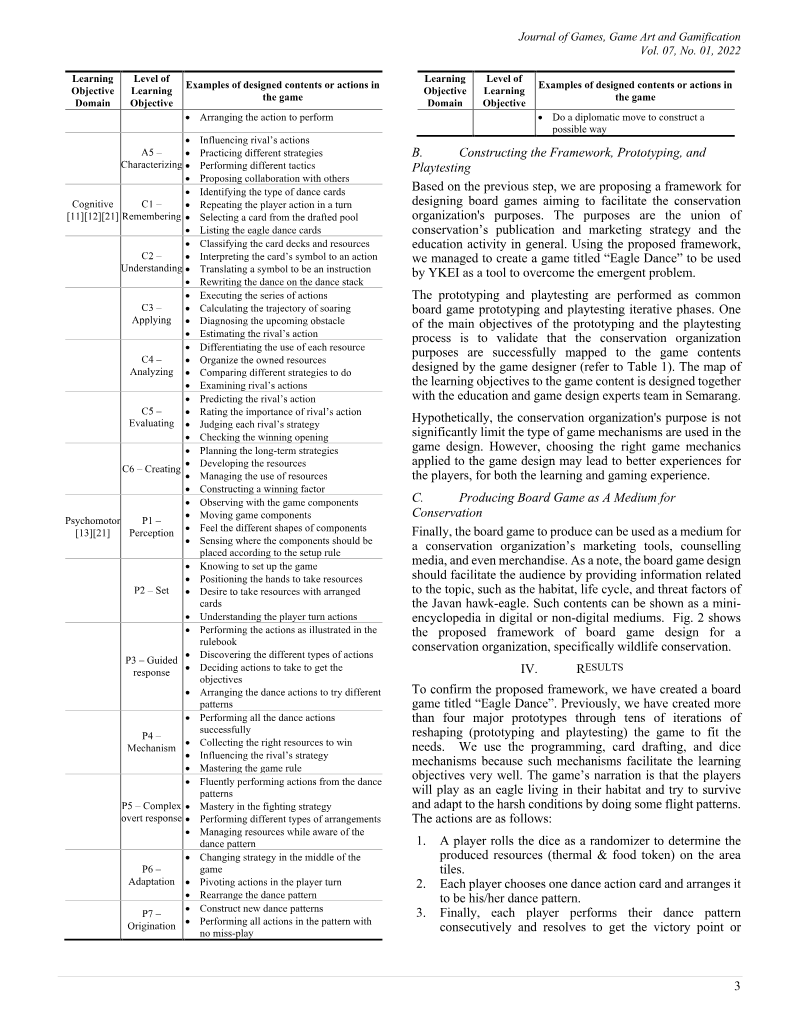
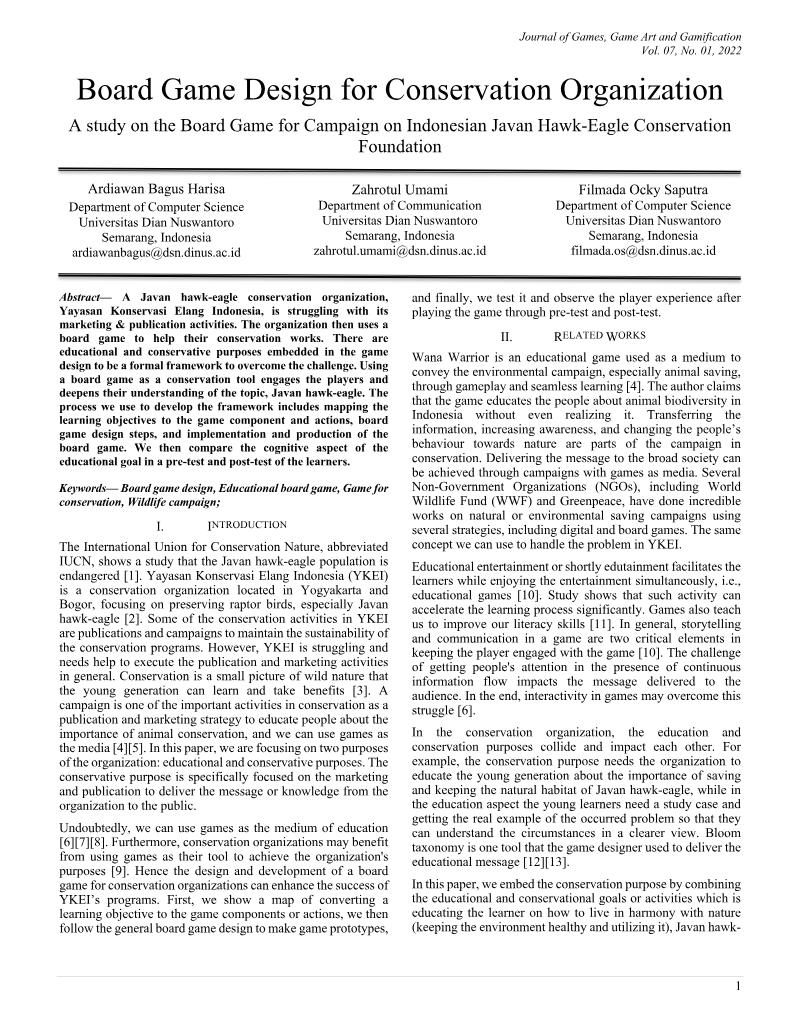
Journal of Games, Game Art, and Gamification · 2022
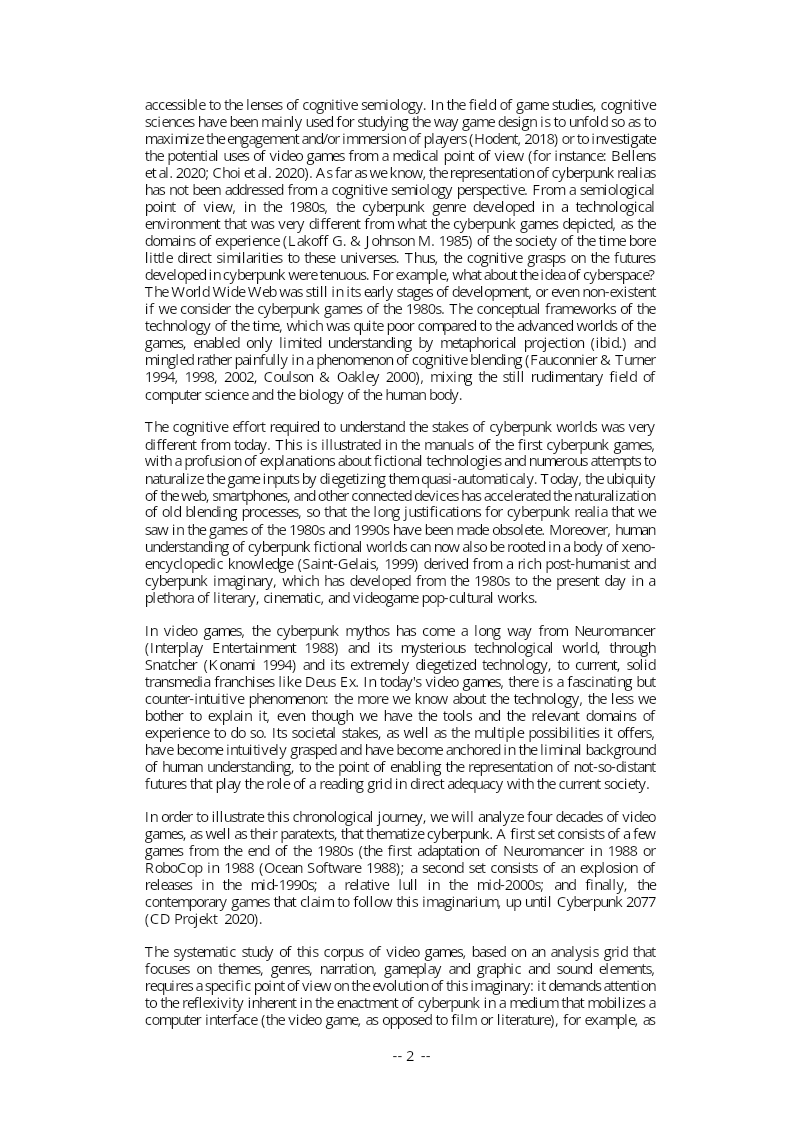

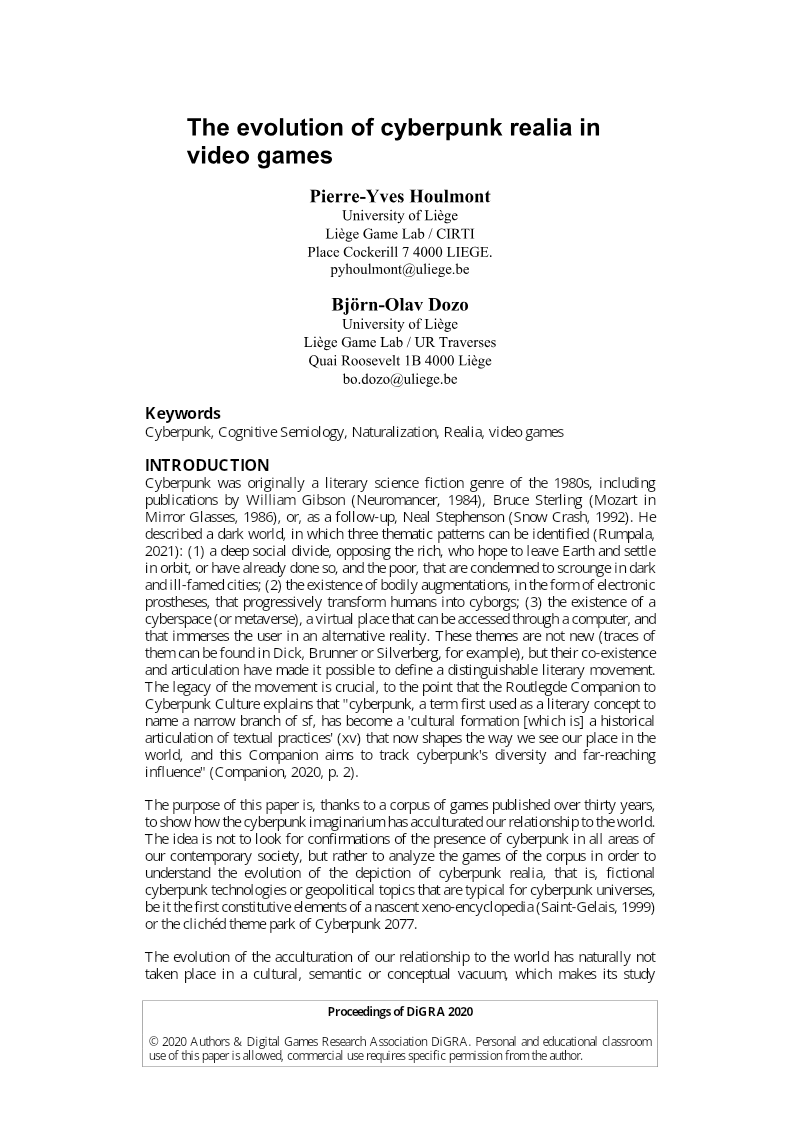
University of Liège · 2022
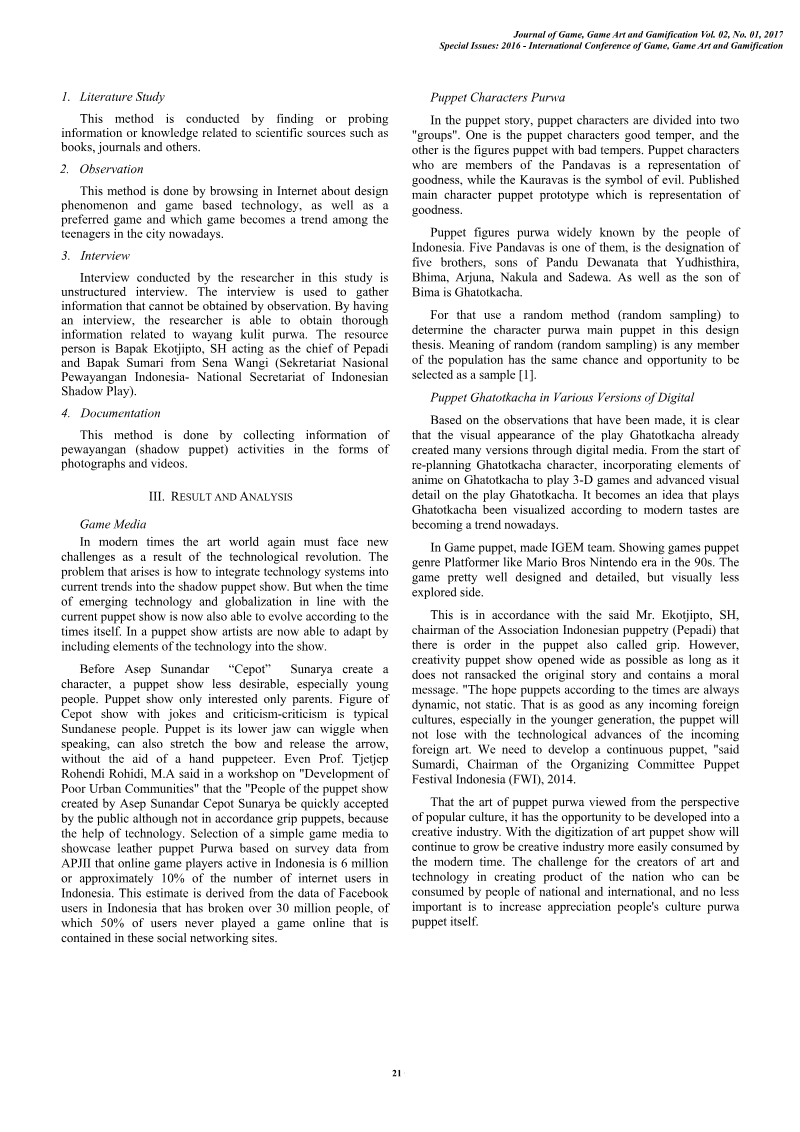
Bina Nusantara University · 2021