Key insights
4 slides
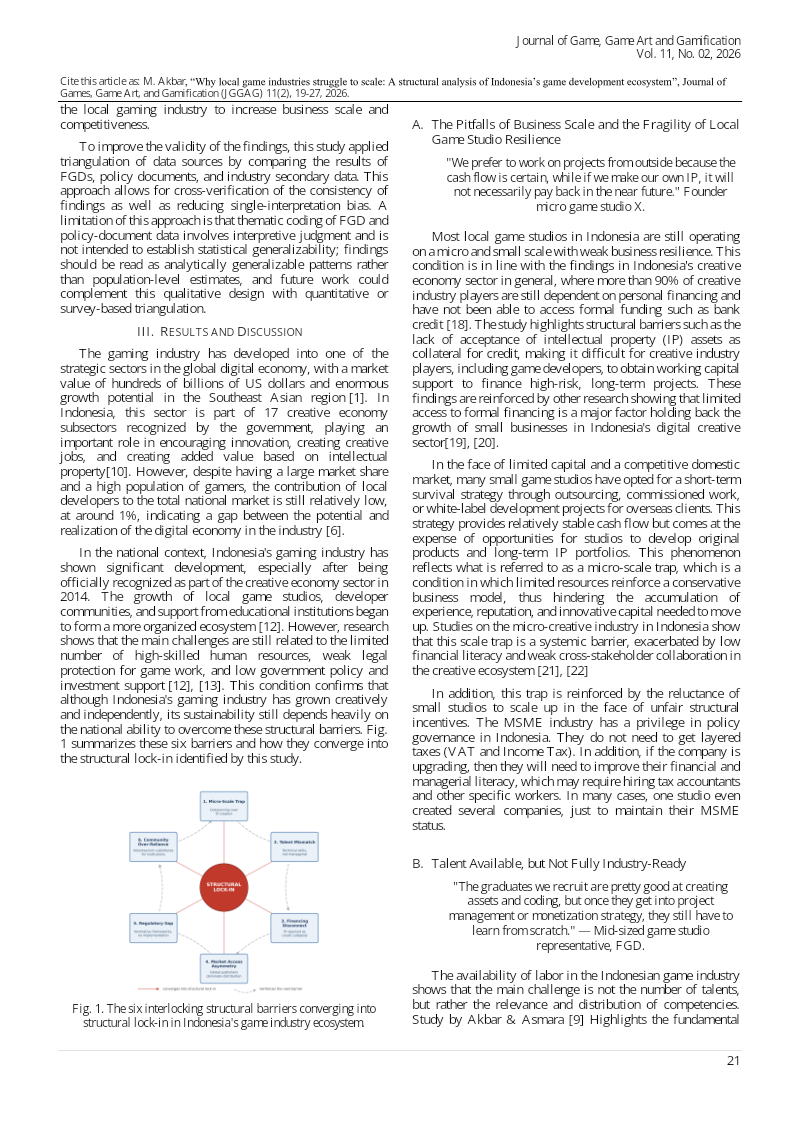
Growth Barrier
The industry is stuck in a cycle of low-growth micro-enterprises.
These enterprises prioritize short-term outsourcing work over developing original intellectual property.
1 / 4
- 01Indonesia's domestic game developers capture less than one percent of their own national market despite the country's large consumer base.See it on page 5
- 02The industry is trapped in a cycle of low-growth micro-enterprises that prioritize short-term outsourcing work over the creation of original intellectual property.See it on page 1
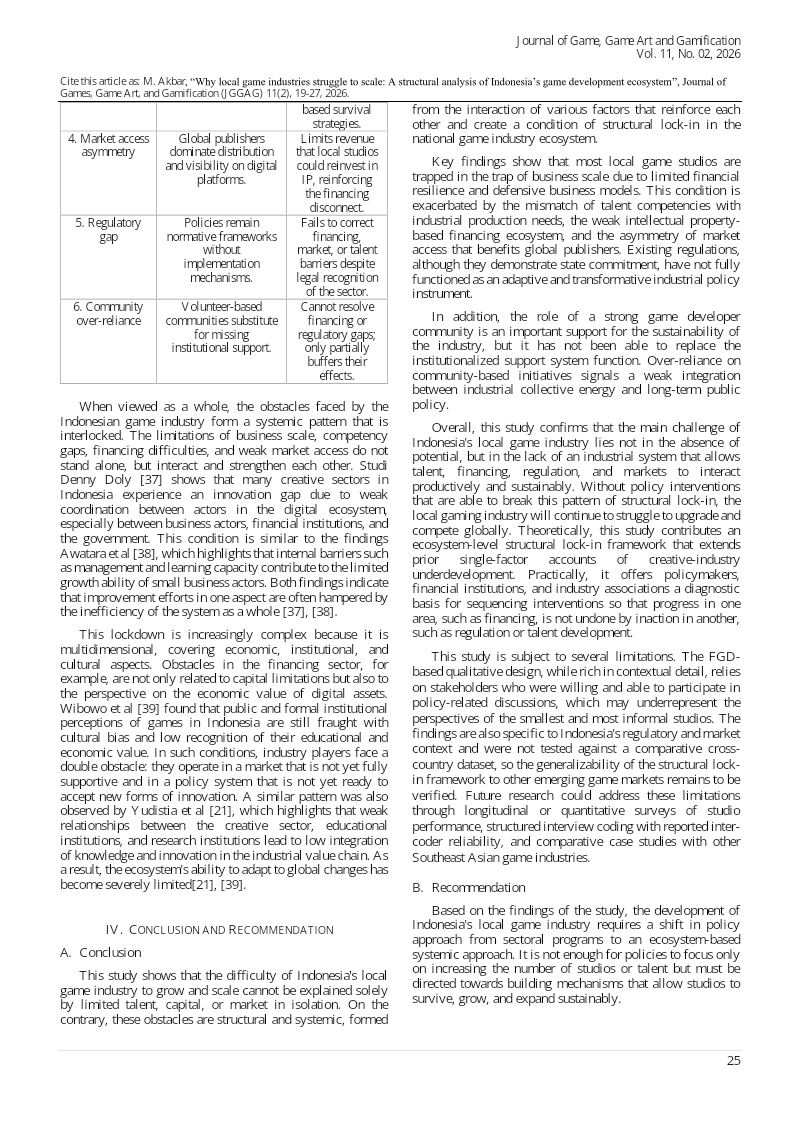
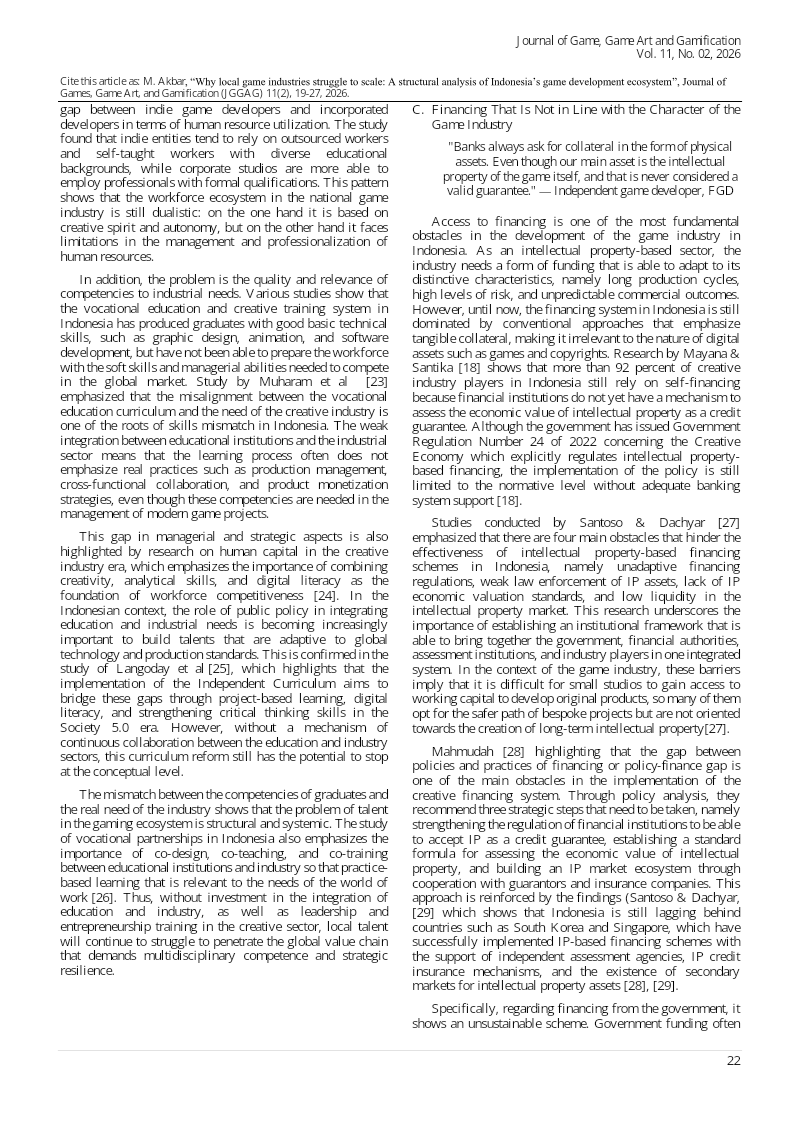
- 03Conventional financing systems are structurally incompatible with game development because they require tangible collateral, which intangible intellectual property assets cannot provide.See it on page 3
- 04A persistent talent-policy gap exists where vocational education fails to produce the specialized skills necessary for global-scale production.See it on page 4
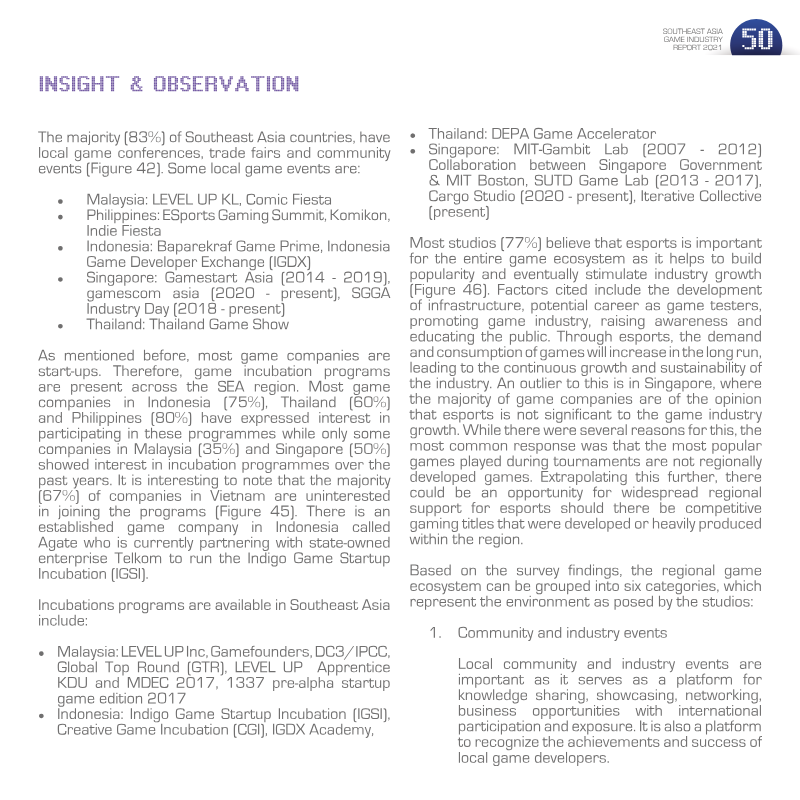
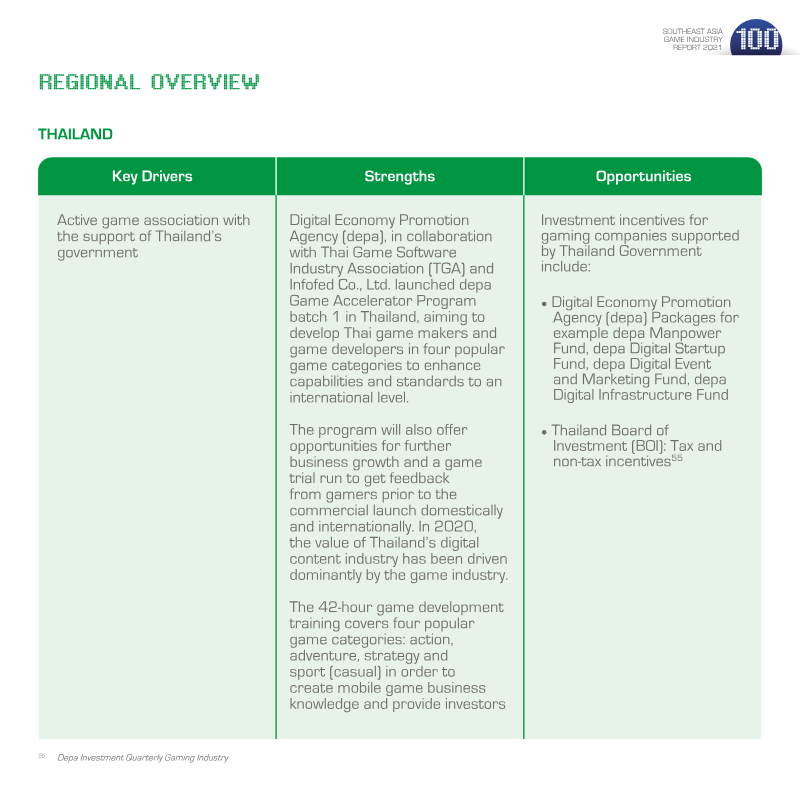
- 05The sector relies on informal, community-led networks that lack the capacity to function as a substitute for robust, formal industrial policy.See it on page 7
- 06Sustainable scaling requires a holistic transformation that simultaneously integrates vocational training, specialized financing for intangible assets, and comprehensive regulatory support.See it on page 4
Ask AI about this report
Summary
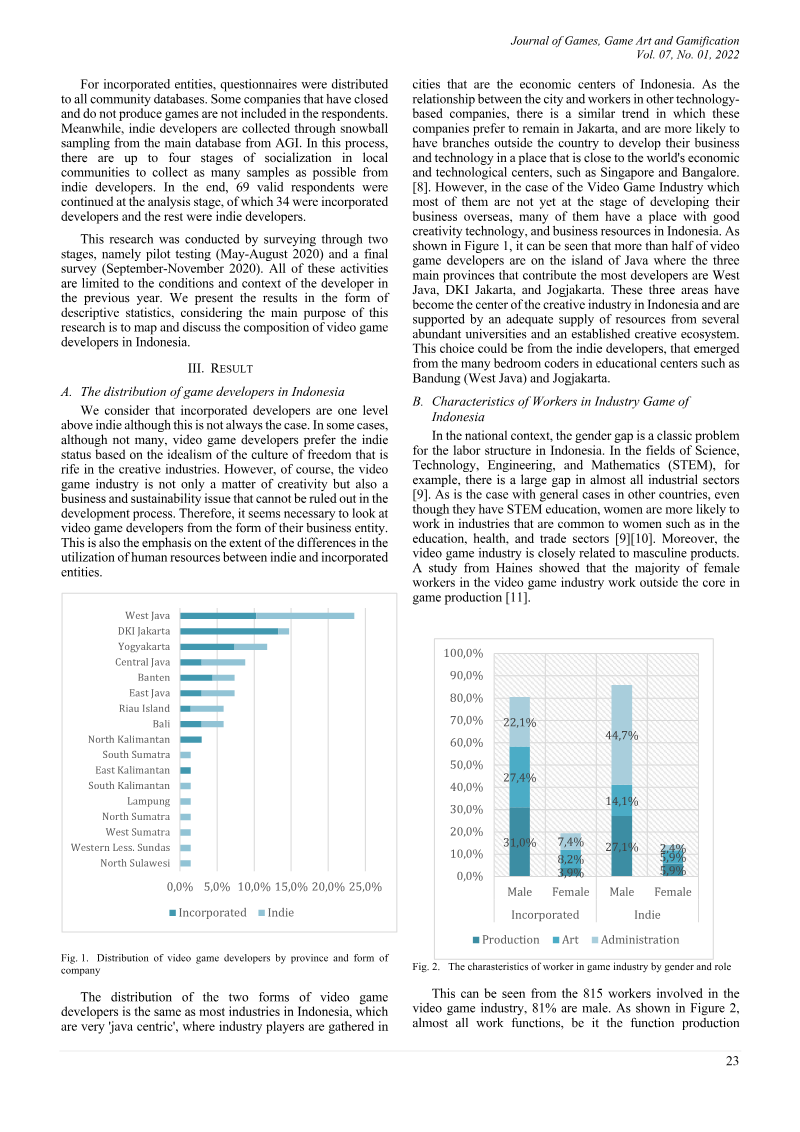
Indonesia’s game development sector faces a profound structural lock-in that prevents local studios from scaling despite the country’s massive domestic consumer base. Although the industry possesses significant creative potential, local developers contribute less than one percent to the domestic market. This stagnation is driven by a cycle of low-growth micro-enterprises that prioritize short-term outsourcing over the development of original intellectual property. Without a transition toward high-value creative assets, the industry remains trapped in a precarious position, largely marginalized by foreign competitors and unable to achieve long-term sustainability.
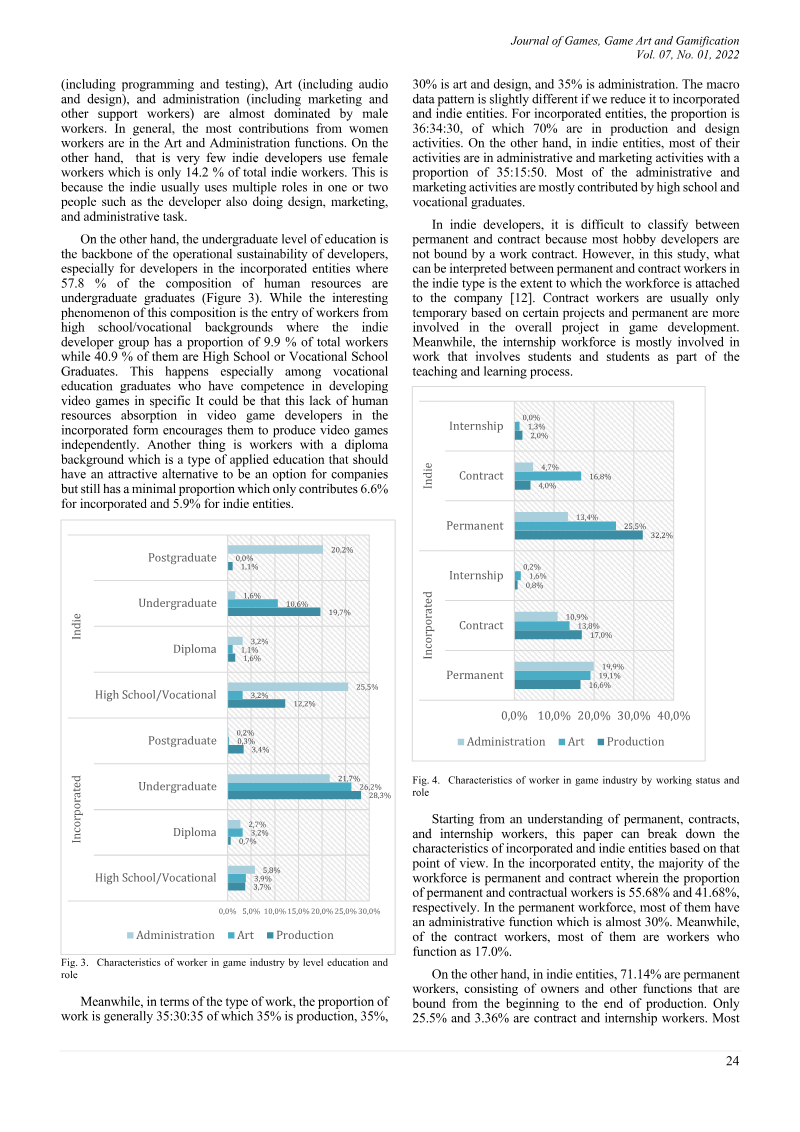
The primary obstacles to growth stem from a systemic misalignment between the nature of digital creative work and the existing institutional framework. Conventional financing systems remain ill-equipped to support game development, as they demand tangible collateral that intangible intellectual property cannot provide. Simultaneously, a persistent talent-policy gap undermines competitiveness; vocational education fails to produce the specialized skills required for global-scale production, while government interventions remain largely symbolic. These issues are compounded by a lack of formal infrastructure, forcing studios to rely on informal, community-led networks that, while valuable for grassroots support, cannot substitute for robust industrial policy.
Overcoming these barriers requires a shift away from isolated, sectoral programs toward a holistic ecosystem transformation. Sustainable development depends on the simultaneous integration of education, finance, and regulation to address these interconnected dependencies. By aligning vocational training with industry requirements, creating specialized financing mechanisms for intangible assets, and implementing comprehensive regulatory support, Indonesia can move beyond its current micro-scale cycle. Only through such a systemic approach can the industry transition from fragmented, community-based initiatives into a cohesive, globally competitive economic sector.