Strategy 8% +24% -3% YoY
Source: South East Asian Mobile Game Market Insights 2024Release Date: October 2015 - China
Source: South East Asian Mobile Game Market Insights 2024In the first half of 2024, mobile game downloads in Southeast Asia increased by 3.4% compared to the previous half-year period, reaching 4.2 billion, with 91% coming from Google Play
Source: South East Asian Mobile Game Market Insights 2024period-over-period declines of 3% and 9%, respectively.
Source: South East Asian Mobile Game Market Insights 2024downloads of simulation, strategy, shooting, and RPG mobile games grew by 11%, 14%, 6%, and 7%, respectively.
Source: South East Asian Mobile Game Market Insights 2024Action 22% +11% YoY
Source: South East Asian Mobile Game Market Insights 2024Puzzle 5% +6% YoY
Source: South East Asian Mobile Game Market Insights 2024The image displays a bar graph and a line graph
The image displays a bar graph and a line graph
The image displays a bar graph and line graph that show the growth of the top gaming subgenres in Southeast Asia
The image displays a bar graph and a line graph
The image displays a chart that shows the growth of Thailand's sports industry from 2020 to 2025
The image displays a bar graph and a pie chart
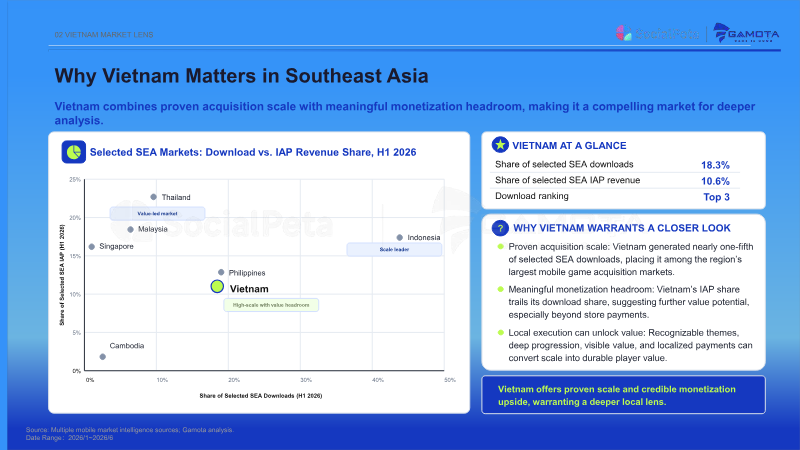
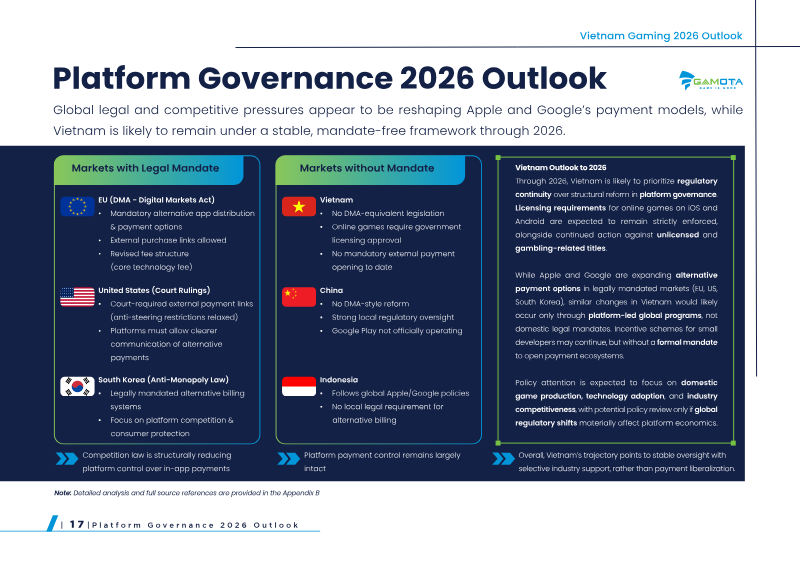
The report argues that Vietnam’s mobile gaming sector will reach a billion‑dollar valuation by 2025, driven by an expanding user base and high spending per download. In 2023, 1.1 billion mobile users and 900 million mid‑core players generated gross revenue of approximately US$1.3 billion, with a compound annual growth rate of 9.8 % across all platforms. The analysis attributes this surge to rapid mobile penetration, widespread 5G coverage (average speed 75.7 Mbps), and a growing banking‑linked payment ecosystem that facilitates in‑app purchases. A key finding is the regulatory shift that began in 2025, when Apple introduced a mandatory license field and the Vietnamese government revoked 1,081 unlicensed titles. This crackdown reduced total downloads by 13.7 % but created a more favorable environment for compliant mid‑core games, which now dominate the market. The report’s methodology involved surveying 250 representative titles with significant download volumes, measuring D1 and D7 retention, playtime, and revenue. Data were cross‑validated with internal tools and third‑party analytics to correct discrepancies common in the local market. Geographically, the study focuses on Vietnam but benchmarks against other Southeast Asian markets. It notes that while daily playtime is rising across the region, Vietnam’s revenue per download exceeds that of the Philippines by at least 28 %. The report concludes that early licensing and a focus on social, competitive, and narrative‑rich mid‑core experiences—particularly 4X strategy, MOBA, squad RPG, MMORPG, and battle royale genres—will be critical for publishers seeking sustainable growth in the Vietnamese market.
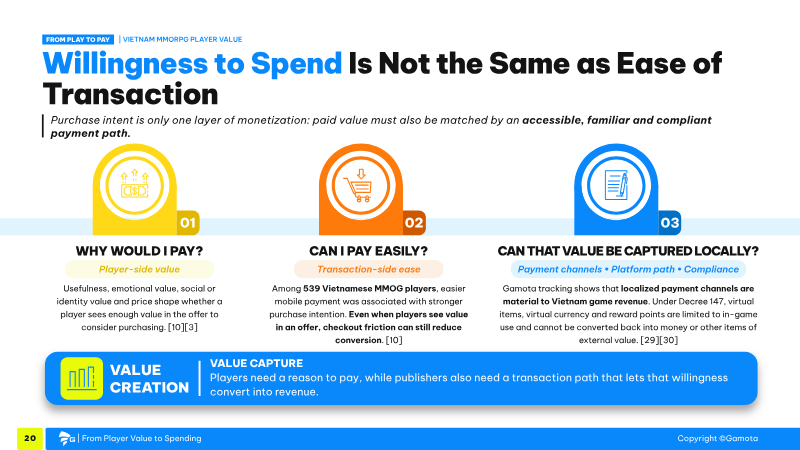
Vietnam’s mobile gaming landscape is rapidly evolving from a download‑centric, ad‑driven model to a hybrid ecosystem that prioritizes in‑app purchases (IAP) and subscription revenue. In 2024, the country led global Google Play downloads with 6.1 billion installs yet generated only about $430 million, underscoring the profitability ceiling of pure advertising. Rising acquisition costs, privacy‑driven signal loss, and a plateauing average revenue per user (ARPU) have forced studios to adopt IAP‑first, hybrid casual titles that deliver deeper engagement and predictable cash flows. Global IAP and subscription revenue reached $150 billion in 2025, up 13%, while Vietnam’s IAP growth surged 65 %, positioning hybrids as the default blueprint for sustainable growth by 2026. The transition hinges on data‑centric monetization strategies. AI‑driven programmatic advertising and hybrid supply‑side platforms help studios navigate privacy constraints, while sophisticated IAP systems require clean player‑behavior analytics and structured measurement frameworks. Localized pricing—using purchasing power parity tiers, local currency endings, and one‑tap tokenised payments—can lift conversion by over 20 % and reduce checkout abandonment by up to 30 %. Integrating multi‑currency settlement through a single provider such as Airwallex adds 2–5 % to net margin without altering game design. A phased rollout model enables Vietnamese studios to pilot in core markets, expand regionally through configuration rather than new vendor projects, and scale into high‑value markets like the US for top‑line growth and FX savings. Premium ad formats on TikTok, when matched to specific spending barriers, can boost transaction values by 20–30 % and shift campaigns from cost‑per‑install to return‑on‑ad‑spend metrics. Case studies, such as Falcon Game Studio’s pivot to a hybrid model with 60–70 % day‑one retention and a 3–5 % global payer rate, illustrate the tangible benefits of this approach. Overall, Vietnam’s mobile gaming sector is poised to compete globally by leveraging robust payment partners, privacy‑first acquisition tactics, and a disciplined IAP strategy that unlocks higher lifetime value and sustainable studio growth through 2026.
Vietnam’s gaming and esports landscape has evolved into a high‑growth, culturally resonant channel for brands targeting the country’s youthful, tech‑savvy population. With one‑third of the populace engaged in esports and an adult gamer rate of 85 %—the highest globally—the market is driven by widespread smartphone penetration, robust 4G coverage, and a demographic where roughly 70 % are under 25. Mobile titles dominate, particularly MOBAs and FPS games, while PC gaming remains significant; casual players account for nearly half of the audience. Consumer behavior shows intense engagement: gamers spend 1–3 hours per session, seek entertainment (85.9 %), stress relief (74.7 %), and social interaction (46.5 %). Streaming platforms such as YouTube Gaming and Facebook Gaming lead, with Twitch lagging behind. Brands that sponsor mobile esports events or partner with key opinion leaders (KOLs) can tap into this high‑interaction environment, especially as 51 % of gamers trust KOL recommendations and 42 % purchase endorsed products. Investment trends confirm the sector’s appeal. Global esports spend reached $844 million in 2021, with 9.9 % allocated to Vietnam. In‑game advertising that offers prizes (49 %) and video content (40 %) yields the strongest purchase intent, particularly for electronics, tech, and gaming accessories. Best practices emphasize customized creative assets, reward‑based incentives, and authentic collaborations—examples include Adidas “Time In” with Ninja, Dashing’s team sponsorship, and Mastercard’s League of Legends partnership—demonstrating higher recall than traditional sports ads. Practical engagement strategies recommend experiential pop‑ups, in‑game placements, and co‑creation with publishers (e.g., Louis Vuitton’s LVxLOL) to deliver authentic touchpoints. Cause‑based campaigns resonate with Gen Z’s social consciousness, while treating esports as a “co‑business” encourages integrated, audience‑centric messaging. Overall, Vietnam’s rapidly expanding mobile and PC gaming ecosystem offers brands a fertile arena for digital fluidity, agile research, influencer partnerships, and localized media strategies to capture high‑growth engagement.
Vietnam’s 2025 Innovation and Private Capital Report positions the country as a rapidly ascending tech‑investment hub in Southeast Asia, underpinned by steady macro growth and decisive policy support. A 6 % annual real GDP expansion, a $36 B digital economy, and the landmark Resolution No. 57‑NQ/TW collectively create a macro‑environment that attracts both domestic and foreign capital. Private‑capital activity in 2024 totaled $2.3 B across 141 deals, with buyouts dominating but early‑stage venture capital rebounding sharply in the second half of the year. High‑tech sectors—particularly AI, AgriTech, Green Tech, semiconductors, and data centers—experienced multi‑fold funding surges, reflecting a shift toward technology‑driven value creation. The labor market fuels consumer and industrial demand: Vietnam ranks second in Southeast Asia for workforce size, with a growing middle‑affluent class projected to exceed 45 % of the population by 2030. Strong education outcomes and a youthful, tech‑savvy demographic drive growth in retail, e‑commerce, digital health, and edtech. Tier‑2 cities such as Bac Ninh, Can Tho, and Da Nang emerge as new growth poles, supported by government investment in transportation, renewable energy, and digital infrastructure. Resolution No. 57 sets ambitious 2030–2045 targets—30–50 % GDP share from digital and high‑tech exports, 80 % cashless transactions, and 2 % of GDP allocated to R&D (60 % private). It outlines strategic actions in AI, 6G, talent development, and digital governance to attract at least five global tech giants for R&D and manufacturing. Projected economic gains from AI alone could reach $120 B by 2040, while renewable energy and climate‑tech investments are already reshaping the power sector through flexible PPAs and green‑credit programs. Overall, Vietnam’s coordinated policy framework, expanding talent pool, and maturing private‑capital ecosystem converge to make the country a compelling destination for long‑term value creation across high‑growth technology, green infrastructure, and consumer markets within Southeast Asia.
The Southeast Asia Gaming Consumer Economy report, produced jointly by Telekom Malaysia and twimbit in Q2 2022, examines the region’s rapidly expanding gaming market. Six key economies—Indonesia, Malaysia, the Philippines, Singapore, Thailand and Vietnam—account for 85 % of SEA’s gamer population, which is projected to reach 367.8 million by 2025, representing more than half of the region’s total population. Mobile gaming dominates, with 70 % of in‑game revenue and a 13.7 % CAGR in consumer spend from 2018 to 2021, totaling US$5.57 billion. Urbanisation and a youthful demographic drive high willingness to spend, with 64 % of gamers willing to pay; average annual spend varies from US$9 in Indonesia to US$189 in Singapore. Genre preferences skew toward action, strategy and casual titles; 86 % of players engage in the top five genres. Gender parity is notable, especially on mobile where female gamers constitute 47 % of the market and are highly spend‑active. eSports viewership is nascent but growing, with SEA tournaments ranking among the world’s most‑watched events; mobile eSports is expected to lead future growth as 5G and cloud gaming mature. Monetisation remains dominated by free‑to‑play with in‑app purchases (86 % of revenue), supplemented by hybrid and subscription models. Methodologically, the study synthesises industry interviews, published data, annual reports, and platform analytics. The report recommends that developers adopt edge computing for low‑latency play, deliver cross‑device flexibility, and build scalable cloud architectures to meet the region’s dynamic demand.
The report examines the esports market across Southeast Asia (SEA) for 2024, drawing on a summer‑2024 consumer survey of 14,250 respondents representing the region’s online population aged 16–65. The study focuses on audience reach, engagement maturity, demographic composition, consumption habits, and monetisation challenges. SEA emerges as the world’s most extensive esports market, with a 75 % overall reach but only 32 % of viewers engaging regularly; about half of those regular viewers watch more than seven hours per week. Mobile gaming dominates, accounting for roughly 55 % of esports consumption and driving the shift toward digital-first viewing platforms such as YouTube Gaming, Facebook Gaming, and local streaming services. Gender distribution shows 43 % female viewership, slightly higher than in traditional sports, while the audience is markedly younger—81 % of viewers are Millennials or Gen Z. Compared to traditional sports, esports has a comparable male share but a younger demographic profile and higher urban concentration. Country‑level snapshots reveal Vietnam, Malaysia, and the Philippines as leaders in regular viewership (over 70 % of aware audiences), whereas Singapore lags behind. The report highlights a significant drop‑off from sporadic to regular viewership, underscoring the need for brands and tournament organisers to build stronger brand equity and leverage influencers. Engagement data indicate that esports audiences are highly willing to pay for free‑time activities, yet they also maintain many hobbies, presenting both opportunity and competition for attention. Overall, the findings suggest that SEA’s esports ecosystem is maturing into a mainstream entertainment sector, offering substantial growth potential for advertisers, publishers, and league operators willing to invest in mobile‑centric, data‑driven engagement strategies.
The analysis establishes that Malaysia’s competitive edge stems from the tight integration of digital investment flows with commercial‑real‑estate development, positioning the country as a regional hub for high‑value technology activities. By concentrating the majority of foreign digital capital within a narrow geographic corridor, the nation creates a synergistic environment where advanced infrastructure and specialized real‑estate assets reinforce each other, driving sustained economic benefits. Data reveal that 95 percent of approved digital‑investment projects, amounting to RM 342.6 billion, are located in the Klang Valley, Johor and Penang, with the Klang Valley alone accounting for roughly three‑quarters of total digital foreign direct investment. This region hosts a diversified portfolio that includes data‑centre and cloud services, fintech platforms, artificial‑intelligence applications, and global‑business‑services/KPO operations, collectively generating RM 13.9 billion in digital‑sector employment value. Johor’s contribution is anchored in large‑scale hyperscale data‑centre campuses, while Penang’s niche lies in semiconductor‑linked activities, offering targeted opportunities for developers. A streamlined MDLR framework, co‑created with the Malaysia Digital Economy Corporation, reduces digital‑real‑estate standards to four core criteria, shifting focus to building‑level attributes such as robust digital infrastructure, connectivity, energy resilience and security. This refined approach equips developers and investors with clear benchmarks to align property supply with the evolving demands of the digital economy, ensuring that real‑estate assets remain adaptable and future‑proof across the identified clusters.
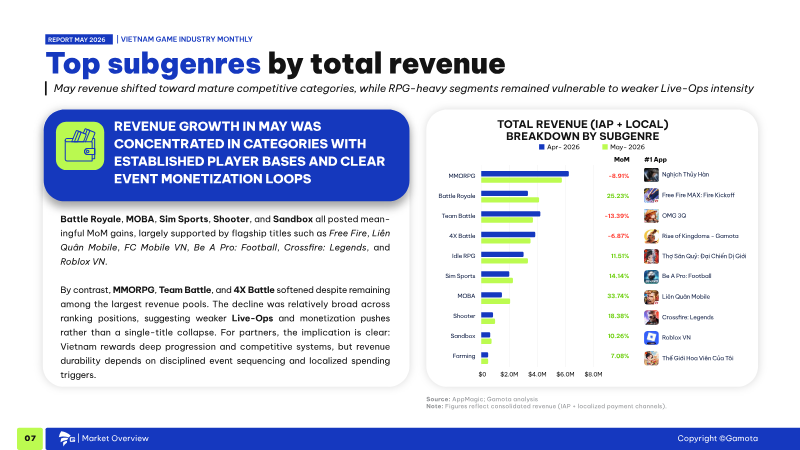
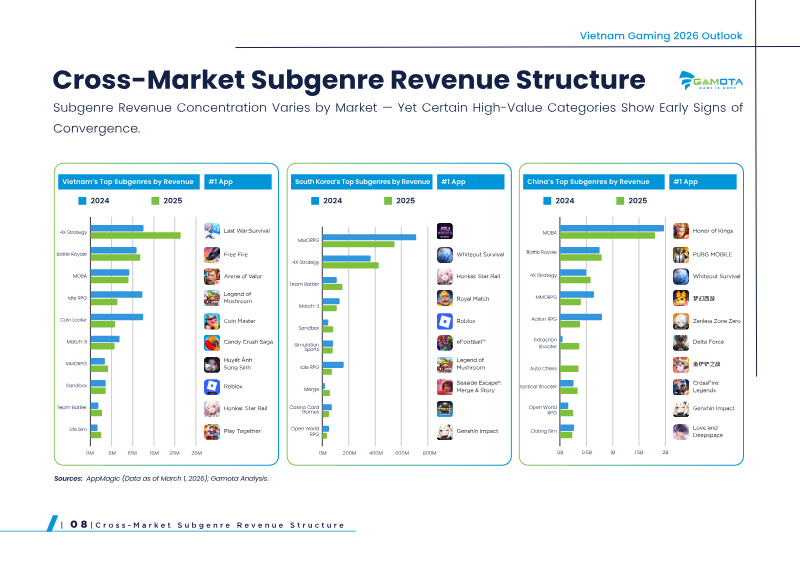
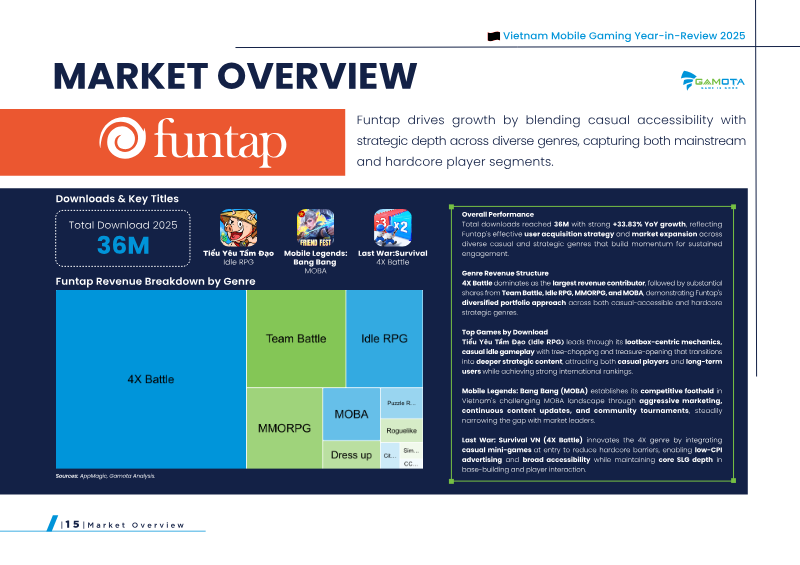
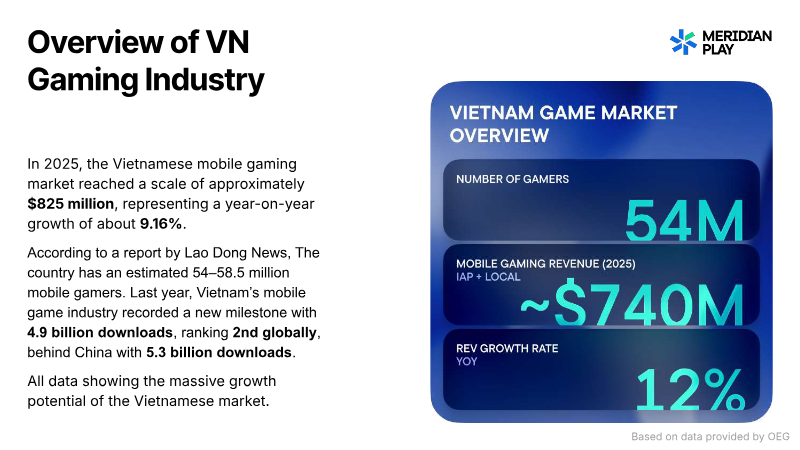
Southeast Asia solidified its position as the world’s second-largest mobile gaming market by downloads in early 2025, reaching 1.93 billion installs. While the region currently ranks seventh globally in revenue at $625 million, it demonstrates significant monetization potential fueled by expanding digital payment infrastructure and rising smartphone penetration. Indonesia serves as the primary volume driver with 870 million installs, while Thailand leads the region in consumer spending, generating $162 million. This growth is increasingly supported by publishers based in Singapore and Vietnam, who have emerged as a dominant global force, contributing over 5.8 billion installs to the international market through a mix of hypercasual hits and competitive titles. Market dynamics reveal a shift toward high-engagement genres and localized content strategies. Although casual arcade and simulation games drive the highest download volumes, monetization is concentrated in Strategy, MOBA, and RPG segments. Mobile Legends: Bang Bang remains the regional revenue leader, sustained by hyper-local live operations and community engagement. Simultaneously, the 4X Strategy genre is experiencing rapid expansion, highlighted by a 77.7% revenue surge for titles like Last War: Survival. Conversely, traditional MMORPGs have seen a decline of nearly 20%, making way for Open World Adventure RPGs and sophisticated strategy games that leverage deep social and competitive mechanics. The regional landscape is characterized by distinct national preferences and the global expansion of local firms. Vietnam has become a powerhouse for survival-themed hypercasual games, while Thailand shows a unique affinity for realistic sports simulations. Established titles like Garena Free Fire continue to dominate global charts by blending cultural relevance with nostalgic collaborations. Ultimately, the region’s trajectory is defined by a transition from high-volume downloads to sophisticated monetization, driven by a combination of community-led activations and the strategic global influence of Southeast Asian publishers.
Korean content and entertainment startups are being urged to treat Southeast Asia as a primary growth engine rather than a peripheral market. Success hinges on deep localisation that goes beyond subtitles, requiring partnerships with local “co‑pilots” that can navigate fragmented linguistic, regulatory and payment landscapes in cities such as Jakarta, Manila and Bangkok. By embedding region‑specific monetisation schemes—micro‑transactions, live‑commerce, and hybrid free‑plus‑premium models—companies can align with the mobile‑wallet‑driven habits of Southeast Asian fans and convert grassroots enthusiasm into sustainable revenue streams. The region’s fandom operates as a decentralized, grassroots network where fans act as unpaid marketers, driving earnings through digital stickers, low‑priced concert tickets and other micro‑purchases that often outpace traditional subscription revenues seen in Korea or Japan. Promising niches include short‑form video, webtoons and IP‑centric ecosystems, mobile‑first games, and live‑commerce platforms, all of which benefit from early community testing and strong local alliances. Trust capital built by global Korean acts such as BTS and BLACKPINK demonstrates the willingness of Southeast Asian audiences to pay for authentic, culturally resonant experiences. Investors now demand proven revenue traction and genuine localisation before committing capital, and scalable startups are expected to adopt modular, locally adapted business models. Exits are likely to occur through mergers and acquisitions rather than public listings, underscoring the strategic importance of establishing a resilient foothold in Southeast Asia as a launchpad for broader global expansion.
SensorTower’s Southeast Asia Mobile Game Market Insights 2025 positions the region as a pivotal growth engine for mobile gaming, with 1.93 billion new installs and $625 million in IAP revenue reported for Q1 2025. The analysis draws on App Store and Google Play data, classifying titles by genre and tracking revenue while excluding ad income. Casual genres such as Arcade and Simulation dominate download volumes, whereas Strategy, Shooters, and social‑driven RPGs generate the bulk of monetization. Mobile Legends: Bang Bang and Garena Free Fire remain revenue leaders, while newer IPs like Ragnarok M: Classic and Magic Chess: Go Go rapidly climb both download and revenue charts, illustrating the market’s receptiveness to fresh, socially rich experiences. Vietnam exemplifies deep localization success: Roblox leads downloads while Garena Free Fire dominates revenue, and local titles such as “Trò Vẽ Vui Tuổi Thơ” fuel organic growth. In the Philippines, hyper‑casual “Block Blast!” captures the largest download share, yet Mobile Legends: Bang Bang sustains top revenue. Across both markets, robust community engagement and localized content underpin strong monetization even as casual download volumes fluctuate. From 2017 through Q1 2025, Southeast Asian titles have consistently topped global download and revenue charts. Vietnamese and Singaporean publishers now rank among the world’s top download leaders, with titles like Free Fire and Car Race expanding genre breadth. The region’s high mobile penetration, community‑driven marketing, and IP collaborations enable SEA publishers to scale player engagement and revenue on a global stage. Overall, the report underscores Southeast Asia’s emergence as both a production hub and a lucrative monetization frontier for mobile games worldwide.
The interview underscores a shift in Southeast Asia’s convergent‑content market from speculative metaverse enthusiasm to a pragmatic, ROI‑driven landscape where augmented reality has become the primary vehicle for marketing and tourism initiatives. Growth is anchored in measurable outcomes such as cost‑reduction ratios and increased foot‑traffic, supported by government funding and a mobile‑first infrastructure that leverages WebXR and expanding 5G networks. Large‑scale AR deployments at heritage and tourist sites illustrate the sector’s scalability, emphasizing the necessity of culturally resonant storytelling, clear narrative structures, and quantitative metrics like dwell time and interaction density to assess engagement. Effective experiences consistently incorporate gamified micro‑games and selfie‑style interactions that encourage user participation and social sharing. These design elements amplify interaction density and foster virality, reinforcing the importance of narrative quality over pure technological novelty. The chief operating officer highlights that AI‑generated, personalized storytelling—through digital humans and generative‑AI scripts—remains the chief catalyst for sustained user interest, with success measured by dwell time, interaction density and social‑virality indicators. A principal commercial obstacle is the high bandwidth demand of simultaneous, large‑scale XR experiences. The rollout of 5G and cloud‑native architectures such as CloudXR has already mitigated latency and loading challenges, as demonstrated by the AR broadcast of Singapore’s Chingay festival in 2020. Continued expansion across the region will depend on further high‑bandwidth network deployment, sustained government infrastructure investment, and deeper integration of AI technologies to produce adaptive, immersive content.
The Southeast Asian mobile gaming market in 2024 is characterized by high advertiser activity and a strategic shift toward video-centric marketing. Data collected between January and August 2024 reveals a monthly average of over 20,000 active advertisers in the region, representing a 9.5% year-over-year increase. While the proportion of new advertisers remained stable at approximately 3.7%, a significant surge occurred in June, where new game advertisers reached 8.5% of the total market. Geographically, Indonesia leads the region in the volume of monthly advertisers with 12.3K, surpassing major markets like Japan and South Korea. However, Thailand remains the most intensive in terms of content volume, serving as the only country in the region to exceed 100 monthly creatives per advertiser. From a platform perspective, Android dominates the landscape, accounting for over 70% of advertisers in markets like Indonesia, though iOS users see a higher proportion of image-based creatives. Genre analysis indicates that while casual games maintain the largest share of advertisers at 28.4%, Role-Playing Games (RPGs) are the most aggressive marketers. RPGs account for 16% of total creatives, a figure significantly higher than the global average. Strategy games (SLGs) lead in format innovation, with 76.5% of their ads utilizing video. Across all genres, video is the dominant medium, making up nearly 70% of all creatives, with a growing trend toward using local influencers, live-action footage, and "mini-game" playables to drive engagement. The findings are based on sampling from SocialPeta’s database of 1.6 billion ad creatives across 70 global channels. The methodology combines statistical forecasting with desk research to track advertising intelligence across Indonesia, Thailand, Singapore, Malaysia, Vietnam, the Philippines, and Cambodia. Findings suggest that successful regional campaigns increasingly rely on localized content, such as Thai celebrity endorsements and TikTok-inspired audio synchronization, to navigate the fierce competition in the Southeast Asian media-buying landscape.