Titan
Company
Documents about Titan
Titanfall 2: The Titan That Almost Was
The gaming industry underwent a period of profound transformation between 2022 and 2026, characterized by shifting monetization models, the integration of generative AI, and significant volatility in user acquisition.
- Mobile gaming success is increasingly driven by older, established titles, requiring developers to focus on long-term retention and quieter, sustained growth strategies rather than explosive launches.
- Performance marketing strategies frequently collapse at scale, often due to a failure to adapt creative assets to a privacy-centric environment where traditional targeting is less effective.
- Studios founded by alumni from major companies like Activision, Blizzard, and King possess a distinct competitive advantage in launching and scaling new gaming startups.
Stillfront Group Q3 Report Presentation 2016
Stillfront Group’s 2016 third-quarter report outlines a strategy focused on consolidating the fragmented gaming market by acquiring indie studios while maintaining their operational agility.
- Stillfront Group achieved significant financial growth in 2016, reporting a 56% increase in net revenue over the previous 12 months and an 85% year-to-date growth rate compared to 2015.
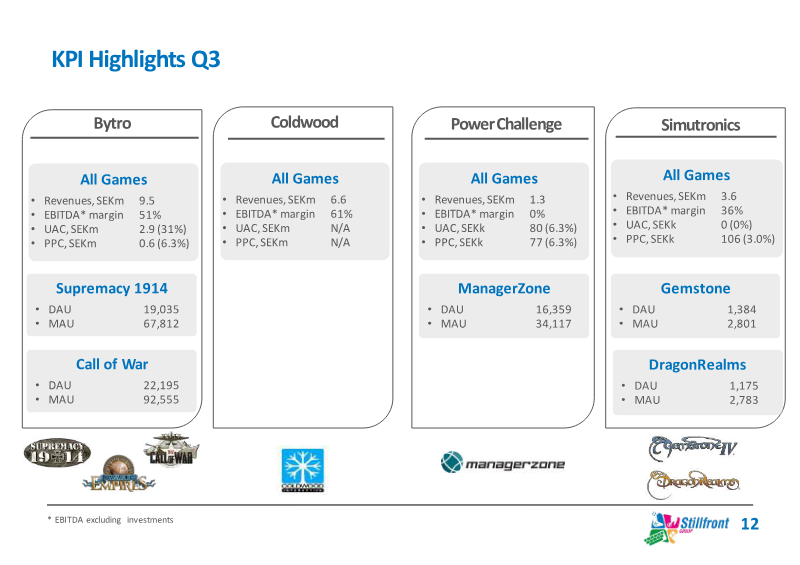
- The company maintained high operational efficiency with a 37% EBITDA margin in the third quarter of 2016.
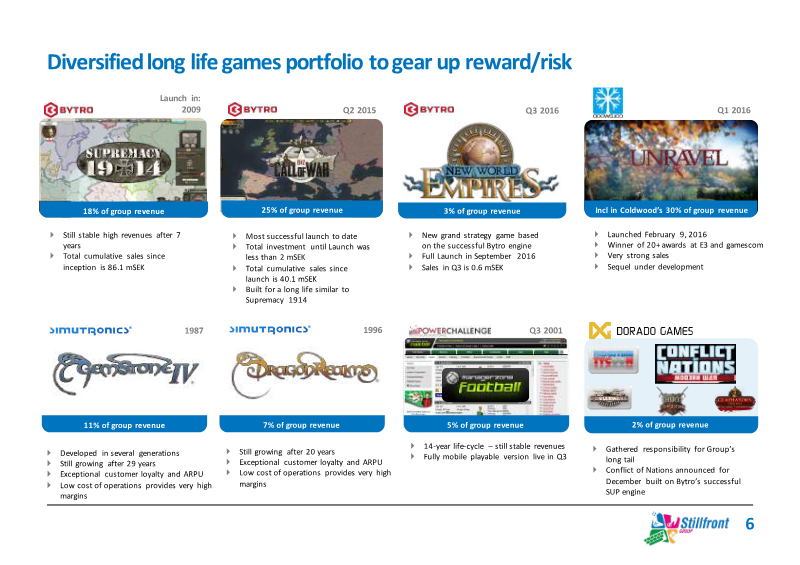
- Over 70% of the group's revenue is generated from self-published, owned brands, reducing reliance on third-party publishers.
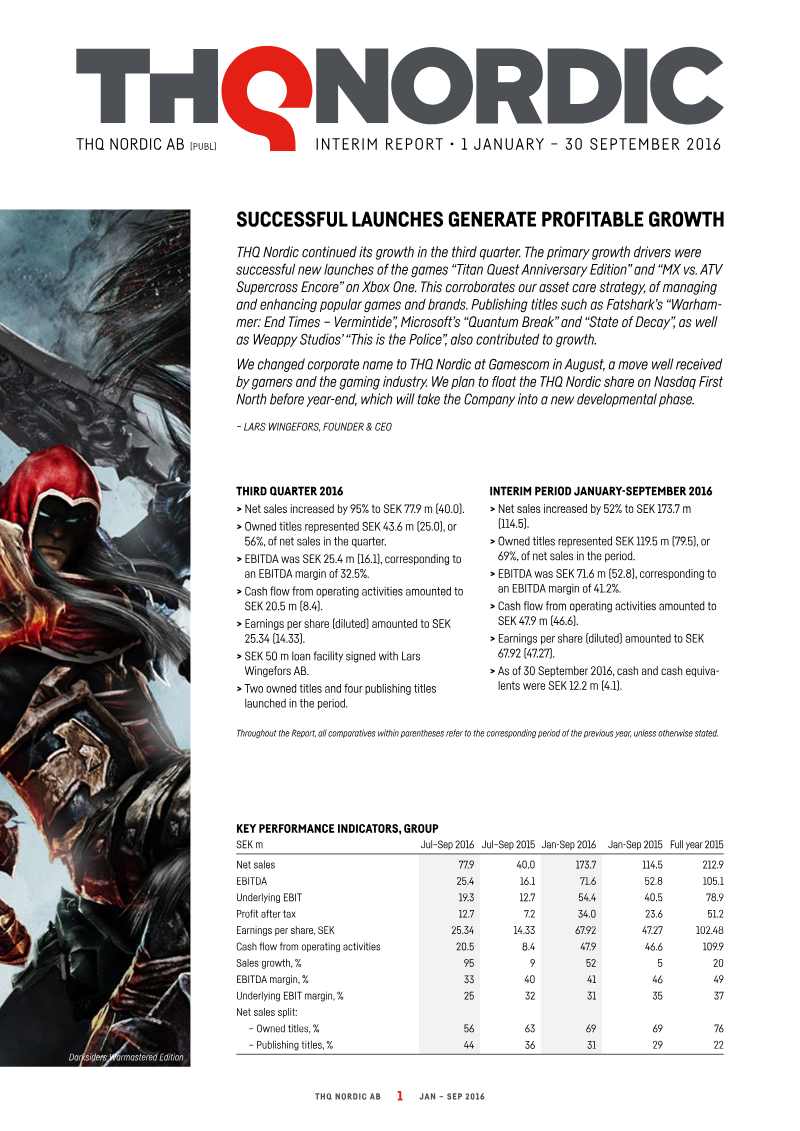
THQ Nordic AB Interim Report: 1 January - 30 September 2016
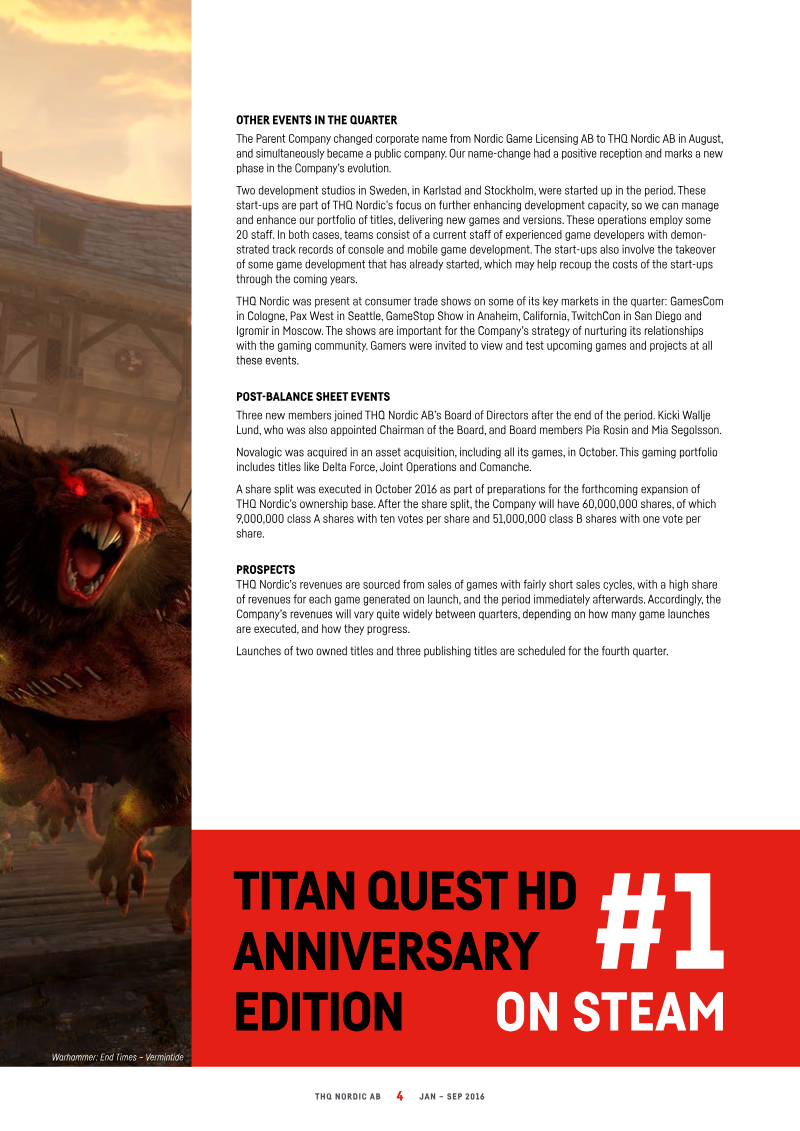
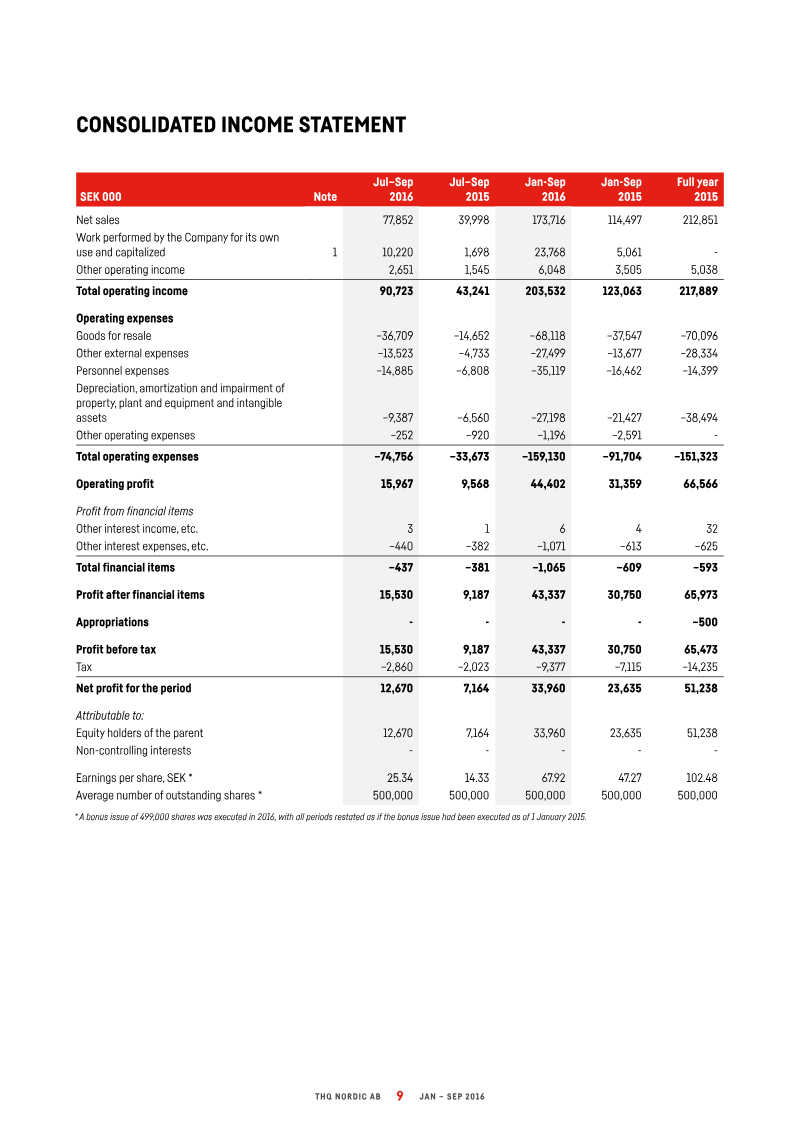
THQ Nordic AB experienced significant financial expansion during the first nine months of 2016, characterized by a 52 percent increase in net sales to SEK 173.7 million compared to the same period in the previous year.
- THQ Nordic AB achieved a 52 percent increase in net sales to SEK 173.7 million for the first nine months of 2016 compared to the same period in 2015.
- The company reported an operating profit of SEK 44.4 million and an EBITDA of SEK 71.6 million for the reporting period.
- Financial growth was driven by an asset care strategy focused on revitalizing existing intellectual property and the commercial success of titles including Titan Quest Anniversary Edition and This is the Police.



Fiscal Year Ending March 2017: 1st Half Financial Results
Koei Tecmo Holdings reports record-high sales for the first half of the fiscal year ending March 2017, driven by strong performances in the entertainment segment and successful intellectual property (IP) expansions.
- Koei Tecmo achieved record-high first-half sales of 16.58 billion yen, representing a 9.3% year-over-year increase, with operating profit rising 11% to 2.75 billion yen.
- Despite revenue growth, ordinary profit and net income declined by 13.3% and 6.8% respectively, attributed to game release timing and non-operating expense fluctuations.
- The entertainment division generated 14.6 billion yen in revenue, supported by key titles including Toukiden 2, Attack on Titan, and Dragon Quest Heroes II.

Financial Results for the First Quarter of the Fiscal Year Ending March 2027
Koei Tecmo Holdings’ financial results for the first quarter of the fiscal year ending March 2027 demonstrate a period of growth driven by robust back-catalog performance and an expanded mobile title portfolio.
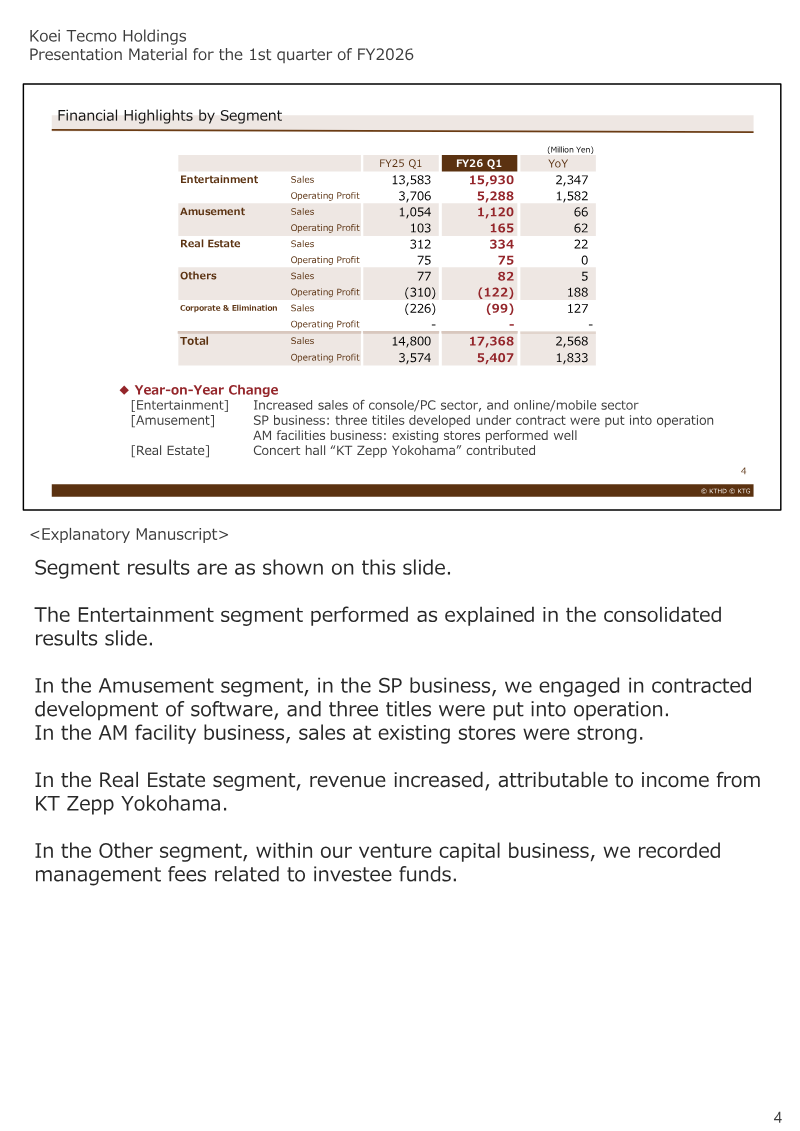
- Koei Tecmo reported Q1 fiscal year 2027 consolidated sales of 17.37 billion yen, a 17.4% year-on-year increase, and an operating profit of 5.41 billion yen, up 51.3%.
- The company maintained its full-year revenue forecast of 90 billion yen, relying on a strong back-catalog and upcoming major releases including 'Wo Long 2: Wings of Ember' and 'Attack on Titan 3'.
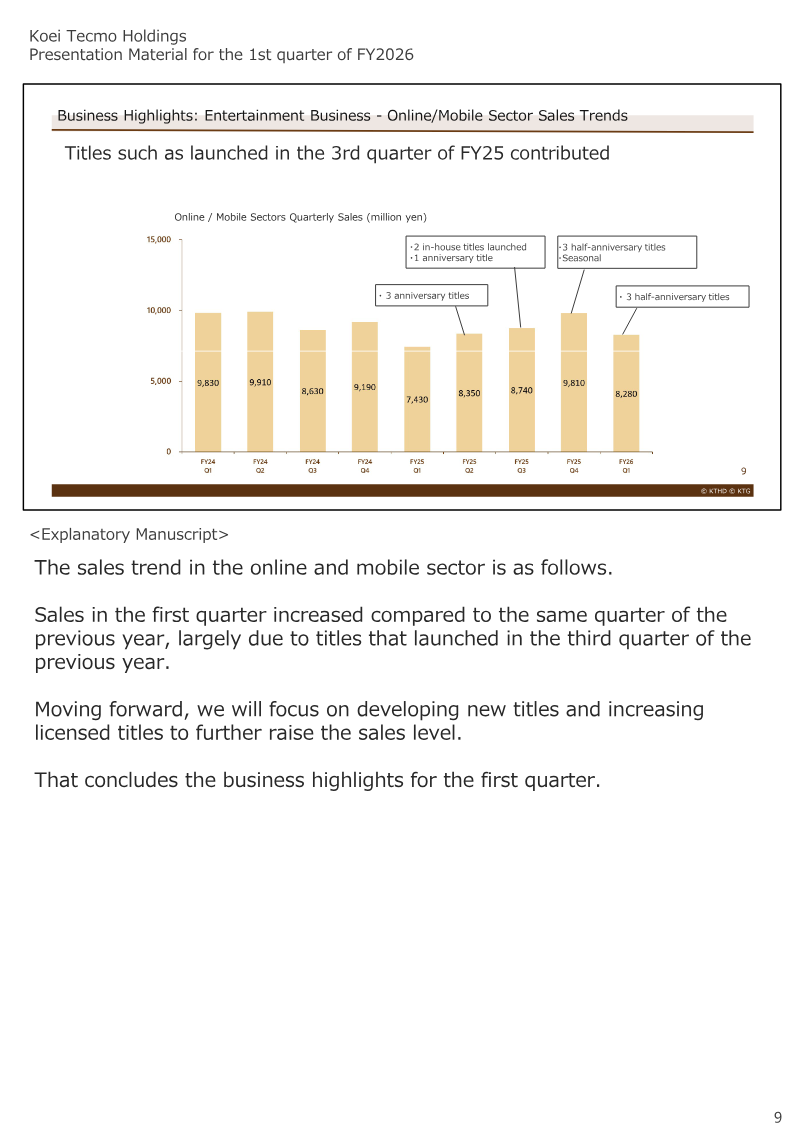
- The Entertainment segment generated 15.93 billion yen in sales, driven by sustained performance in console and PC back-catalogs alongside mobile title growth and licensing royalties.
