
Telltale Games
CompanyUnited States · Founded 2004
Telltale Games is redefining the way the games industry works. Telltale fosters a creative, fun, and entrepreneurial environment. As an employee, you will have a loud voice. Lots of companies talk about open work environments and teamwork, but we LIVE IT.
Connections
Each row is a game or company named alongside Telltale Games, each column a document, oldest first. A mark means that document names it. Select a row to see those documents.
About the company
- Founded
- 2004
- Country
- United States
- Links
- Official site
Company data from IGDB.com
Documents about Telltale Games
Interview with Dispatch developer: We were told comedy games don't sell
The interactive narrative game Dispatch serves as a compelling case study in challenging industry orthodoxy regarding the commercial viability of comedy and narrative-driven titles.
- Dispatch achieved commercial and critical success with over four million sales and nine BAFTA nominations, despite industry skepticism regarding the viability of comedy-focused narrative games.
- The studio successfully utilized an episodic release model to maintain high player engagement and completion rates throughout the product's lifecycle.
- After losing an initial publishing partner, the studio pivoted to self-publishing, using a high-impact trailer at The Game Awards to secure investor confidence and retain creative control.
First-Ever Interview with Head of LEGO Digital Play – Aaron Loeb
LEGO Digital Play represents a strategic pivot toward establishing original, first-party digital experiences that operate independently of the company’s existing licensed gaming portfolio.
- LEGO is establishing a dedicated London-based division to develop original, first-party digital experiences that operate independently of its existing licensed gaming portfolio.
- The initiative is backed by a long-term generational mandate from the Kirk Kristiansen family, which prioritizes brand longevity and emotional resonance over short-term quarterly revenue targets.
- The strategy seeks to differentiate LEGO from entrenched social-hub live service platforms by leveraging artificial intelligence to create novel, creativity-focused play patterns.
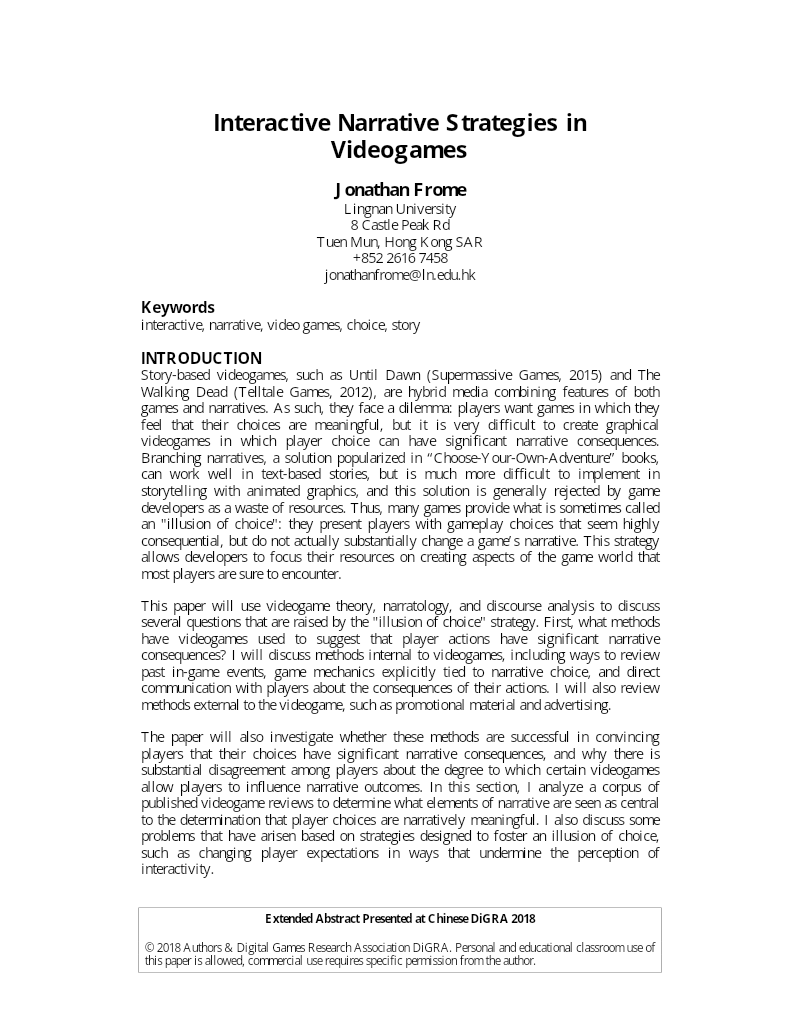
Interactive Narrative Strategies in Videogames
This paper examines the "illusion of choice" strategy in story-based videogames, where developers present player decisions that appear consequential without substantially altering the narrative.
- The 'illusion of choice' is a design strategy in story-based games where player decisions appear consequential without substantially altering the narrative, driven by the high cost of producing branching storylines with animated graphics.
- Developers often regard branching narratives as an inefficient use of resources, creating a core dilemma in hybrid media between players' desire for meaningful choices and the production costs of delivering them.
- Illusion-of-choice techniques are divided into internal methods (reviewing past events, mechanics explicitly tied to narrative choice, and direct communication of action outcomes) and external methods (promotional material framing a game as highly responsive to player decisions).
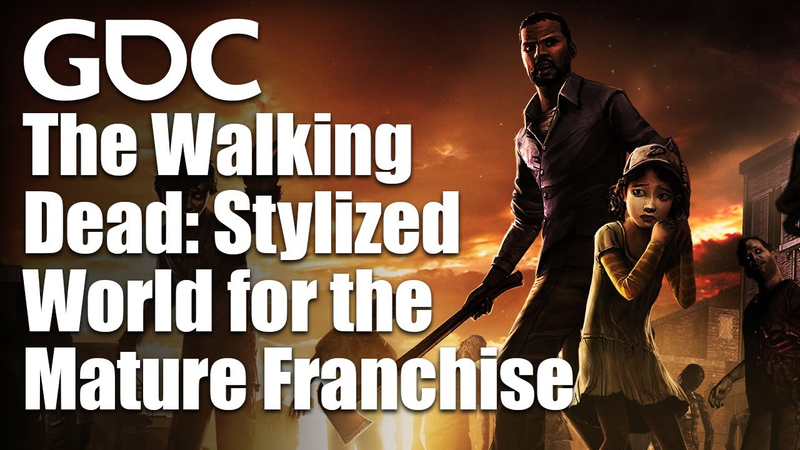
The Walking Dead: Crafting a Stylized World for the Mature Franchise
Telltale Games developed a distinct, stylized visual language for the 2013 release of The Walking Dead to differentiate the title from the saturated market of gritty, realistic zombie games.
- Telltale Games achieved a unique visual identity for The Walking Dead by rejecting the industry-standard gritty, desaturated aesthetic in favor of handcrafted, comic-inspired art that utilized bold silhouettes and high-contrast lighting.
- The production team successfully maintained visual cohesion across 78 environments and 45 characters by creating 2,316 textures that featured 'crafted imperfection' to reflect the series' mature, flawed narrative themes.
- To ensure the game could run on a wide range of platforms, the team imposed strict technical constraints, including a 30,000-vertex limit per environment and the use of vertex lighting instead of per-pixel lighting.
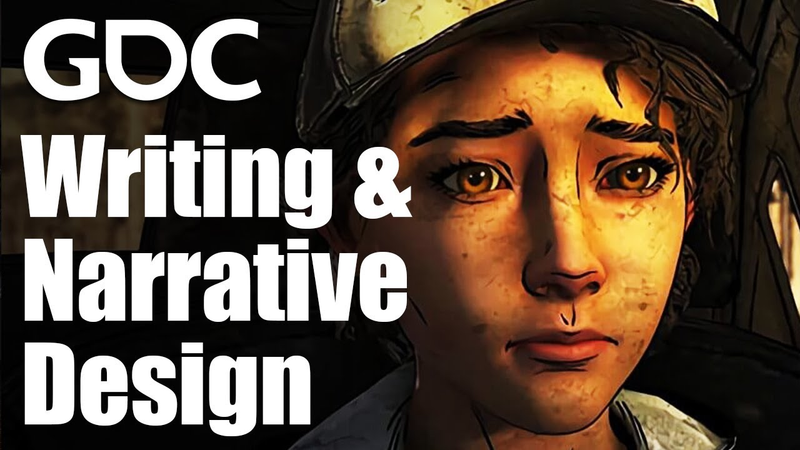
Writing and Narrative Design: A Relationship
The relationship between writing and narrative design is a critical, collaborative partnership that defines the quality of interactive storytelling.
- Writing and narrative design must function as equal, collaborative partners to balance character-driven storytelling with player-driven mechanics.
- Writers at Telltale Games focus on character development, dialogue, and thematic tone, while narrative designers manage player agency, choice-driven mechanics, and gameplay pacing.
- The 'stubbing' methodology, where designers map out structural nodes and choices before writing begins, prevents the 'blank page' problem and ensures mechanics are integrated into the narrative.
"No Going Back": The Telltale Model as Thought Experiment
Sarian's "No Going Back" argues that Telltale Games' choice-driven narratives, despite offering little ludic consequence, generate genuine meaning by functioning as philosophical thought experiments that confront players with moral dilemmas and expose their underlying values.
- Sarian argues that Telltale Games' choice-driven narratives generate genuine meaning as philosophical thought experiments, even though their choices carry little ludic (gameplay) consequence.
- The serial, television-like structure of these games defers consequences and keeps narratives largely linear, while end-of-episode survey screens compare individual choices against community data.
- The analysis links the model's limitations to the ELIZA effect, where an illusion of complexity dissolves under scrutiny, but contends that this illusion is not disqualifying.

How The Walking Dead mobile game was brought to life
The development of the mobile title The Walking Dead: Road to Survival represents a strategic collaboration between Skybound Entertainment, Scopely, and IUGO to translate a high-profile media franchise into a successful free-to-play mobile experience.
- The Walking Dead: Road to Survival achieved over 20 million downloads in its first year and maintained a consistent position in the top 50 grossing charts.
- The development team utilized a 'lean' philosophy that treated iterative failure as a necessary tool for refining technology and live-operations processes.
- To maintain narrative integrity, developers used backstory from the Governor novels to create a parallel story structure that allowed for consistent content updates without violating the core comic book canon.
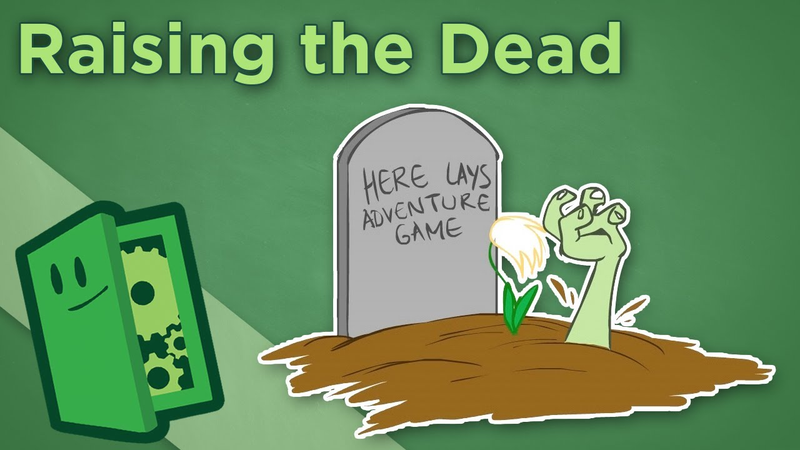
Raising the Dead - How Telltale's Walking Dead Revived Adventure Games - Extra Credits
Telltale Games’ The Walking Dead serves as a primary case study for the revitalization of the adventure game genre, demonstrating that the format remains viable when developers prioritize narrative depth over outdated mechanical tropes.
- Telltale Games’ The Walking Dead successfully revitalized the adventure genre by prioritizing narrative depth and character development over outdated mechanical tropes.
- The game achieved its success by removing traditional barriers such as inventory management, pixel hunting, and convoluted puzzle-solving.
- By stripping away legacy mechanics, the developers modernized the adventure format to focus on the core appeal of immersive storytelling rather than mechanical constraints.

