1 free read left. Create a free account for unlimited reading + AI research.
Create free account
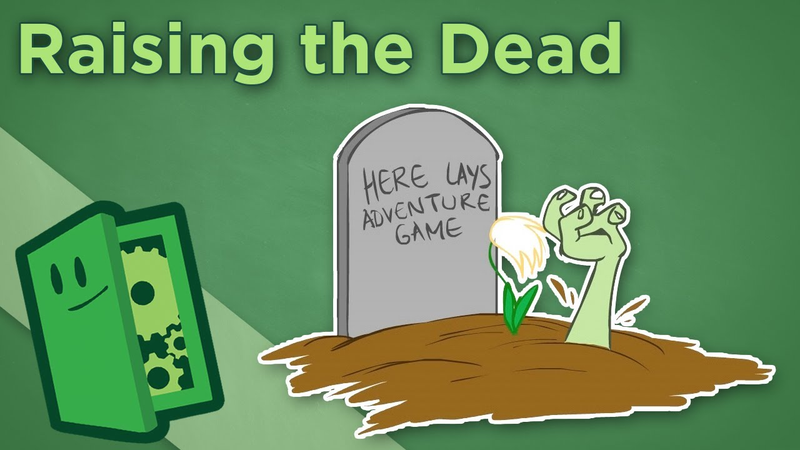
Raising the Dead - How Telltale's Walking Dead Revived Adventure Games - Extra Credits
Key insights
6 takeaways- 01Telltale Games’ The Walking Dead successfully revitalized the adventure genre by prioritizing narrative depth and character development over outdated mechanical tropes.
- 02The game achieved its success by removing traditional barriers such as inventory management, pixel hunting, and convoluted puzzle-solving.
- 03By stripping away legacy mechanics, the developers modernized the adventure format to focus on the core appeal of immersive storytelling rather than mechanical constraints.
- 04The title utilizes mechanics to foster emotional tension and force players to confront the consequences of their choices, treating the player as an intellectual equal.
- 05The industry should define genres by their underlying experiential promise rather than as collections of specific, repetitive mechanics to prevent stagnation.
- 06The success of the title proves that modern audiences remain highly engaged by well-realized worlds and sincere narratives when developers focus on fundamental human experiences.
Ask AI about this video
Transcript
[Music] [Music] This week, we've decided to start a short series on Telltale's rather excellent The Walking Dead adventure game. Don't worry if you haven't played it. I don't think it'll impact your enjoyment of the discussion, and I don't expect we'll be spoiling anything. It's really just that The Walking Dead series is such an oddity in modern AAA gaming that it serves to point out a lot of interesting things about the medium as a whole. It's probably worth mentioning before we start. I personally think The Walking Dead game is very good, great even, and I have no problem recommending it. But that said, it's far from perfect. We're mostly going to be using it as an example for the things it gets right, which means we'll be talking about it in a very positive light, and I got no problem with that. But like Spec Ops before it, I don't want to give anyone the idea that this is the apotheiois of game. It's just a very, very good game that did some brave things that deserve to be talked about. The first question that has to be answered about The Walking Dead is why anyone played it. After all, conventional wisdom in the industry says adventure games are dead. And Walking Dead is an adventure game as pure as they come. Not an action adventure game,
not a platforming or shooting adventure game, but a straight up capital A, capital G adventure game. So, if this is a dead genre, why did millions of people play this game? Sure, it has a strong license to work with, but we've seen other adventure games with strong licenses die on the Vine, even ones made by Telltale Games. So, what made Walking Dead special? What made it stand out? What allowed them to revive a genre that everyone else thought was dead? Well, in order to figure that out, the real question to ask is, why were adventure games popular in the first place? Think back to the tech available at the heyday of the adventure games. Say late 80s to early '90s, the years of 486s and Super Nintendos. At that time, because their gameplay wasn't very processor or RAM intensive, adventure games allowed a lot of flexibility for engineers to deliver on high-end graphics and more importantly allowed resources to be used on created a fleshed out narrative, holistic characters in a fully realized world. As that ability was appropriated first by RPGs and then by games in general, adventure games as a genre began to turn more towards gimmicky puzzles and gameplay that mostly involved clicking on everything in the game with every object in your inventory. And while this has always been a staple of the genre, it wasn't the reason people played the genre. The
Walking Dead game knows this all too well. There's very little of the traditional inventory juggling or even puzzle solving in The Walking Dead, and where these elements creep in, they tend to be the weakest sections of the game, actually. The fact that there isn't even an inventory screen and that the game assues almost all permanent UI shows us how clearly the developers understood that their core engagement wouldn't come from the types of puzzles we traditionally associate with adventure games. And by getting out of that box, The Walking Dead succeeds in showing us the format for the 21st century adventure game. The type of adventure game that is relevant and resonant even today. They went back to storytelling. They went back to delivering a world that seemed real and characters who seemed like human beings. And they did this by trimming the fat. They showed us that an adventure game doesn't need the tired mechanics that had gotten it labeled a dead genre. People will still be glued to their screens for a solid tale in a strange world that they get to live through. But Telltale also realized one other thing about the best adventure games of Yore, that they offered something different. In the '90s, when games were firmly considered a pastime for children, adventure games from Mist to Grim Fandango didn't talk down to their audience. They didn't assume a short attention span or inability to
process anything but the most purile humor. They treated their audience as equals. And this is exactly what The Walking Dead does. It does not pull its punches. It uses action for the purpose of creating emotional tension rather than assuming that without a shot of adrenaline, our attention is going to wander. It's okay to assume that we're willing to think, that we're willing to ponder the consequences of our actions. That we as players will add to our immersion because we're willing to care. So, to everybody who ever claimed that the adventure game genre is dead, Tailtales Walking Dead shows how it's done. Saying a genre is dead is kind of a strange thing to claim anyway. Saying that we've lost touch with what mattered in that genre or saying that what we're doing with it today doesn't appeal to our audience, that's pretty valid. But to say a genre is dead, to me, that seems foolish. There was something there, something at its core that appealed to us as humans. We got to get past the idea that a genre is simply an elomeration of mechanics we recognize and instead look at what really appealed to us about the games we lumped together in a genre. Otherwise, we end up where adventure games ended up recently, confined by mechanics that were outdated and perhaps unappealing, rapidly losing relevance with our audience, rather than delivering on the promise inherent in them. If you want to see how to
resurrect the genre of adventure games simply by doing what they were best at doing all along, look no further than The Walking Dead. We're going to talk more about it next week. We'll see you [Music] then. [Music] [Applause] Yeah. Heat. [Applause] [Music]
Summary
Telltale Games’ The Walking Dead serves as a primary case study for the revitalization of the adventure game genre, demonstrating that the format remains viable when developers prioritize narrative depth over outdated mechanical tropes. While industry consensus long held that adventure games were obsolete, this title succeeded by stripping away the genre’s traditional reliance on inventory management, pixel hunting, and convoluted puzzle-solving. By removing these barriers, the game highlights that the core appeal of the genre has always been its capacity for immersive storytelling and character development rather than its specific mechanical constraints.
The success of the title is attributed to its commitment to treating the player as an intellectual equal, a hallmark of classic adventure games from the 1990s. Instead of relying on adrenaline-fueled action or simplistic humor, the game utilizes its mechanics to foster emotional tension and force players to confront the consequences of their choices. This approach validates the thesis that a genre’s perceived death is often merely a failure to evolve or a loss of focus on the fundamental human experiences that originally defined it.
Ultimately, the game proves that modern audiences remain highly engaged by well-realized worlds and sincere narratives. By discarding the "fat" of legacy mechanics, the developers successfully modernized the adventure game for the 21st century. The findings suggest that the industry should move away from defining genres solely as collections of specific, repetitive mechanics and instead focus on the underlying promise of the experience. This shift in perspective allows for the resurrection of stagnant genres by returning to the foundational elements that originally resonated with players.
















Comments