Rain
Company
Documents about Rain

Inside General Intuition’s Push to Build Embodied AI Agents
General Intuition is advancing the development of embodied AI agents by utilizing billions of gameplay clips from the Metal platform to construct sophisticated world models.
- General Intuition is developing world models that simulate environments by predicting future frames based on user actions, allowing for interactive, embodied AI agents rather than just passive video generation.
- The company is leveraging a proprietary dataset from Medal, a platform for recording and sharing gameplay clips, to train agents on human behavior across diverse, consistent first-person perspectives.
- General Intuition aims to provide game developers with tunable AI bots that allow for skill-level adjustments (on a scale of 0 to 100) and steerable text-based prompts to control agent behavior.

Istanbul Is Building Gaming Giants
Cipher Games, a mobile developer based in Istanbul, recently secured $30 million in Series A funding led by the Rain Group and Play Ventures.
- Istanbul-based mobile developer Cipher Games secured $30 million in Series A funding led by Rain Group and Play Ventures, bringing its total capital raised to $43 million since 2022.
- Cipher Games is currently test-launching its debut title, Match Squad, in the Philippines, Indonesia, and the UK to refine its hybrid mechanics.
- Match Squad differentiates itself by combining traditional match-3 gameplay with a die-roll system inspired by titles like Monopoly Go and Coin Master.

🎮 Megabonk: The New roguelite phenomenon EXPLAINED
Megabonk has rapidly established itself as a significant breakout success within the roguelite genre, recording 300,000 units sold and generating $2 million in revenue within its first 11 days on Steam.
- Megabonk achieved 300,000 units sold and $2 million in revenue within its first 11 days of release on Steam.
- The game’s design successfully hybridizes the accessible gameplay loop of Vampire Survivors with the 3D verticality and depth of Risk of Rain 2.
- Core mechanics such as extreme character scaling, infinite inventory systems, and complex item synergies have driven high Twitch viewership and replayability.

Why going 2D to 3D was an epic challenge in Risk of Rain 2
The transition from a 2D to a 3D environment in Risk of Rain 2 serves as a primary case study for the technical and design challenges inherent in evolving a successful indie franchise.
- The developers maintained the franchise's signature high-intensity chaos by utilizing a unified base class for players, enemies, and AI, which ensures consistent movement and inventory logic across all entities.
- To manage the computational load of dynamic lighting during combat, the game employs deferred rendering, which calculates lighting based on screen resolution rather than individual vertices.
- The transition to 3D movement necessitated a sprint mechanic and a lowered camera height to prevent the gameplay from feeling sluggish compared to the original 2D iteration.
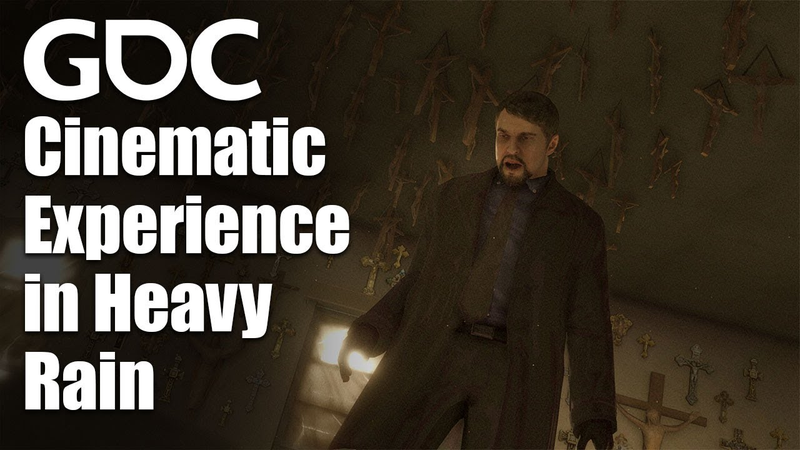
How Art Was Used to Create a Unique Cinematic Experience in Heavy Rain
Heavy Rain functions as a pioneering interactive drama that prioritizes emotional resonance and mature narrative depth over conventional gaming tropes like boss battles or traditional failure states.
- The development team prioritized a grounded, cinematic aesthetic by modeling environments after Philadelphia’s industrial landscape rather than using the exaggerated, oversized spaces typical of the era.
- Visual storytelling was achieved through 'invisible' methods, embedding character history directly into environmental clutter to maintain immersion without relying on cutscenes.
- Character fidelity was maintained under a strict 20,000-polygon budget, utilizing 3D scanning and a modular motion capture system that decoupled facial and body animation.
Game Maker Studio 2 - Make a Game Before This Video Ends! (Tutorial)
GameMaker Studio 2 serves as a highly efficient and accessible engine for independent developers aiming to produce professional-grade 2D titles.
- GameMaker Studio 2 is a 2D-focused engine designed for rapid prototyping and deployment, as demonstrated by commercial titles like Hotline Miami and Risk of Rain.
- The engine utilizes an event-driven architecture where Create events define initial variables and Step events manage real-time input responsiveness, friction, and acceleration.
- Standardizing the frame rate at 60 FPS is a core practice for maintaining technical stability and a smooth user experience.

The Rain World Animation Process
The animation process for the indie game Rain World centers on the use of procedural animation to create a believable, autonomous ecosystem.
- Rain World utilizes a procedural animation system that separates physics simulations from cosmetic visuals, allowing for performance efficiency and easier tuning of creature behaviors.
- The game’s AI and animation are deeply integrated, where locomotion is driven by pathfinding algorithms that treat creatures as physics objects moving toward destinations in a tile-based environment.
- Creature personality is an emergent property of the game's systems; by making AI motivations and environmental interactions visible to the player, users project intent and personality onto non-scripted behaviors.

Choices vs Consequences - What Player Decisions Mean in Games - Extra Credits
Game design often conflates the concepts of choice and consequence, yet these two mechanics serve distinct psychological and narrative functions.
- Choice-based design focuses on the player's internal conflict by presenting dilemmas without clear numerical solutions, forcing them to weigh personal values in real-time.
- Consequence-based design relies on retrospective analysis, where the impact of a player's past actions is revealed later to prompt reflection on previous behavior.
- Effective consequence-based systems, as seen in Chrono Trigger, require a clear causal link between minor actions and narrative outcomes to prevent players from feeling unfairly punished.