
Playfish
CompanyFounded 2007
Playfish was a developer of free-to-play social network games on facebook.
Connections
Each row is a game or company named alongside Playfish, each column a document, oldest first. A mark means that document names it. Select a row to see those documents.
About the company
- Founded
- 2007
- Links
- Official site
Company data from IGDB.com
Documents about Playfish
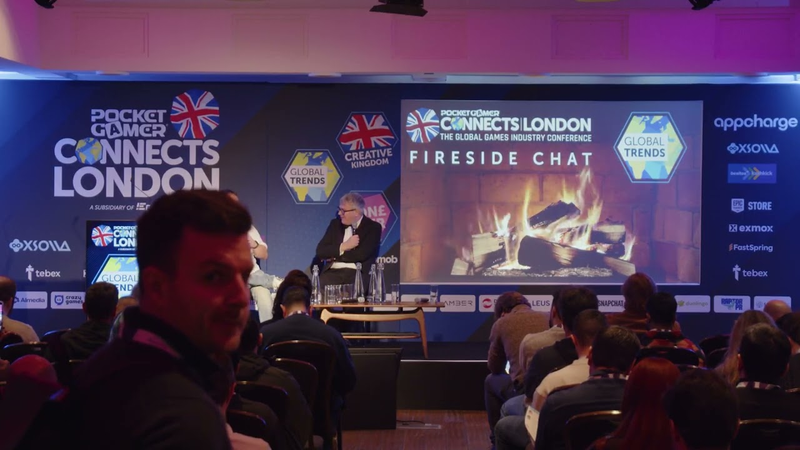
Fireside Chat: A Life in Mobile: From Games to Music to Apps – 15 Years of Wins, Losses and Learns.
This discussion explores the evolution of mobile development through the career of Simon Hade, a veteran entrepreneur who transitioned from founding the mobile studio Space Ape to his current role as Head of New Subjects at Duolingo.
- Duolingo is actively recruiting game developers to transition from traditional gaming to app-based product development, focusing on making core user experiences inherently fun rather than relying solely on gamification or paywall-focused product management.
- The shift in the mobile industry has moved from the early era of 'aping' successful titles like Clash of Clans to a current landscape where success requires deep product differentiation and specialized studio expertise.
- Modern studio fundraising now requires a complete, experienced team and a clear ambition to build a game that can self-fund the studio, as investors are less likely to fund concepts without proven execution capabilities.

Unity shenanigans, Space Ape postmortem, your games of the year, 2025 wrapped, more
The mobile gaming industry is currently navigating significant shifts in corporate strategy, consolidation, and monetization models.
- Unity is reportedly introducing a new 'Enterprise minimum commitment' fee for studios with over $25 million in annual gross revenue, with costs scaling from $250,000 for $25M+ earners up to $2 million for those exceeding $250M in revenue.
- Supercell completed its acquisition of Space Ape Games in November 2024, rebranding the studio as Supercell London and tasking it with applying lean live-ops expertise to legacy titles like Hay Day and Boom Beach.
- Space Ape Games' history under Supercell involved testing approximately 25 different games and numerous prototypes, a process that highlighted the studio's struggle to focus on winners and kill underperforming projects quickly enough.
From Space Ape to Duolingo via Supercell with Simon Hade
The evolution of modern mobile gaming studios reveals a critical shift from rapid, decentralized experimentation toward a model defined by genre mastery and operational focus.
- The mobile gaming industry has shifted from decentralized, rapid experimentation to a model of genre mastery and operational focus, as the market now demands blockbuster-level commercial performance.
- High-autonomy, broad-spectrum R&D strategies are increasingly ineffective because studios that diversify across too many genres dilute their expertise and fail to meet modern growth thresholds.
- Integrating gaming expertise into non-gaming sectors like educational technology allows companies to leverage game-like mechanics and engagement loops to drive user retention.
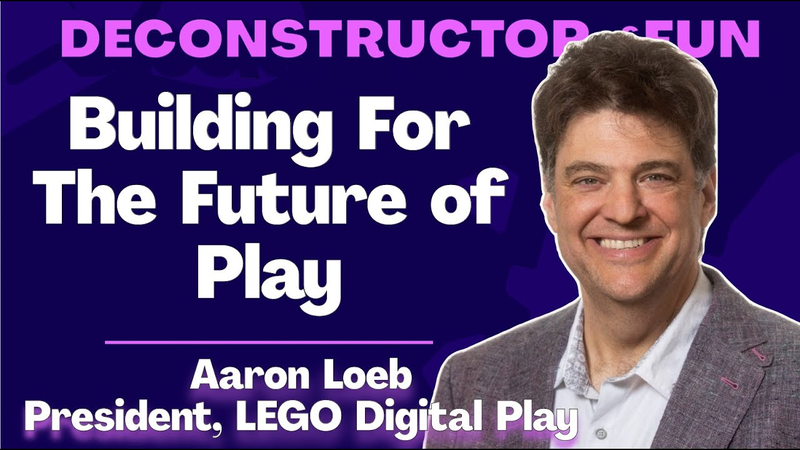
First-Ever Interview with Head of LEGO Digital Play – Aaron Loeb
LEGO Digital Play represents a strategic pivot toward establishing original, first-party digital experiences that operate independently of the company’s existing licensed gaming portfolio.
- LEGO is establishing a dedicated London-based division to develop original, first-party digital experiences that operate independently of its existing licensed gaming portfolio.
- The initiative is backed by a long-term generational mandate from the Kirk Kristiansen family, which prioritizes brand longevity and emotional resonance over short-term quarterly revenue targets.
- The strategy seeks to differentiate LEGO from entrenched social-hub live service platforms by leveraging artificial intelligence to create novel, creativity-focused play patterns.

From Space Ape to Duolingo via Supercell: Simon Hade on Building, Pivoting, and the Price of Being a Founder
The professional journey of Simon Hade illustrates the complex evolution of mobile gaming leadership, moving from the early days of Skype and Playfish to the founding of Space Ape Games and its eventual integration with Supercell and Duolingo.
- Supercell acquired a 62% stake in Space Ape Games in 2017 for $55.8 million, establishing a valuation of approximately $90 million.
- Space Ape Games successfully pivoted from mid-core strategy titles like Samurai Siege and Rival Kingdoms to the casual music genre with the hit title Beatstar to counter rising user acquisition costs.
- Long-term studio viability in the current mobile landscape increasingly depends on high production values and broad market appeal to compete against established incumbents.
Playing Your Network: Gaming in Social Network Sites
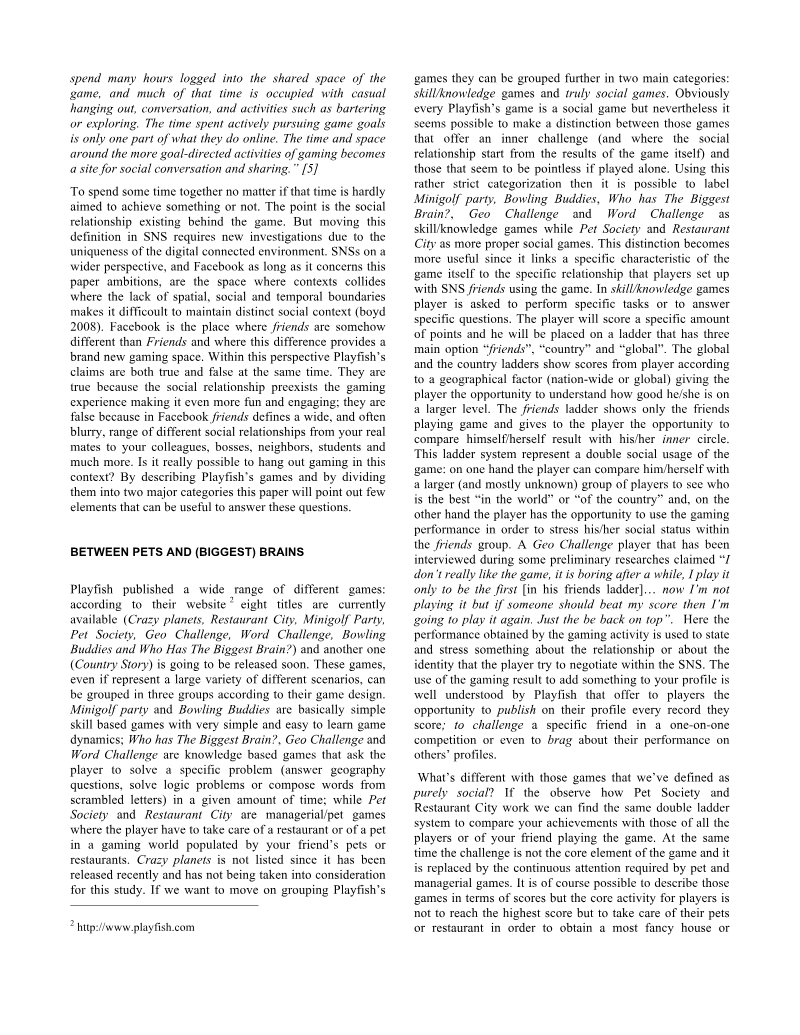
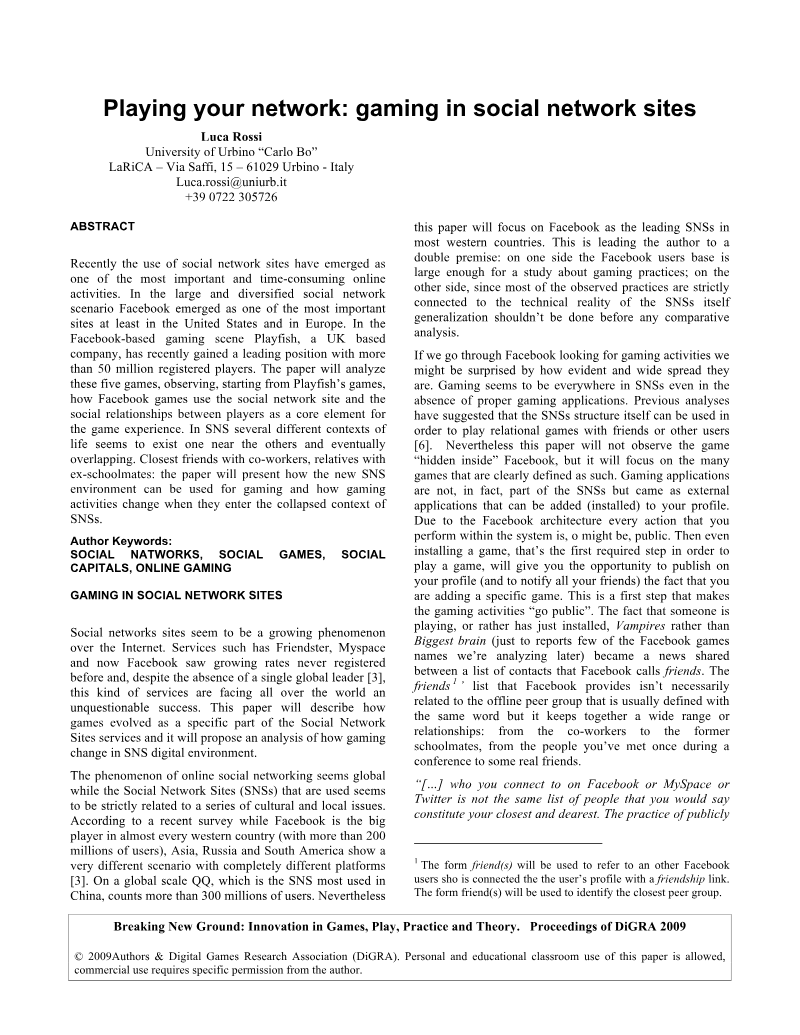
Luca Rossi's paper examines gaming within social network sites, focusing on Facebook as the dominant platform in most Western countries, and uses the UK-based company Playfish as its central case.
- Games on Facebook are built around existing social relationships, shifting gaming from a standalone or shared-passion activity toward one grounded in friendships, a distinct branch of online gaming the paper calls SNS gaming.
- The paper uses UK-based Playfish as its central case, observing a catalogue of about eight titles with over eleven million monthly players, and draws on qualitative, exploratory methods plus preliminary player interviews.
- Skill and knowledge games such as Who Has the Biggest Brain? and Geo Challenge rank players on friend, country, and global ladders, and players use these rankings to assert status within their social circles.