Nordeus
Company
Documents about Nordeus
Giving Back to the Community as a Game Developer: A Case Study
Game studios increasingly view community engagement as a core business strategy rather than a peripheral philanthropic activity.
- Game studios are shifting community engagement from philanthropy to a core business strategy that directly supports talent acquisition, retention, and long-term organizational growth.
- Nordeus leveraged its internal expertise to address systemic industry barriers in Serbia by co-founding the Digital Serbia Initiative and establishing the Nordeus Hub.
- The Nordeus Hub supports the regional gaming ecosystem through physical collaboration spaces, boot camps, and an indie incubator that requires no equity, revenue sharing, or IP rights from participants.
How the Games Industry M&A Frenzy is Making New Genre Leaders in Mobile
Sustained mergers and acquisitions are reshaping genre leadership in U.S. mobile gaming, with a single major deal or string of smaller purchases able to elevate a publisher to category leader in a short time.
- The mobile gaming industry is experiencing a significant M&A frenzy, driven by a maturing market, a lockdown-induced bump, and intense competition, allowing major publishers to quickly become genre leaders.
- EA became the No. 1 mobile Sports games publisher by U.S. revenue ($176 million) and the No. 1 Lifestyle games publisher ($123 million) between January 1 and August 31, 2021, largely due to its acquisitions of Glu Mobile and Playdemic.
- Activision Blizzard (including King) maintained its position as the No. 1 publisher in the Puzzle genre, generating approximately $873 million in U.S. player spending from January 1 to August 31, 2021, with Candy Crush Saga performing strongly.
Take-Two Interactive 10-Q: Q1 Fiscal Year 2022
Take-Two Interactive’s Q2 FY2021 10-Q demonstrates a robust financial performance driven by its flagship franchises and expanding digital revenue streams.
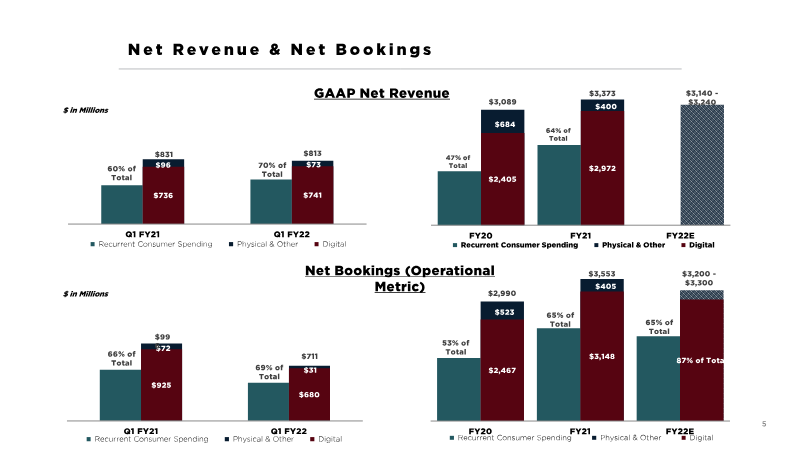
- Take-Two Interactive reported a 9% revenue increase to $813 million, driven by a $572 million contribution from recurrent consumer spending despite a $93 million decline in full-game sales.
- Net income rose to $152 million with diluted earnings per share reaching $1.30, bolstered by a significant drop in the effective tax rate to 2.1% and improved gross margins of 59.5%.
- Digital online sales now account for 91% of total revenue, with the company's geographic and platform concentration remaining heavily weighted toward the United States (61%) and consoles (74%).
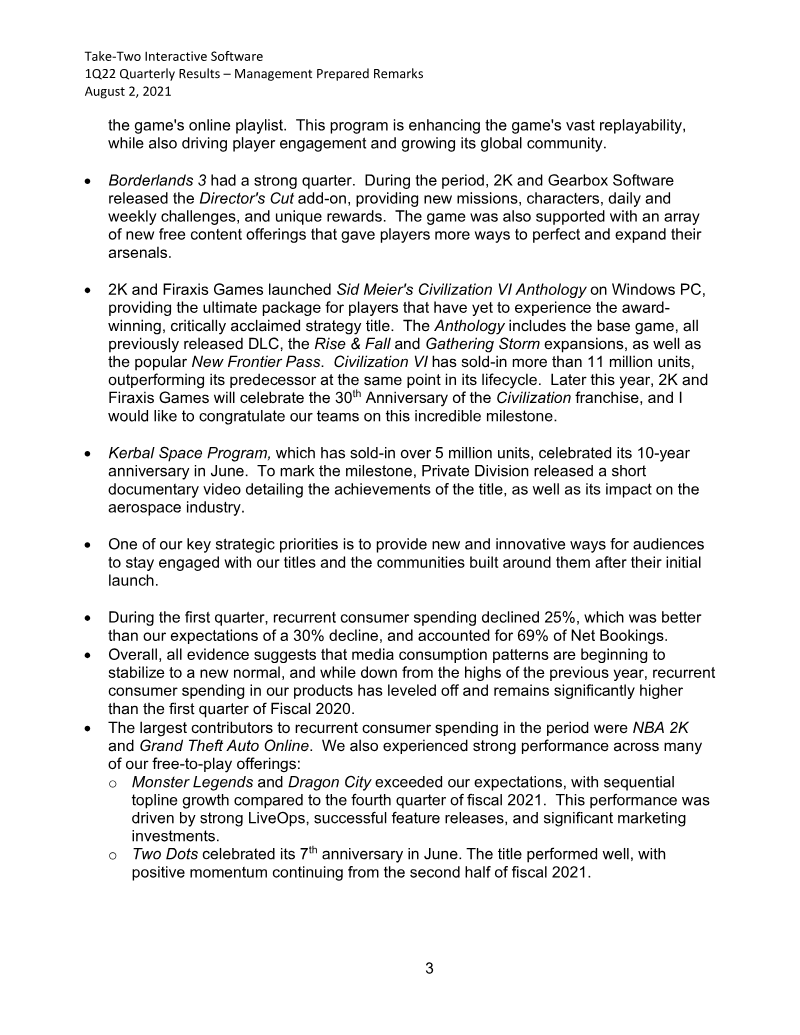
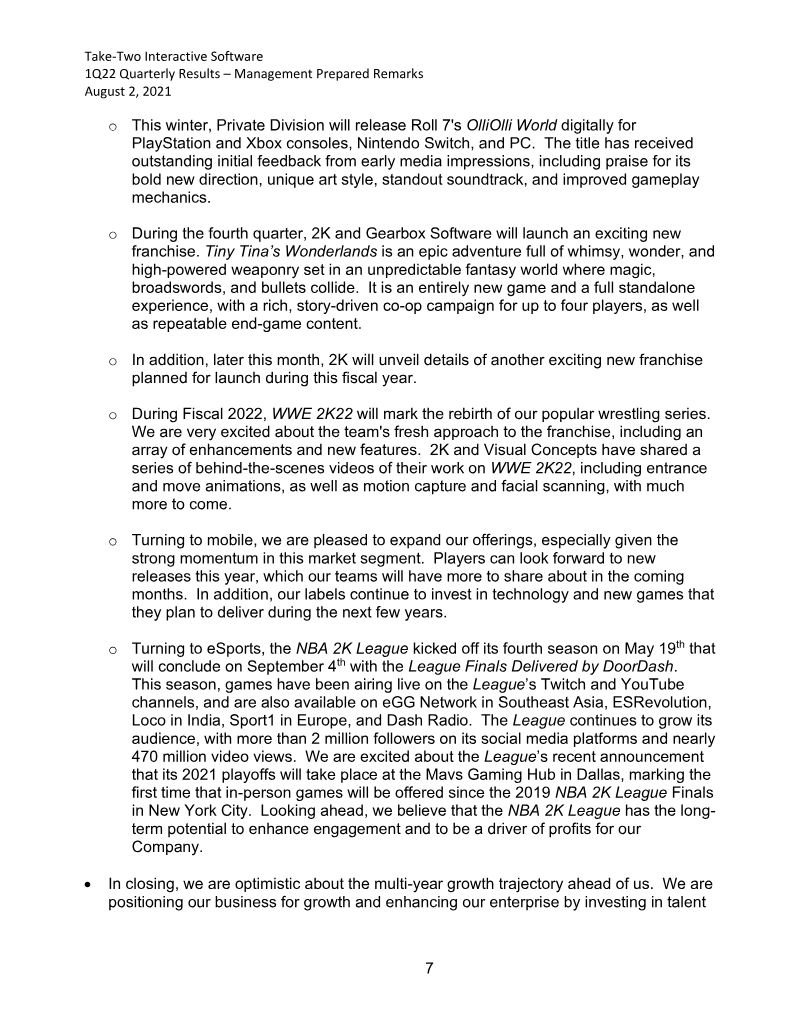
1Q22 Quarterly Results: Management Prepared Remarks
Take-Two Interactive’s first-quarter fiscal year 2022 results demonstrate a strong start to the year, characterized by net bookings of $711 million, which exceeded management’s initial expectations.
- Take-Two Interactive reported $711 million in net bookings for 1Q22, exceeding management expectations despite a 25% year-over-year decline in recurrent consumer spending.
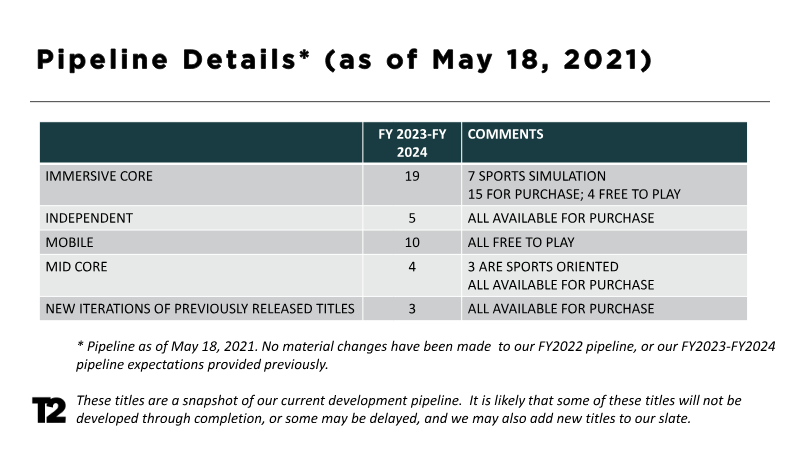
- Management maintained its full-year net bookings guidance of $3.2 to $3.3 billion, as first-quarter gains were offset by the delay of two immersive core titles.
- Digital delivery accounted for 96% of total net bookings, with console digital sales penetration reaching 73%.
Take-Two Interactive Q1 FY2022 Results
Take-Two Interactive’s Q1 fiscal year 2022 results demonstrate strong financial performance, characterized by the second-highest first-quarter net bookings in the company’s history.
- Take-Two Interactive reported $711 million in net bookings for Q1 fiscal year 2022, marking the second-highest first-quarter performance in the company's history.
- The company reiterated its full-year fiscal 2022 guidance, projecting total net bookings to fall between $3.2 billion and $3.3 billion.
- Recurrent Consumer Spending (RCS) exceeded internal projections, driven primarily by the ongoing performance of Grand Theft Auto Online and the acquisition of Nordeus.

News Mash-Up: Week 22 & 23 (June 2021)
E3 2021 returned in a reduced, digital-first form after the 2020 cancellation, with 18 events and conferences operating under the E3 banner.
- Microsoft is expanding its Xbox cloud gaming strategy by developing a streaming dongle and smart TV app to enable GamePass access via browsers, mirroring the Stadia model.
- Take-Two Interactive acquired mobile developer Nordeus, creator of Top Eleven, for $378 million to expand its mobile gaming footprint.
- GameStop reported a 25% year-over-year revenue increase to $1.3 billion for Q1 2021, though the company still posted a net loss of $41 million.
Global Gaming Industry Update: June 2021
The "Global Gaming Industry Update: June 2021" provides an overview of significant M&A, fundraising, and public market activities within the global gaming and esports sectors during the first half of 2021.
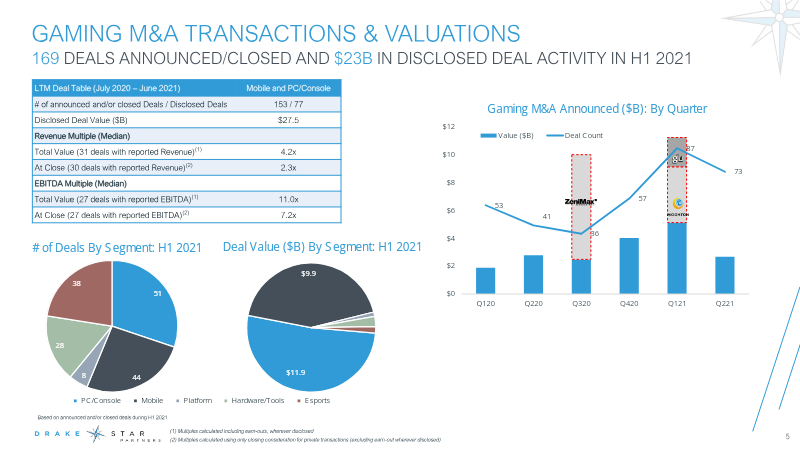
- In the first half of 2021, the gaming industry saw $23 billion in M&A activity across 169 deals, nearly doubling the total dollar value recorded for the entire year of 2020.
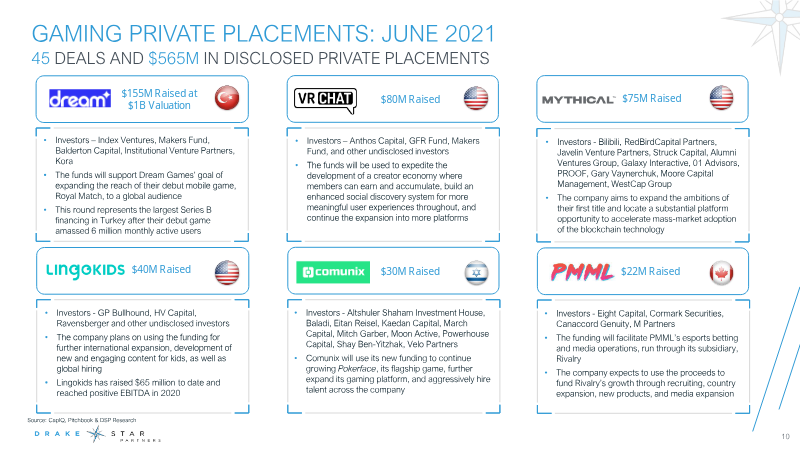
- Private placement transactions reached $4.8 billion across 364 deals during the first six months of 2021.
- Major strategic consolidators included Tencent, Electronic Arts, Take-Two, and Embracer Group, while private equity firms like The Carlyle Group and Bain Capital significantly increased their market participation.
Serbian Gaming Industry Report 2021
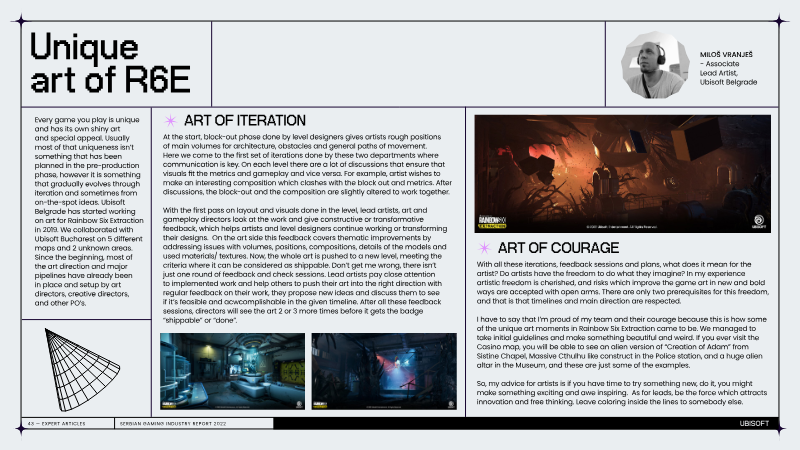
Serbia's gaming industry in 2021 is a fast-growing, export-oriented ecosystem, and the Serbian Games Association's fourth annual survey documents its scale, outlook and challenges.
- In 2021, Serbia’s gaming sector comprised approximately 130 studios employing 1,548 people, generating $125 million in revenue with 75% to 100% of earnings derived from international exports.
- The industry is heavily reliant on the free-to-play model, which accounts for 64% of all games produced, while the total output reached roughly 2,200 titles.
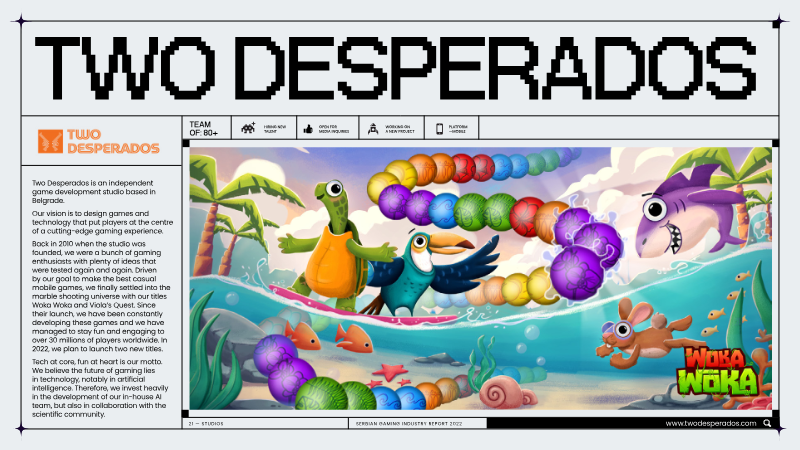
- The ecosystem supports a diverse production scale, ranging from indie developers using high-fidelity tools like MetaHuman Creator to major contributors such as Nordeus, Playrix RS, and Ubisoft Belgrade.

Gaming Industry Report: Serbia 2020
Serbia's gaming industry reached record revenue of roughly €120 million in 2020, up about 20 percent year over year.
- Serbia’s video-game industry reached over €100 million in revenue in 2020, marking a 20 percent year-over-year growth across 120 development teams.
- The sector employs approximately 2,100 people, with women accounting for one-third of the workforce and a majority of firms planning to increase staff in 2021.
- Educational infrastructure expanded significantly with new programs at the University of Kragujevac and the University of Arts in Belgrade, supported by partners like Epic Games and Nordeus to serve over 1,500 students.
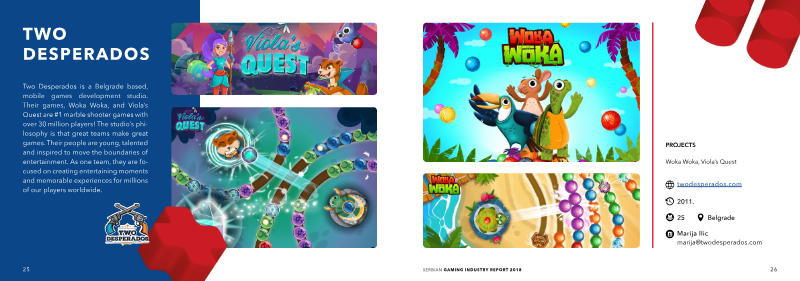
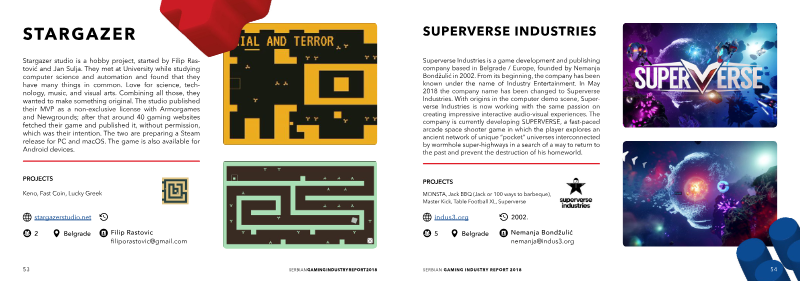
Serbian Gaming Industry Report 2018
Serbia's first industry report, published by the Serbian Games Association (SGA) in 2018, argues that the country is emerging as a credible destination for game development and investment.
- The Serbian gaming industry comprises over 60 member entities and employs more than 1,500 professionals, anchored by major players like Nordeus, Ubisoft Belgrade, and 3Lateral.
- Funding for the sector is diversified, with 40% sourced from angel investors, 30% from crowdfunding, and 20% from venture capital, with the largest single investment reaching €650,000.
- A robust pipeline of technical talent is supported by approximately 30,000 university students in IT-related programs and the integration of programming into primary-school curricula.

Serbian Gaming Industry Report 2019
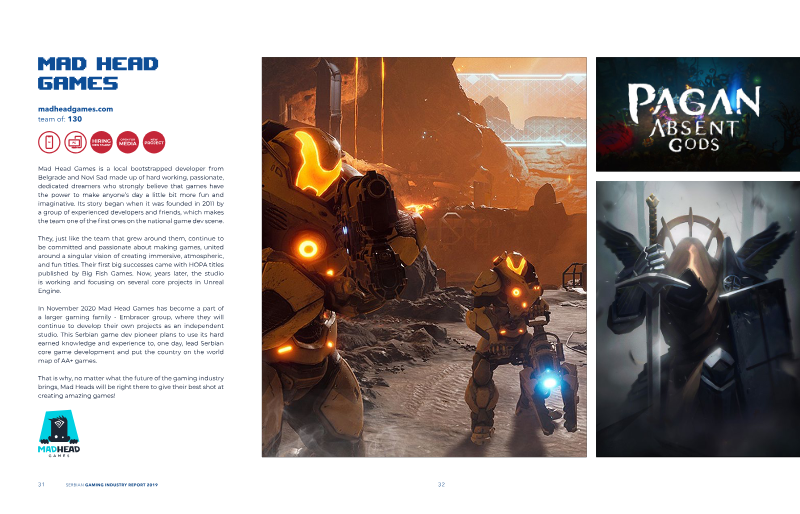
The Serbian Gaming Industry Report 2019 maps a fast-growing, export-oriented sector centered on mobile development, drawing on Serbian Games Association (SGA) survey data and company and professional profiles.
- The Serbian gaming sector generated approximately €100 million in revenue in 2019, supported by an ecosystem of over 80 companies and 2,000 employees.
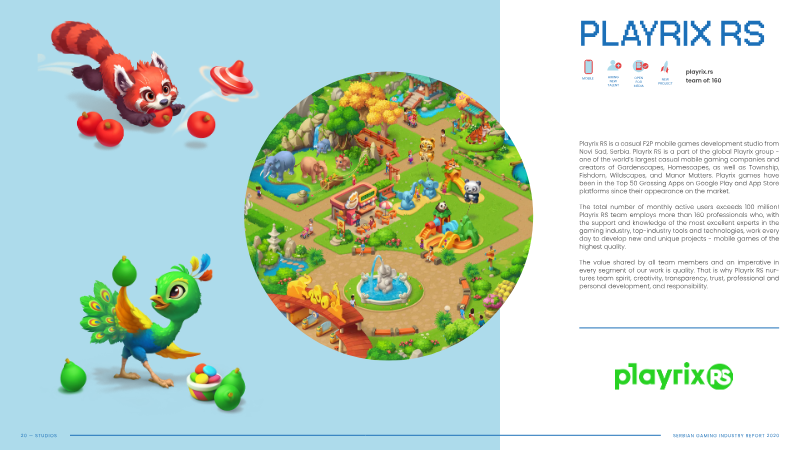
- Flagship mobile titles from companies like Nordeus and Playrix RS have achieved massive scale, amassing over 100 million monthly active users.
- The industry is experiencing steady growth with a 3.4% year-on-year increase in staff and robust recruitment demand across studios ranging from micro-teams to 180-person developers.

Facebook Instant Games: Designing Games for Chat
Facebook Instant Games on Messenger is presented as a distinct platform requiring a fundamental shift in game design, comparable to the move to mobile in 2010-2011, rather than a simple port or marketing channel.
- Facebook Instant Games is a standalone business platform rather than a user acquisition channel for external mobile games, with top titles reaching 3 million to 10 million players.
- Retention on the platform is driven by social interactions within chat threads, such as group raids where players must collaborate to complete challenging levels.
- Developers should avoid traditional mobile porting strategies, as the platform requires unique designs that leverage native Messenger features like bot channels and social contexts.
