LucasArts
CompanyUnited States · Founded 1990
With titles on consoles, PCs, and mobile devices, LucasArts endeavors to deliver experiences — whether it’s piloting a snowspeeder in the Battle of Hoth or slinging Jedi Birds at Sith Pigs — that are not possible in any other medium, and dazzle fans with stunning graphics, engaging storytelling, and fun gameplay.
Connections
Each row is a game or company named alongside LucasArts, each column a document, oldest first. A mark means that document names it. Select a row to see those documents.
About the company
- Founded
- 1990
- Country
- United States
Company data from IGDB.com
On Steam
Steam estimates as of 9 Oct 2026. Revenue is premium revenue on Steam only: game sales, without DLC.
- Revenue as publisher
- $114.5M
- 38 games
- Revenue as developer
- $19.5M
- 25 games
- Units sold
- 14.0M
- as publisher or developer
- Headquarters
- United States
LucasArts’s best-selling games on Steam
| Game | Released | Share of the best seller | Revenue | Units |
|---|---|---|---|---|
| Star Wars: Battlefront 2 (Classic, 2005)Publisher | 2009 | $17.9M | 2.7M | |
| STAR WARS™ Knights of the Old Republic™ II: The Sith Lords™Publisher | 2005 | $16.6M | 2.5M | |
| STAR WARS™ Empire at War: Gold PackPublisher | 2010 | $15.3M | 1.1M | |
| LEGO® Star Wars™: The Complete SagaPublisher | 2009 | $12.0M | 937K | |
| STAR WARS™ Knights of the Old Republic™Publisher | 2009 | $9.6M | 1.5M | |
| LEGO® Star Wars™ III: The Clone Wars™Publisher | 2011 | $7.1M | 539K | |
| STAR WARS™: The Force Unleashed™ IIPublisher | 2010 | $5.6M | 427K | |
| STAR WARS™: The Force Unleashed™ Ultimate Sith EditionDeveloper and Publisher | 2009 | $5.5M | 422K | |
| STAR WARS™ Republic CommandoDeveloper and Publisher | 2009 | $5.2M | 794K | |
| STAR WARS™ Jedi Knight: Jedi Academy™Publisher | 2003 | $3.8M | 582K |
Documents about LucasArts

Review of PC Gamer March 1997
The mid-1990s PC gaming landscape was defined by a pivotal transition toward strategy, simulation, and immersive 3D experiences, signaling a departure from traditional point-and-click adventure games.
- In the March 1997 PC Gamer Awards, Civilization II was named Game of the Year, beating out high-profile titles like Quake and Tomb Raider.
- Looking Glass Studios, despite their focus on immersive sims like System Shock, produced a golf simulator during this period to generate revenue and offset the high costs of their innovative projects.
- PC gaming in 1997 was characterized by a heavy reliance on expensive, specialized peripherals like flight sticks and steering wheels, distinguishing the platform from the console market.

Why Healthcare Is Gaming’s Next Trillion-Dollar Market
The integration of professional game design into the healthcare sector represents a transformative shift in medical education and patient care, moving beyond superficial gamification toward immersive, high-stakes simulation.
- The integration of game design into healthcare creates a new, multi-billion-dollar market opportunity for developers facing saturation in traditional gaming sectors.
- Gaming-based medical simulations replace static, expensive training tools with high-fidelity, interactive platforms that demonstrably improve physician decision-making and diagnostic accuracy.
- Developers can move beyond consumer advertising models by partnering with life science and medical device companies to create high-value clinical education tools.
Talon Esports Partners With Planet Mojo
Talon Esports, a prominent Hong Kong-based organization, has entered into a strategic partnership with the Web3 gaming ecosystem Planet Mojo.
- Hong Kong-based esports organization Talon Esports has entered into a strategic partnership with the Web3 gaming ecosystem Planet Mojo.
- Talon Esports will provide professional player feedback and regional market expertise to assist in the development and balancing of Planet Mojo's upcoming mobile autochess game, Mojo Melee.
- The collaboration includes plans for Talon Esports to help design and facilitate future tournaments and competitive events for the game.
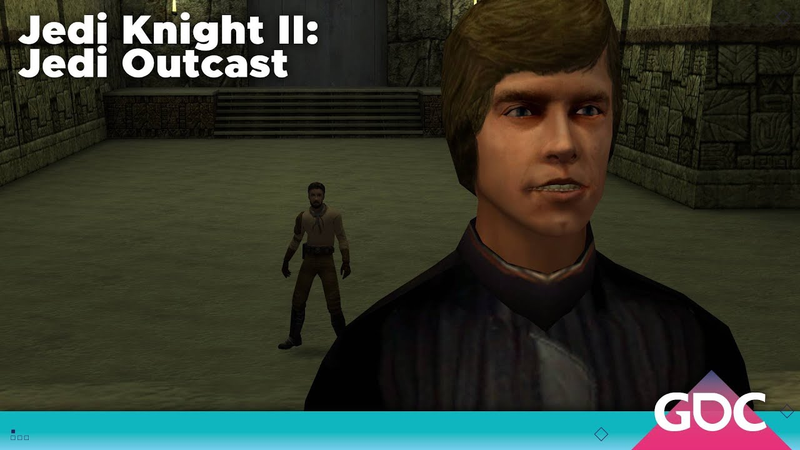
GDC Plays Jedi Knight II: Jedi Outcast with Raven Software
The development of Jedi Knight II: Jedi Outcast represents a pivotal moment in early 2000s action gaming, characterized by a transition from traditional first-person shooters to hybrid combat experiences.
- Raven Software developed Jedi Knight II: Jedi Outcast by hybridizing first-person shooter mechanics with third-person combat systems inspired by Heretic II and Bushido Blade.
- The development team utilized the technical foundation of Star Trek: Voyager – Elite Force to build the game, leveraging proprietary tools like GTK Radiant to manage hardware limitations.
- To ensure performance on early 2000s hardware, the team implemented rigorous asset optimization, level segmentation, and memory-efficient solutions like procedural facial animations driven by audio volume.