Transcript
Welcome to the Navit Gaming Podcast, where it is our mission to explore the business and future of video games. We bring together the industry's brightest builders, investors, and thinkers to keep a pulse on current events, dissect emerging trends and games, share lessons learned, and have a great time. This podcast is also part of Navik's growing ecosystem which ranges from free and premium research to consulting and advisory services. For more information, visit www.navic.co. This episode is brought to you by Overwolf. With over 1,500 games supported, 178,000 creators, and 113 million monthly active users, Overwolf is the guild for in-game creators. Whether you're a gamer, creator, or game studio, Overwolf is the ultimate destination for integrating UGC into
games. For game studios, Overwolf offers Curse Forge for studios, a white label solution that lets game makers and publishers easily integrate mods safely and seamlessly into their games, both existing and new, at zero cost. It's battle tested by AAA studios and games including Craftton with Enzo, Studio Wildcard with Ark, Take Interactive, and others. Alongside this, Overwolf is the all-in-one platform that enables creators to build, distribute, and monetize in-game apps, mods, and game servers. In 2024, Overwolf paid over $240 million to in-game creators, proving that they truly value the talents and contributions of the gaming community. You can check out all Overwolf has to offer at overwolf.com or simply check out the link in the show notes. Now, let's jump into the episode. All right, what's up everyone and welcome to the Navic Gaming podcast. I'm your host Alex and this is the interview and insight segment. Last year in
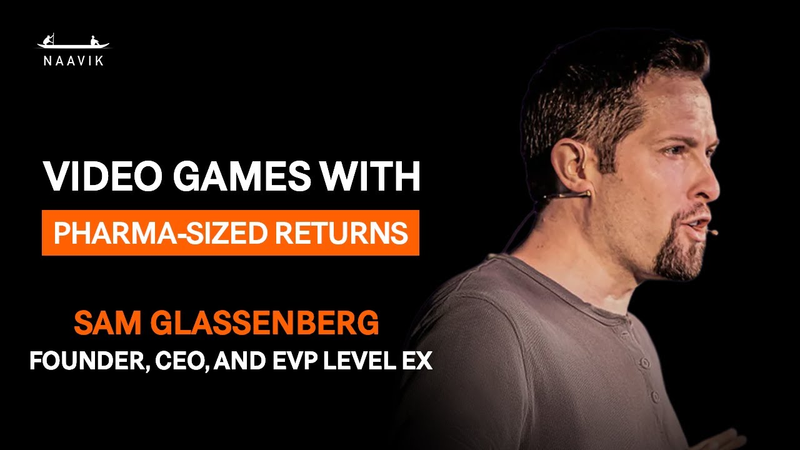
November this 2025, um I had the privilege of attending games beat Next, I did a talk on all the things. And one of my favorite things about going to a conference is when you genuinely have the time to sit down for the other talks and listen and learn something new and not be inundated with meetings. And this is how I met today's guest, Sam Glassenberg. Now Sam was giving a talk on something really interesting on the border of edtech and games and medicine. And I come from a family of doctors. So his talk really struck me. Sam is building medical games, games that teach doctors to be better doctors and that are genuinely fun. And it struck me from some of my own gaming experiences that medical diagnosis can actually be a very fun game mechanic. If you've played Do No Harm on Steam, you'll see the entire game is just centered around identifying boils and skin conditions, and issuing serums and potions to those patients can be extremely exciting. But I digress. Today, Sam and I are going to talk about medical games, how to build them, the history of the field, who plays them, whether or not they're effective in their altruistic goals, and yes, how much money they actually make. Sam is
the founder of Level X, a medical game studio that's gone through an interesting corporate arc, which we will discuss. TLDDR, Level X's Life Science Businesses, was acquired and rebranded under Relevate Health, which is where Sam is now. But Sam, welcome to the show. Um, it's such such a pleasure to have you.
Thank you. Thank you for having me. Great to be here.
Yeah, I'm very excited. Um, and I love the background and if you're going to be watching on YouTube or on Spotify video, um, there's going to be some really cool visuals that we're going to show, which I'm pretty pumped about. But,
well, you make video games, you know, you can't just handwave it. You can't just, you got to see it. See, as they always say, show don't tell. Um, so before we dive into our first topic, I want to know what inspired you to work in this field because I know from your talk, you actually have a great story and I really enjoyed it and I resonated with so I'm just going to have you tell our audience about it, too.
Sure. So, I mean, my my background is in video games. So, I used to work at, you know, Lucas
Arts. I I started my career as an animator literally at Lucas Arts flying spaceships for PlayStation 2 cutscenes. Uh I used to run the DirectX graphics team at Microsoft. Uh after that I ran a game studio that made mobile and social games for all the big Hollywood movies. But uh like you Yeah. I come from a family of doctors. Uh my grandfather was a famous doctor. Both of my parents aunts uncles. I'm the idiot who didn't go to medical school. Um, and
I also did not go to medical school. I think that's the right choice.
Yeah. Um, so I have terrible stories about this I can I can share another time. Um, but essentially eventually after many years my father gave up and about a dozen years ago he says, "All right, Sam, you're too old to go to medical school. So, at least put all this gaming nonsense to good use. Make
me a game to teach my residents how to do a fiber optic intubation. It's this procedure doesn't matter. It's a tricky procedure. We only do it on like patients with difficult airways. So, I, you know, he's seen experienced anesthesiologists struggle with it if they haven't done enough cases. But he goes, "Sam, I don't want to drag anyone to the training center. Can you just make me a game they can play on their phones?" So, you know, I'm busy like running a Hollywood game studio. I have a day job, but sure. So, out of guilt, I sit down for three weekends and I throw together this like crappy little fiber optic laryangoscopy video game that this is before the days of test flight. So, I have to upload it to the app store so his friends can put it on their phones. So, all right, Dad, here's the link. You know, leave me alone. I go back to work. I don't think about it again. Two years later, uh, he calls me up. He goes, "Hey Sam, how many people downloaded it?" Dad, I don't know how many of your friends downloaded your fiber optic laryangoscopy game, but I'll
check for you. So, I went on iTunes Connect and sure enough, we had a 100,000 doctors, nurses, and airway specialists who've been playing this. Now, in the realm like, you know, we make consumer video games played by 10, 30, 50 million people. But in healthcare, like this is unheard of. This has never been done before. So I Google it to try to understand how this happened and I discover unbeknownst to me they've been doing efficacy studies at hospitals all over the world from China to Stanford that shows this like crappy little video game I made for my dad is substantially improving physician performance. So you know I would love to say that games for doctors was some you know genius idea but it wasn't. It was really just an accident and, you know, sprinkled with some parental guilt. So, all right. You know, clearly there's demand for this. Okay. What if it wasn't just me? Uh, so, you know, after my the Hollywood game studio was acquired, I said, "All right,
let's bring together the top video game developers, artists who worked on everything from, you know, Mortal Kombat to Words with Friends. team them up with hundreds of physician advisors across every major therapeutic area to we say advance the practice of medicine through play. So we've got now millions of medical professionals earning literally they're earning CME. They're earning continuing education credit toward renewing their medical licenses by playing video games. And we're working with all the major life science companies, med device companies. The studios actually split, as we said, into two different studios. One of them works with NASA. It's crazy. We're having We're having a lot of fun.
This is awesome. I'm gonna have to recommend to everybody to watch this on YouTube because this is probably the best like visual opening I think we've ever had on this show. Um it was like a little movie of of awesomeness. Um
it's all video game streaming tech. I just like this is all OBS. All good things come from the video games industry.
Yeah. Well, I think even though you're making medical games, I believe you are the first person to ever stream me OBS on our show today. Um, but that's amazing and I think like as is very inspired by your father and his, you know, you're like, "Hey," he's like, "Hey, you learned something. Can you help me out here?" Um, and you know, this kind of like started your amazing journey uh into into building games that I think have that are fun and that bring a lot of value to an entirely different profile of gamer, which we will talk about. But, you know, I want to talk a little bit about the market reality of the history of medical games before we get into sort of like the era that you feel like you're in. Um, but before we actually get clinical or talk about any of that, um, I actually just want to ask what is like the funniest this is not how games work moment when you've had a medical stakeholder like try to design a game? You mentioned that you've working with a bunch of life sciences partners. I bet you there's something funny here. Um,
oh god. I mean, we have
just pick one.
I mean, what's actually interesting I've I've even funnier stories are when video game developers learn discover how
doctors learn things without video games.
Okay,
those are the crazy we do one of those or we can do
Sure. Sure. One of those. That's fine.
Um, and then I mean you the thing is like what are the first assumptions about games to make is s always the super obvious thing. It's always like let's play a game where you shooting molecules with a laser and like it's all these very it's the problem is it's obvious
because that is what
all the reason why this whole the whole realm of applying game design in other disciplines or gamification is so stigmatized is because all of the examples are scraping the most obvious layer of video games. the badges and the quizzes and like slapping them on to boring things completely ignoring the incredible richness and depth that is the discipline of video game design.
Got it. Yes, I would agree. And I think even from that contest I think that's happening that's pervasive that's across
like any kind of software tech consumer platform where people just basically they use the word gamification which is basically badges and slapping lo and like little like icons and that's like oh we're gifying the app but you're not actually gamifying anything in the true sense of what is the actual motivation and progression of video game design.
Correct. There's there's no depth there. And that's why like you'll hear you know I run medical video game companies. I never use the word gamification unless disparagingly. We don't use the word serious games.
Yeah. Um Okay. But like serious games, right, have been studied for decades and the evidence is kind of like mixed or positive. I think depending on the quality of the game and the outcomes, I think I was reading that one large systemic review in medical education found the evidence was like moderate and that serious quote serious games were often complimentary rather than replacements for traditional teaching. or at least that's some of the research I was reading. Um, and so I wanted to kind of begin with if you had to describe quote the state-of-the-art in
medical training today, what is broken? And this maybe goes to your point about what people are shocked about in terms of how doctors learn.
Yeah. Yeah, I I think that anytime a study is done on I will say a halfdecent medical simulator or game, the results are always extremely good because the bar is ridiculously low. In fact, they've even shown that surgeons going into a laparoscopic procedure, if they play any game before surgery, it doesn't have to be a medical one. If they play any game that like uses their hand eye coordination, like a Twitch game, it'll improve their performance in the lab.
Dude, this is why my dad must have been such a good orthopedic because he used to play Halo with my with my brother a bunch. Um, though my my though my dad would get nauseous like extremely fast. Um, but there is that.
Well, that's a whole other thing.
That's a whole other thing. All right. Well, but but yeah, I mean the the the
the state-of-the-art in healthcare and
in medical training is 30 years behind the state-of-the-art in video games. And I have there are just so many examples of this. You know, look, in the video games industry, we you know, today I can make, you know, for $50 I can buy a copy of Call of Duty, maybe 65, right? you know, zoom into the eye of one of the soldier. This is what it looks like. Like, this is what an eye looks like in a modern video game. Now, let's sit down in front of a $250,000 eye surgery simulator. Looks like it fell out of a gumball machine. I mean, this is like what an N64. This is unbel Yeah. The people who are just listening can't see it, but imagine basically an eyeball in like Mario 64. That is what they're using. And the problem is not just that this looks like crap, but the the problem is it doesn't capture the challenge. It's just a loose
kind of it's basically an interactive video.
It doesn't capture what happens when you do things wrong, what happens when you use different tools, what happens when you tear something. And this is crazy, right? This is $250,000 and it looks worse than the eye we throw into a video game as an afterthought to make the character more realistic. And not only that, that $250,000 simulator, where is it? It's it's in a simulation center. It's in a the basement. There's only 200 of these in the United States. They're in the basement of of medical schools and they're stocked with, you know, a dozen of these, you know, half a million dollar simulators. Now, we're very familiar with this model in the video games business because we abandoned it 30 years ago. Nobody goes to the arcade to play video games on some expensive physical box. You have more compute power on your phone than you had in all the sim centers and arcades in the world in 1990. And so
like we have all this amazing graphics tech, physics tech that we use day-to-day in the video games industry that until Level X showed up was basically like completely out of the realm for for healthcare. And it creates this huge gap. So when you're measuring, you know, video against basically an interactive video, the results are not going to be great. you actually do something that uses just a little bit of video game neuroscience
and a little bit of that, you know, can we balance reward and frustration, you know, challenge and skill, get a little dopamine, get you into the flow state a little bit, create a little bit of challenge, a little bit of surprise. Boom. The results are always way better than the results you get from the standard learning modalities. The way doctors really learn is through play, just like we all do. But they're learning through play on live human beings because the tools we give them before you actually have to diagnose a patient or manage a ventilator or do surgery are terrible.
I see. Yeah. All right. And so the other thing that I was thinking that was really interesting is that what do
doctors do for continued education and skills refresh? And in the video game industry, games are meant to be updated. You know, we add rank, we add level cap, we expect the game to get harder, we expect to change the game to make it more fun. And I presume the same thing happens in science, right? where new discoveries are made, new surgery techniques are made, and then you have to go back into that autoistic basement lab and re-update that software, which I'm sure is not designed the way that like live ops video games are. Um, it's probably not very modular, and then you have to relearn those techniques. And so is video games, I guess, in my mind, I'm like, wow, like it could be really great to have continuous updates in the game that would evolve alongside the science so that doctors could continuously play one game and continue to learn new things and learn new techniques. So this is exactly there are all these areas where video games is ahead of everyone else. Not just it's not just graphics and physics tech and game design. It's also the ability to update content. I remember during COVID we launched I remember we had um a game. It was a strategy game around how to intubate a difficult patient was in our anesthesia game. And when COVID hit all the
guidelines for how to manage an airway were wrong. If you use them on a patient that might have COVID, you would aerosolize the virus and infect everybody in the room. And so we as quick as we could updated the game with the latest guidelines. It took us only like a day to actually update the game because it's all data driven. What took us a while is the first guidelines for how to do this were in Italian because if you remember the Italians were dealing with it first.
So we got it from the Italian Anesthesia Society. Then when the American Society of Anesthesiologists came up with theirs, we updated the game again. So we I think we updated the game like three or four times in a period of two months.
But right that's standard operating procedure for a mobile casual game.
Yeah, we would p we patch every week like Yeah, absolutely. I think that that's so so interesting because I think like so much of stuff like how knowledge gets transferred, people learn and update their skills is really slow and
in games is extremely fast because you introduce a new mechanic, you do a new patch, you do a new challenge and that would be weekly. Um, so I think there's a lot of really interesting potential there. Um, I have some questions though like where games have worked in healthcare already. It seems like a lot of stuff that you guys have done at Level X and Revate Health is is working. And I know there are also many doctors that are trying to build games to help patients form habits, for example. So, not
for the doctor's side, but more for the patient side. Um, do you see anything there that's been effective in the past about managing people with behavior with chronic conditions? And if so, like where does that evidence come from? Yeah. So there's all you know there are many ways there are there's no shortage of problems to solve in healthcare and when you solve them there's usually a substantial revenue opportunity. I mean just a minute ago you were talking about CME. CME in the United States alone CME continuing education for doctors is a $3 billion a year business of just keeping
doctors up to speed. That's like $3,000 per practicing US physician per year. If you can build games to do that, you can get them CME accredited, there's money to be made.
Same thing with patients. Like we're at the point now the FDA has actually started approving what we call digital therapeutics.
So if you build a game that can treat a mental health condition, for example, or an eye condition, you can get it FDA approved and then doctors can prescribe it. Not only can doctors prescribe it, but insurance companies will reimburse for it. So, you're a video game studio making money like a pharmaceutical company. Uh, to date, they've had games to treat ADHD. There are some coming out to treat PTSD. I actually built one with my daughter to treat her um, uh, convergence insufficiency in her eyes. So, build you can build these things sometimes relatively easily. In fact, I would argue similar to medical games, the quality level of the digital
therapeutics that are out there are very low,
which means there is a substantial opportunity to come in and build better ones. And you know, you make a successful therapeutic,
the opportunity there is bigger than any, you know, AAA game title.
Yeah. I mean, it makes a ton of sense. And I think the TLDDR of kind of what I'm hearing from you is like lots of room to grow. Baseline could not be worse, right? We can only go up from here. Um, and the TLDDR of all thing you've said is that the form of the video games that or software that doctors are using to learn or to train patient behavior is outdated and autoistic. And you also told me in our kickoff call that quote doctors suck at making games. Um, and then we're going to go to our next topic. But why do doctors suck at making games? Just say it out loud.
Yeah. No, I mean, why does anybody suck at making games? Because it's this incredibly deep discipline. It's like movies. Anyone who watches a movie
thinks they can make a movie and then you hand them a camera and it sucks. Just like anyone who plays games is like, "Oh yeah, I'm going to make a video game. Uh, I want to have" Or if you ask, even ask players what they want. We've learned this, right? You can't ask players what they want. What do I want? I want a machine gun that shoots lasers and missiles at the same time. And then you build it and it's terrible.
Yeah.
Because that's not game design is this incredibly deep discipline with this ridiculously complicated toolbox that combines art and science and economics and psychology. You can't just, oh yeah, I can make a game. Um, and even just asking doc similarly asking doctors what they want can often send you down the wrong path. We built I remember years ago we built a gastronurology game
and you ask a doctor what's you know what we're trying to do is capture the challenge of their field is a video game. So you ask a doctor what's challenging about the field and they'll tell you uh for example it's a you know
colonoscopy right what's challenging about a colonoscopy well one of the challenges is it's actually kind of like a deflated balloon the colon so you're like navigating this crazy thing and you're trying to do this procedure and it's a deflated balloon so um novices who aren't good at it have to keep inflating the balloon there's like a air pressure valve you can turn so you can push a button and keep inflating the balloon but that's uncomfortable for the patient and it means the procedure takes longer because you actually have to feed it farther down. And so we build this whole mechanic into the game with like this crazy physics where you can like, you know, pressure and you can inflate the colon and we measure how well you're doing based on that. And then we hand the game to gastronurologists. They go, "Well, this is easy." We go, "Wait a minute. You told us this was super hard." They're like, "Well, yeah, it's super hard for residents to learn, but once you've mastered it, it's easy." Wait, what? So, it's very important to actually, you know, when you ask a doctor what's difficult, they'll tell you what's difficult for a resident to learn, but to actually get get her to think, "No, wait a minute. Stop. What
gives you the adrenaline rush when you see a patient or when you're in the emergency room or the operating room? What gives what's the thing where you see it and you go, "Oh, no. What What's that thing?" And they go, "Oh, wow. That's I haven't thought about that." And that's where you start really finding the challenge and the fun.
Yeah. Yeah. And I mean, and that's exactly when you like when you read like I've read a Theory of Fun by Raf Coer um and and who did Ultima online like those are some of the tidbits of fun art controlled randomness um feeling like there's enough outcome that you're in power of but there's something special and new that you were excited by that you didn't expect, right? Um and there's all of these different kind of things that you put into the magic bag of beans that becomes a really fun video game. And yeah, exactly. I think you said it right. Like the craft of making video games is a craft and being a doctor is not that craft. And I just wanted to say that out loud.
Um being a doctor is still a craft.
Yes.
Right. Doctors are intellectually curious. They're lifelong learners. Like they are constantly just like game
developers. They're constantly honing their craft. That's what continuing education is all about. There's a lot of similarities, but they're not game developers.
But they're not the game developers, right? And so that kind of brings me to the next topic which is okay so the doctors aren't very good at making games but we need to take some serious games and we need to make them fun um making fun products and so we need reinforcements to some extent you so you founded a company called Level X that split into two studios one that was focused as you said on survey and medical devices and the other one was focused on clinical gameplay which is um I believe relevant health. Yeah.
Um and your clients as you told me are typically life science companies. they're not regular video gamers like in the market that you know I traditionally come from. But where I want to start is there's clearly something that needs to be done to make the serious games fun. And you've talked about a little bit of the pieces here, like what gets your heart pumping when you're in the emergency room and something goes wrong. Um, and you also told me a story about how you helped your daughter's convergence issues and with with her eye
and sorry, she was given some um eye exercises that were boring and she wasn't doing them and you made a game that would help her do her eye exercises. Can you like describe to me exactly sort of like what that looked like? How did you actually like take that and make it fun?
This is the simple thing. We can also we you know talk about how we fix type 1 diabetes on boarding but let's talk about eye convergence therapy right my daughter I have a nine-year-old you know she has uh eye convergence insufficiency so a lot of kids get this where you know objects when objects come close basically things get blurry you get double vision and so the doctor prescribed a the eye doctor prescribed this I don't app was hundreds of dollars 500 bucks and it was terrible my daughter hated it. She said, "This is incredibly boring and I'm not going to do this. You have to do this, you know, like an hour a week or something like it's an investment." And so I said, "All right, Alex. Um,
hold on." Like, you know, I looked at it and I was like, "I think we could I think we could do this." We sat down with, you know, Claude Code and, you know, she's nine. Okay. So, if you could have any game that you would play to do this exercise, what would it be? You want Pong? You want Tetris? She goes, "I want Guitar Hero and I want it with Taylor Swift songs." Whatever. She was eight. Whatever you want.
That's awesome.
We sat down and we built it in a few hours. It didn't take very long. It's not a very sophisticated game, but it's actually fun to play. Let me turn off the audio. U It's actually fun to play like you where would play with 3D glasses. You put it on and as you play this basically Guitar Hero game, if you get the notes right, the images diverge. So you know the the game moves closer and closer to you. If you get a note wrong, it starts coming back together. The thing goes farther away to sort of keep you in that zone of proximal development and really keep you like all right, get you to that point where you're just about pushing the edges of
your eyes ability to track. And every week she would play it for, you know, 10, 15 minutes and play through all of her favorite Taylor Swift songs. And a few weeks ago I took her to the eye doctor. she cured herself.
And so this is not hard. Um you can do this and when you do it opens, you know, you can fix real problems. This is not like you need, you know, hundreds of people and sophisticated labs. Now obviously certain problems you do, but there's no shortage of problems you can solve with the standard game developers toolbox.
Yeah. Yeah. Well, I think the interesting thing that you've done here, right, to our point earlier about gamification, which is kind of just like points and badges and leaderboard lipstick, right? Like what you've done here is you've actually you haven't invented any of the design of this game yourself. You just stole Guitar Hero, which is a legendarily designed game, right? With an entirely interesting and new input system of the guitar itself that appeals to this insane fantasy of
being on a stage and combined a rhythm based game with that. So, it's like your daughter already knew that. She was like, "This is something I already know that I like to play. I just want to do it in this other way." She kind of gave you that guidance. I think there's actually so much to be taken from there. It was because you don't actually, like you said, it's not hard. Like, you just look at some video games that have already been invented and made with successful mechanics that are consistent with potentially like the medical space that you're trying to attack and you just attach them to something different. Uh, which is sort of what what you've done here. Um,
that that is the exercise of game design.
Yeah. Forget medical games for a minute. What what are most medical what what are most consumer game designers doing? No one's building games from whole cloth. They're saying, "Wait, what if I take this core loop and I take this mechanic from this game that I really liked and then I integrated it with the story this way and then I have you do this loop." That's what they're doing, right? Great game designers are great pattern matchers. They're looking, they play tons of games, they get a good set to choose from, and they go, "Oh, this, you
know what, actually, this mechanic would be fun here." And that's what we're doing. We're not inventing any of these mechanics from scratch. When we build, let's say, a diagnosis puzzle game. That is a like that's a a reductive reasoning game. It's not, oh, here's the test result. What does the patient have? That's not fun. You have, you know, patient presents with their chief complaint. You have to order the right tests, ask the right questions to eliminate all the, you know, not only figure out what the patient has, but eliminate the other alternatives, what we call the differential diagnosis. That's the puzzle. You want to manage a complex patient over time. That's a strategy game. But, you know, there are lots of strategy games that work this way. Reigns and others. We didn't invent these mechanics out of wholeclaw. You want to learn how to manage a ventilator, that's a rhythm game. So, we're borrowing those mechanics the same way any game designer would. We're just trying to figure out what maps to the mental model that you need in order to understand how to manage, you know, how to diagnose a rare disease.
Right. Right. That's awesome. Um, okay. So, we talked a little bit about the pieces of how you guys take something boring and make it fun. Um, but who are the people on the team that make these games? I mean, I you just said that you you had a background in in more formal video games. Um, and you brought that kind of over to this space. So, how do you kind of convince people who maybe work in mobile games or PC console and art in the maybe the trad video game market to come build games like this? Is that hard for you? Um, once they see the games, then it's no longer hard. uh the challenges before that until they see what we're doing. Um it's all, you know, everyone all has a picture in their head of what medical games look like. Just like this is why we don't use the word serious games. It's not because it's not a descriptive word, but because every example we can think of serious games is not fun.
Looks like Second Life with like terrible interfaces.
Um, but when you see what we're doing, it's like, no, no, this is the first time in like, look, let's say you're a game designer. You've worked on Call of Duty, you worked on a bunch of different stuff, and now you're like, look, I want to apply my craft in, you know, say, let's say a healthcare discipline. Before Level X, your options were basically you had to compromise. You had to say, all right, well, I guess the graphics are going to suck and, you know, it's not going to be real game design. It's going to be curriculum. And then you see what we're doing and you're like, "No, no, no, no. That's that that's not how it works." Actually, we're using real game mechanics, real game technology. Um, and this is the first time you can go and do this without compromise. We're using, you know, Unreal Engine and like the latest Unity stuff. We're doing crazy physics and graphics. The gameplay is actually fun. Um, and so once you don't have to compromise, we were finding it was actually, you know, relatively easy. We were able to hire experienced veteran designers, artists, engineers who've
worked on everything, you know, major console titles, worked on lots of mobile titles because we want to get a good breath. Most of what we do is actually mobile and casual. Uh, and so pretty much everyone on the game design, engineering, our teams, they all come from the video games industry and they've worked on consumer games before this. The only difference is we also have a medical team which is staffed with MDs and biomedical engineers uh to help the game devs out. But other than that, we look like any normal game studio.
That's awesome. Yeah. Very cool. I mean, I would suspect that I think from the offset it could be difficult, right? Because a lot of people in the games industry want to build awesome and fun video games. And I have I personally had the exact same reaction. I was like, you couldn't you could not pay me any amount of money to go build curriculum, right? But when you don't frame it as curriculum, it becomes basically like anything else. Um, and I guess before we move on to the business and the market, right, which I think is obviously we're a business show and I want to talk about, you know, all the different kinds of business models and approaches that you guys um you guys have, but do you
ever feel like ever there's a challenge maybe between the medical team that you said you have on staff and the game design team that is that could potentially like make make light of a disease? Um, I could imagine that sometimes it could feel a little bit trivialized to play a game about curing a disease. Um, I'm not sure if that's actually true. This was just something that I was thinking about and potentially like a thought about as a question that maybe comes up um when you're thinking about maybe some sort of types of games that you're building that might be fun but kind of seem too light-hearted or too fun for the severity of the problem. Does that make sense?
We never run into the too fun problem. Um, obviously there's the treatment.
Yeah. meaning the game treatment. And that goes with anything. Like if you're building a game in, you know, the Call of Duty universe or, you know, the Last of Us universe, you know, there is, you can incorporate humor and playfulness and stuff like that, but there are going to be limitations.
Yeah.
Just like us. And what the way we sort of think about it is we keep pushing the limit um until
basically the doctors tell us to stop. So, going back to gastronurology, remember once like early on we, you know, we had this gastronurology game and we were like, you know what? We should port this to VR. Oh, yeah. And so, literally, we make this VR game and the doctors love it. We put it up at the big gastronurology conference and the it's the crowd. You you can't we're in like this little booth in the corner and we're just packed packed. Why? Because you walk and there's a C doctor in a suit and he's got a headset on his controllers and he's moving around like this like crazy. You look at the screen what's happening and it's an visceral experience he's never had because normally you're doing this procedure, you know, holding this device from 3 feet away with your fingers and now you're in the colon and you're grabbing polyps with your bare hands and it's squishy and there's blood and they loved it and they discovered all of this emer Oh yeah. And they discovered all this emergent gameplay.
you could remove polyps, right? You're holding these forceps and you could remove polyps. And then what they discovered is because it's all it's all a physics engine, you could juggle them. So these surgeons were sitting there juggling polyps inside a colon having a blast like playing golf. And then at some point, one of the game developers said, "Well, actually, we added this cool thing. Check it out. You take the argon plasma coagulator. It's a light. It's a plasma rifle. It's a lightning gun. You actually use this in in real life. I can show you. Um, and you can take the plasma rifle and you can point it at a polip you've removed and when you zap the pop, the palip explodes with this cool explosion. And so the surgeon's like, "Oh, let me check it out." That's totally not realistic. It wouldn't work that way. Why do you have that?
Really? You were juggling polyps 30 seconds ago and you were totally fine with that. But the second you shoot the palip with a lightning gun, which by the way you're also fine with, and the palip explodes, that's where we broke suspension of disbelief. Okay, good enough. No, it's
future.
But you see how far we went.
Very far.
Very far. But I mean it's like also know thy customer, right? Like it's like a very different unique gaming profile. And I mean as someone who comes from a family of doctors, absolutely they are obsessed with skin conditions and picking and looking and checking and that's the kind of psychology of the thing that gets a lot of them going to some extent depending on what field they're in, of course. And as I understand it, you know, it's there's all of the different diversities of orthopods and derm people and plastics and there's all have all different like cultures and clicks, which I kind of feel like is akin to like RTS gamers and mobile players and shooter players and a bunch of other different stuff. So, I'm sure there's a lot to kind of explore there, too.
Oh, they play differently.
Yeah, I I can tell you I've measured it. Dermatologists have a shorter attention span than cardiologists. M
um it's the the game design approach that you take for different just like you would when you're designing for
different segments in the traditional games business. Yep.
It's the same thing here.
Same approach. Awesome. All right. So, as I understand it, I want to talk a little bit about the business and the and the market, right? Because I think this is also something that was so interesting, right? You kind of said earlier like imagine you're a video game company, but you could be targeting a market and with returns like pharma, right? And as I understand it, you are you're you are ad based, not premium, and you mostly do stuff on mobile. Um, and you also have a lot of client funding. So you're like working with someone like Merc or something like that to build something on behalf of them. So can you walk me through kind of how you approach a client like Merc or do they pay for the development? Um, how does that actually process start?
Yeah, so we again there are many business models you can employ. subscription premium. We are all sponsored. Everything we do is sponsored. Our thing for what we make, everything's free to doctors and the stuff we also make for patients is free. We started doing that recently. Um, and then it's sponsored by industry. So the
models that you can imagine for that are the same models that you would have in the traditional games business working with brands. So sometimes, for example, we have games like if you open the app store right now, you'll find Top Derm and you open up, it's a dermatology game. You can earn CME credit inside the game. There's playable ads. There's playable levels that are sponsored by industry where you can learn about specific uh you can learn about specific treatments. And the same thing also we make as well. We make playable ads. So, for example, uh you know, here here's an example I'm showing behind me of like literally an ad in LinkedIn, a playable ad where you click it and then you're playing a dermatologist is playing a game where they understand we call mechanism of action. They want to understand how a drug works before they prescribe it. So, we make video games where you can play with a drug in a sandbox and understand what's happening at the molecular or cellular level. But that game just plays as a playable ad. So we have a bunch of different mode,
you know, sort of game modes that we can run in. We can do a playable ad in one of our games where we bring the doctors and we could launch it out on LinkedIn or in emails. We also build party games. So doctors learn a lot um at what we call speaker programs or it's called peer-to-peer where doctors go to a conference. It's a lecture. It's a lecture format. It's death by PowerPoint. Um and they learn a lot that way, but it's it's boring as it's terrible. So we come in and in the middle of PowerPoint deck there's a QR code and everyone in the audience snaps the QR code and then boom boom boom everyone is joining teams collaborating competing to answer questions about clinical study data diagnose the patient well what what's the next test you would order and it's like a competitive game. So that's sponsored by industry because industry is sponsoring the event but it's using the same game mechanics. So we have all of these different ways that we work with uh life science companies and the other company works with med device companies uh to
make games that engage doctors and you know that is a that is a highly profitable endeavor but there are lots of other business models you can employ.
Right. Okay. Interesting. And I I mean of course I just wanted to discuss sort of like how you guys are thinking about your approach and I presume that obviously the way that you get more clients is you go to one of these big conferences and another maybe someone from industry is there and they're like dang I really could use my next uh relevate health video game that's sort of similar for this you know surgery thing that I'm doing and we'll we'll walk up to you and we'll say hey when you come we want to commission you to build a game about spine surgery and you say yes and then you go right to it.
Exactly. I mean, think about think about E3 or GDC.
You know, take one of those booths welldesigned with like fun gameplay. You got big screens, people seeing, oh, look at this. Get a nice crowd around it. Now, drop that into a medical conference. They don't know what hit
them. Like, it is so dry and boring. And then all of a sudden, so how do we get what drives business for us? Literally, it's people from other companies digging their way through the crowd around our booth or around one of our clients booths being like, "What are all these people doing?" Oh, they're playing a video game.
Oo, I want one of those.
Yeah. Yeah. You don't have a lot of competition.
No. I remember once that virtual real actually that virtual reality game with the p-ups and the juggling.
One Fizer came up to us once and they were like, "We need this in our booth." And I was like, "But this has absolutely nothing to do with your product. We don't care. How how much for that? And we did and you just saw their booth was packed with the virtual reality polip game.
That's so awesome. I've just I've seen photos of medical conferences and this all just this makes sense. Um okay, so how many people So like you said you have Top Derm in the app store, right? Like I could go download it right now. Um
how many people play this game Top Derm?
Like
couple hundred thousand.
Couple hundred. the latest numbers, but basically like if you look sort of across our mobile games, it totals around like I mean there's 3 million people, but only a million of them are medical professionals. A little over a million are medical professionals.
Okay. And the other people are just regular gamers.
They're muggles. We don't count them toward any of our stats.
But but but why not? Because they're I'm certain that they're are you making I'm sure they're you're making ad revenue off of them.
No. No. Because our advertisers are like life science companies or med device companies. want to know that it's going in front of a doctor.
So if not a doctor then
okay ad sometimes we can't we're not even supposed to serve we we're not even allowed to serve the ad.
Oh wow interesting. Okay so there's something on going on the programmatic side where you've set up your you know like I when I make my account I register that I'm a doctor and then you serve ad inventory only to those guys and the other app they just get to play at ad free. Mhm.
Yeah. Exactly. And it's it's Yeah. And and the doctors in order to earn CME credit
to earn your medical your medical license, you need to give your NPI number. So, we know
your national prescriber ID. So, we you have to confirm that you're a doctor in order to earn the credit. So,
okay. I have so many questions that as like a regular gamer, I'm like, "Wow, look at those two million people that are just looking there to be monetized." Um, so the first thing is, do you make So, do you make contact with any of the muggles, as you've called them? Why are they playing this game? And what do they want out of that experience? Are you just a completely untapped unknown?
Uh, I mean, mostly untapped unknown. I can guess that it's people that are just interested. The games are fun. Some of them are harder to play than others. The derm game is really hard to play. Um, but like our gastronurology and pulmonology games are actually fun to play if you're if you don't know the medicine. Um, some other games are much harder. Uh, and so yeah, I think you know people are interested just like people play Kerbal Space Program. Um, so there's definite like there's definitely potential opportunity there and we've also started making games for
patients and those are growing much faster because those have a
a wider audience. Yeah, that makes sense. So I guess in that sense like you said that it's an opportunity there. Like would you guys ever want to expand beyond just like the life sciences market and just push on for full regular mobile player? Like clearly there's twothirds of your daily active users on some of these apps are just normal people having fun identifying skin conditions.
Well, actually one of the things that we're that I'm we're we're working on is expanding this to help bring in more revenue for the rest of the games industry. So how can we get for example our playable ads running in other video games? M
um and so uh this is this is a you know to just bring in more revenue for game devs uh who have maybe doctors who are playing or even patients who are playing.
Right.
And so
yes, in other words like you you may have a doctor that is not yet a customer of a relevant health game. They're playing Candy Crush. You want to service
them an ad for Top Derm in Candy Crush
as opposed to Bibble Bubble Bubble Bop,
you know. Exactly.
Yes. Yes. Yes. as opposed to I mean look this is this great tragedy that video games generate something like 13% of digital engagement and something like 2% of ad revenue like literally like Fox News is staying afloat with all this broadcast advertising no one's seeing it and in the meantime video game ads are wait what's the diplomatic way of saying it a circular economy
yep they are
of yes
games just promoting other games there's no revenue coming in
and that's silly and we can fix that and so we're working on it.
Interesting. Yeah, I mean it's certainly a um especially on the uh I would say that that's actually it's very true for the mobile ecosystem. For PC console it looks a lot different but for mobile it was absolutely just a
they will
companies will it's not even just other game companies feeding each other. It's
intergame inter companies feeding their own franchises back to one another. Like so if I you know at Candy Crush you know I might feed you bubble witch saga and it's the same it's still king like we're it's you're cannibalizing your own revenues and you kind of have like a different life cycle of of player as well where people might kind of migrate from social casino game to social casino game through that ads pipeline of yeah talking to to to one another. Um, which is interesting
if people get nothing else from this conversation. You know, it's this industry has all this existential angst now that we just about hit $200 billion and now it kind of feels like we're flatlining. Um, we had this big jump with COVID and then there were all these false starts with the nonsense like NFT games and you know VR didn't turn out to what it was supposed to be and everyone's really worried like where is the future of the games industry coming from? And I'm telling you, like the next hundred billion dollars a year as an industry is ours to lose because it's out there. Like you go solve a couple
key problems in healthcare, forget not to mention other industries, but with video games, there's a hundred billion dollars right there. There's no shortage of opportunity. You just got to, you know, apply your skills and craft creatively.
Yeah, makes sense. Um, all right. And actually that's going to bring us kind of to one of the the the later topics which is kind of like the impact of of Relevate Health and some of the work that you've done. Um but I think one of the things that you mentioned was that that there's actual audience growth here. There's people that don't play games that are playing games such as the people at the medical conference doing the polyps or that thing that you were describing. I mean you make money as you said from solving medical problems and that a lot of new games in games, traditional games is left pocket, right pocket, right? you're just sort of like tossing money around. Um, I'm curious like if you think there could be kind of a breakout hit medical game that reaches like a parody of like a dream or a supercell like a like a Brawl Stars or something like that and if you had to
pick a game category in the medical category that could do it, which genre and like what kind of game?
As a question of hypo hypothetical.
Yeah, good question. I think it's not going to necessarily look like that. We say with freeto play or sorry with medical games like the the it's the same equations as free to play but the inputs are very different. So would you necessarily get something that's going to reach hundreds of millions of people? Not necessarily but you don't need to because in healthcare the spend is so high. The US alone is a trillion a year um or more. the spend is so high that like if you can get small changes in behavior even among you know type two diabetics or people with COPD or doctors diagnosing rare disease or you can get someone to order fewer X-rays because they know how to use an ultrasound. Whatever it is, there's billions of dollars to either save or make. Um I would say probably the closest if you were like what would be like a good
mainstream thing. One thing I've always wanted to build is uh something to combat vaccine hesitancy. So I think um you know we have all these like amazing particle puzzle games. You look at like Frost, Feed Me Oil, Where's My Water? These games all hit like the top of the app store every time because they're super fun to play. Um we actually use that mechanic for a bunch of our games, including for diabetes. Um, but I would love to play a to have a game where you're playing one of those fun particle puzzles where, you know, you got to combine the right particles to get the right thing at the target. Da d d d d d d d d d d d d d d d d d d d d d d d d d d d d d d d d d d d d d d d d and then all of a sudden at level 18 you realize, wait a minute, this game is teaching me how mRNA vaccines work and how they don't actually give you COVID and how, you know, there's no mercury and just help someone develop the mental model that they're missing. Uh, you know, we wish I wish we had that during CO. I think that would have actually done a good job of sort of stemming the misinformation pandemic that we were that we were dealing with. But that's
just one example. I mean, obviously, if you can make a game that, you know, treats ADHD, that's going to have, you know, an audience as big as Call of Duty. You make a game that treats PTSD or depression, right?
Or helps people focus, like all of these things.
Yeah.
You know, if you can do it, I mean,
the approach there is
Pokemon Go
already did it. The Obama administration spent I think two or three billion dollars like to stem the obesity epidemic literally just to try to get overweight Americans off the couch to go for a walk and then all of those efforts were eclipsed in 48 hours when Pokémon Go got what was it 40 million Americans like walking for miles for months.
Yeah, it was a time but it's a great fantasy right if it fits in the IP. You were always supposed to be looking for Pokemon anyway, right? Like it's the whole like and I think that's why something like Pokémon Go, you know, works. so well um where it was like and and you need that fantasy, you need the storytelling, you need the world, the world building to like have that like actual genuine motivation, which I think is why it was effective. But I think
what I'm hearing what you're saying is that there's like one there's a difference when I say scale of breakout hit to dream or supercells, right? Like there's a revenue target and there's an MAU target. And you're saying we can hit these revenue targets with significantly smaller MAU just given the just given the pronouncedness and the spikiness of the of how much wallet size.
Oh, sorry.
I was going to say like because it's such a it's a trillion dollar market and some of these things are so needed like the willingness to pay for some of those types of experiences is much higher than obviously we don't need Brawl Stars like no offense but like you know whereas like we do need tools that help us diagnose patients in a better way. And then also you're saying in addition to that, if you wanted to go to something mainstream, you'd have to basically pick a um a a disease is maybe too severe of a word, but a disease of some kind that is large scale, right? Something like ADHD or PTSD that a lot of people have. Um which makes sense.
We've made highly profitable games where the target audience was a few thousand
doctors.
Yeah. Because if you're in a certain there's a certain specialty, you know, and if we could just get doctors to diagnose this a few months early,
if we could just get doctors to escalate therapy to this instead of that, like the outcomes would be so much better. It's totally worth it to build a game that may only be played by a few thousand doctors, but in the end will affect will will affect tens of millions of dollars in healthcare spend.
Yeah. And lives like lots of patients lives.
Yeah. Yeah. Yeah. Um which again like now we're we'll go to kind of like the impact of relevant health and you've told me that a lot of this work has clinical impact and so how are you actually like measuring that all sorts of ways. So look the whole reason this got started was because people started measuring impact of a game I made and didn't even realize it. Since then, we've just been doing one efficacy study after another. Whether it's um you know, our adviserss who love to do they love doing efficacy studies to show, you know, demonstrate how you
know, games are this much better. We usually try there's like there's lots of studies out there that show games do great. Um we generally try to answer interesting questions. So, for example, everyone assumes that games work great for the young doctors. What about the older ones? M
you know a lot of the studies that are out there are test on medical students because you can recruit them with pizza but we ran a study a couple years ago we for example a lot of our studies are we did one in dermatology where the average age I think was like late 40s so to prove that once you controlled for existing knowledge games were the most effective way to learn no matter how old you were and that's exactly what was demonstrated so you're able to measure this you know through studies the other way we measure it when we're working with life science clients for example is they can actually look at EHR data to see how the game has changed improved diagnostic and treatment behavior among the people who play it
and and what is EHR data just for the audience
oh sorry uh electronic medical record
okay
so when doctors prescribe things it goes into the medical record when doctors order a test it goes in the medical record so you can actually on the back end look at all the data and say, "All right, doctors who played the game over the, you know, 60 days after they played, how did that affect how they diagnosed or treated?" And it is in fact the most effective way to improve behavior.
I see. Okay. So, it's a combination of kind of the efficacy studies as you've said with advisers, the electronic medical record. Um, and there's probably some like in-game performance stuff that you're like actually looking at, right?
Yeah. The in-game performance is the most obvious. Yes. Everyone, you know, you can see who's improving their performance in the game to diagnose, treat, whatever. But what we really care about is skill transferability
to the real world obviously.
Oh great yes I can get better at diagnosing the patient in the game. How does that affect my ability to you know recognize skin disease on skin of color in the real world? All right we measure that.
Yes, that makes total sense. As someone who's played a lot of do no harm um I
saw an X-ray the other day and I was like look standard. You know it's like a terrible X-ray and I was like don't don't know what that's supposed to look like. So definitely understand the translation to real world impact. Um, in the I have a couple questions that are more like in the like the maybe the ethical nature of the of of this. Um,
so are these games do they get like maybe this is even a dumb question, but do they get like regulated by the FDA like are checked heavily? Okay, tell me about that.
So, okay, so first off, the way it works is any game that we make that's not sponsored or it's just, you know, generic content that goes through peer review.
Okay. Okay. Um, it's played just like any you could publish a paper, right? The FDA doesn't review it, but it goes through peer review. Everything we we make is peer-reviewed by doctors. If you're going to get CME credit for it, it's going to be CME accredited. There's an additional level of review that verifies and validates not only is this accurate, but it actually closes a knowledge gap that exists. So, that's that's separate from FDA. Anything that
we do that is sponsored by industry um abi has to abide by FDA regulations. And that applies a whole bunch of what translate to game design constraints. So for example, sandbox games are lots of fun. We cannot create a sandbox where you're allowed to use the for example a drug or a device in any way that's off label that's not approved by the
Yes, I could see that being very fun to do but not make sense.
But Exactly. There's a lot of like we you know how you know how uh entrepreneurs or or business people always complain about regulation. Oh, regulation's killing me. I'm going to vote for Okay, we make we work in a heavily regulated industry that puts a lot of constraints on our game design. And every time we see one of those constraints, we go, wait a minute, what is the bad behavior that must have happened that made this rule necessary? And then we go, oh, okay, yeah, this is why we can't have
nice things.
Yeah. Um, so it's you all of these serve a purpose and from from a game design perspective, it just means there's constraints just like any other you're making a game for, you know, a major IP, a major franchise, there's going to be constraints. Okay. This just applies more game design constraints. We're going to have a game you play with clinical study data. You can only use the data that's approved by the FDA.
Yeah. And I mean Yeah. And I think like that's actually kind of the fun of game design. Like, oh, like I want more enemies, but the enemies are taking up all the graphical rendering. like can't do that. Okay, here's a constraint. Um let's see if we can create that same fun but get around it in a different way. Uh so that I mean that's really interesting and that's a I that is something I totally nushed had not thought about. Like I imagine having a sandbox where you could just like all these like little me car like we like me meeps characters are just there and you just like freaking give them a bunch of drugs and just see what happens. Like that would be so fun but probably so bad. Okay.
Yeah. All right. Um, next, if you said that you work a lot with um with a lot of clients, so like an industry sponsored client like a Fiser. Um, if a pharma company sponsors a game, how do you kind of ensure that it's not like marketing for their products? Does that make sense what I'm saying? Like if it's like let's just say that like Fizer or or someone has a very specific drug and the treatment is centered around that drug.
How do you make sure that like yes it's Fiser sponsored but like this isn't like a thing where we're saying like Fizer is
the the provider of choice. Have you ever like ever refused? So there there are rules about this too but okay even if there weren't rules we still just like anything any so you're playing a game right? you're playing say top term there's a bunch of game content any content in the game that is sponsored by Fizer that Fiser has any influence over it's going to explicitly say before after during your playing sponsored by Fizer.
Okay interesting
um and that's just uh usually you know usually that's required but even if it
wasn't required we would do it anyway.
Um and for things for example like CME anything where you're going to earn educ continuing education credit that cannot be sponsored.
Okay I see. So if you're earning like there there are all of these rules and all the rules serve a purpose and we abide by the rules and that allows us to create an environment where you can be like all right I'm going to play a game sponsored by Fizer where I get to pour the you know pour the molecules in and play the particle puzzle to understand you know what it what it binds with and what it doesn't but I know it's sponsored by Fizer.
Okay. Have you ever refused to build a client their game?
All the time. Um, but usually the reason isn't going to be some deep ethical concern. It's going to be we can't make that fun.
Ah, okay. I see there. So, they're ch Yeah.
Yeah. All the time they go, oh, can, you know, can you make us a game to, you know, there's no shortage of examples where it's just there's no challenge there. There's nothing interesting there.
And for this, you should just have a
video or a slide.
See, I see you're saying go back to the old ways. Get your get your get your death by a thousand powerpoints. Um, got it. Okay.
But that's rare. Rare. Usually most things in medicine are scientifically interesting or there's some challenge involved because if there wasn't a challenge, then doctors wouldn't have anything they need to learn.
Um, all right. We're almost at the top of our episode and I kind of want to close with like one or two questions, but I think on the the impact of relevant health is like obviously like very clearly demonstrated as you've described by some of the the games that you've built, the clients that you've worked with, the doctors and patients lives that you've impacted. What's sort of like your 2026 looking forward plan to make an even bigger impact?
Well, there's some stuff on the playable ads front that I alluded to a little bit. expanding what we're doing to create revenue opportunities not just for us but for the whole industry. Um so that's one area that's less sort of medically interesting but more business
interesting. Um and then we're continuing to expand in patient games. So we just a few months ago launched our first game um for patients for type 1 diabetes and we have fixed it the problem we we we we set out to fix. I'm happy to talk about that. But based on the success of that game, we are now expanding and creating patient games for a number of different conditions.
Very cool.
So that's going to be a big area of expansion for us in 2026 and 2027.
All right. And finally, for that big impact, to have that big impact, what is like a message that you would love to share to the gaming community, the gaming industry, um, and maybe even to doctors, uh, in terms of like why who should come with you and why they should partake, um, in in this 2026 mission for you.
There is no shortage of problems to solve. And if you can solve those problems, there is lots of money to be saved by the system and lots of money for you to
make. So, and the toolbox you need to do this has been invented already. We have been honing it for the last 30 years and testing it on three billion unwitting test subjects. And that is the game developers toolbox.
Excellent. I love that. Well, we'll close with that. Um, well, Sam, it was such a pleasure. Um, I have really enjoyed this episode today. I was like, I have to have you on the show. When I saw you speak at GamesB, thank you so much for giving your time. Um, this is obviously like very impactful. Um, it's probably helping lives and and patients all around the globe. Um, so thank you so much for for coming on. Um, and as always, if you have feedback or ideas for me specifically, hit me up at alexandra.co. Um, I am always open. And with that, that is our episode. See you next time. Thank you, Sam. Thank you for having me.
If you enjoyed today's episode, whether on YouTube or your favorite podcast app, make sure to like, subscribe, comment,
or give a fivestar review. And if you want to reach out or provide feedback, shoot us a note at [email protected] or find us on Twitter and LinkedIn. Plus, if you want to learn more about what Navic has to offer, make sure to check out our website, www.navic.co. There you can sign up for the number one games industry newsletter, Navic Digest, or contact us to learn about our wide-ranging consulting and advisory services. Again, that is www.navic.co. Thanks for listening and we'll catch you in the next episode.
Auto-generated captions from YouTube — names and numbers may be misheard.





















Comments