Kabam
Documents about Kabam
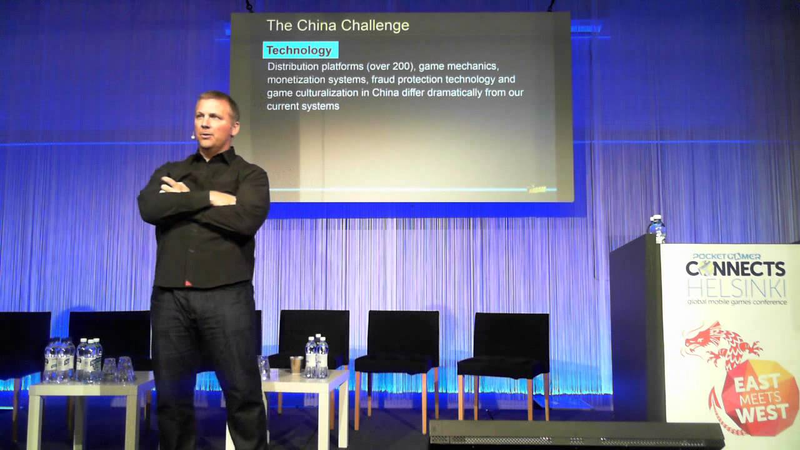
How Kabam is looking to crack China
Kabam’s strategy for navigating the global mobile gaming market centers on the necessity of "culturalization"—the deep adaptation of game systems to fit local preferences—rather than simple localization.
- Asian markets including China, Japan, and Korea now account for over 50% of global mobile gaming revenue, yet remain dominated by local developers due to high barriers to entry.
- Kabam’s strategy for market penetration relies on 'culturalization'—deeply adapting game systems like VIP features to local preferences—rather than simple translation.
- To succeed in China, Kabam leverages local partnerships for distribution and regulatory compliance while utilizing its Beijing studio to maintain internal control over code and IP.

Biz Daily: Why Undead Labs shut down Moonrise before it launched
The cancellation of the creature-based RPG Moonrise by Seattle-based developer Undead Labs highlights the challenges of the modern mobile games-as-a-service model.
- Undead Labs cancelled the creature-based RPG Moonrise because it failed to meet essential 1-day, 7-day, and 30-day player retention benchmarks during its eight-month soft launch.
- The project was deemed commercially unsustainable because the developer could not achieve the monetization levels required to offset the high ongoing infrastructure and operational costs of a live-service model.
- Publisher Kabam shifted its strategic focus away from original intellectual property, prioritizing high-revenue branded content like Marvel-themed titles instead.

Why Kabam is toning down its F2P monetisation
The mobile gaming industry is currently navigating a shift toward long-term player retention and sustainable monetization strategies, as evidenced by the financial performance and strategic pivots of major players like Electronic Arts and Kabam.
- Kabam shifted its strategy from aggressive, short-term monetization to a 'less is more' approach after missing its 2014 revenue target of $550–600 million, reporting only $400 million.
- To improve long-term lifetime value, Kabam is reducing its game release frequency and easing monetization mechanics, such as gifting players small amounts of hard currency to foster better sentiment.
- Mobile game developers are increasingly utilizing 'extreme user acquisition,' evidenced by companies like Supercell and uCool investing millions in high-profile traditional media, including Super Bowl advertising.

TrailPlay on engaging fresh audiences
The primary thesis of this analysis is that developers can overcome the saturation and high user acquisition costs of the mobile market by adopting a cross-platform strategy that includes desktop and web-based platforms like Facebook, Steam, and Kongregate.
- Adopting a cross-platform strategy across desktop and web channels serves as a low-cost user acquisition alternative to the saturated and expensive mobile market.
- King reported a 50% increase in average play time and a 100% increase in user engagement after porting their titles to additional platforms.
- PopCap successfully utilized Facebook Connect to enable cross-platform play, resulting in 20% of their monthly active users engaging with these connectivity features.

Monetizer: Dark District
Dark District, a mobile strategy title developed by Kabam, serves as a case study in the evolution of the city-building genre popularized by Clash of Clans.
- Kabam’s Dark District, released in late 2013, monetizes base development by restricting players to a single construction unit, creating artificial scarcity that incentivizes the use of hard currency to accelerate progress.
- The game utilizes a science-fiction aesthetic to differentiate itself from the fantasy-themed city-building titles that dominated the mobile market during the 2013–2014 period.
- The monetization model features a tiered structure for in-app purchases, ranging from approximately four dollars at the entry level to mid-range options around fifty dollars.

The future of F2P mobile gaming with Kabam's Andrew Sheppard
Kabam is strategically pivoting from its historical focus on strategy-based mobile games toward higher-fidelity, immersive, and interactive experiences to meet evolving consumer demands.
- Kabam is shifting its development focus from strategy-based games to high-fidelity, 3D, and AAA-quality experiences to align with evolving consumer demands.
- The company is diversifying its portfolio beyond traditional strategy titles into genres like tower defense and synchronous multiplayer action, as seen in upcoming releases Dark District and Blast Zone.
- Leveraging intellectual property through partnerships with major studios like Warner Bros. and NBC Universal has proven successful, with the Fast & Furious 6 tie-in achieving 33 million installs.

Monetizer: Backyard Monsters: Unleashed
Backyard Monsters: Unleashed represents the mobile transition of a foundational Facebook real-time strategy title.
- Backyard Monsters: Unleashed adapts a legacy Facebook real-time strategy title for the mobile market, testing whether brand heritage can compete against established mobile-native leaders like Supercell and Kabam.
- The monetization model utilizes a dual-currency system centered on 'shiny' hard currency, which is used to accelerate construction timers, bypass wait times, and offset resource deficits.
- The in-game shop features five distinct price tiers for hard currency, ranging from approximately $5 to $100.

KLab Financial Results Briefing: 4Q/FY2013
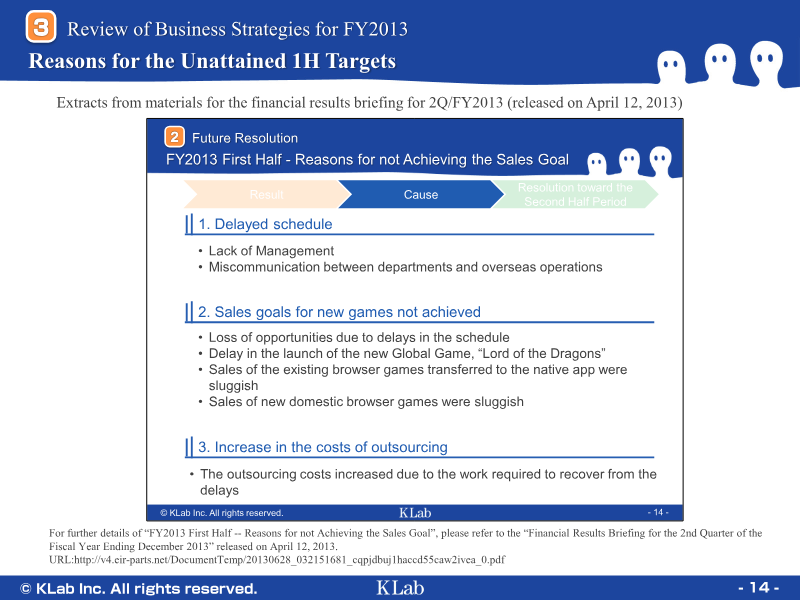
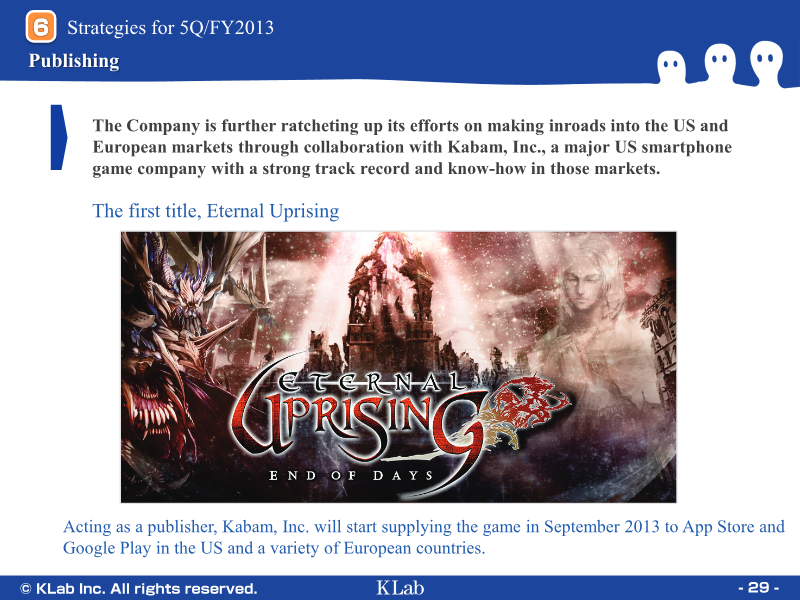
KLab’s financial performance for the 2013 fiscal year reflects a strategic transition toward a mobile-first business model, characterized by a pivot away from legacy system integration and licensing services.

Monetizer: Kabam's Heroes of Camelot
Heroes of Camelot, a mobile card-battling spin-off of the established Kingdoms of Camelot franchise, utilizes a standard free-to-play monetization model centered on card collection, evolution, and resource management.
- Kabam utilizes a dual-currency model for Heroes of Camelot, featuring earnable gold and a hard currency (gems) purchased through a six-tier pricing structure ranging from £0.99 to £69.99.
- The game employs aggressive monetization tactics, including time-limited beginner offers and mandatory hard currency requirements for specific activities like player-versus-player arena participation.
- The title leverages the existing Kingdoms of Camelot intellectual property to convert an established audience into a card-battling ecosystem centered on card collection, evolution, and resource management.

News roundup: Gamevil buying Com2us, Kabam and GREE reorg and Kixeye's mobile entry
The mobile gaming industry experienced a period of significant structural realignment during the first week of October 2013, characterized by tactical downsizing at established firms and aggressive expansion by others.
- Gamevil is acquiring its primary competitor, Com2uS, marking a major consolidation in the South Korean mobile gaming market.
- Kabam closed its Austin studio and GREE offered voluntary redundancies to 200 staff members as part of a broader industry shift toward smartphone-centric platforms.
- Established developers including Kixeye, Stardock, and Jagex are pivoting toward mobile-first strategies to target the core gaming demographic.

Monetizer: Kabam's Puzzle Trooper
Puzzle Trooper, a match-3 action RPG published by Kabam and developed by Gumi, utilizes a standard free-to-play mobile architecture designed to onboard new users through a guided tutorial and immediate incentivization.
- Puzzle Trooper utilizes a dual-currency system featuring soft currency and hard currency (diamonds) to drive a gacha-style troop acquisition loop.
- The game employs a six-tier store structure for microtransactions, with price points ranging from small purchases up to a $100 high-end tier.
- To reduce user friction, the game allows players to engage as guests before requiring social media integration, facilitating an immediate entry into the core gameplay.

Mobile games industry news (w/e 19 July 2013)
The mobile gaming industry in mid-2013 is characterized by rapid growth in user acquisition and significant consolidation, particularly within Asian markets.
- Baidu’s $1.9 billion bid for 91 Wireless highlights intense competition among Chinese tech giants like Tencent and 360 to control Android distribution channels.
- The Korean messaging platform Kakao generated over $300 million in revenue during the first half of 2013 through its integrated games platform.
- Kabam reached a $700 million valuation following a private share placement, signaling strong investor confidence in the scalability of free-to-play business models.