Infinity
Company
Documents about Infinity
BreederDAO: The NFT Factory
BreederDAO, a Philippines-based organization, positions itself as an "NFT factory" aimed at solving the supply-side constraint in the play-to-earn economy.
- BreederDAO operates as a specialized 'NFT factory' that uses a proprietary 'Breeding & Crafting Optimization Engine' to supply high-utility in-game assets to play-to-earn guilds and players.
- The organization aims to scale its operations to support 5,000 guilds and over 10 million players by providing assets optimized for specific game metas and economies.
- The company utilizes a tech stack comprising market analytics, tokenomics data, and asset pricing models to automate the breeding and crafting process, which currently serves over 10 partner guilds.

NFT games: Future or Crisis?
NFT games sit at the center of a debate in early 2022 over whether blockchain gaming represents the future of the industry or an overhyped speculative bubble.
- NFT sales reached approximately $25 billion in 2021, driven by significant capital inflows and an 800% valuation increase for major marketplaces like OpenSea following a $300 million funding round.
- Despite the financial surge, only 30% of game studios express interest in developing NFT-integrated projects.
- Consumer adoption remains cautious, with a survey of 1,500 console and PC gamers showing that only 56% of hardcore players are willing to earn NFTs through gameplay.

Mobile Game Trends in 2022: It’s Now or Never
Mobile game growth that had been fueled by pandemic-era stay-at-home spending was slowing and stabilizing by 2021, and the outlook for 2022 centers on six trends that developers and advertisers must adapt to.
- Apple’s privacy updates have significantly increased user acquisition costs, forcing developers to pivot from traditional targeting toward influencer marketing and live-streaming on platforms like TikTok, Twitch, and YouTube.
- The Play-to-Earn (P2E) model is becoming a mainstream revenue stream and employment alternative in underdeveloped markets, with some players in regions like the Philippines earning up to $3,000 monthly from titles such as Axie Infinity.
- Non-gaming giants including Netflix, Amazon, TikTok, Google, and Apple are aggressively entering the gaming space, evidenced by Amazon’s 'New World' reaching 700,000 concurrent players and TikTok campaigns like #GiftOfGame generating 2.5 billion views.

PlayStation's Game Pass: Making Sense of Sony's Subscription Strategy
Sony's March 2022 reveal of a three-tier PlayStation Plus subscription, priced between $9.99 and $17.99 and launching in June, is the focus of this newsletter analysis.
- Sony is shifting to a tiered subscription model to stabilize revenue against macroeconomic pressures like inflation and supply chain volatility, moving away from the debt-heavy cycles of traditional hardware launches.
- Sony’s gaming division currently generates $2.8 billion in quarterly digital revenue, which accounts for approximately 50% of the division's total earnings.
- While Sony’s subscription service offers a larger library of 400 titles compared to Microsoft’s 100+, its reliance on 40-hour single-player campaigns creates a retention challenge compared to Microsoft’s live-service model.
PlayStation's Plus Reboot: The Pluses and Minuses
Sony's March 2022 announcement of its revamped PlayStation Plus, due to launch in June, is the lead subject of this GameDiscoverCo newsletter analysis.
- Sony’s 2022 PlayStation Plus restructuring maintains a traditional premium sales model by explicitly excluding first-party titles from the service on their release dates to protect high-budget studio investment.
- Subscriptions currently account for only 4% of total gaming revenue in North American and European markets, totaling $3.7 billion compared to $81 billion from traditional retail sales.
- The three-tier subscription system ranges from $59.99 to $119.99 annually, with the Premium tier costing $17.99 per month, which is 20% more expensive than the $14.99 monthly price of Xbox Game Pass Ultimate.

EX Plus Alpha
Nathan Brown's March 2022 newsletter edition argues that Sony's announcement of its revamped PlayStation Plus, due to launch in June, was a disappointment on nearly every count: content, pricing, branding, and communication.
- Sony’s overhauled PlayStation Plus subscription service lacks day-and-date first-party releases, signaling that the company will maintain its existing high-cost business model rather than directly competing with Microsoft’s Game Pass.
- The new service structure is criticized for confusing branding and a high price point, with the premium tier costing 20% more per month than Xbox Game Pass Ultimate.
- Funomena is closing its doors following an investigation into CEO Robin Hunicke’s leadership, resulting in the termination of contractors and staff.
What We Know About Axie Infinity: Origin So Far
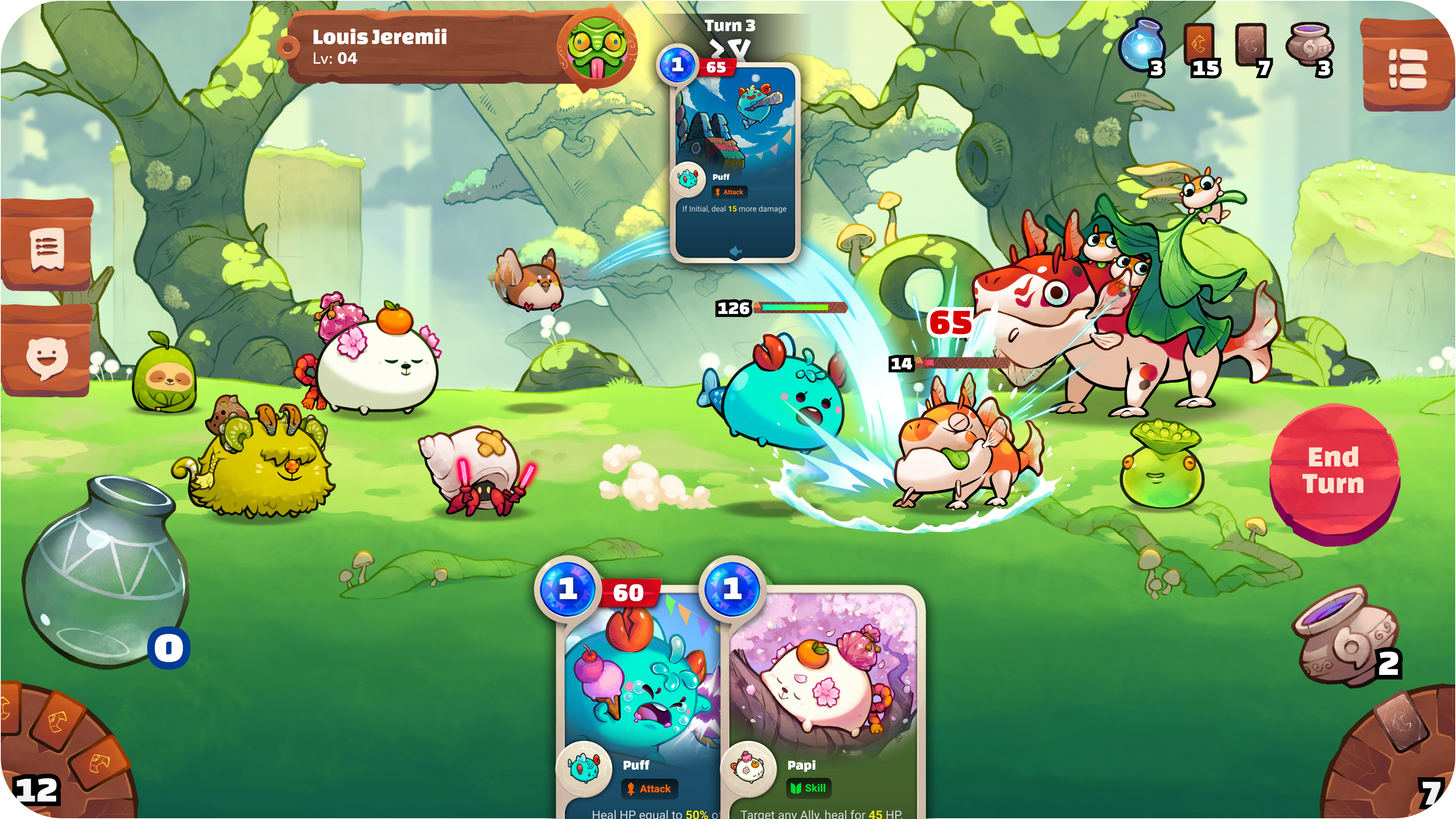
Sky Mavis is preparing Axie Infinity's Origin (Battle V3) update, slated for an alpha launch at the end of Q1 2022 via Mavis Hub and Android APK.
- Sky Mavis is launching 'Origin' (Battle V3) to pivot Axie Infinity toward a free-to-play (F2P) mobile card battler model, aiming to scale its userbase beyond the existing crypto-native audience.
- The update introduces three non-NFT starter Axies to lower the barrier to entry, replacing the previous requirement for new players to purchase three NFTs, which historically cost significantly more.
- To address SLP token inflation, Sky Mavis is implementing a new power-up system using 'Runes and Charms' that requires players to spend in-game resources and eventually SLP to enhance their Axies.

Putin's Single Player Narrative: Surviving War Is a Multi-player Effort
This early-March 2022 industry newsletter examines how the game sector is responding to Russia's invasion of Ukraine, then rounds out with a weekly news roundup.
- The gaming industry has mounted a unified response to the invasion of Ukraine, impacting a regional sector that encompasses approximately 30,000 employees across 400 organizations.
- Major entities including CD Projekt Red, EA, and Apple have halted sales or removed Russian-themed content, while Ukrainian officials have successfully pressured tech firms to withdraw from the Russian market.
- Netflix is aggressively internalizing development capabilities to leverage existing IP, evidenced by its $72 million acquisition of Next Games.
Splinterlands: A Pay-to-Win & Play-and-Earn CCG
Splinterlands, a blockchain-based trading card game in which players build teams of creatures that battle automatically, is examined as a more accessible and resilient alternative to earlier play-to-earn titles such as Axie Infinity.
- Splinterlands is a blockchain-based trading card game launched in May 2018 that utilizes an automated battle system and a zero-sum ranking model to gate earning potential.
- The game differentiates itself from competitors like Axie Infinity by offering a low barrier to entry, requiring only a $10 initial cost and allowing payments via both fiat and cryptocurrency.
- An integrated rental system allows players to lease cards for pennies per day, providing a more accessible alternative to the traditional scholarship models found in other blockchain games.
Steam's Boss Talks Subscriptions, NFTs, Hardware
Valve co-founder Gabe Newell's wide-ranging interviews around the Steam Deck launch in late February 2022 offer a window into the company's thinking on blockchain, subscriptions, and hardware.
- Valve has officially banned NFTs and cryptocurrency on Steam, citing high fraud rates that previously saw 50% of Bitcoin transactions on the platform identified as fraudulent.
- There are no immediate plans for a first-party 'Steam Pass' subscription service, though Valve remains open to integrating third-party services like Microsoft’s Game Pass if technical and contractual hurdles are resolved.
- The Steam Deck is being utilized as a foundational hardware platform, with its mobile architecture intended to eventually support future standalone, tetherless VR solutions.
What Does 'Success' Really Mean for PC/Console Games in 2021?
Defining "success" for premium PC and console games in late 2021 is the central question, prompted by a tweet from Industria co-creator David Jungnickel.
- A 'successful' launch—defined by high Steam visibility and top 5% chart placement—often yields only $100,000 to $200,000 in gross revenue, which is frequently insufficient to cover development costs and sustain studio operations.
- The case of the first-person shooter Industria demonstrates that achieving 80,000 Steam wishlists does not guarantee the financial viability required to fund future projects or support full-time staff.
- Sustainable indie development now requires diversifying income through government grants, contract work, and platform deals rather than relying solely on premium game sales.
The Sandbox: Where Digital Land and UGC Collide
Blockchain-based virtual real estate has become a prominent investment theme in early 2022, with nearly a quarter of early-December NFT sales tied to digital land.
- The Sandbox is currently valued at a fully diluted market cap of $13.8 billion, despite having only 30,000 monthly active users (MAUs) and approximately 15,000 users playing more than one hour per day.
- The platform's valuation-to-MAU ratio is significantly higher than industry peers, sitting nearly 20 times higher than Decentraland and over 400 times higher than Rec Room.
- The Sandbox lags behind competitors in content density, with a capital-to-experience ratio of $24,017 per user-generated experience, compared to $36 per experience for Roblox.