indie
CompanyUnited States
Documents about indie

A Day In The Life: Indie Game Development
The life of an independent game developer is characterized by a high degree of autonomy, constant multitasking, and the necessity of balancing creative output with the psychological pressures of entrepreneurship.
- Indie game development requires balancing creative output with the psychological demands of entrepreneurship, necessitating a disciplined routine to manage inherent industry instability.
- Developers must function as multidisciplinary project managers, handling tasks ranging from Unity programming and animation to marketing and community engagement on platforms like Discord.
- Effective production requires the use of task-tracking software to pivot between flexible development phases and the rigid requirements of a launch window.

How To Finish Long Game Projects!
The primary challenge for indie game developers is the inability to complete long-term projects, which serves as a critical barrier to success.
- Adopt an iterative development strategy by finishing a fully functional, releasable version of your game every three months.
- Limit project scope by condensing long-form concepts into shorter, complete experiences that still contain essential pillars like tutorials, boss fights, and narrative.
- Utilize Parkinson’s Law by setting strict, short-term deadlines to increase productivity and prevent tasks from expanding to fill indefinite timeframes.

1 Year Indie Dev! (2018 Results)
This retrospective analysis evaluates the first year of a solo indie game development career, focusing on the symbiotic relationship between game production and content creation.
- Building a YouTube audience serves as a critical engine for indie development, directly facilitating game visibility, playtesting, and essential feedback loops for solo creators.
- Transitioning from daily low-quality content to a weekly high-production-value schedule increased average video views from 200–300 to 1,000.
- The developer’s YouTube channel grew from zero to 1,500 subscribers over the 2018 calendar year, demonstrating the effectiveness of consistent content creation.

GET GAME IDEAS - The Ultimate Guide!
Developing a successful indie game begins with a high-quality concept that balances personal passion with market appeal.
- A successful game concept must balance market familiarity with a unique hook, ensuring the game is both recognizable to players and distinct enough to stand out in a crowded market.
- The development process should follow a three-step methodology: brainstorming familiar genres, innovating through unique mechanics or genre-blending, and simplifying the scope for realistic execution.
- To ensure a manageable project, developers must define clear victory conditions, obstacles, and a core decision-making loop while stripping away all non-essential features.

DON'T QUIT YOUR JOB FOR INDIE GAMES (5 Reasons)!
Transitioning to a full-time career in indie game development requires significant preparation and specific personal traits to ensure long-term viability.
- Establish a proven track record of completing projects before transitioning to full-time development, as successful game cycles often span several years.
- Maintain a stable day job while building a foundation to mitigate the financial volatility inherent in the indie game sector.
- Diversify revenue streams beyond initial game sales by actively exploring crowdfunding platforms like Kickstarter and Patreon, educational content, and publisher partnerships.
3 Lies About Being An Indie Game Dev
The independent game development industry is often romanticized as a glamorous pursuit, but the reality involves significant professional challenges that contradict common misconceptions.
- Indie developers must allocate 40% to 50% of their total working time to marketing, audience building, and content creation to remain competitive in a saturated market.
- Relying exclusively on the sales of a single game after years of development is a high-risk strategy that frequently results in financial instability.
- Sustainable indie development requires transitioning from a hobbyist mindset to a business model that integrates diverse revenue streams throughout the entire development cycle.

My Game Dev Journey! - What a Ride...
This retrospective chronicles the evolution of an independent game developer’s career, tracing the progression from rudimentary childhood experiments to professional-grade projects.
- Success in independent game development relies on the ability to abandon non-viable projects and treat failures as essential learning opportunities for refining design sensibilities.
- Transitioning from solitary development to professional success requires balancing technical proficiency with practical business skills, specifically marketing and community building.
- Technical growth is best achieved through a consistent practice of building, documenting, and archiving projects, moving from simple mechanics to complex systems like custom pathfinding and procedural generation.
3 People You MUST Know To Be Successful
Achieving professional success in the competitive indie game industry requires a strategic approach to networking and personal development.
- Accelerate professional growth by intentionally curating a network consisting of three specific archetypes: creatively successful mentors, functional adversaries, and energy-giving supporters.
- Engage with creatively successful mentors who have already achieved significant milestones to gain new perspectives and bypass the limitations of your immediate local environment.
- Maintain close proximity to adversaries who provide harsh criticism to build the emotional resilience and thick skin necessary for navigating public-facing community feedback.
3 Game Dev Excuses & Why They Suck
The contemporary landscape for independent game development has reached a point of unprecedented accessibility, rendering common barriers to entry largely obsolete.
- The democratization of development tools, such as Unity for multi-platform deployment and Blender for creative assets, has eliminated the high capital requirements that previously acted as barriers to entry.
- Modern indie game markets are sufficiently diverse to support niche concepts, with even specialized titles capable of securing a base of at least 10,000 dedicated players.
- The primary constraint on development is often the inefficient use of personal time rather than a lack of resources, as many individuals possess significant untapped leisure hours currently spent on passive consumption.
PlayJob Podcast #4: Blizzard Artist Peet Cooper
The game industry demands a unique blend of technical proficiency, continuous self-improvement, and strategic networking to achieve long-term career success.
- Career longevity in the game industry requires a hybrid background, as AAA studios like Blizzard and Riot Games provide deep specialization while independent projects foster the versatility needed for a well-rounded skill set.
- Professional visibility is best achieved by maintaining a portfolio on platforms like ArtStation and engaging in deliberate practice by studying the techniques of established industry masters.
- Effective networking relies on a 'confidently humble' approach, prioritizing personalized, thoughtful outreach over generic communication to secure mentorship and industry integration.
Games You Might Not Have Tried - ep 16 - Spooky Scary Game Recommendations - Extra Credits
This collection of game recommendations serves as a curated guide for players seeking unique, atmospheric, and unsettling experiences during the Halloween season.
- Effective horror design often relies on subverting player expectations and leveraging the player's own imagination rather than relying solely on jump scares.
- Environmental storytelling and ambient audio are critical tools for building tension, as demonstrated by the tactical shooter F.E.A.R.
- Horror can be successfully integrated into diverse genres, ranging from the tactile puzzle mechanics of The Room to the samurai combat of Onimusha Warlords.
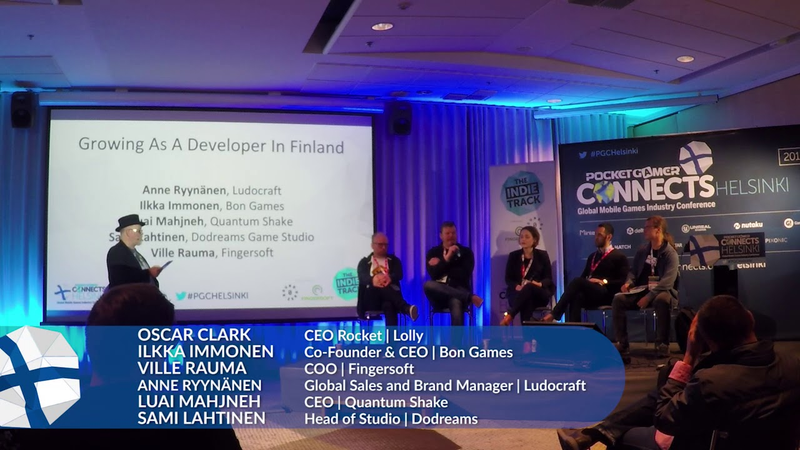
Growing as a developer in Finland
The Finnish game development sector has evolved from a landscape of experimental indie projects into a mature industry defined by strategic discipline and professionalized operations.
- Sustainable growth in the Finnish game industry requires balancing a human-centric organizational culture with a data-driven, pragmatic approach to project viability.
- Successful studios prioritize early market validation and niche targeting over trial-and-error methodologies to maintain competitiveness in a crowded global market.
- Long-term operational success is achieved by institutionalizing post-mortems, treating project failures as essential learning opportunities to foster resilience.