indie
CompanyUnited States
Documents about indie

Choo-Choo Charles & The Secret To Its Success | EP 005
The success of the indie title Choo-Choo Charles serves as a blueprint for solo developers aiming to achieve commercial viability through strategic marketing and disciplined production.
- Solo developers can achieve significant commercial scale by prioritizing marketability and audience engagement over personal passion projects, as demonstrated by Choo-Choo Charles reaching 370,000 Steam wishlists.
- Development updates should be treated as high-stakes narrative content, using conflict-driven storytelling and unresolved tension in devlogs to drive click-through rates and wishlist conversions.
- A strong, high-contrast visual hook is essential for immediate concept communication, allowing developers to maximize impact while managing limited resources through efficient asset customization.

The Married, Full Time Indie Dev Team — Full Time Game Dev Podcast Ep. 002
Operating as a full-time, married indie development team, Black Tabby Games demonstrates a sustainable model for independent production through the creation of the episodic narrative horror title Scarlet Hollow.
- Black Tabby Games sustains long-term project viability by treating marketing as a holistic, ongoing practice that prioritizes deep community integration over traditional press coverage.
- The team drives recurring revenue and wishlist growth by utilizing Early Access and episodic releases, supplemented by consistent Patreon support and A/B testing of store assets.
- The studio maintains complex narrative depth in 'Scarlet Hollow' by using a tracking system that monitors ten character variables across five axes to influence evolving relationship dynamics.
Your First Indie Game Should SUCK
The primary objective for aspiring indie game developers is to transition from hobbyist to professional by following a structured, iterative development roadmap.
- Prioritize completing a modest, low-stakes first project to build psychological resilience and technical skills rather than attempting a high-fidelity commercial debut.
- Limit the scope of your first project to a labor-time budget of $10,000 to $30,000 to ensure the game is finished quickly.
- Use industry-standard engines like Unity or Unreal and leverage asset stores to focus on core system development instead of creating basic assets from scratch.

The TOP FREE Software for Game Development (2022)
This overview evaluates essential software tools for independent game development, emphasizing cost-effective solutions that allow developers to bypass expensive industry-standard subscriptions.
- Blender serves as the definitive free, professional-grade solution for 3D modeling, sculpting, and animation in game development.
- Unity is the preferred engine for indie developers due to its superior documentation, extensive community support, and efficient cross-platform porting capabilities.
- Unreal Engine requires a five percent royalty on gross revenue once a developer exceeds the one-million-dollar earnings threshold.
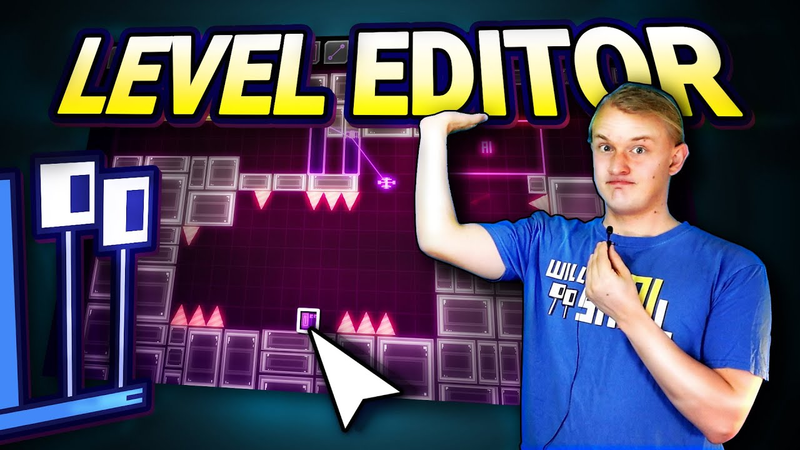
You Bullied Me Into Making a Level Editor (Lol)
The development of a level editor for the indie game Will You Snail serves as a case study in managing complex feature implementation under strict time constraints.
- The developer successfully compressed a planned six-week level editor development cycle into a 15-day sprint to accommodate other professional commitments.
- The project utilized an incremental, modular methodology, prioritizing foundational infrastructure like camera controls and grid systems before integrating complex UI and gameplay elements.
- A significant portion of the 15-day timeline was dedicated to debugging and refining the user interface within the GameMaker engine, highlighting the high time cost of UI development.
Accessibility on a Shoestring
Accessibility in game development is defined as the removal of unnecessary barriers that prevent players from experiencing a game as intended.
- Accessibility is not about medical conditions but about removing design-based barriers, such as small text or inflexible controls, that prevent players from experiencing a game as intended.
- Considering accessibility early in development is the most effective strategy for small studios, as demonstrated by Naughty Dog's shift from Uncharted 4 to The Last of Us Part II.
- Developers should prioritize the five most common accessibility complaints: text size (avoiding anything smaller than 28 pixels at 1080p), remapping controls, background transparency for text, motion sickness triggers (camera shake/blur), and photosensitive epilepsy risks.

The Snowball Changing the Games We Develop - The Metacast by Naavik
The global gaming industry is currently undergoing a structural transformation driven by shifting distribution models, aggressive sovereign investment, and restrictive platform policies.
- The gaming industry is shifting toward subscription-based ecosystems, exemplified by Riot Games' integration into Xbox Game Pass, to maximize player lifetime value through cosmetic-heavy economies.
- Apple’s privacy-focused restrictions on ad-tech fingerprinting are forcing developers to pivot away from traditional user acquisition toward internal data optimization and in-game personalization.
- Saudi Arabia’s Public Investment Fund, via the Savvy Gaming Group, is aggressively acquiring stakes in major publishers like Nintendo, EA, and Embracer Group as part of a national economic diversification strategy.

Does Indie Game Dev Get Any Easier?
The independent game development landscape is characterized by persistent financial instability and the psychological challenges of entrepreneurship.
- Financial instability remains a permanent feature of indie development, characterized by sporadic revenue spikes rather than predictable income streams.
- Scaling from a solo developer to a team-based model is essential to mitigate the high risk of burnout and emotional exhaustion associated with handling all technical and creative tasks.
- Transitioning to a team allows founders to shift focus from granular bug fixing and coding to high-level art direction and project management.

The Secret To Getting Your Game To Blow Up
The primary objective of this discussion is to identify effective, low-cost strategies for indie game developers to generate traction and sales without relying on traditional, high-budget marketing plans.
- Targeted, personalized outreach to content creators can drive significant revenue growth for indie games, as demonstrated by a case study where monthly earnings increased from $150 to $12,000 following streamer coverage.
- Authentic, handwritten messages that demonstrate genuine familiarity with a creator's content are significantly more effective than mass-marketed, template-based emails.
- Positioning outreach as a request for developer feedback rather than a direct demand for promotion builds rapport and increases the probability of securing organic coverage.
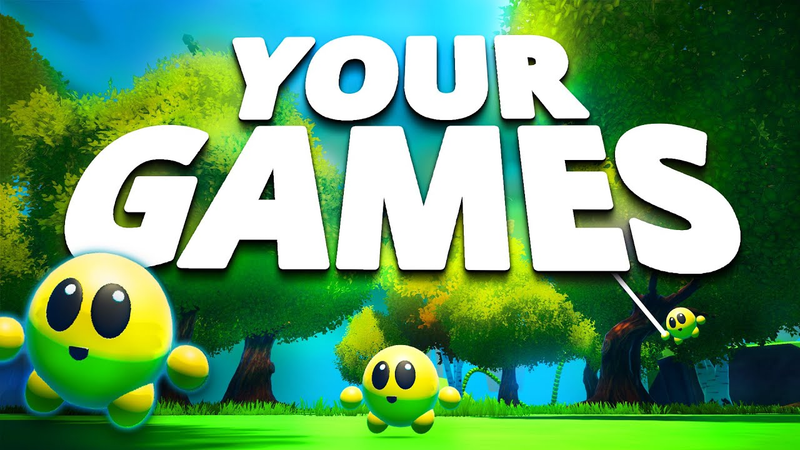
I PLAYED YOUR GAMES! | Game Design Feedback
Effective game design hinges on the seamless integration of intuitive mechanics, clear visual hierarchy, and platform-specific optimization.
- Developers must avoid porting mobile-first UI and control schemes to PC, as non-native iconography and input methods create a disconnect that undermines the core gameplay experience.
- Platformers require jump buffers and responsive control schemes to ensure movement feels precise, while complex mechanics should be introduced through gradual onboarding to prevent player frustration.
- Visual hierarchy in stylized or low-poly games can be improved by using atmospheric fog, gradients, and color correction to prevent high-contrast backgrounds from obscuring foreground gameplay elements.
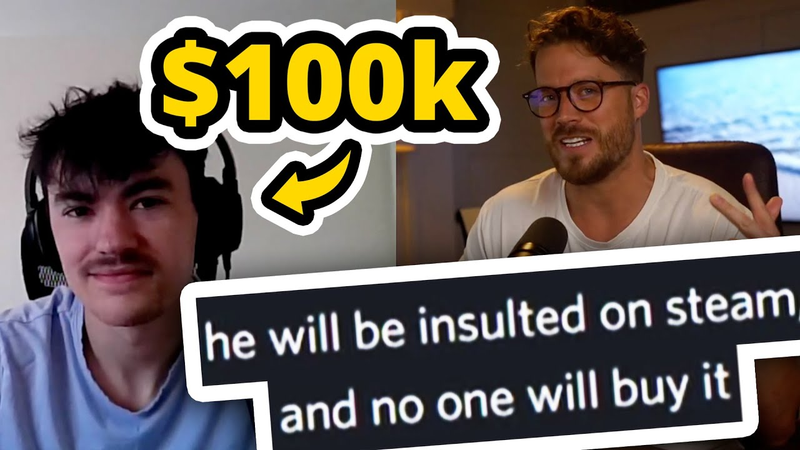
His Indie Game FLOPPED... Then It Made $100k!
The commercial trajectory of the indie game Roll serves as a case study in overcoming a failed launch through targeted outreach and iterative development.
- The indie game 'Roll' increased its revenue from an initial $150 to $100,000 by pivoting from a failed launch to a strategy of iterative development and targeted outreach.
- Personalized, authentic communication with content creators proved significantly more effective for sales growth than automated marketing efforts.
- Overcoming the 'spotlight effect'—the tendency for developers to obsess over minor technical flaws—allows creators to focus on a clear, honest design aesthetic that better resonates with players.
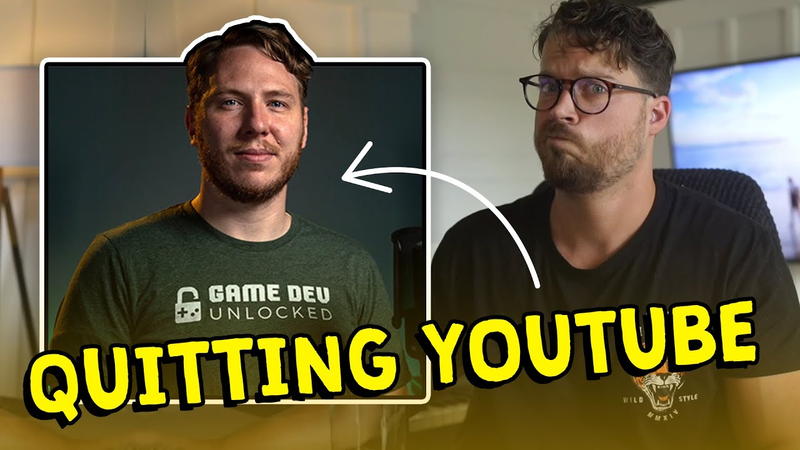
My Response
The central theme of this discussion is the pervasive burnout experienced by independent game developers who attempt to balance game creation with the demands of content creation and community management.
- Independent game developers face unsustainable burnout by attempting to simultaneously function as game creators, educators, and public influencers.
- The industry's current model forces developers to fragment their focus across multiple roles, which creates a high-pressure environment of constant public scrutiny.
- The psychological weight of maintaining a public persona can be as exhausting and detrimental to mental health as the technical challenges of game design.