indie
CompanyUnited States
Documents about indie

Living the Dream or Surviving the Nightmare: Making Commercial Indie Games as a Professor
The integration of academic tenure-track roles with commercial indie game development offers a unique pathway for creators to pursue experimental projects while enhancing their pedagogical efficacy.
- Academic game developers should prioritize securing exhibitions, awards, and grants over commercial sales figures, as these metrics carry significantly more weight during tenure and promotion evaluations.
- University-based game development requires a modified production pipeline where projects are designed as extended, long-term experiences to accommodate the high turnover and limited availability of student collaborators who typically contribute only 10–15 hours per week.
- To ensure project coherence when working with students, faculty should adopt a 'key-frame' workflow where the professor handles core design and animation, then delegates in-betweening or specific feature implementation to students based on their individual talents.
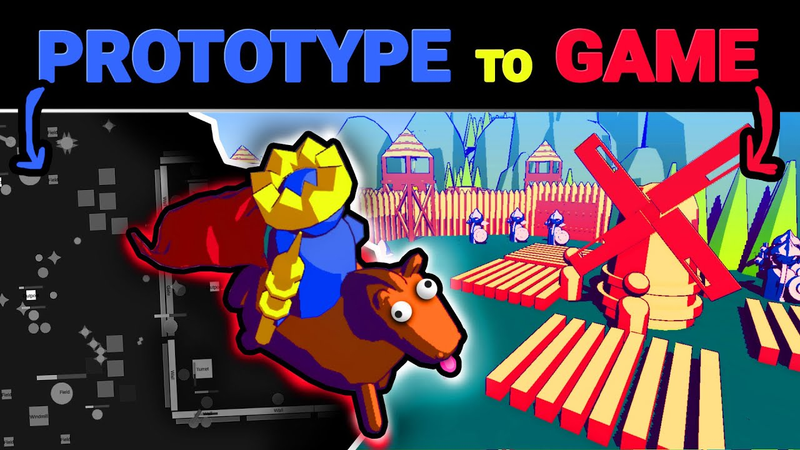
First Prototype to Actual Game in 22 Days!
The development of the indie title Thronefall demonstrates a rapid transition from an initial prototype to a functional, production-ready base defense game over a 22-day period.
- The development team successfully transitioned from an initial prototype to a feature-complete, production-ready foundation for the game Thronefall in just 22 days.
- The team prioritized a minimalist, stylized art aesthetic to ensure high visual readability and efficient production of a large volume of game content.
- Adopting an isometric, top-down camera perspective was a critical design pivot that significantly improved the game's strategic feel and environmental integration.
5 Solo Game Dev Mistakes You MUST Avoid (My Experience!)
The primary objective of this analysis is to outline critical strategies for solo game developers by reflecting on the development and launch of the indie title Pinstripe.
- Solo developers must prioritize rigorous, objective playtesting throughout production to identify design flaws and ensure reward systems remain fair and engaging.
- Securing a publisher is essential for solo projects to gain access to professional PR, media coverage, and industry expertise that are difficult to cultivate independently.
- Developers should leverage existing assets rather than creating every element from scratch to prevent burnout and significantly accelerate development workflows.

Launch Day: The Emotional Cost Of Releasing a Game
The modern game development landscape imposes significant emotional and physical strain on creators, particularly within small indie studios.
- The shift toward games-as-a-service models has eliminated clear project endpoints, forcing developers into a state of perpetual exhaustion and operational instability.
- 75 percent of developers regularly work outside of standard business hours to address post-launch issues, driven by the fear that negative community reception will permanently damage market performance.
- The lack of a defined conclusion to the development process creates a high-stakes, reactive cycle that threatens both individual well-being and long-term project viability.
This Is Why Your Indie Game Will Fail
The primary driver of commercial success in the video game industry is the presence of a unique, distinctive hook that differentiates a title from existing market offerings.
- Commercial success in the modern game industry is primarily driven by a unique, distinctive hook that differentiates a title from existing market offerings.
- Games lacking a clear, defining hook are considered derivative and face a significantly higher risk of failing to achieve viral success or financial viability.
- A game's defining hook does not need to be present at the start of development; for example, the iconic bullet-time mechanic in Max Payne was only introduced halfway through production.
Making Indie Games with Public Domain Content
Indie game developers can significantly enhance their projects by integrating public domain content, which provides a cost-effective strategy for establishing distinct visual and audio identities.
- Works published in 1926 or earlier are in the public domain, allowing developers to legally build games based on classic characters and stories like The Wizard of Oz, Don Quixote, and Night of the Living Dead.
- Trademark law remains distinct from copyright; even if a character is in the public domain, companies like Edgar Rice Burroughs Inc. may still hold trademarks on the brand, preventing the use of specific names or titles in your game.
- Sourcing public domain assets is time-intensive, with some developers spending up to two weeks searching for appropriate music or art for a three-month development cycle.
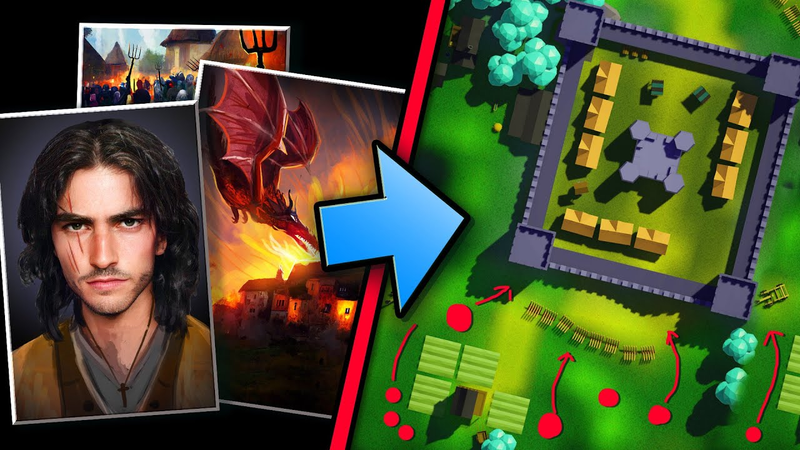
Our Deck Building Game Evolved Into Something Unexpected!
The development process of a new indie title reveals the critical importance of rapid prototyping and maintaining a clear design vision.
- Prioritize gameplay feel over initial design assumptions, as the team found that complex card-based mechanics felt like an exhausting math problem rather than an engaging experience.
- Avoid the 'fail fast' trap by avoiding long periods of complex architecture; the team spent 30 days on a complex code structure before realizing the core mechanics were not viable.
- Validate core gameplay loops early by creating 'quick and dirty' full-scale prototypes that encompass both early and late-game experiences.

Start Game Development Off RIGHT (The ONE Tip You Need)
The primary thesis for establishing a successful career in game development, whether in the AAA sector or independent studios, is the critical importance of professional networking.
- Professional networking is the primary driver of career success and longevity in both AAA and independent game development.
- AAA studio entry is most effectively achieved by starting in support roles like quality assurance or customer service to build internal relationships.
- Independent developers must prioritize a high-quality, public portfolio on platforms like itch.io to demonstrate capability and attract collaborators.

Indie Game Developer VS. AAA Developer: Which Path Is Right For You?
The game development industry offers two distinct career trajectories, each defined by unique operational scales, professional expectations, and risk profiles.
- AAA development involves large-scale production teams of 50 to 400 people and multi-million dollar budgets, prioritizing specialized, siloed roles over individual creative autonomy.
- Indie development requires an entrepreneurial approach where developers must balance core technical tasks with marketing, community management, and business operations.
- AAA studios offer greater job security and consistent salaries, whereas indie development is a high-stakes, autonomous path that demands significant self-reliance.
Our Next Big Indie Game | What to Make? (Devlog 0)
The primary objective of this development project is to select a concept for a new indie game through a structured, two-week prototyping phase.
- The team utilized a structured two-week prototyping phase to evaluate nine initial game concepts through digital prototypes and analog card-based simulations.
- The final project selection was a medieval-themed, system-heavy card game, chosen specifically because its reliance on UI design and character-driven mechanics aligned with the developers' core competencies.
- To ensure project viability, the team explicitly discarded concepts requiring extensive artistic assets or complex multiplayer infrastructure that exceeded their current resource capabilities.

The Best Game Developer Tools (ULTIMATE List To Start A Game Studio!)
Establishing a successful indie game studio requires a comprehensive suite of software and business tools that extend far beyond core game engine development.
- Successful indie game studios must allocate 40% to 50% of their total operational time to marketing, administrative tasks, and relationship management rather than technical production.
- The core technical stack for development consists of Unity for the engine, Visual Studio for coding, Blender for 3D modeling, Photoshop for 2D assets, and Audacity for sound mixing.
- GitHub is the industry standard for version control and team collaboration, while Steamworks serves as the essential backend infrastructure for store management.
The Resolve of the Latin American Gaming Industry
The Latin American gaming industry is currently undergoing a period of significant expansion, characterized by a unique creative identity that blends diverse genres with regional cultural elements and themes of magical realism.
- The Latin American gaming industry is currently limited by systemic barriers, including restricted access to high-end development hardware, inadequate educational infrastructure, and persistent financial constraints.
- To scale beyond its current indie-focused foundation, the region requires a strategic shift toward internal infrastructure and the formation of a unified regional coalition.
- Cross-border collaboration and grassroots initiatives, such as charity streaming festivals and digital knowledge-sharing platforms, are currently the primary mechanisms for securing international visibility and resources.