1 free read left. Create a free account for unlimited reading + AI research.
Create free account
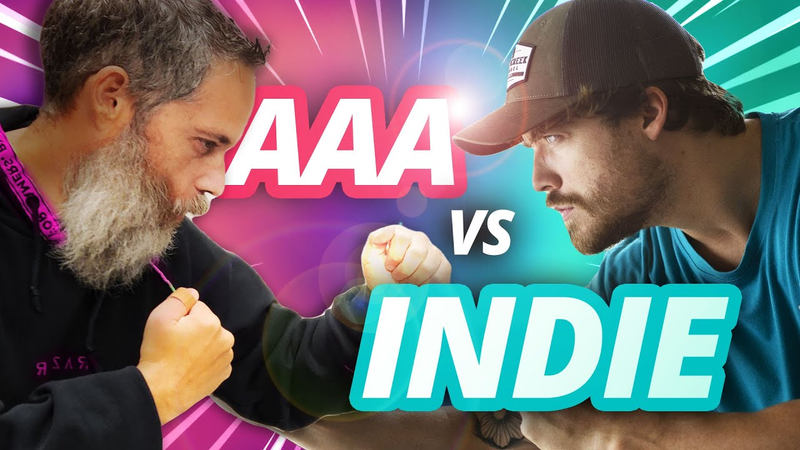
Indie Game Developer VS. AAA Developer: Which Path Is Right For You?
Key insights
6 takeaways- 01AAA development involves large-scale production teams of 50 to 400 people and multi-million dollar budgets, prioritizing specialized, siloed roles over individual creative autonomy.
- 02Success in both sectors requires a project-focused portfolio, but AAA studios prioritize specialized technical expertise while indie teams prioritize adaptability and cultural fit.
- 03Career advancement in AAA studios often relies on strategic entry through quality assurance or customer service roles, whereas indie opportunities are secured through direct outreach and personal rapport.
- 04AAA studios offer greater job security and consistent salaries, whereas indie development is a high-stakes, autonomous path that demands significant self-reliance.
- 05Indie development requires an entrepreneurial approach where developers must balance core technical tasks with marketing, community management, and business operations.
- 06Choosing a career path depends on balancing the need for structural stability in large-scale environments against the desire for creative freedom in smaller, independent settings.
Ask AI about this video
Transcript
It's a question that's been haunting game developers for centuries. Well, not really. 20 or so years. Which career path should you take? Indie game development or work for a AAA studio? Should you suffer through the grind of building your own indie studio, living in a dumpster on scraps of old cheeseburgers, drinking sewage, dreaming of one day owning your own indie studio? Or should you work for the fat cats at EA Games, Activision, or Blizzard, working through the night to hit your deadlines, only to release a buggy piece of crap that not even your mother would be proud of? Who can answer such a question? Please give a round of applause for Jason Wyman, aa veteran whose fingerprints have touched the likes of EverQuest 2 and Vanguard, and Thomas Brush, indie game dev extraordinaire, developer of Pinstripe and Never Sock. A debate for the ages, a battle to the death. Can they answer this age-old question? Only time will
tell. Let the fight begin. Um, but first I was just going to say I think it's going to be interesting cuz I don't know that much on the indie side of it. And you said not a lot of your friends are AAA developers. Most of my friends are AAA developers. Not a lot of them are indie developers. So, it's nice to be able to come and get this completely opposite perspective. Um, I started working on a long time ago. The first AAA game I got to work on was Vanguard Saga of Heroes at Sony and then I got to work on a bunch of the other MMOs there. Um, worked on a bunch of other games since then in the last 10 15 years, but nothing that was super exciting that I like to talk about that that much. like the the first ones working on EverQuest 2 was a blast and was probably one of the most exciting times and where I learned the most like in the actual big AAA time and I spent a lot of time doing that. But since then, like I said, worked on a bunch of other
things. And now I I like to just do mostly YouTube. I I like said, I make games for fun and YouTube videos for a living. So, it's a it's fun stuff. But I I really love the AAA field and like I said, most of my friends that I talk to daily are working on some AAA project or another or just coming off of one or some of them are looking at indie stuff though. So, this is going to be fun. Cool. Well, guys, stick around to the end of this video because I think it's going to be a huge knowledge dump for all of us, including myself, about, you know, I guess I mean there's a lot of misconceptions about AAA. Maybe some of them are true though and we're going to find out. But before we jump into the conversation, I want to let you guys know that Jason and I have a massive program called the Ultimate GameDev Course. And it is Oh, there's 24 hours left really, right? There's just one day left to join this program. And it's crazy. You know, we've we've had over a 100 students already sign up. Um probably at the time of recording this
video, there's something like 20 seats left, 30 seats left. And after that, we don't know if we're going to do this event again. But the course is all about indie game development and AAA, right? It's it's it's everything, right? It's not just indie game development. If you guys want to get a AAA job or you want to learn about how to make a game with, I guess, the professionalism of a AAA studio, or you want to learn how to start your own game studio from scratch, um, you can learn from both of us. The cool thing about our courses, not only do we have 10,000 students worldwide, and not only is it massive, it's going to take you more than a couple months to finish these courses, but the cool thing is it's actually taught by, you know, game developers who have been in the trenches. And me, I'm currently like in the trenches making my next indie game. And I know Jason is making games as well. So, be sure to click the link below to take advantage of this massive sale event and join over 10,000 students worldwide. All right, Jason. You ready to debate?
I am very ready. I've been I've been waiting for this for a while. Good. Me, too. I'm excited. Okay. So, the first big question I think everybody wants to know, and I actually don't know the answer to it, so I'll just let you answer this. What What defines AAA, right? Oh, okay. Well, and I think that in general, most people when they're thinking of AAA games are just thinking of companies with large budgets and large teams. And there's probably some very specific definition that you could get down to, but in general, you're looking at teams that have, you know, 50 to 300, 400 people on them and multi-million dollar budgets, usually with a big publisher and somewhat of a success record. I think most AAA studios start off as smaller indie studios and then they get a big success. They make a couple big hits and they go from being this 20man or 10man team to 300 or 500 people working on four different games.
So when you get to AAA it's really at that that large scale where things are more defined as far as roles. There's a lot more of the kind of middle management too, which is the one of the the negatives, I think. Um, but you've also got like full teams that can support and build all of the different parts, and you're not trying to have one person or a couple people put something together or grow their skills beyond what they already are to be able to accomplish the project. Usually, AAA team is going to already have the people and the skills required to get the project done. There might be a little bit of learning and experimenting, but for the most part, like they know what they're going to do, they know how to do it, and they're they're going to be able to build it, but they also have a huge budget and uh you know, a large team. So, it's it's really a question of just budget basically scale. Bud budget and but and scale. Yes. And generally you'll see that to hit those budgets though they're going to be the games that are going out to
consoles that are going out to PlayStation, Xbox, um the Nintendo platforms and everything else or that are going to be big um maybe big on Steam. Some of the big gun Steam games though I would say classify more as indie games where they have nice small teams. They don't necessarily have to be huge, but those console ones tend to be big AAA teams for the most part. Yeah. So there's not really a clear-cut definition, right? I mean, an indie studio can make a $5 million game, right? Sure. Sure, they they could. Yeah. But I think $5 million would still be kind of at the low very bottom end of a AAA game. You're probably talking in the tens of millions um and much bigger team. Yeah. Okay. And I think I think specifically and this this will be related to our next talking point um your your discussion of defined roles. It it's really interesting because in the indie game sphere um like I I have like 20 different roles, right? I do the music
and the art and the story and I do some of the code. I used to do all the code. Uh I do the marketing. Um I do the the the communications for so in social media management. So there's just a ton of stuff you have to do as an indie game developer. Whereas with AAA, I guess because the budget is big. It's much more specific and targeted for a very sort of niche role. Right. Right. Yeah. You could be doing just UI art and all you do all day every day is make the UI as as beautiful as possible and just focus on that, nothing else. or I I think of the programming teams on a AAA game versus an indie game. Programming team on an indie game, they're probably going to be bouncing in and changing things kind of everywhere working on all of the different systems. Where on a big AAA game, you're going to have like a lead programmer that never even writes code that just talks to the other programmers and keeps track of what they're doing and making sure that they're doing the right things. Like a
totally different scale. indie one, the lead programmer is going to be writing most of the code or a big chunk of it, adding things in, importing pro stuff into the project, making design decisions and all kinds of stuff where in the AAA part, you're probably just going to be doing code reviews and making sure that your programmers are doing well. Right. Right. And for for a personality like me, like, and I'm sure a lot of my subscribers feel the same way I do, it it sounds like a frustrating position to be in because like I want to I kind of want to be in charge of everything and to only focus on one thing to me sounds really boring. Um, was it boring for you? Um, no, not at all when I started out at least because there was there was only one thing to focus on, but there was a ton of stuff to do. So, working on um And when I started off, I was doing tools programming. So I was working on tools for the designers. So making it easier for them to put stuff in. And there was a ridiculous amount of stuff just to do with that. And then I found
out there were all kinds of other tools that the code team needed and the production team needed. I found just a ton of stuff that I could come up with and kind of get into and and experiment with and learn from there. And then when you get into the gameplay coding side, when you start actually putting in the game systems, if if the game is of big enough scale, it takes so much time to put in these big things and put in all of these different systems that you never really like run out of interesting things to do. I have seen people who get stuck on like a really boring long running long-term project. Um, but it's very rare in games. I can think of like two scenarios outside of the games though in like enterprise development. see that all the time. People working on big long boring things that'll run on for like four years and they're doing the same thing. But in games, it's usually adding this cool new system. I'm adding flying mounts to it. I'm adding a city combat system. You're going in and like creating this thing, taking a designer's idea and then making it into something that works. And then the
artists are making it beautiful on top of it. So, right, it's it makes it be it's a lot more fun and it's really rewarding because you see a lot of stuff happening and a lot of accomplishment even when you're not doing the work, you know. Okay. I mean, that's that's so different. Like, that's so different than my experience of making games. But then again, you know, my games are much smaller and they take a really long time to make. But now that we know what AAA well we kind of have an idea of what AAA is. Um let's jump into like the mo the top voted question that I asked my audience or that my audience wanted to ask you. Um and I'll throw in uh some answers as well from my perspective. Um uh the first question is I would like to know what is the best way to enter working uh in a AAA studio? um as there are obviously differences when it comes to indie and AAA and there's clarification here. Is it qualification? Is it experience? Is it both? Um so yeah, I guess the question here is
like yeah, what's the best way to enter working at AAA studio? I think the person asking the question missed the the most important one before qualifications or experience which is uh connections. really the number one the best way I it is but it's the truth it's it's like that with everything though I there isn't there are very few professions out there where connections aren't the best way to to get in if you already know somebody who works at a AAA studio and you're applying for it talk to those people have those people put in a good word for you have them to say to their manager hey just talk to this person at least know give them an interview it's not necessarily that that's going to get you the job, but it'll help you kind of get your foot in the door um and be able to be seen in front of people. Outside of that, if you don't have any connections at all, having some experience on your resume is going to be better than just qualifi like certifications or qualifications or
schooling. having know some projects that you've actually completed on your own and put out there even if they weren't um big AAA or even big indie projects just being able to show that you were able to get things done and get that finish is good. But I think the the best thing if you don't know anybody there and you can't get in, um, try to get in through the QA department or the customer service department or any of those other ones because I if you do that and you actually talk to people, you'll make those connections really quickly and end up getting promoted or getting into the positions. I know a lot of people So you mean just emailing customer service with your No, go get a job as a customer service rep. Oh, okay. go get a job there. And ideally, like in their QA department or maybe like their platform management department. A lot of companies, the bigger ones, they'll have these smaller teams that kind of do the the grunt work that other people don't really want to do. There's not that much demand for those jobs. People don't apply for them heavily. If you get in there, you'll learn who the people are and meet the
right people. And I know a lot of people that are, you know, directors, CEOs, and other things that started off in QA. They started off like no experience, no idea what they were doing, no qualifications. They got in, they just started talking to people, making friends, learning the job, and uh leveled up really quickly like that. I mean, my first gamedev job was in QA, you know, lasted like three weeks, and then I got hired as a programmer. Well, I was I was going to disagree with you about the connections are relevant for every job because I was at first I was like with indie game development, all you got to do is for me it was like build your own audience and and make great games and and and that audience will propel your project to to go viral on Steam, which is kind of my method. But then I realized as you were talking, it was only because I had a ton of connections that these projects were even possible. And I didn't get these con like for example like connections with publishers for example you know armor games funded pinstripe my first game um if I hadn't known Armor Games or
the CEO I probably wouldn't have ever been able to do the project right um but the you know I don't know where you you recommend finding connections um but for the indie game sphere um I found all my connections by just asking for advice um well most of them right so like just emailing people and saying hey can I chat with you for like an hour um it just I just want to learn from you and suddenly that builds a friendship with these people who are a little bit higher up on the ladder um so I'm curious if you've experienced that where you just asked for mentorship or just kind of befriended somebody at a at a I don't know an event or conference or something without a doubt yeah especially at events but so the first place is at work. So, one of the biggest benefits, I just want to call this out, of AAA Studios is that you're working with and you're going into an office with dozens
or hundreds of people who are in the industry. A lot of them have been in the industry for a long time, have worked on games that you've played. You know, they might have made your favorite game or been a part of that. Um, and it's going to be people from like hundreds of different games that are also leaving and going to hundreds of different companies. And if you're going out to lunch with them, talking with them, and making friends with them, you're going to make connections faster than just about anything. Of course, if you, you know, stay at your desk and hermit up, then that won't happen. But if you just take the opportunity to be friendly with your co-workers, it make a huge huge difference. But the other one, if you're not already in there, is the meetups. And these like they kind of changed with all the the co crap, but seems like it's kind of come back and meetups are starting to reappear. But in-person meetups, hackathons, and events. Um, even if it's just like a talk, somebody's giving and everybody's hanging out there and hanging out for an hour before and after chatting. A great way to meet lots of people and make lots of connections. Actually, um, I met um, one of the guys from Odin at a meetup.
Just happened to be. I was like, "Oh, that's the dude from Odin." Somebody was like, "Oh, oh, let's go talk to him. Go talk to him." We made friends, Brian. He's a great dude. Just happened to be at an event and we started talking. Um, and it's happened. I've met a lot of my friends just at these events, you know, talking to them and also gone through tons of opportunities and they've presented plenty of opportunities that I've passed on to other friends. So, I highly recommend going to meet up and stuff like that. It's true and it's uh you know, my style with with the indie game side of this question. Um, you know, because the the the real topic here is like which is easier? Like when it comes to like networking for example like if we apply this to the title of this video when it comes to networking which one is harder to do AAA networking or indie networking? Because for me when I think about indie like the indie side of networking it's meeting publishers. So these aren't AAA studios these are just p you know small studios with money right who can market your game. um meeting publishers.
It it really happens not at like I don't think I I don't know exactly where where these happen, but for me they happened at like PAX um game developer conference. Um but also just putting my work out there online u my portfolio like I I put out free games and so I highly recommend anybody listening release crappy games on Hio. just do it and make them free and uh see see who reaches out to you even and says, "Hey, we we saw your game. Um we might want to publish it, make it bigger." Because that's happened to me multiple times. But I think the big question here is like is AAA networking accessible? So what I mean is like do you have to already know somebody to go to a networking event or can you just find them online and go to the city and go to these events? That's the So, I I think that it depends a lot on where you are and I've got a weird like I'm personally in a bubble being like an hour out of LA where
there's meetups all the time that are hosted by AAA companies or by people that work at AAA companies and attended by them. Um, and it's a relatively regular thing. I could probably find a couple each month that are just within a 20 30 minute drive. But for regular people, it's probably much much more difficult. I think you actually have to put in some effort and probably start also attending some, like you said, some of those bigger events, going to packs, going to um GDC um inersonite events, things like that where you can actually get around and talk to people. It is one of those few opportunities. But if you happen to be in an area that has AAA studios, I would start looking. Look on um meetup.com is a great place to just find game developer meetups. Um there's probably some other ones out there, but that's the main one we've used. There are also some online ones. I know I've hosted online gamedev meetups. They're not necessarily AAA, but some of the people who attended them regularly are
AAA developers. You could also probably start your own, but that that might be a little bit harder, I guess. But yeah, it depends where you are probably. I said I have the benefit of being in Southern California. Right. Right. And for those of you who are curious where I'm at, I'm on the complete opposite side of America. I'm in South Carolina. So, it's like the last place you want to be to to, you know, join the AAA industry. So, it's an interesting discussion because, you know, for you, Jason, getting into AAA made sense, right? Um because the industry is basically shrouding you. For me, that said, I didn't I didn't live here when I got into it. I moved the second I got an opportunity. I got an opportunity for a job working on QA in the AAA game that I wanted to work on. I said, "All right, let's go. We're moving." We moved straight down here. It was uh crazy and and wild. My wife is super supportive, though. Um yeah, I I just figured, hey, worst case, it falls apart and I can move back. Like, you can always figure
back somewhere. Washington State. So, there was not not any game development at all where I was. Um Seattle, right? kind of but not really. It was still really far and there's very limited. There were like, you know, three game studios up there at the time and they were well, you know, that that makes me like think about the path that I took and why I took it. You know, I always wanted to make games, but I've been in South Carolina my whole life. I love it here. Uh, and I can't I can't get myself to leave just because the quality of life here is really good. The prices are low. Um, but that I think that's part of the reason why I did indie game development because I was like, I'm gonna do this regardless of of what company I work for. Like, I'm going to make games no matter what. I don't care where I live. And fortunately, like, it's getting easier and easier to do that. Um, for from my perspective, if if you guys listening, instead of doing AAA, you
want to start your own game studio and you want to make connections, the way that I recommend people do it is just make really really good demos for like your portfolio. Because when I get emails from people who want to like, you know, get advice from me or they want to maybe work with me, do contract work, if I don't see a portfolio, I won't, frankly, I won't even consider the email. Um, because it's like, look, you you didn't even send me anything. Um, so I don't I don't really have the time to go back and forth to try and figure out what you have to offer. Um, so a great portfolio will get you those connections. Um, and it's just through email, right? So, all of my connections, well, 90% of my indie game connections for my career have been through email, including this one, right? Um, so I don't know if that's similar to AAA, but email is is a huge aspect of it. Yeah, email's been not as big for me, I
think, just because probably the people with those email boxes don't care. They don't read stuff that comes from outside the company. Um, you know, unless you But that's interesting. Yeah. I was kind of curious um on your end though about getting a job at an indie place because I mean you're an indie developer who hires indie people. So people don't have money. So they they I mean like it's I'm just being frank like whenever I get emails people saying hey can we work with you? I'm like in it. May like I have maybe enough money to pay me and one other person and my 3D artist um is, you know, full-time, but that's that's about all we've we've got or I'm comfortable. That's all I'm comfortable with spending, especially on a risky project. Like making a game is a risky ordeal. And so AAA Studios, when they throw $100 million at something, I'm pretty sure they know that it's going to succeed. Well, that's a question for you really. do they what what gives them the this confidence to
make a gamble on a hundred million dollar project and hire all these people, you know? Yeah. I think it's usually the success of a pe of a previous project. So, they just kind of assume that like this last one made 200 million, so the next one's got to make 400 million. So, obviously, we can spend 100 on it. It' be no problem. Yeah. Not realizing that maybe that all the people that sometimes the problem is like all the people that made that first one left and made their own studio. They didn't get enough of that that 200 million and they left and made their own. But um yeah, a lot of time I don't know that they necessarily know it. But I'd also um one of the things I've done a couple times is work in some smaller studios that I would consider them to be more indie studios, you know, where they had maybe a million or two million in funding. Um, and those ones I found the hiring process is quite a bit easier than the AAA ones. And it's largely because the number of applicants that come in. You put out a a job opening at a AAA studio and you're going to get at
least a couple hundred people applying. Put out one for these smaller ones and you get maybe like a dozen or two dozen people applying. The applicant pool is much much smaller. Probably because the visibility is small. Not a lot of people going searching for, you know, my little fishing game, right? Whatever. Well, that also bring brings the conversation back to connections, which is like a lot of times these smaller studios, this is my assumption. This is just my experience. A lot of the indie studios, if they do need work, they've already got a list of 12 people that they know of that they would reach out to, right? So, it's not like this massive listing that's, you know, put on online on a list somewhere, right? It's they're they're reaching out to people or their community that they know, I guess. I'm not so sure. Yeah, that that's usually the case is that they're posting they might post the job online and then also reach out to the people that they think might be a good fit and have them apply. And then if some somebody applies a lot of the
time, I'd say probably 50% of the time somebody at the company knows knew somebody that that was hired. The other 50% of the time it was just somebody who applied and you know had a really good resume and a good interview. Um okay, just just depended. Well, you know, now that we know that connections are the scaffolding that basically holds up anybody's career in the game industry, and I like I I'm assuming that's what you're saying. And I'm saying that that if you're going to make an indie game studio, you need to start to get to know people. Like that's how it works. Um if that's the case, let's move on to the next tier, which is I would assume, and this is a question that I got from one of my um subscribers. Um let's move on to the skills required. So we've got connections, but what are the skills? So the question is, what are the skills a gamedev should have to work in a AAA or even a small indie game studio? So, I guess we could both answer this question. Um, but let's let's hear from you. What are the skills a game dev should have when working in AAA?
Well, I think it it's probably a little bit different than the the indie ones and you talk about that because it's going to be more specific. When you're applying for an indie game dev or aa gamedev job on the job description, it's going to give you like the first probably the first two things on that job description are the things that they they care about. It's the stuff that you're actually going to be doing day-to-day. Whether that's making tools for the designers or adding in new systems or, you know, optimizing networking or whatever the hell it is. It could be designing content if it's a game design job, right? It could be content design or level design or whatever. It's going to be those the the two things like right up at the top are usually the the primary skills. And it's going to vary a lot from job to job. It's an art art job could be anything from, you know, needing specific 2D art skills and being able to make a specific 2D art style or maybe making um characters. Like if you look at AAA studios, a character artist, environment
artist, almost never the same person. It's almost the character artist, they get the person that's best at making characters because there's tons of characters to make. There's no end to the amount of characters to make. Same with environment. There's they get the person that's going to do that the best. Um, when it comes to game programming, you're going to have or the programming side, you're going to have people that are focused heavily on the graphics that are just focused on making the visuals look great and run really well. Have other people that are just focused on gameplay content stuff. You'll have people that are focused on server side or networking stuff. If it's a multiplayer game, which most of the AAA games end up being, they have some networking component, you know, some multiplayer component or a big part of it is multiplayer. You have people that are very focused on those. And you have to have the skills for the specific job that you're applying for is is really kind of the the core thing. But there's not like a specific like you need to know this one thing. It really depends on the role that you're applying for. And you need to tailor your resume and your what your cover letter that you're
sending in to highlight and focus on those specific skills, too. You can't just send out the same generic one and you happen to have those skills somewhere in the list. It's got to be right at the top, right, man? And I mean, what about the indie though? I assume you thinking way different though, right? Well, it it I mean, yeah, it's like when I was looking for a 3D artist for my next game, which is called Father, but it the name is changing to Happy Hotel or something like that. We're still trying to figure out the name. When I hired Felipe, my 3D artist, um I wanted a a friend because uh that's the first thing I wanted. No, I'm paying for friends here. No, I wanted a friend because I wanted someone I could get a beer with. Um because first off, when the indie game life is a lonely life, um because oftentimes you're you're working on one project that has like $500,000 of funding and so you have a small little team. Um and it's contract workers,
meaning like you're not paying for their health insurance or anything. you're just paying them um you know like like you would a like a contract worker, right? Um so I'm looking for somebody who I'm going to spend a lot of time with um that I'm going to be, you know, having conversations with all day about tiny little granular things covering a variety of aspects of game development. Now, most of you listening are probably thinking, "Oh, so like you need an artist and you also need somebody who can like touch the code and maybe somebody who can maybe animate a little bit." And I'm like, "No, I need that, but I also need somebody who wants to help with social media and I I need somebody who can help with email and hey, maybe you can do a YouTube devlog for me. Um, oh, and by the way, uh, can can you help me, um, grapple with, you know, putting together a presentation for, you know, a pitch deck to a publisher? Right? I need somebody who
can basically be me, um, but like a smaller scale. And I'm not saying that in like a a der a diminishing way. It's just that a a business owner or like an indie studio owner like myself, I should never expect my team members to put as much pressure on themselves as I put on me because it's my studio. Um, but I do want it to be a smaller scale version of that. So, it's like I need you to basically I'm just saying I need you to wear 10 hats. And so, that's what I told Felipe who's just the greatest team member ever. I love working with Filipe. It's been such a blast working with him for the last year. And uh I told him at the beginning when I hired him, I was like, "You need to be okay with feeling feeling constantly like the wind is changing." Like if we were on a boat um and we were sailing to a destination, you need to be okay with it feeling like
really confusing because we're like touching so many things together, right? He's doing right now he's really focused on art. Um, but he did do he did like um he helped me create resources as well and we sold resources um just to bring in extra funding for the studio. He did YouTube videos for me as well. Um so he just does a lot of different things. And so for those of you who want to get a job in an indie studio or for those of you who want to start a studio, you need to know that if you have a versatile set of skills um then you're going to thrive. But if you have a very specific targeted set of skills that you're obsessed with, like really good code, you're probably going to at least struggle in an indie environment. Um, because you're going to be spending all your time on code and then you're going to be wondering why nothing else is getting done and you're going to launch a great game, but nobody's going to see it because nobody was focused on marketing. So, I think it I think it's like a totally different uh mindset for
the indie side. And personally, I love the indie side. Like, I love that feeling. I I I sometimes I think of it as like you're like a pirate and you're just like sailing the open seas and you're looking for the booty. You're looking for the treasure chests and you're finding where all the cash is and where all the opportunities are, but you're constantly doing so many different things and you're definitely rogue. I think that's a good word to describe it. Um, whereas an indie, a triple AAA studio, from what I can gather, it's it's more like you do what your job is and it's cleanly defined for you and you don't have to worry about up there like, "Hey, there's some treasure over there with the spy glass and tell the dude over there to turn the boat. Send the anchor down. Go grab it." Yeah. So, I'd say I would say personally like which is easier to thrive in? Like to answer the question of the title to thrive as an indie developer? I would argue it's harder because it's not necessarily harder. It's just a smaller
minority of people who can handle that kind of uh it's not necessarily pressure, it's constant change. You're just like one day you're doing another thing and the next day you're doing another thing. Whereas with AAA, am I right here? It's like that's not the way it is. No, it might be one week you're doing one thing, one week you're doing the next thing. But they're going to be for the most part. Yeah. It's going to be like, hey, I'm I'm adding an inventory system. Oh, now I'm adding banking to my inventory system. It's going to be thing after thing and like, oh, now I'm going to go look at the thing marketing sent out and about it. Well, what what you're doing right now, though, you're you're you're behaving in an indie way right now, you're doing YouTube videos, you have your online school, you make uh these games. Do you enjoy personally? Do you enjoy Which one did you enjoy the most? Oh, I think that I enjoyed the AAA stuff a lot at the beginning. I really liked the structure, the the learning, and being able to get a lot out of um out of
other people, like being able to figure out like how to make games and really see how it's done. Um that was really really helpful. Now, I feel like now I've gotten to the point where I'm I'm too old and uh disorganized. I can't I can't I couldn't go back to it um long term and just be in in a box anymore. But I think that it's a great place to um kind of grow and and learn a lot. There was just I I also get this urge to just want to do more after a while and after quite a while. Even while I was doing AAA programming stuff, I would still randomly if I got bored, I was just like, "Hey, I'm going to do some design work, guys. Um, and if you guys want to throw it away, you can. But I'm going to do it anyway. I see. Just hop in and just do do the other things that are And once you've been there for a little while and you've made the friendships, it's really easy to just kind of explore and expand out into the other things. And I found that a lot of that stuff was fun, too. And wanted to kind of branch out a little bit, I guess. So,
cool. Well, before we move into sort of this shotgun, we're going to do like a shotgun approach with other questions, and we're going to try and answer those quickly. Before we do that, let's let's try and do a final verdict here. Um, which is easier to start? And I guess we should sort of add an additional word. Which is easier to start and thrive in, AAA or indie game? I'm going to give you my answer. Um, I was going to say, well, it depends, but I'm just going to say right now after this conversation, I I think that it's indie. I think it's harder to do indie. um to thrive in India and to maintain funding and to and and to suffer through the loneliness of it. I'm going to say Indie. What's your verdict? I think I agree. I think that especially if thriving involves um you know just having a nice steady stream of income with AAA there's just lots of money there. So they can pay you a nice steady program or salary just like anywhere else with all the benefits and job
security. So, it's uh it's certainly I think easier, but maybe not as uh exciting and free. Yeah. Yep. Cool. Well, um let's move on to these these shotgun questions. And by the way, guys, if you haven't hit like and left a comment, uh any other questions you have or thoughts you have, be sure to do that. And also subscribe for more indie game development videos, that'd be awesome. Um and let Jason know uh that you're thankful for him hanging out. This has been really, really fun. So, let's jump into these questions here. Um, this is a great question. I have some some fantastic game ideas, but I don't know programming. What should I do, and where can I sell my ideas? Um, first, you can't sell your ideas. Nobody will buy them. And you should either learn programming or find a programmer and figure out what it is that you want to do on the game. Because if all you have is ideas and you're not going to bring anything towards um actually building the game, you're not going to do the art, the code or the
design and the design, including the implementation of the design, um you're going to have a really really hard time. Then the only way to do it is with lots of money. You're going to have to pay all that for you. I will argue with you a little bit here. If you're on your like third commercial game, you can sell your ideas. That's true. Yes. If you have You got to have that cred though. You got to have that cred like me. No, you got to at least release two games or maybe even three games for you to be able to just give a screenshot to somebody or a title or a hook with like it's called a pitch deck, but like for me like I I still will do a 15-minute demo. Like I'll have a demo made or a prototype made for the game. So, if you want to sell an idea, make sure your idea comes with a demo, some credibility, um, and a great hook, um, and a pitch deck, which is just a website with all the screenshots and descriptions and stuff. But you're right, like an idea in and of itself,
no, you you can't sell that. Yeah. Well, everybody's got them. And everybody in every game company probably has half a dozen game ideas that they would love for the company to build. No company wants to buy your ideas. They might, like I said, like you were saying, if you got a pitch deck, you have a demo and a proven track record that you could actually build it. You could definitely sell it to a publisher, right? You can get and that's I don't necessarily consider that selling your idea. It's more as just a uh I guess you're you're kind of selling it, but you still own it, like you're making the game and having them publish it for you. Um, but yeah, I think in general you're gonna have to learn one of the specialties or you're gonna have to have a lot of money to hire people to do it and you're gonna have a hard time without knowing the details of what it is that you're paying them to do. Exactly. I think we should clarify. I don't think you can sell ideas to AAA studios. I think you can sell tech to AAA studios, right? Yes. Like Portal for example, Portal was purchased that the tech behind Portal
was purchased by Valve from a a small group of like students, I believe. Whereas with the indie side of things, yes, you can sell ideas to publishers, but they're not going to buy the idea. They're going to buy the demo and then the right for for you for them to get a royalty when you finish the game, right? So, you've got to eventually you've got to make a game, a full game for these indie for these publishers. So, yeah. Yeah. Cool. Okay. Next question here. This is fun. I I love this question because I'm I don't even know the answer. Is crunch inherent to gamedev because of the problems of estimating deadlines or is it completely cultural? And if it's the former, how can an indie developer without experience in the industry avoid it? So crunch in gamedev. Um I I think that crunch in all software development largely comes from a lack of actually estimating deadlines and properly
estimating them and then also changing them. And it happens more in game development that things change that you know you're 75% done implementing a system and then that system is just you guys decide it's not fun. It's not what you needed and it has to change and gets changed again. So, I I think that a lot of the time the crunch happens just because of that that failure to plan, but it's not nearly as bad as people think outside of or at least in AAA. In AAA, I know a lot of AAA developers, all of them have crunched at least a little bit. Some of them have horror stories, but 99% of the time they're working 40 hours a week or less. Um, you know, they're not they're not working crazy crazy hours. They're not working 60 80 hours. It's not months and months of crunching. Um, I think it used to be worse a long time ago. Lots of stories came out. And in my experience, I've never had anybody who was like, you have to come in and you
have to work, you know, 16 hours a day or 12 hours a day or anything like that. It's just you have these tasks to get done. You get the tasks done and as long as they're done, nobody cares um how long it took. There are some people I I know I've got at least one friend who like can't resist working 60 hours a week no matter what, like minimum. Um, and I think that that's much more likely to happen as an indie game dev because you've got so much to do and you don't just have like your list of tasks and know that the the project's going to keep going on and and getting built when you go home. When you're the indie dev, it's like as soon as nobody's working on it, like it has stopped, it's paused, and you know, somebody's got to get to it. so you may as well do it and there's no reason to wait where it's like yeah it that makes me think you know with the indie side there's less obligation to outside contracts um for example like if you're making a
game you've got all this massive marketing side of things PR companies are involved you're launching on certain platforms you're doing events there's a whole strategy, right, to launch a AAA game. Whereas with the indie side of things, you might have a contract with, let's say, like Epic, right, um, for the Epic Store. You might have a contract, like I did with Apple Arcade, but those contracts sort of come later. That's what I've found for me. And so, the obligations to hit all these deadlines aren't nearly as intense on the indie side. So, I've actually never experienced crunch like this, like um what this individual is describing. Um for me, it's just like I was I just call my publisher and say, "It's going to be late." Like, "Give me two more months." And then I would call again, "Give me two more months." And then I call again, "Give me two more months." So, I was and I would work 40 hours a week. So, it's like there wasn't a lot of intensity there because it's not like we were going to miss a deadline with with Microsoft, right, or Sony or something.
So, yeah. I know. I think more it becomes an issue with indies when they're um when they're in a rush to make money, especially pre-making cash when they're pre pre-revenue and they're trying to get to that, you know, we've got to get this out, got it's either got to we got to launch this game in the next year or this company is going under that that kind of thing. Those are the ones where I find people like crunching and working like 80 hours, you know, plus. And they're somewhat voluntarily because they they want that company to succeed or their their position is sometimes they own the company, you know, they really want it to succeed, so they're working their ass off. Um, but yeah, games other than like right before the release of a game, I would say always like the last month or so before the release of a game, you probably expect that some some subset of people are going to be working overtime. But that could just be that those people have too much work and it's definitely not the entire team. Um at least nowhere that I've been. I'm sure there's some horror stories out there though. Oh yeah, I'm sure. Well, in conclusion,
guys, um you know, this this was just really like generous of Jason to join us. So, be sure to say thank you to Jason below. Um and ask me any questions below and I'll try and answer them in the comments. The cool part is is we have another debate on Jason's channel that you guys can watch. The link is in the description, so be be sure to check that out. We're going to talk about a totally different topic, but there will be some overlapping as well. Um, just discussing AAA. So, there's a ton of more information in that podcast or that interview or debate orever whatever you guys want to call
Summary
The game development industry offers two distinct career trajectories, each defined by unique operational scales, professional expectations, and risk profiles. AAA development is characterized by large-scale production environments involving teams of 50 to 400 people and multi-million dollar budgets. These studios prioritize highly specialized, siloed roles, offering greater job security and consistent salaries at the expense of individual creative autonomy. Conversely, indie development demands a versatile, entrepreneurial mindset where developers must balance core programming or design tasks with marketing, community management, and business operations.
Professional networking serves as the primary catalyst for career growth across both sectors, though the execution varies by environment. AAA studios favor candidates with specialized portfolios and established industry connections, often utilizing entry-level positions like quality assurance or customer service as strategic gateways for internal advancement. In contrast, indie developers rely on direct outreach and personal rapport to secure opportunities, as smaller teams prioritize adaptability and cultural fit over narrow technical expertise.
Choosing between these paths requires an assessment of personal priorities regarding creative freedom versus structural stability. While AAA environments provide a predictable, collaborative framework for large-scale projects, indie development offers a high-stakes, autonomous experience that requires significant self-reliance. Ultimately, success in either domain hinges on a proactive approach to skill development and the ability to demonstrate relevant expertise through a robust, project-focused portfolio. Both paths remain viable for aspiring developers, provided they align their career strategies with the specific demands and cultural expectations of their chosen sector.



















Comments