indie
CompanyUnited States
Documents about indie
Week in Mobile Games E30 - Ubisoft's woes and Genshin Impact hits $6bn in four years(!)
Ubisoft currently faces a period of profound instability characterized by a 20 percent decline in share price, driven by the strategic delay of Assassin’s Creed Shadows and the underwhelming commercial performance of Star Wars Outlaws.
- Genshin Impact has generated $6.3 billion in lifetime revenue over four years, demonstrating the long-term viability of mobile live-service titles despite a recent dip in annual earnings due to market saturation.
- Ubisoft is facing significant financial instability, marked by a 20 percent share price decline following the delay of Assassin’s Creed Shadows and the poor commercial performance of Star Wars Outlaws.
- Dungeon & Fighter Mobile has emerged as a major revenue driver, securing over $800 million in gross revenue within its first four months in the Chinese market.
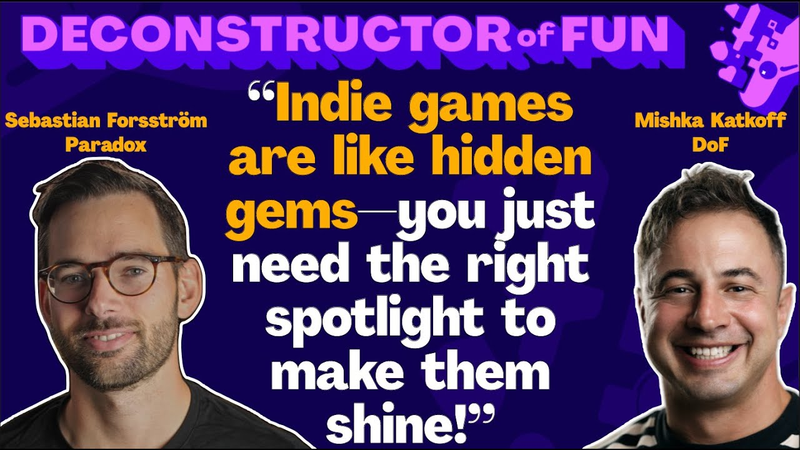
Indie Publishing and Growth Strategies with Sebastian Forsström, Head of Paradox ARC
Paradox ARC functions as a specialized publishing division designed to recapture the agility of early-stage game development by supporting high-potential indie projects that fall outside the scope of larger, franchise-driven titles.
- Paradox ARC prioritizes 'endlessly replayable' titles based on the ALICE pillars: emergent narrative, living worlds, inviting gameplay, cerebral challenges, and long-term engagement.
- The publishing model utilizes two tracks: a prototype track where the publisher retains IP ownership, and a co-publishing track based on revenue sharing and minimum guarantees.
- Success is measured by qualitative metrics such as community growth and responsiveness to iterative updates rather than rigid milestone schedules or short-term sales spikes.

Steam Next Fest? What's going to happen?
Steam Next Fest has transitioned toward a discovery model that prioritizes randomized, tag-based exposure over the historical reliance on pre-event wishlist counts.
- Steam is shifting its Next Fest algorithm to prioritize personalized player recommendations based on genre tags and median playtime rather than relying solely on high-volume wish list counts.
- The previous 'trending' and 'most wish-listed' widgets, which historically required 20,000 wish lists in two weeks or 150+ minimums to gain visibility, are being deprioritized in the new system.
- Developers should aim for a median demo playtime of 30 to 45 minutes to signal game quality to the algorithm, as Steam will track how quickly players drop off after downloading.
Is It The End Of The Indie Game Industry (As We Know It)?
The indie game industry is currently undergoing a significant structural shift, characterized by widespread layoffs, increased market saturation, and the rapid integration of AI tools.
- The indie game market is experiencing extreme oversaturation, with approximately 80,000 games released on Steam in 2023 alone.
- To survive, developers must secure at least 10,000 wishlists before launch to ensure visibility and achieve the critical threshold of 10+ reviews required to exit Steam's 'sandbox' phase.
- Owning an audience—built through consistent content creation on platforms like YouTube, Twitter, or Reddit—is the most valuable asset for ensuring a game's success in the current market.

5 x Tactics for the Volatile PC/Console Gaming Market with Newzoo's Devan Brennan
The global gaming market is poised for a 2.1% year-over-year growth in 2024, signaling a recovery led by mobile gaming and the resilience of PC live-service titles.
- The global gaming market is projected to grow 2.1% year-over-year in 2024, with recovery driven by mobile gaming and resilient PC live-service titles.
- Console sector growth is currently stagnant due to a sparse AAA release schedule, but a significant market catalyst is expected in 2025 with the launch of Grand Theft Auto VI.
- Developers should prioritize PC and PlayStation in their roadmaps, as the value proposition of Xbox hardware is diminishing under its current cross-platform strategy.
10 Years Of Game Dev Experience In 20 Minutes
The primary objective of this guide is to provide a sustainable, low-risk blueprint for indie game developers to achieve financial stability and avoid the common pitfalls of the industry.
- Shift from high-stakes, multi-year development cycles to a diversified business model that combines small-scale game production with consistent digital product sales.
- Establish a 'safe bubble' by creating two foundational assets: a Steam or opt-in page to collect wishlists and a high-value educational resource, such as an asset pack or mini-course, to generate monthly revenue.
- Prioritize the development of micro-games—tight, high-concept projects—to minimize financial risk and avoid the 'all-or-nothing' volatility of single, large-scale game launches.
He Knew Nothing.... But Got His Indie Game Published — Full Time Game Dev Podcast Ep. 017
Transitioning from a background in video production to indie game development requires a fundamental shift in perspective, moving from the linear control of film to the complex, non-linear demands of player agency.
- Securing publishing partnerships provides essential funding and access to professional resources like voice talent, but developers must vet these partners as long-term collaborators rather than just financiers.
- Developers should stabilize the long-term development cycle by diversifying capital through a combination of government tax credits, grants, and crowdfunding.
- Successful game design requires mastering subtle signposting to guide player agency through non-linear environments without breaking the sense of discovery.
You MUST AVOID These 4 Game Dev Mistakes
The primary purpose of this analysis is to identify critical pitfalls in indie game development that lead to costly production delays and poor player reception.
- Developers must prioritize early player feedback and structured design processes to avoid costly production delays and ensure commercial viability.
- Implement rigorous gray-boxing by blocking out levels with abstract shapes before applying assets to ensure gameplay loops are functional and logical.
- Mitigate 'creator bias' by assuming players possess only one-third of the developer's internal knowledge regarding game mechanics.

How to Find Niche Keywords for ASO
App Store Optimization functions most effectively when developers adopt a research-first strategy, identifying high-intent, niche keywords before committing to product development.
- Prioritize niche keywords with a moderate traffic score of approximately 30 and minimal competitive density to bypass major industry players and secure top-tier organic rankings.
- Validate product-market fit and generate revenue—such as reaching $1,600 in under a month—by targeting specific user pain points rather than broad, saturated categories.
- Use analytical tools like App Follow, Mobile Action, or App Radar to populate data templates that sort potential keywords by traffic volume and difficulty.
Is The Indie Game Dream Still A Thing? — Full Time Game Dev Podcast Ep. 016
The modern independent game development landscape demands a strategic fusion of distinct artistic identity and rigorous commercial planning.
- Building an email list is the most critical marketing asset for indie developers, as it serves as the primary driver for both Kickstarter campaign notifications and Steam wishlist conversions.
- Indie developers can achieve financial viability by focusing on marketing with the same intensity as game development, including proactive outreach to potential backers and community members.
- For teams with limited development time, such as the six-month window utilized for 'Layers Deep,' prioritizing the creation of a high-quality trailer is essential for building early momentum and community interest.
Is The Indie Game Dream Dead?
The indie game development landscape remains viable for those who treat marketing with the same rigor as technical development.
- Crowdfunding remains a viable path to full-time indie development, evidenced by a successful $48,000 Kickstarter campaign that allowed the developer to transition to full-time work.
- A successful pre-launch strategy requires building a base of 500 to 1,000 followers on the Kickstarter page before the campaign goes live to ensure initial momentum.
- Marketing should be treated with the same intensity as game development, utilizing outreach to influencers and professional contacts to secure promotional support prior to launch.
How To Make Millions From An Indie Game
The journey of developing the indie game Eastshade serves as a case study for transitioning from a stable career in AAA game development to independent production.
- Eastshade, an indie game developed by Danny Weinbaum, has generated over $3.5 million in revenue across all platforms since its 2019 release.
- To fund full-time development, the creator saved approximately $130,000 while working in the AAA industry at Sucker Punch, allowing for a multi-year runway.
- The development process spanned four years, during which the creator and his partner lived frugally and eventually moved in with family to extend their financial stability.