indie
CompanyUnited States
Documents about indie
Steam Gets 'Experimental' with Discovery
The primary purpose of this analysis is to evaluate recent developments in video game discovery, specifically focusing on Valve’s experimental updates to the Steam store and broader industry trends regarding player engagement metrics.
- Valve has introduced 63 new Steam store categories—consisting of 48 genres, 8 themes, and 7 player modes—to improve game discovery through granular, niche-specific landing pages.
- Titles launching directly into subscription services like Xbox Game Pass demonstrate substantially higher player counts compared to those released via traditional storefront models.
- The cessation of third-party tracking services like GamStat has created significant limitations in accurately measuring player acquisition metrics across PlayStation and Xbox platforms.
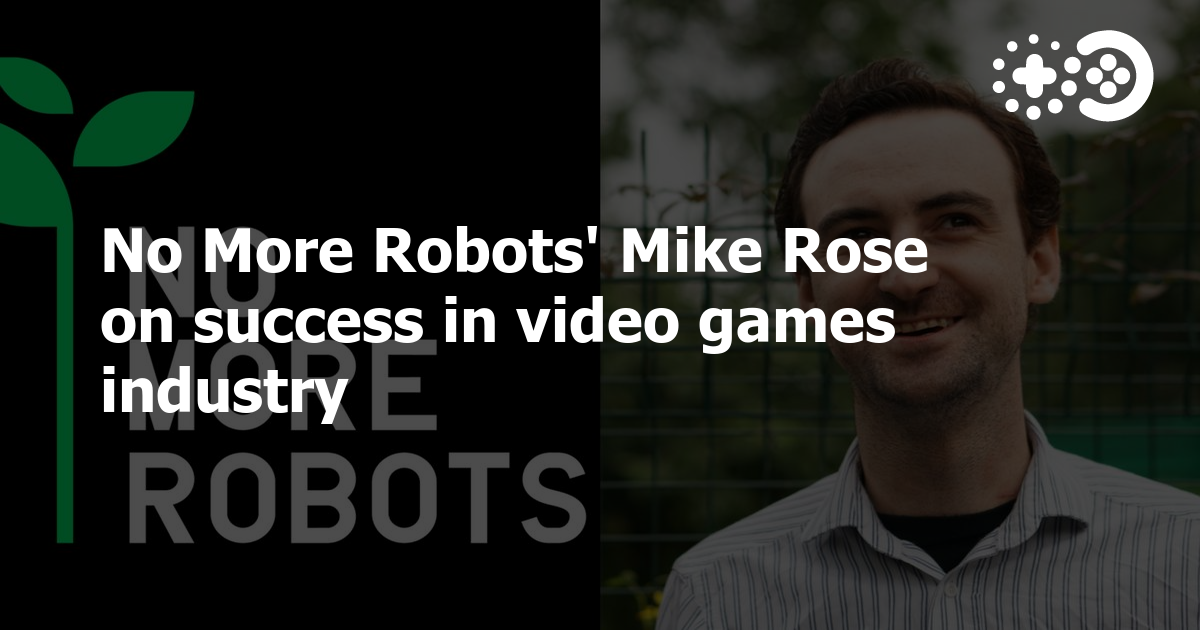
Mike Rose on Success in the Video Game Industry
The philosophy of indie publisher No More Robots, as articulated by founder Mike Rose, centers on prioritizing employee welfare and sustainable development over aggressive corporate growth.
- No More Robots has committed to adding every game it publishes to Xbox Game Pass to secure commercial success and reduce financial pressure on developers, following the success of its title 'Descenders,' which saw Xbox sales triple after joining the service.
- Mike Rose, head of No More Robots, argues that studios should prioritize employee well-being over aggressive growth and wealth accumulation, citing his own company's practice of paying above-average UK salaries and providing full private healthcare.
- In 2020, No More Robots generated approximately $10 million in revenue, which the company utilized to provide five-figure bonuses to staff and six-figure donations to various charitable initiatives and industry causes.
What's Your First Week Revenue per Game Platform?
This analysis examines the distribution of first-week revenue across various gaming platforms, emphasizing the necessity of transparency in multi-platform sales data.
- Launching on multiple platforms does not guarantee a proportional increase in total revenue, as PC/Steam frequently captures a larger share of indie-style game earnings than consoles.
- The Nintendo Switch market has become significantly more crowded and competitive for developers since 2018.
- Platform-specific discounting strategies vary, with the Nintendo Switch and Steam offering more flexibility for regular price reductions compared to the restrictive policies of Sony and Microsoft.

Steam Refund Worries, Kickstarter Trends & More!
This analysis explores the intersection of platform policies and market trends within the PC and console gaming industry during late 2021, specifically focusing on Steam refund behaviors and Kickstarter performance.
- Steam refund rates for typical game portfolios range between 5% and 11% of total revenue.
- High refund rates in short-form indie games are driven by specific genre characteristics and abrupt endings rather than a systemic rejection of short games by the Steam community.
- Tabletop and board game Kickstarter campaigns significantly outperformed video games in the first half of 2021, raising $146 million.
Plus: Why Such Big Steam Hype Winners This Week?
This analysis evaluates the performance of high-profile video game launches on Steam, Xbox, Switch, and the Epic Games Store during a high-volume release window in mid-September 2021.
- High-profile releases in mid-September 2021 saw varied performance, with Deathloop hitting 20,000 peak concurrent users (CCU) while Eastward emerged as a breakout hit with 13,800 peak CCU.
- The market shows a strong appetite for simulation games, evidenced by Gas Station Simulator reaching 7,500 CCU and the successful launch of Timberborn.
- Niche titles faced significant challenges during this competitive release window, with games like SkateBIRD and Gamedec struggling to exceed 400 CCU.
The Anatomy of a Steam Sale
This analysis examines the impact of themed Steam sales on developer visibility and commercial performance, using the November 2020 Guildford Games Festival as a primary case study.
- Securing official Steam platform support through themed events is essential for independent developers to achieve significant traffic and wishlist growth.
- Coordinating regional developer clusters allows studios to leverage Valve’s promotional tools for visibility that is otherwise unattainable for individual titles.
- The November 2020 Guildford Games Festival attracted between 1.75 million and 2.5 million visitors, helping participating games reach global top seller charts.

Quibi's Collapse: An Exercise in Humility
The collapse of Quibi serves as a primary case study for the failure of top-down, high-capital media ventures that prioritize corporate interests over user-centric innovation.
- Quibi failed to achieve product-market fit despite $1.8 billion in funding because its rigid, closed-door development model ignored user preference for organic and interactive media.
- The success of titles like Among Us and Hades demonstrates that industry value is shifting toward accessibility and human engagement over the sheer scale of capital investment.
- Tencent’s merger of Huya and DouYu consolidated the Chinese esports and marketing sector, creating a dominant entity with 334 million monthly active users and a 67.5% voting share.
Data Deep Dive: Meteorfall: Krumit's Tale on Steam
This analysis examines the Steam performance of the deckbuilding roguelike Meteorfall: Krumit’s Tale, covering the period from its Early Access launch in November 2019 through its full release in July 2020.
- Early Access proved highly effective for initial conversion, achieving 0.83 sales per wishlist during the first week of the November 2019 launch.
- The game grew from 1,400 initial wishlists to 30,000 over the nine-month Early Access period, maintaining a 93% Very Positive rating.
- The 1.0 full release in July 2020 generated a revenue spike, but sales tapered off quickly due to the difficulty of securing media and influencer coverage after the initial Early Access debut.

How Marketing Strategies Differ Depending on IP Familiarity and Market Saturation
Effective game marketing requires a strategic alignment between messaging and the specific market position of an intellectual property.
- Marketing strategy should be dictated by two primary factors: the level of IP familiarity and the degree of market saturation in the game's genre.
- For new, unknown titles, marketing must focus on clearly introducing the core mechanics and what the game actually does to establish a baseline understanding.
- In niche markets with few competitors, marketing should emphasize the game's specific benefits and the fun factor to attract the target audience.
I Come in Peace: Why Indies Are Not Competing Against Each Other
The indie game development sector functions most effectively through the economic principle of agglomeration rather than zero-sum competition.
- Indie developers benefit from 'economies of agglomeration,' an economic principle where businesses in the same sector thrive by clustering together to increase total consumer traffic rather than competing in a zero-sum environment.
- Clustering similar games—such as bundling titles within the same genre—makes it easier for consumers to comparison shop, ultimately increasing sales for all participants.
- Indies can leverage their collective presence to negotiate for better visibility, such as organizing multi-developer sales events that are more likely to receive front-page promotion from platforms like Steam than individual requests.
The Anatomy of a 'Crazy Multiplier' Post-Launch Game Success
This analysis examines the mechanics of post-launch game discovery and the evolving landscape of subscription services, specifically focusing on Steam and Apple Arcade.
- Long-term revenue can significantly exceed the industry standard of 2x–4x first-week earnings, as demonstrated by The Dungeon Beneath achieving a 25x multiplier by growing from $4,500 in week one to $112,000 within a year.
- Sustained sales growth is driven by synchronizing influencer coverage with deep 50% discounts and consistent content patches to establish a higher permanent daily sales floor.
- Apple Arcade has shifted its strategy away from original prestige indie titles toward replayable franchises and 'Plus' versions of existing mobile hits to better serve its casual, Apple One-bundled user base.
Why Is the Publisher and Developer Dance Getting More Contentious?
The relationship between independent game developers and publishers is becoming increasingly strained due to shifting market dynamics and evolving contract standards.
- Publisher revenue demands for high-quality indie titles have shifted from a traditional 30% cut to as much as 50% of net revenue.
- Market oversaturation in the early 2020s has created a 'trust gap' between developers and publishers, driven by unfulfilled expectations and mutual blame.
- Publishers are increasingly adopting a 'portfolio approach' that prioritizes signing a high volume of titles while providing minimal, diluted support to individual developers.