Indie Games
Company
Documents about Indie Games

Living the Dream or Surviving the Nightmare: Making Commercial Indie Games as a Professor
The integration of academic tenure-track roles with commercial indie game development offers a unique pathway for creators to pursue experimental projects while enhancing their pedagogical efficacy.
- Academic game developers should prioritize securing exhibitions, awards, and grants over commercial sales figures, as these metrics carry significantly more weight during tenure and promotion evaluations.
- University-based game development requires a modified production pipeline where projects are designed as extended, long-term experiences to accommodate the high turnover and limited availability of student collaborators who typically contribute only 10–15 hours per week.
- To ensure project coherence when working with students, faculty should adopt a 'key-frame' workflow where the professor handles core design and animation, then delegates in-betweening or specific feature implementation to students based on their individual talents.
Making Indie Games with Public Domain Content
Indie game developers can significantly enhance their projects by integrating public domain content, which provides a cost-effective strategy for establishing distinct visual and audio identities.
- Works published in 1926 or earlier are in the public domain, allowing developers to legally build games based on classic characters and stories like The Wizard of Oz, Don Quixote, and Night of the Living Dead.
- Trademark law remains distinct from copyright; even if a character is in the public domain, companies like Edgar Rice Burroughs Inc. may still hold trademarks on the brand, preventing the use of specific names or titles in your game.
- Sourcing public domain assets is time-intensive, with some developers spending up to two weeks searching for appropriate music or art for a three-month development cycle.
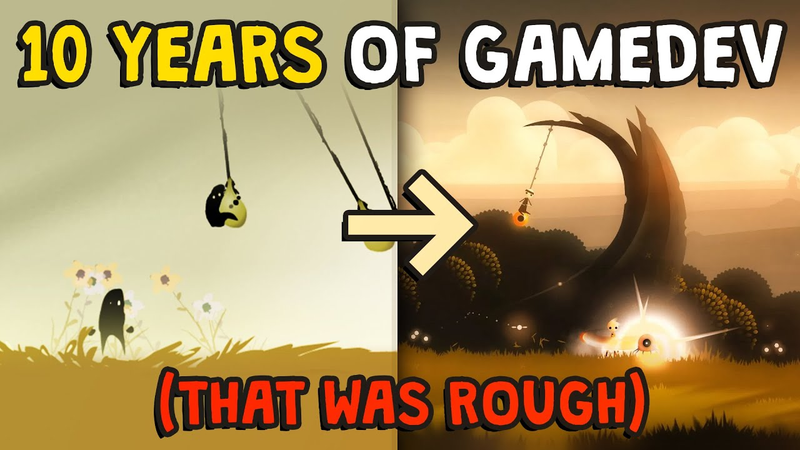
How NOT To Make Indie Games
The primary thesis of this analysis is that personal psychological traits, while often perceived as obstacles, can be managed and integrated into a sustainable indie game development career.
- Developers should avoid the 'restrictive developer identity' trap, where projects are driven by external validation and feature bloat rather than genuine creative interest.
- Indie teams must avoid the trap of recreating the scale of classic titles, as attempting to match the complexity of nostalgic influences is rarely financially or logistically feasible.
- To mitigate the impact of attention-related struggles like ADHD, developers should formalize project management structures and utilize professional partnerships to enforce strict deadlines.

Why You SHOULD Make Indie Games Solo
Solo game development serves as a foundational career path for aspiring developers, offering a practical pathway to professional growth despite the common perception that large teams are a prerequisite for success.
- Solo development functions as a strategic career investment that provides the technical versatility and professional validation necessary for long-term industry sustainability.
- Managing every aspect of a project—including coding, art, music, and design—provides a holistic understanding of the development pipeline that is essential for future leadership roles.
- Creating and releasing early, imperfect projects in isolation builds professional resilience and provides critical learning experiences that are difficult to replicate in large teams.
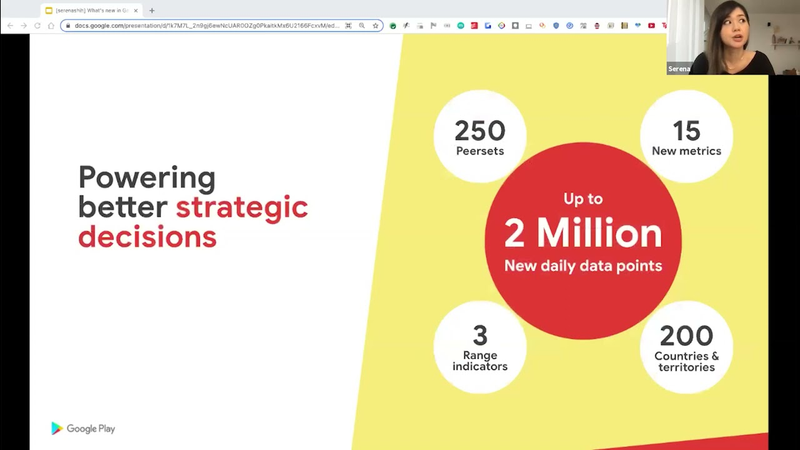
Superstar Session: What's New for Mobile Game Developers at Google Play
Google Play’s strategic partner manager, Serena Shih, outlines the platform's recent initiatives and tools designed to help mobile game developers scale their businesses, improve user engagement, and navigate evolving policy requirements.
- Google Play has implemented a reduced 15 percent service fee on the first $1 million of annual revenue to support sustainable developer growth.
- The platform now mandates the Android App Bundle format for all new applications, which reduces average app sizes by 15 percent.
- Google Play supports 2.5 billion monthly active users across 3 billion monthly active Android devices, with 140 billion annual installations.
Embracing the Co-Op Studio Model in Indie Games
Worker cooperatives represent a transformative organizational model within the independent game industry, replacing traditional top-down hierarchies with democratic, horizontal governance.
- Worker cooperatives replace traditional top-down hierarchies with democratic, horizontal governance, ensuring employees share equally in profits, decision-making, and workplace management.
- This model functions as a form of micro-unionization, providing creators with a collective safety net and professional leverage against the volatility of the gig economy.
- Operational success in co-ops requires balancing individual autonomy with consensus-based governance, often utilizing vertical deployment where members maintain specialized roles.

Playing YOUR Indie Games (Bug's N Boo Hags RETRO ARCADE GAME!)
The game Bugs N Boo Hags is an indie title currently seeking funding through a Kickstarter campaign.
- Bugs N Boo Hags is an 8-bit arcade-style indie game currently seeking development funding via a Kickstarter campaign.
- The game’s core mechanics are rooted in Gullah Geechee folklore, requiring players to defend homes from supernatural 'boo hags' using traditional items like salt, brooms, and haint blue paint.
- The title is designed as a high-stakes, punishing experience that mimics the difficulty and aesthetic of classic Nintendo-era console games.
Wake of Poseidon! - I Analyze Your Indie Games (#013)
The indie game Wake of Poseidon is a twin-stick shooter that utilizes a unique orthographic camera perspective to create a three-dimensional play space.
- The orthographic camera perspective creates significant depth-perception issues, making it difficult for players to track projectile trajectories during high-intensity bullet hell sequences.
- Combat readability should be improved by replacing line-based projectiles with round bullets and shifting focus toward faster projectiles, melee-focused enemies, or telegraphed area-of-effect attacks.
- Visual feedback requires enhancement through clearer hit detection indicators, directional knock-back mechanics, and death animations that react to the specific angle of impact.
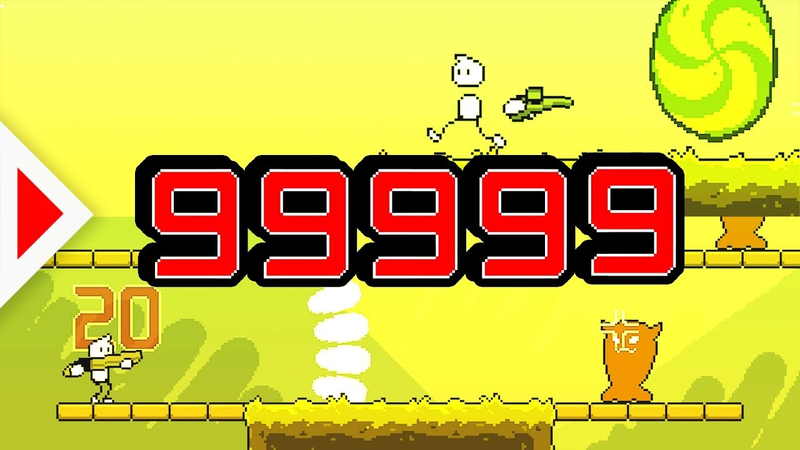
Gunkid 99 - I Analyze Your Indie Games! (#012)
Gunkid 99, a twin-stick platformer, is analyzed for its core design mechanics, player engagement strategies, and areas for potential improvement.
- The core weapon-collection mechanic serves as a multi-functional design tool that forces player movement, drives scoring, ensures weapon variety, and maintains high tension via time limits.
- High-quality, responsive controls combined with impactful visual feedback like screen shake and enemy knockback are the primary drivers of the game's satisfying combat loop.
- The progression system, which gates new worlds behind a specific weapon-collection quota, risks player frustration if the difficulty curve is not precisely balanced.

Know Your Market: Making Indie Games That Sell
This analysis examines the factors driving commercial success for independent games on the Steam marketplace, drawing on data-driven insights to challenge the assumption that game quality alone dictates sales performance.
- Average playtime is a primary driver of commercial success on Steam, with data showing an exponential correlation between longer engagement times and higher revenue.
- Genre selection significantly impacts market performance; for example, action RPGs generate a median revenue 24 times higher than puzzle platformers, while roguelikes and Metroidvanias earn 3.5 times more.
- Games featuring mod support are highly lucrative, with the 'moddable' tag associated with median revenues nearly 140 times higher than those of puzzle platformers.
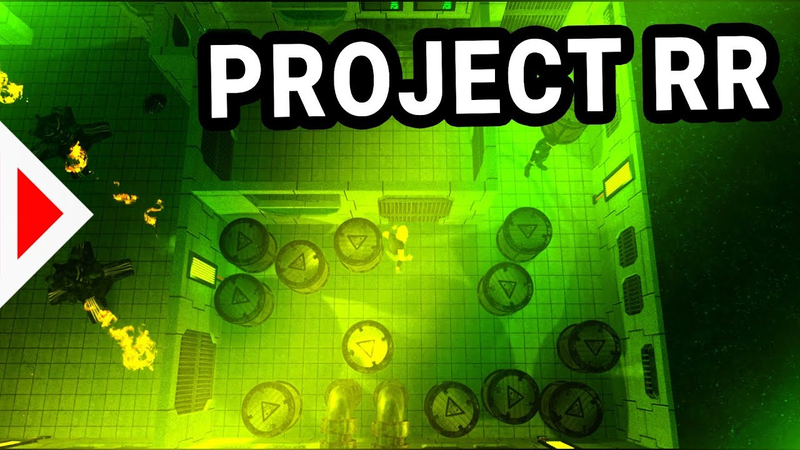
Get Feedback For Your Indie Games!... #010
The primary objective of this analysis is to evaluate the design philosophy of the indie stealth game Project RR, emphasizing the importance of establishing a clear game identity to guide development decisions.
- Developers should prioritize a cohesive game identity over conventional design rules, even if that requires incorporating elements traditionally viewed as frustrating or unfair.
- In Project RR, retaining map progress across restarts transforms the gameplay from a single-run challenge into a puzzle-solving experience based on repeated exploration.
- The developer must balance trial-and-error loops with predictable execution, ensuring that once a player masters a level, success is determined by skill rather than inconsistent AI behavior.
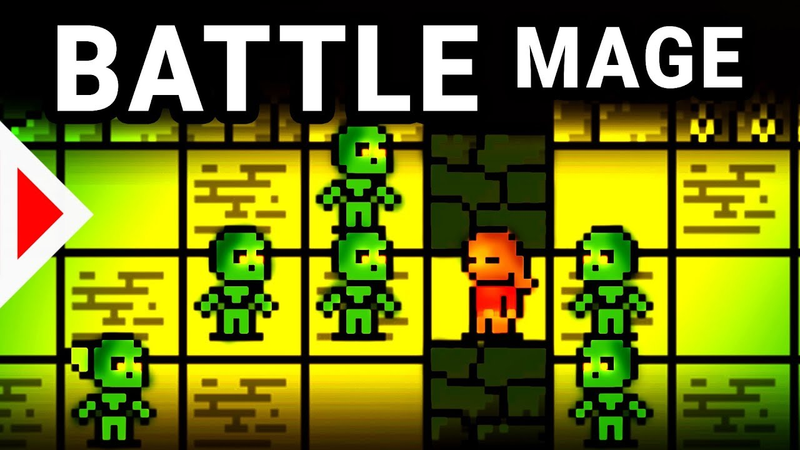
I Still Play Your Indie Games!... #009
The provided analysis examines the indie game Aldarix the Battlemage, focusing on game design principles, balancing, and player experience.
- Improve player onboarding by replacing the initial overwhelming spell selection with a gradual unlocking system to foster better progression and engagement.
- Enhance combat clarity by implementing more impactful damage animations and integrating mana costs directly into the user interface.
- Leverage a limited enemy pool to keep the game easy to learn, shifting the focus of complexity onto the player’s diverse spell kit rather than enemy behavior.