
Hypixel Studios
CompanyUnited Kingdom · Founded 2018
We are a team of passionate, self-driven game developers headed by the Hypixel founders who reacquired Hytale after its cancellation. Hypixel Studios Inc is fully independent and consists of a mix of modders, indies, and industry veterans, given the autonomy to thrive within our shared vision.
Connections
Each row is a game or company named alongside Hypixel Studios, each column a document, oldest first. A mark means that document names it. Select a row to see those documents.
About the company
- Founded
- 2018
- Country
- United Kingdom
- Links
- Official site
Company data from IGDB.com
Documents about Hypixel Studios


The State of Video Gaming in 2026: Growth and Where to Find It
The global video game industry in 2026 stands at a critical juncture, characterized by record-high consumer spending that masks deep structural instability.
- The industry is experiencing a sharp bifurcation where record-high revenue masks structural instability, evidenced by a 55% decline in private funding and 44,000 industry layoffs.
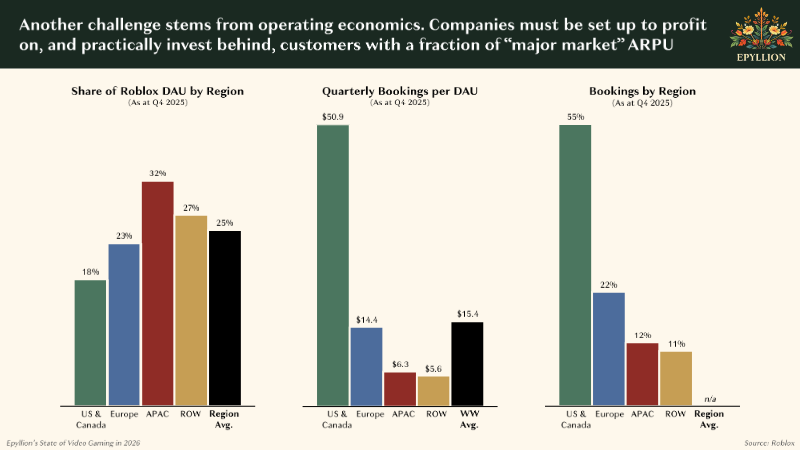
- Growth is increasingly concentrated in emerging markets like Southeast Asia, Latin America, and the broader APAC region, which have seen a 41% surge in value since 2022.
- Chinese developers and platforms like Roblox are the primary drivers of global expansion, accounting for approximately 50% of all industry growth since 2021.
Hytale: Competing with Minecraft on Live Streaming
The launch of Hytale in January 2026 serves as a significant case study in the competitive dynamics between emerging sandbox titles and established industry giants like Minecraft.
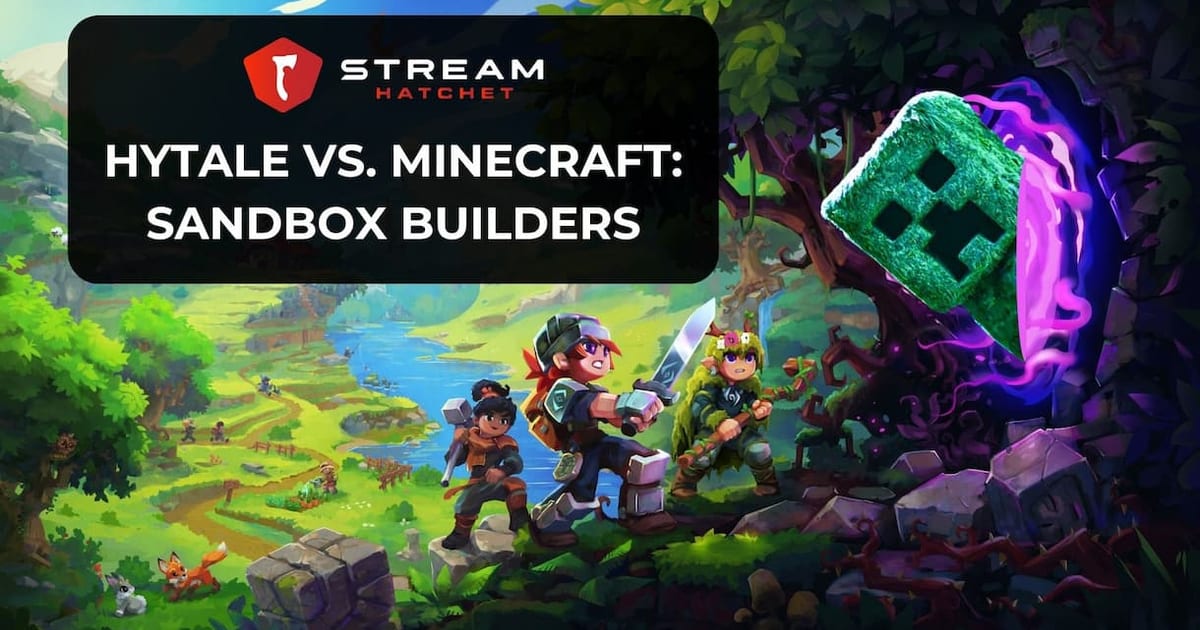
- Hytale launched into early access on January 13, 2026, achieving 13.4 million hours watched and a peak of 525,000 concurrent viewers in its first week.
- On its debut day, Hytale outperformed Minecraft with 3.9 million hours watched compared to Minecraft's 2.7 million, though viewership for Hytale declined significantly by the end of the week.
- There is a notable audience overlap between the two titles, with 1.2 million Twitch viewers watching both games during Hytale's launch week.

Why Your Game Studio's Organizational Structure Is the Real Problem: Not Your Talent
Organizational structure, rather than a lack of individual talent, is the primary driver of inefficiency and failure in modern game studios.
- Traditional game studio structures, organized by craft silos (e.g., separate design, engineering, art departments), create significant friction, leading to endless iteration, communication breakdowns, and features that miss their mark.
- The core problem in many game studios is organizational structure, not a lack of talent; optimizing for craft silos instead of outcomes leads to inefficiencies where handoffs lose fidelity and original intent.
- An 'outcome team' framework, consisting of small (5-9 people), cross-functional units with clear missions, success metrics, and authority, significantly outperforms traditional specialized departments, reducing iteration timelines from 6-12 months to 2-4 months.
Game Dev Teams Are Broken. Here's the Structure That Actually Works.
Modern game development frequently suffers from structural friction, where traditional craft-based silos impede progress and dilute creative intent.
- Studios should reorganize into autonomous, cross-functional teams of five to fifteen members to reduce communication overhead and accelerate iteration.
- Teams should be structured around specific product outcomes, such as combat mechanics or meta-systems, rather than traditional craft-based silos or task lists.
- Guilds must be established to facilitate cross-team knowledge sharing and maintain quality control while individual units operate with autonomy.

“We need our studios to believe they can grow again” – Ukie
The United Kingdom’s video game industry is undergoing a strategic pivot toward long-term sustainability and economic independence, supported by a new government-backed growth package.
- The UK government is launching a strategic growth package for the gaming sector, featuring £10 million in startup funding and the establishment of a dedicated UK Video Games Council.
- The industry is pivoting toward long-term sustainability by decoupling gaming from film and television to establish it as an independent economic and cultural pillar.
- Workforce development is being prioritized through the Game Skills Network, which focuses on apprenticeships and leadership training to foster high-quality intellectual property as a defense against AI-generated content.

From Leadership to Layoffs: June 26, 2025
The video game industry is currently navigating a period of significant instability characterized by widespread layoffs, studio closures, and the failure of high-profile live-service projects.
- The video game industry is facing a critical shortage of senior talent, with estimates suggesting that only 50% of the required experienced professionals remain active in the workforce.
- A reliance on short-term financial returns and formulaic live-service projects has created systemic instability, leading to widespread layoffs and studio closures.
- Chasing market fads is a failed strategic approach because development cycles are too long to capitalize on fleeting trends effectively.

NoPixel and The New Creator Auteurs
NoPixel, a prominent role-play server for Grand Theft Auto V, serves as a case study for the evolution of user-generated content (UGC) and the rising influence of "creator auteurs."
- NoPixel represents a significant evolution in user-generated content (UGC), transforming an eight-year-old game into a complex, player-driven ecosystem with custom economies, legal systems, and professionalized roles.
- The modding industry has shifted from hobbyist projects to a professionalized 'Creator Economy,' where mod teams like Hypixel Studios and PUBG Corp. have leveraged their success to secure acquisitions or independent scaling.
- Operating independent, high-scale modding projects is costly and technically fragile; for example, the NoPixel server incurs monthly operating costs of approximately $10,000 and remains susceptible to frequent client-side crashes.
