Habby
25 documents in the library are about Habby, from writers such as Two & a Half Gamers, Deconstructor of Fun and Brutally Honest, the newest from 2026. Each has a summary and key insights with the page they come from.

Habby is a combination of Hobby and Happy. We believe in creating happiness through hobbies by using the games that we promote and play. By playing our games, you can hope to obtain new interests and cultivate already existing ones.
- Founded
- 2018
- Country
- Singapore
- Games
- Archero, Penguin Isle, SSSnaker, Flaming Core
- Links
- Official site
Company data from IGDB.com
Key figures
Habby has surpassed $2 billion in lifetime user spending, highlighting the continued success of specific mobile publishers despite broader market volatility.
Mobilegamer.biz, 2026 · Ares' gameplan, Honkai: Star Rail drama, Moonton's Savvy sale, Rovio's write-down, DICE awards, more, p. 1
Top studios like Habby and Rollic are shifting toward IAP-first monetization, with ad revenue now accounting for as little as 11% to 20% of total earnings in recent titles.
Two & a Half Gamers, 2025 · The Walled Garden Stack: Why no new Mediation platform has Survived Since 2017 by Felix Braberg, p. 5
New entrants are prioritizing high-volume video advertising, with 'Delta Force' utilizing 62.55% video content and Habby’s 'Wittle Defender' dedicating 90% of its 7,700 creatives to video.
SocialPeta, 2025 · Global Top Mobile Games: April 2025
Habby’s idle RPG 'Souls' generated $13 million in revenue between its August 2023 launch and the report date, maintaining a balanced 50/50 revenue split between Android and iOS.
Two & a Half Gamers, 2024 · Creative trends Q3, Merge mansion Japan, Admon tips, Habby: Souls review (#87), p. 50
Documents about Habby
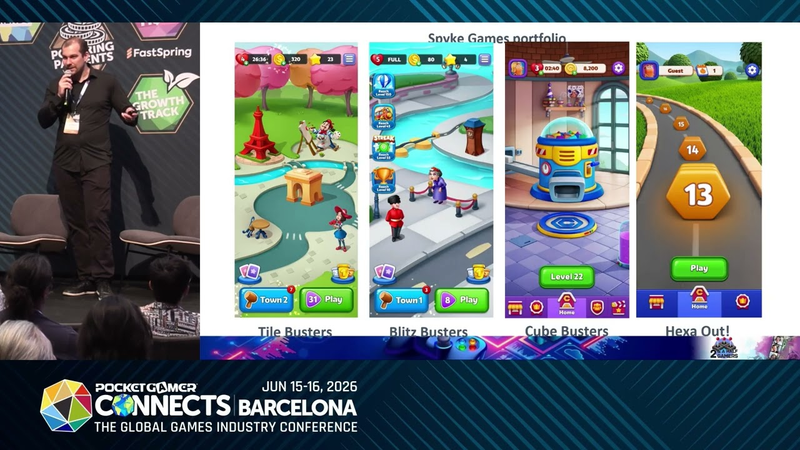
Session: Winning Portfolio Strategies Of 2026 - Jakub Remiar, two & half gamers.
The current mobile gaming landscape is defined by a shift toward systematic, data-driven portfolio management rather than reliance on individual hit titles.
- Successful mobile game portfolios rely on 'template-ization,' where developers build a reusable engine for a specific genre, allowing them to salvage work from failed projects to accelerate the development of future titles.
- Companies like Gram Games operate like the 'Warren Buffett of puzzle games' by identifying high-traffic, ad-monetized genres and converting them into high-revenue IAP (in-app purchase) models through superior execution and polish.
- Radical innovation, such as the mechanics seen in 'Pixel Flow' or 'Screw Jam,' offers the highest potential for success but requires deep, long-term genre expertise to identify and implement meaningful improvements to existing core loops.
Vampire Survivors' New Spin-Off Has Hooked Me
The article examines the transition from the 2022 indie hit Vampire Survivors to its first spin-off, Vampire Crawlers, and proposes a similar card-based mechanic in the upcoming city-builder Combolands.
- The spin-off Vampire Crawlers evolves the core Vampire Survivors formula by replacing passive progression loops with strategic, card-based mechanics like mana-cost sequencing.
- Vampire Crawlers shifts gameplay from mindless repetition to active decision-making by requiring players to engage in deck building and tactical combo management.
- The industry is seeing a broader trend of 'Balatro-for-X' mechanics, where card-driven systems are being integrated into diverse genres to add depth while maintaining accessible progression.

Top Mobile Game Ad Creatives and Advertising Trends: March 2026
The analysis focuses on mobile game advertising activity in March 2026, drawing from SocialPeta’s global database of over 1.7 billion creatives across more than 80 countries.
- Video ads dominate the mobile gaming landscape, accounting for approximately 80% of all creative formats, with a preference for 1280×720 landscape dimensions.
- High-volume creative production is a primary growth driver, exemplified by Habby’s 'Dicero!' which launched with 9,000 distinct creatives and reached a peak of 2,396 daily ads on iOS.
- Event-driven marketing remains highly effective for revenue growth, as demonstrated by PUBG’s 8th-anniversary campaign, which triggered a month-over-month revenue increase of over 30% on the App Store.
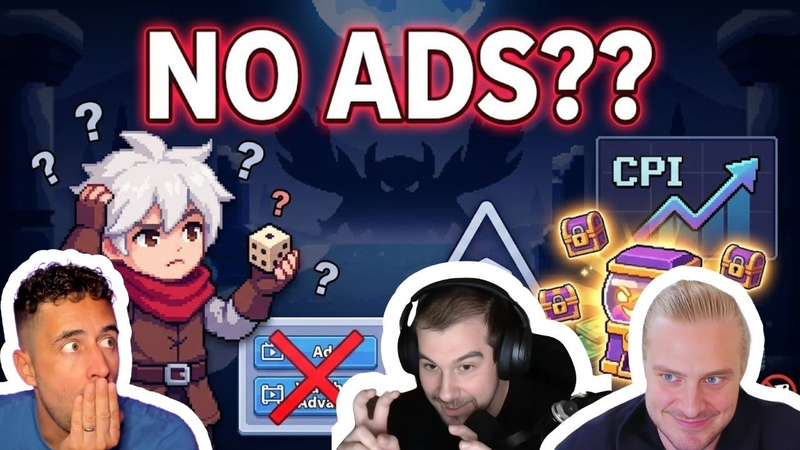
🎲Dicero: Habby’s biggest bet (And biggest risk?)
Habby is undergoing a fundamental strategic transition, moving away from the hypercasual-adjacent success of titles like Survivor.io toward a more complex, midcore model exemplified by its latest release, Dicero.
- Habby is pivoting from hypercasual-adjacent titles like Survivor.io to a midcore model with Dicero, characterized by complex gacha mechanics, tiered evolution, and a slower-paced merging economy.
- The studio has abandoned rewarded advertisements in favor of a direct-to-consumer web store and high-intent monetization, marking a fundamental shift in its revenue strategy.
- Habby is currently facing its lowest revenue and download figures in recent history, casting doubt on whether its new, more complex gameplay can achieve the same market penetration as previous hits.

TWiG #371: Clash Royale's Death Spiral, Blizzard's Comeback, and Why AI Hype is Killing Games
The modern gaming industry is currently navigating a period of significant structural tension, characterized by the breakdown of traditional mobile growth models and the evolving power dynamics between developers and content creators.
- The gaming industry faces a structural shift where long-term success depends on integrating influencers into the product flywheel, as evidenced by Supercell’s friction with creators during the resurgence of Clash Royale.
- Aggressive monetization strategies, particularly pay-to-win mechanics, are increasingly straining community relations and threatening the sustainability of mobile titles.
- Blizzard has successfully revitalized core franchises like Overwatch and Diablo by shifting toward narrative-driven live operations and refined monetization models.

Ares' gameplan, Honkai: Star Rail drama, Moonton's Savvy sale, Rovio's write-down, DICE awards, more
The mobile games industry is currently navigating significant shifts in investment, corporate restructuring, and geopolitical influence.
- Savvy is in negotiations to acquire Moonton, the developer of Mobile Legends: Bang Bang, for approximately $7 billion, signaling a potential exit from mobile gaming for ByteDance.
- Sega recorded a $200 million write-down for Rovio, citing intense market competition and a lack of recent successful titles.
- Financial performance across the sector is polarized: AppLovin reported a 70% revenue increase to $5.48 billion and Krafton reached $1.2 billion in mobile revenue, while Embracer Group saw mobile game sales decline by 66%.
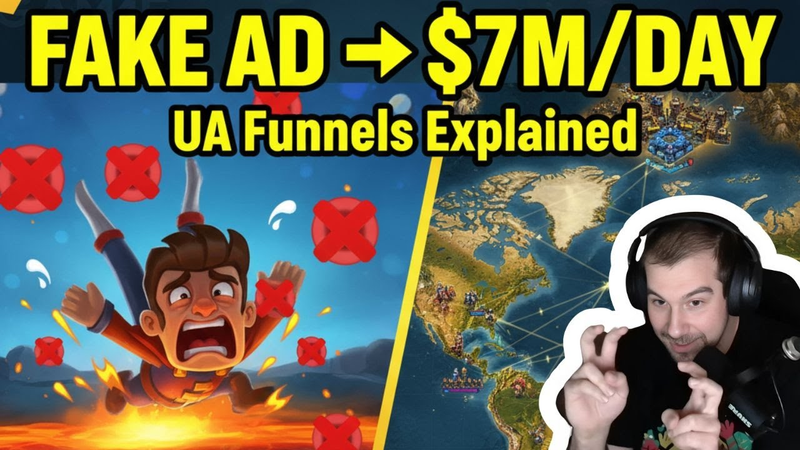
🎮 The 2 product trends that rule Mobile Games in 2025 by Jakub Remiar
The mobile gaming landscape in 2025 is defined by two dominant product strategies: the sophisticated user acquisition (UA) product funnel and the widespread adoption of game templatization.
- The mobile gaming market is currently dominated by a three-part UA funnel consisting of hyper-casual 'fake' ads, a corresponding 'fake' onboarding experience, and a 'real' core game like 4X or idle strategy.
- Studios such as River Games and Century Games use this multi-stage funnel to lower customer acquisition costs by attracting a broad audience before transitioning them into high-revenue, complex gameplay.
- Game templatization has become a primary strategy for scaling, where studios like Habby and Microfun recycle proven meta-game structures and UI layouts to increase the speed and volume of their product releases.

🎮 Habby finally SPEAKS: The template evolves! First-ever Habby Western interview
Habby has evolved from a publisher of simple puzzle games into a powerhouse of midcore, IAP-driven mobile experiences, exemplified by the global success of titles like Survivor.io and Archero.
- Habby has transitioned from simple puzzle games to a midcore, IAP-driven model, leveraging a repeatable development template that balances accessible onboarding with long-tail engagement.
- To combat rising user acquisition costs, Habby is shifting away from the hybrid-casual market and investing in long-term partnerships, such as a $2 million commitment to Mavis Games.
- Successful scaling requires integrating monetization directly into the core game loop, a strategy where Chinese developers currently outperform Western studios that often treat revenue as an afterthought.
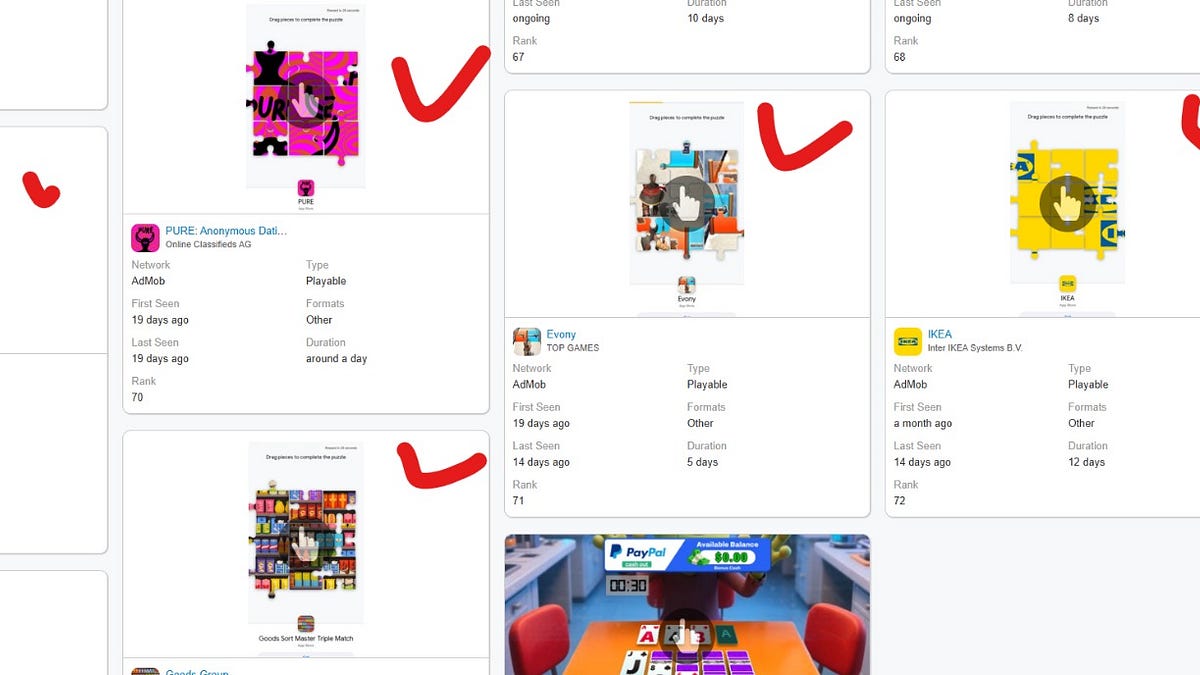
Playable Ads Trends in Mobile Games & Apps: August 2025
The mobile user acquisition landscape is currently defined by a significant shift in creative strategy, specifically regarding the resurgence of playable advertisements.
- As of August 2025, mobile user acquisition is shifting toward a resurgence of playable advertisements, with increased spending on SDK networks and platforms like AppLovin.
- The current market is dominated by 3x3 puzzle game templates, which are being deployed across multiple companies using identical mechanics with varied visual skins.
- The widespread standardization of these playable templates indicates high market saturation, likely driven by aggressive third-party sales efforts targeting major developers such as Habby.
The Walled Garden Stack: Why no new Mediation platform has Survived Since 2017 by Felix Braberg
The mobile ad monetization landscape in 2025 is defined by a rigid, consolidated mediation market and a strategic shift among top publishers toward in-app purchase (IAP) revenue.
- The mobile mediation market is a closed ecosystem dominated by AppLovin MAX, Unity LevelPlay, and Google AdMob, with no successful new entrants since 2017 due to high barriers to accessing essential bidding demand.
- Top studios like Habby and Rollic are shifting toward IAP-first monetization, with ad revenue now accounting for as little as 11% to 20% of total earnings in recent titles.
- Effective cost-per-mille (eCPM) rates have declined by approximately 20% from pandemic-era peaks due to privacy-related targeting limitations, market corrections, and the transition to automated bidding.
Why Habby Dropped Hybrid Casual: Is Wittle Defender Too Deep for Global Scale?
Wittle Defender represents a strategic pivot for Habby, signaling a departure from traditional hybrid-casual models toward a more complex, hardcore RPG structure.
- Habby has shifted its strategy from hybrid-casual models to a hardcore RPG structure with Wittle Defender, prioritizing deep meta-progression and gacha mechanics over mass-market ad-driven appeal.
- The game generates approximately $300,000 in daily revenue from 40,000 daily downloads, demonstrating a high-value monetization model.
- In-app purchases have become the primary revenue driver, with ad revenue accounting for only 20 to 24 percent of total earnings.
Marvel Just Dropped TWO New Games and Fans Are Schocked!
The current landscape of the gaming industry is defined by a heavy reliance on established intellectual property, even as traditional entertainment franchises face declining public interest.
- Marvel is aggressively expanding its gaming portfolio with approximately 30 active licensed titles, including the newly announced 2D fighter 'Marvel Token' and mobile RPG 'Mystic Mayhem', to offset declining interest in its cinematic entertainment.
- Developers are increasingly leveraging established intellectual property to reduce customer acquisition costs, positioning high-quality game production as a primary brand surrogate.
- Habby is scaling toward a potential billion-dollar run rate by refining midcore meta-progression and utilizing recurring monthly annuity-style monetization models.