Engine
Company
Documents about Engine

The Latest Graphics Technology in Remedy's Northlight Engine
Remedy Entertainment’s Northlight engine represents a significant shift in modern game development by transitioning from traditional screen-space rendering techniques to geometry-aware DirectX Raytracing.
- Remedy's Northlight engine supports ray tracing by building top-level acceleration structures every frame, while handling deforming geometry via a compute shader that updates static buffers on the GPU before the bottom-level builder processes them.
- Ray-traced shadows provide accurate contact points and soft-shadow transitions, but shooting 16 rays per pixel at Full HD resolution incurs a performance cost of approximately 80 milliseconds.
- To optimize material binding for DirectX 12, the engine packs all material parameters into a single buffer and reserves dedicated space in the descriptor heap, allowing for draw calls without additional bindings.
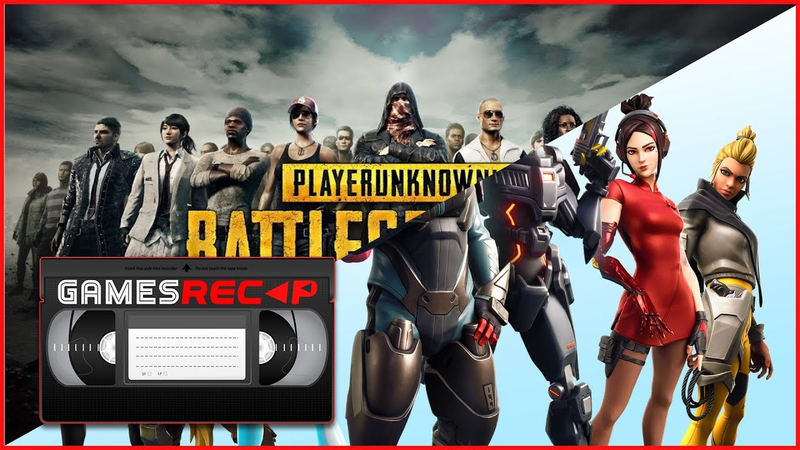
PUBG Corp Burying the Hatchet with Fortnite | Games ReCAP Episode 029
The legal friction between PUBG Corporation and Epic Games has officially concluded, marking the end of a contentious period defined by allegations that Epic leveraged its role as an Unreal Engine provider to replicate the battle royale mechanics of its partner.
- PUBG Corporation has officially ended its legal dispute with Epic Games, which was originally triggered by allegations that Epic misused its position as an Unreal Engine provider to replicate PUBG's battle royale mechanics.
- To combat the current stagnation of the battle royale genre, developers are being urged to move beyond the 'last-man-standing' formula and the reliance on shrinking play zones, which are viewed as design shortcuts that limit innovation.
- Future viability for battle royale titles depends on shifting away from transient, loot-focused gameplay toward persistent, snowball-style mechanics and emergent social systems that foster deeper player engagement.
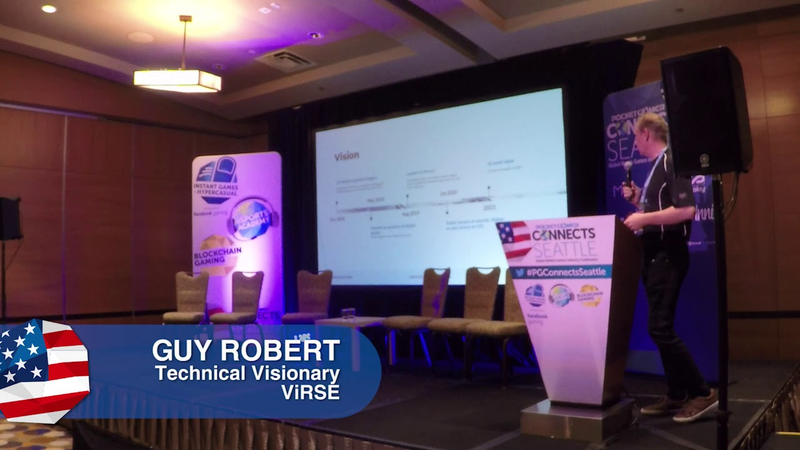
Diversify your game income with blockchain and ViRSE
The ViRSE ecosystem aims to bridge the gap between virtual reality, blockchain technology, and real-world commerce by creating a decentralized, cloud-based virtual universe.
- ViRSE is a decentralized, cloud-based virtual ecosystem designed to bridge virtual reality, blockchain, and real-world commerce by offering tangible utility, such as physical goods discounts, for digital assets.
- The platform aims for significant financial scaling, targeting $4 million in digital inventory value by late 2019 and $2.1 billion in real-life discount value by 2021.
- ShopVerse serves as a specialized distribution platform for blockchain-based games, functioning as an alternative to mainstream app stores to bypass restrictions on crypto-integrated applications.

Glenn Scholfield's New Game Studio | Games ReCAP Episode 013
The establishment of Striking Distance, a new studio led by industry veteran Glen Schofield under the PUBG Corporation banner, marks a significant shift in the San Francisco game development landscape.
- Glen Schofield has established a new studio, Striking Distance, under the PUBG Corporation banner to develop horror-influenced experiences within the PUBG universe.
- The studio aims to expand the PUBG franchise by introducing a robust narrative identity and a dedicated single-player component.
- Striking Distance is utilizing Unreal Engine instead of proprietary technology to streamline development and support a sustainable games-as-a-service model.

Let's Try: Godot Engine - Is it good?
The Godot engine serves as a viable, lightweight alternative to industry-standard tools like Unity and GameMaker Studio 2.
- Godot is a highly efficient, open-source alternative to Unity and GameMaker Studio 2, specifically optimized for 2D game development.
- The engine features a portable, lightweight design that requires no formal installation and offers rapid load times compared to resource-heavy industry standards.
- GDScript utilizes a Python-like syntax, significantly lowering the barrier to entry for developers transitioning from other platforms.
Visual Effects Bootcamp: The Rise of Realtime
The rapid evolution of real-time visual effects is fundamentally reshaping the creative landscape, necessitating a shift in the professional profile of visual effects artists.
- Real-time visual effects are shifting from traditional particle simulations toward a multidisciplinary requirement for rigging, programming, and tool development skills.
- Artists are increasingly utilizing data-driven techniques like motion vector flipbooks and vertex animation textures to bake complex lighting and fluid dynamics into shaders for high-fidelity performance.
- Procedural tools and analytic simulations, such as spline-based trails and mesh-based particle systems, are replacing traditional physics-based approaches to provide greater artistic control and efficiency.
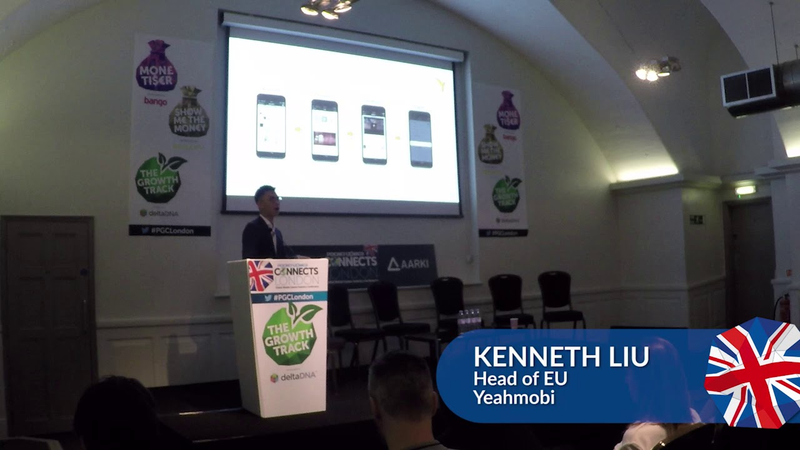
Digital marketing in Asia (China, Japan and South Korea)
The digital marketing landscape in Asia—specifically China, Japan, and South Korea—requires a multifaceted strategy that balances paid performance-based advertising with organic engagement.
- In the Chinese market, companies should prioritize organic search and social strategies alongside paid media, specifically leveraging Baidu SEO and WeChat subscription accounts to build community engagement.
- WeChat is the dominant platform for interactive marketing in China, offering superior functionality compared to Western social media for gathering user feedback and managing direct communication through subscription accounts.
- For successful market entry in Japan, utilize pre-order platforms one month before product launch to capture feedback from the country's highly penetrated gamer demographic.
Real Time Rendering for Feature Film: Rogue One
The integration of real-time rendering into the production of Rogue One: A Star Wars Story represents a pivotal shift in visual effects workflows, proving that high-fidelity game engine technology can meet the rigorous aesthetic standards of feature film production.
- The Advanced Development Group successfully integrated Unreal Engine into the production of 'Rogue One' to render the character K-2SO, proving game engine technology can meet high-end feature film aesthetic standards.
- The workflow utilized open standards like Alembic and Material X to import complex ILM assets into a real-time environment without requiring custom rebuilding.
- By employing custom solutions for geometry caching and temporal super-sampling, the team achieved film-quality beauty renders at 9K resolution.
Going global: Bringing giant games from South Korea to the West
Netmarble’s strategy for expanding South Korean mobile titles into Western markets centers on deep cultural localization and iterative adaptation.
- Netmarble's 'Lineage 2: Revolution' achieved over 30 million downloads and exceeded $1 billion in accumulated revenue by leveraging the Unreal 4 engine to bring high-spec, 50-versus-50 real-time guild battles to mobile.
- Successful global expansion requires significant localization beyond translation, such as adjusting leveling difficulty, UI layouts, and PvE/PvP content ratios to align with Western player preferences.
- When localizing 'Everybody's Marble' for Western markets, Netmarble delayed the launch by six months to overhaul character designs and simplify complex tutorials that were deemed unsuitable for non-Asian audiences.
Terra Virtua – The consumer VR platform
Terra Virtua is a consumer-facing virtual reality entertainment platform designed to serve as a centralized hub for immersive gaming, live events, and social interaction.
- Terra Virtua functions as a centralized VR ecosystem that uses a proprietary blockchain-based token to unify fragmented gaming experiences, currencies, and digital asset trading.
- The platform offers developers an 80/20 revenue split in favor of the creator and utilizes blockchain technology to bypass traditional 60-day payment cycles with immediate settlements.
- The 'Terraformer' toolset, built on the Unreal Engine, enables users to develop, host, and monetize their own VR experiences within the platform.
Unreal Engine and the future of mobile games
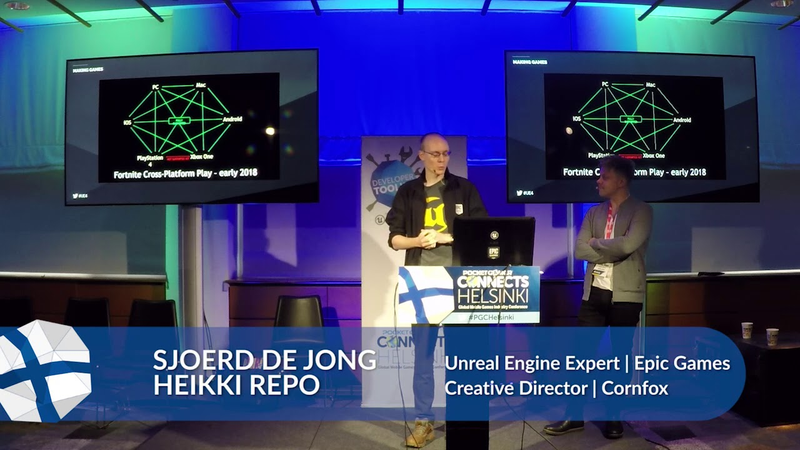
The future of mobile gaming is defined by the transition toward high-fidelity, cross-platform experiences that provide players with seamless connectivity across consoles, personal computers, and mobile devices.
- Mobile gaming is shifting toward high-fidelity, cross-platform experiences that offer seamless connectivity between mobile devices, PCs, and consoles.
- Unreal Engine enables developers to deploy console-quality titles on mobile hardware by overcoming previous technical limitations and democratizing high-end development.
- Optimization for mobile hardware requires addressing strict memory and draw-call constraints through automated level-of-detail generation, material instancing, and platform-specific texture compression.
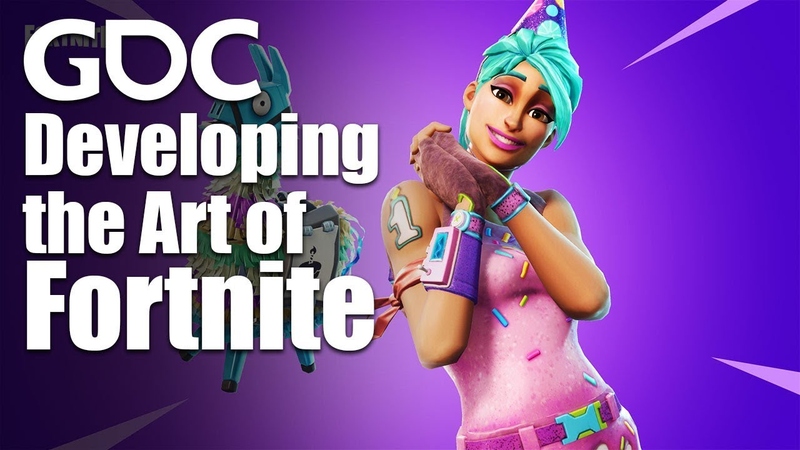
Developing the Art of Fortnite
Fortnite originated as a gritty, realistic survival horror title before undergoing a fundamental artistic pivot toward a vibrant, stylized aesthetic.
- The Fortnite art team transitioned from a realistic, high-fidelity aesthetic to a stylized approach to better support long-term, live-service, free-to-play requirements.
- To maintain gameplay clarity, the team prioritized exaggerated, expressive shape language over realism, ensuring that character silhouettes and weapon designs remained readable during third-person combat.
- The team utilized a modular, grid-based building system but integrated gestural, stylized forms into individual assets to maintain a cohesive visual identity despite the rigid structural constraints.