Disney
CompanyUnited States
Documents about Disney
Digital Marketing Strategies for Top Brands: Disney, Amazon and Geico
This analysis examines the digital advertising strategies of three major corporations—Disney, Amazon, and Geico—to provide actionable business intelligence for organizations looking to optimize their own marketing efforts.
- Amazon led the group in digital ad spend with $537 million, followed by Disney at $466 million and Geico at $311 million over a 12-month period.
- YouTube emerged as the primary advertising channel for all three companies, consistently ranking as a top-five platform for their digital marketing efforts.
- Disney and Amazon concentrate their advertising spend heavily on major coastal markets like Los Angeles and New York, whereas Geico maintains a more geographically diversified strategy.
Electronic Arts’ Earnings From Star Wars Games Top $3 Billion
Electronic Arts has undergone a significant corporate transformation, transitioning from a publicly traded entity to a private company following a $55 billion acquisition.
- Electronic Arts has been acquired by an investor group led by the Saudi Arabian Public Investment Fund (PIF) in a $55 billion deal, marking the largest leveraged buyout in gaming history.
- As part of the acquisition, EA has delisted from the NASDAQ and returned to being a private company after nearly 40 years of public trading.
- The ownership structure of the newly private EA consists of 93.4% held by the PIF, 5.5% by Silver Lake, and 1.1% by Affinity Partners.

The Future of Consumer Content Platforms
The evolution of consumer content platforms is currently defined by a shift away from hardware-dependent distribution toward cross-platform, multi-purpose ecosystems.
- Mobile content platforms are shifting from hardware-dependent models to form-factor-agnostic ecosystems that span three interaction frequencies: real-time (smartphones), daily (TVs/consoles), and intermittent (physical venues).
- The traditional power of mobile gatekeepers like Apple is declining as cross-platform companies—such as streaming services—bypass platform fees and reduce the App Store's role as the primary discovery point for users.
- The deprecation of the IDFA and third-party cookies is rendering traditional performance-based user acquisition less efficient, forcing companies to rely on existing, engaged audiences within 'nexus of attention' platforms.
All Aboard the Axie Infinity Hype Train
This analysis examines the volatile intersection of blockchain technology and traditional gaming, focusing on the rapid rise of Axie Infinity and the broader strategic shifts among major tech platforms.
- Axie Infinity’s play-to-earn model faces long-term viability challenges as competitors like Illuvium introduce more sophisticated financial structures, such as double-sided staking.
- Valve’s Steam Deck poses a direct competitive threat to the $11 billion gaming laptop market.
- Historical industry trends suggest that gaming 'sensations' often struggle to maintain long-term valuations comparable to established media giants like Disney.
Global App Revenue Grew 32% Year-Over-Year in Q3 2020
Global mobile app revenue reached $29.3 billion in the third quarter of 2020, representing a 32 percent year-over-year increase.
- Global mobile app revenue reached $29.3 billion in Q3 2020, a 32% year-over-year increase, while total installs grew 23.3% to 36.5 billion.
- Apple's App Store generated $19 billion in revenue (up 31% Y/Y), while Google Play generated $10.3 billion (up 33.8% Y/Y).
- Mobile game spending grew 26.7% year-over-year to $20.9 billion, with Tencent's 'Honor of Kings' and 'PUBG Mobile' ranking as the top two highest-grossing titles.
Friday Plus Newsletter: Baldur's Gate 3 Gets 1.0 Huge, Assaults Steam Servers
This analysis examines the commercial performance and market trends of the global video game industry during the first week of August 2023.
- Baldur’s Gate 3 achieved over 570,000 concurrent users on Steam at launch, triggering one of the largest bandwidth spikes in the platform's history due to a 122GB download size.
- The video game market is experiencing a 'hollowing out' of the middle, where consumer interest is concentrated in either massive, high-quality blockbusters or focused, systems-driven indie titles.
- Minimalist indie games priced under $10, such as Thronefall and Pseudoregalia, are successfully capturing market share by prioritizing tight mechanics and 'game feel'.

Nintendo, Disney, and Cultural Determinism
The comparison between Nintendo and Disney as cultural icons often obscures fundamental differences in their operational strategies and market positioning.
- Nintendo operates a unique business model where 85% of software revenue is generated by its own first-party titles, a stark contrast to industry standards where hardware platforms rely on third-party content.
- Nintendo’s mobile strategy has struggled because the company prioritizes brand protection over industry-standard 'whale' monetization, which typically drives the majority of revenue in the mobile gaming sector.
- The company maintains a rigid creative philosophy that rejects 'games-as-a-service' models, preferring to release sequels only when new hardware or ambitious design ideas justify a complete from-scratch development cycle.

Why Nintendo Isn’t the Next Disney (And What It Will Be Instead)
Nintendo operates under a distinct corporate philosophy that prioritizes creative uniqueness and sincerity over the aggressive profit maximization typical of modern media conglomerates.
- Nintendo’s business model is defined by the 'Nintendo Way,' a set of principles prioritizing unique, mass-market hardware and software integration over bleeding-edge technology, which creates extreme financial volatility based on the success of a single console cycle.
- The company maintains a significant financial safety net with $10.2 billion in cash, representing approximately 20% of its $52 billion market cap, which protects it against the cyclical downturns inherent in its hardware-dependent business.
- Nintendo’s mobile gaming strategy has underperformed, generating over $1 billion from six games over four years, a figure that fails to meaningfully impact the company’s annual revenue of roughly $11 billion.
Epic Games Worth $15 Billion, Plans to Increase That
Epic Games maintains a strong market position as a major player in the global video game industry, anchored by the success of its flagship title, Fortnite, and the widespread adoption of the Unreal Engine.
- As of April 2020, Epic Games is in talks to raise between $500 million and $1 billion in a new funding round.
- The company is seeking a valuation significantly higher than its previous $15 billion valuation established in 2018.
- In 2018, a group of investors acquired $1.25 billion worth of Epic Games shares, setting the company's valuation at $15 billion at that time.
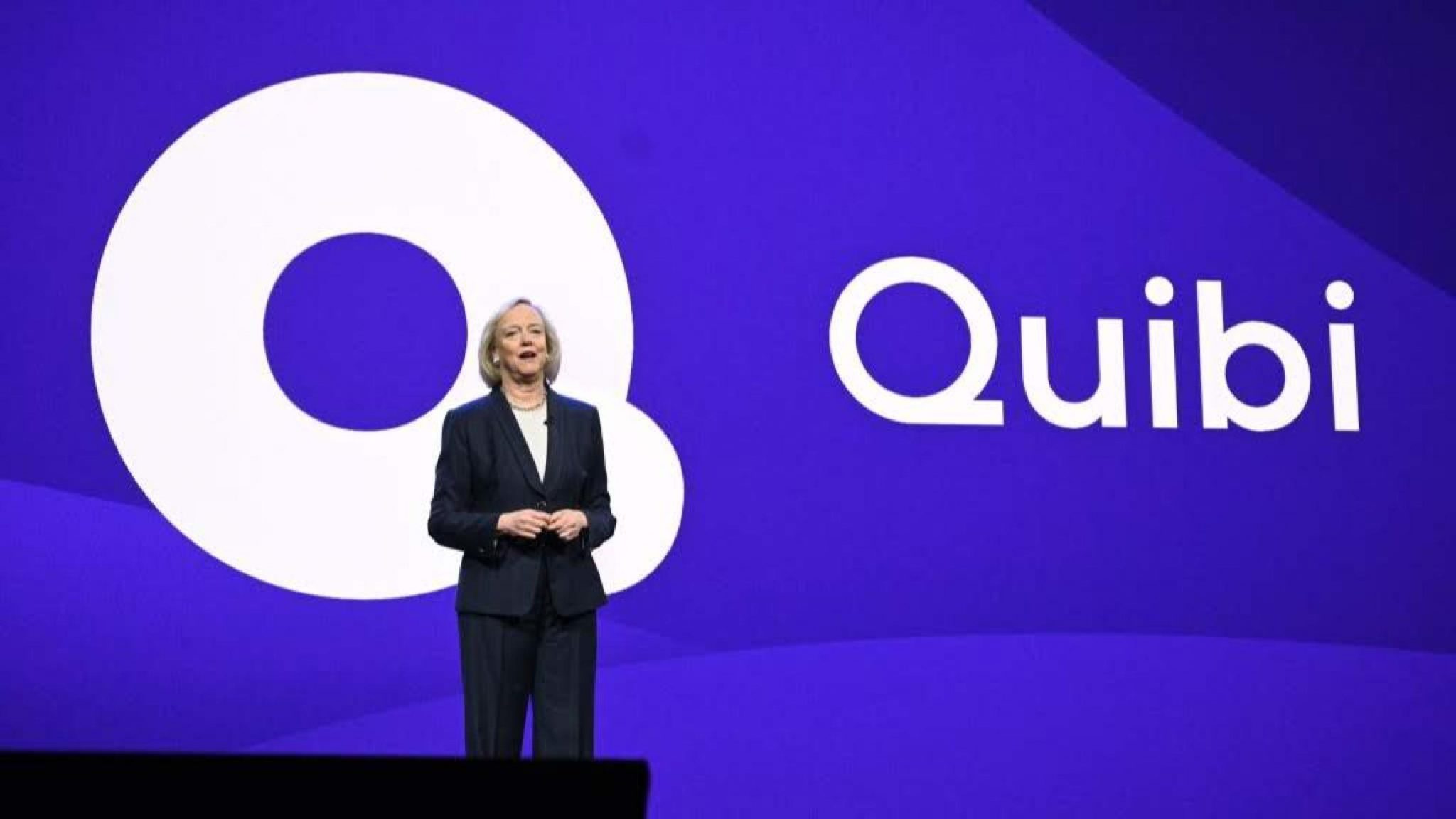
Quibi’s Failure to Launch: Can Hollywood Win on Mobile?
Quibi’s launch in April 2020 serves as a case study in the disconnect between traditional Hollywood marketing strategies and the realities of the mobile app ecosystem.
- Quibi’s launch was considered a failure with only 310,000 installs on April 6, 2020, significantly underperforming compared to Disney+’s 3 million launch-day installs.
- The platform’s marketing strategy relied on a traditional Hollywood 'feature film' playbook, focusing on individual content pieces rather than the utility of the service itself.
- Consumers in the mobile ecosystem treat individual content as a $0 commodity, making it ineffective to market specific shows without emphasizing the unique value of the platform's format.
Zuck's Achilles Heel: Disney's Renewed Interest in Games and EA's Spending Spree
The gaming industry is currently defined by aggressive intellectual property (IP) licensing, rapid consolidation, and a contentious push for new monetization models.
- Electronic Arts spent $4.7 billion over a twelve-month period to acquire studios including Playdemic, Codemasters, and Glu Mobile to expand its mobile gaming footprint and gain leverage against platform holders like Apple.
- Disney has pivoted its interactive strategy to a licensing-heavy model, offloading the operational risks of game development by granting third-party developers like Ubisoft and Square Enix access to its franchise portfolio.
- Facebook’s attempt to integrate advertisements into its Oculus VR platform failed due to community backlash, forcing developers to withdraw from ad-testing programs and highlighting the incompatibility of current ad models with immersive environments.

Will xCloud and Caffeine.tv Be Game Changers? Winners and Losers in the Escalating Streaming Wars
The convergence of major technology and media firms within the streaming sector marks a critical shift in the competitive landscape of digital entertainment.
- Microsoft is pivoting from a hardware-centric model to a service-oriented strategy with xCloud, aiming to deliver console-quality gaming to mobile devices to compete directly with Google Stadia.
- Fox has invested $100 million into Caffeine.tv to establish Caffeine Studios, focusing on live sports and esports to enter the interactive entertainment market.
- Caffeine.tv faces significant barriers to entry, as it must compete for market share against established giants like Twitch and YouTube, which serve a global audience of 900 million gaming video viewers.