
ArticleSuperJoost
Will xCloud and Caffeine.tv Be Game Changers? Winners and Losers in the Escalating Streaming Wars
24 Nov 2019~4 min full read
The convergence of major technology and media firms within the streaming sector marks a critical shift in the competitive landscape of digital entertainment. Microsoft’s launch of the xCloud beta represents a strategic effort to achieve the industry’s long-sought goal: delivering console-quality gaming across platform-agnostic mobile devices. This move serves as a tactical countermeasure to Google’s Stadia, ensuring that Microsoft maintains influence over the cloud gaming narrative. By elevating gaming to a core corporate strategy under executive leadership, Microsoft positions itself to transition from a hardware-centric model to a service-oriented one, potentially mirroring the content delivery styles of high-end providers like HBO or high-volume platforms like Netflix.
Simultaneously, traditional media entities are attempting to pivot toward interactive entertainment, exemplified by Fox’s $100 million investment in Caffeine.tv. This partnership aims to leverage live sports and esports through the creation of Caffeine Studios. However, this entry faces significant headwinds due to its late arrival relative to established giants like Disney, AT&T, and Apple. While Caffeine benefits from a leadership team comprised of former Apple designers, it faces the daunting task of migrating audiences away from entrenched platforms like Twitch and YouTube. Despite a global audience of 900 million gaming video viewers, the platform must differentiate its user experience and content library to survive an increasingly crowded market.
The analysis concludes that while Microsoft’s infrastructure and long-term commitment provide a stable foundation for xCloud, Caffeine.tv’s future likely involves acquisition rather than independent dominance. Given the platform’s design pedigree and the strategic needs of larger tech firms, Apple is identified as a probable suitor. Such an acquisition would allow Apple to expand its gaming footprint beyond mobile subscriptions into the live-streaming and social broadcasting space, following a trajectory similar to Microsoft’s acquisition of Mixer. Ultimately, the success of these ventures depends on their ability to balance high-quality product design with aggressive content acquisition in a market defined by multi-billion-dollar competition.

SuperJoost · 2026

SuperJoost · 2026

SuperJoost · 2026

SuperJoost · 2026

SuperJoost · 2026

SuperJoost · 2026

SuperJoost · 2026

SuperJoost · 2026

SuperJoost · 2026
SuperJoost · 2026

SuperJoost · 2026

SuperJoost · 2026
Newzoo · 2022
Newzoo · 2022
Newzoo · 2022

IGN Entertainment · 2026

InvestGame · 2025
Stream Hatchet · 2025
Stream Hatchet · 2025

Room 8 Group · 2025

Vorhaus Advisors · 2025
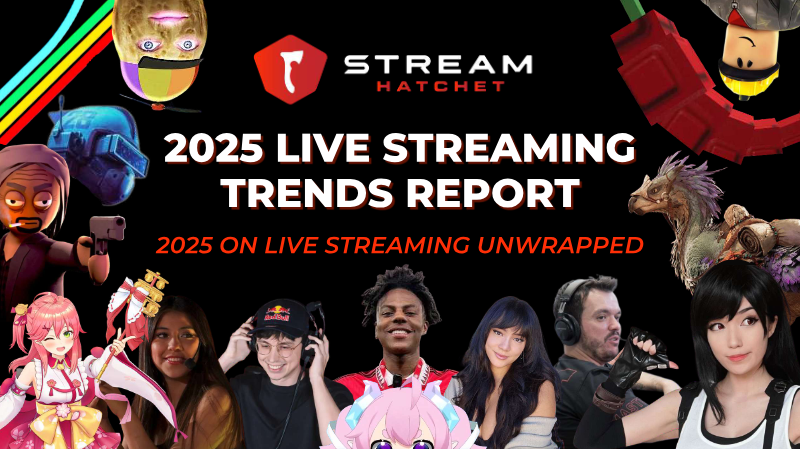
Stream Hatchet · 2025

Stream Hatchet · 2025

Game Developer Collective · 2024