Big Fish Games
CompanyUnited States
11 documents in the library are about Big Fish Games, from writers such as PocketGamer.biz, Deconstructor of Fun and GameDiscoverCo. Each has a summary and key insights with the page they come from.
Connections
The documents about Big Fish Games on the inner ring, the other games and companies they name on the outer one. Select a cover to see it up close and open it in a new tab; drag to move, pinch or Ctrl + scroll to zoom.
Key figures from the reports
Aristocrat Leisure has effectively dismantled Big Fish Games, a company it acquired for $990 million in 2018, by divesting assets into a new entity called BFG Entertainment and ceasing the development of new titles.
PocketGamer.biz, 2026 · Ubisoft turmoil and what happened to Big Fish Games? | Week in Mobile Games podcast, p. 9
Revenue models on legacy portals like Big Fish Games, iWin, GameHouse, and WildTangent are less favorable than Steam, with platforms retaining 60% to 80% of total revenue compared to Steam's 30%.
GameDiscoverCo, 2022 · PC Casual Games: Exploring a Vestigial Market
On Steam
Steam estimates as of 9 Oct 2026. Revenue is premium revenue on Steam only: game sales, without DLC.
- Revenue as publisher
- $1.9M
- 556 games
- Revenue as developer
- $499K
- 21 games
- Units sold
- 297K
- as publisher or developer
- Headquarters
- United States
Big Fish Games’s best-selling games on Steam
| Game | Released | Share of the best seller | Revenue | Units |
|---|---|---|---|---|
| Drawn: The Painted TowerDeveloper and Publisher | 2011 | $63K | 9,785 | |
| Mystery Case Files: RavenhearstDeveloper and Publisher | 2006 | $56K | 8,559 | |
| Mystery Case Files: Return to RavenhearstDeveloper and Publisher | 2010 | $54K | 7,598 | |
| Mystery Case Files ®: 13th Skull ™ Collector's EditionDeveloper and Publisher | 2016 | $49K | 6,534 | |
| My TribeDeveloper and Publisher | 2008 | $44K | 6,335 | |
| Mystery Case Files: HuntsvilleDeveloper and Publisher | 2005 | $37K | 5,727 | |
| Dark Parables: Curse of Briar Rose Collector's EditionPublisher | 2016 | $29K | 4,170 | |
| Mystery Case Files: Madame FateDeveloper and Publisher | 2007 | $25K | 5,123 | |
| Dark Parables: The Exiled Prince Collector's EditionPublisher | 2016 | $24K | 2,799 | |
| Mystery Case Files®: Escape from Ravenhearst™Developer and Publisher | 2016 | $22K | 3,056 |
Documents about Big Fish Games
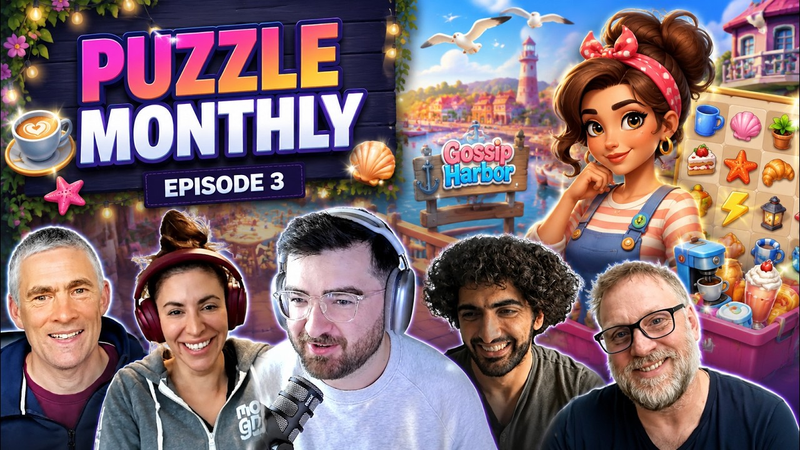
Puzzle Monthly #3: the Merge 2 Secret Tell-All Episode
The merge genre has reached a critical inflection point, transitioning from simple board-based mechanics to complex, live-ops-driven ecosystems.
- The merge genre is shifting from simple board mechanics to complex, live-ops-driven ecosystems, with titles like Gossip Harbor successfully challenging legacy giants like Candy Crush.
- Commercial success in the genre is now driven by aggressive, event-based monetization strategies rather than the foundational merge gameplay itself.
- To combat the friction of board clutter and tedious inventory management, developers are increasingly adopting temporary event boards, generator constraints, and multi-board systems.

Google's Project Genie, Take-Two, Stillfront, Ares, January's top games and more
The mobile gaming industry is currently navigating a period of significant financial restructuring and technological speculation.
- Take-Two Interactive reported a 19% year-over-year increase in mobile revenue, which now accounts for 49% of the company's total net bookings.
- Google's Project Genie generative AI technology caused a temporary market sell-off in game stocks, though industry leaders like Unity and Epic Games clarified that such models are intended to supplement, not replace, professional game engines.
- Stillfront Group is undergoing a restructuring that includes further game closures and the sale of its narrative games division, despite achieving a 27% EBITDAC margin in Q4 2025 through cost savings and disciplined user acquisition.

Ubisoft turmoil and what happened to Big Fish Games? | Week in Mobile Games podcast
Aristocrat Leisure has effectively dismantled Big Fish Games, opting to divest its assets through multiple transactions after failing to secure a buyer for the company as a whole.
- Ubisoft is facing significant internal instability, including a 40% drop in share price following restructuring announcements and a proposed 200-role voluntary termination plan at its Paris headquarters, which has triggered a three-day strike by labor unions.
- Aristocrat Leisure has effectively dismantled Big Fish Games, a company it acquired for $990 million in 2018, by divesting assets into a new entity called BFG Entertainment and ceasing the development of new titles.
- Netflix is shifting its gaming strategy to prioritize cloud-first experiences centered on TV play rather than mobile downloads, a move industry analysts suggest is primarily intended to reduce subscriber churn.

Week in Mobile Games E43 - NetEase scales back, Jam City's Ludia sale, & why Savvy wants Pokémon Go
The global mobile gaming industry is undergoing a period of significant structural realignment characterized by aggressive cost-cutting, divestment, and a pivot toward core competencies.
- Niantic is reportedly exploring the sale of its gaming portfolio, including Pokémon GO, to Scopely as it seeks to pivot toward becoming a pure technology provider.
- NetEase is scaling back its U.S.-based development operations to refocus on domestic production, signaling a shift away from expensive Western studio acquisitions.
- Unity’s stock price surged despite a 25 percent decline in revenue and substantial losses, driven by investor confidence in the company's new cost-reduction and portfolio adjustment measures.
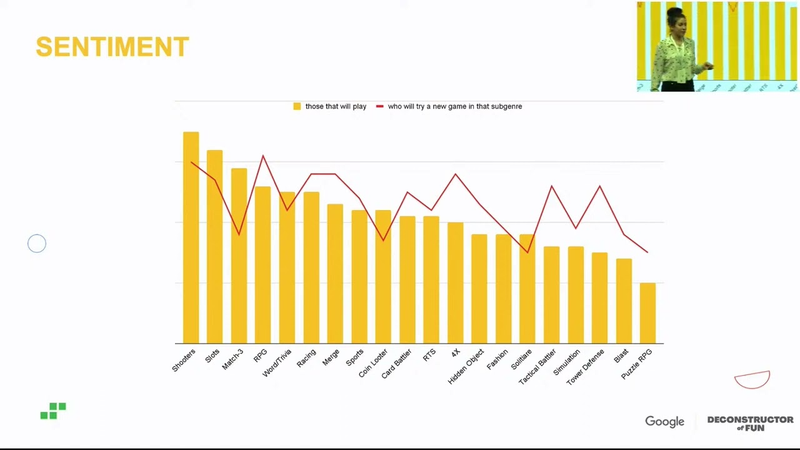
How to Catch the Next Big Fish with Laura Taranto of Big Fish Games
Developing a successful mobile game in a competitive, mature market requires a disciplined, three-pronged framework that integrates quantitative data, qualitative player sentiment, and internal domain expertise.
- Successful mobile game development requires a three-pronged framework that synthesizes quantitative data, qualitative player sentiment, and internal domain expertise to identify viable market opportunities.
- Studios should establish a clear North Star goal and accept high failure rates as an inherent part of the development cycle to ensure better resource allocation and stakeholder alignment.
- Quantitative metrics such as downloads, revenue, and ARPDAU are essential for identifying subgenre trends, but they must be balanced with player sentiment to uncover unmet needs and frustrations.

19 Tips and Tricks From Liftoff's 2023 Mobile Heroes
This collection of industry insights synthesizes advice from a global community of over 3,600 mobile marketers, monetization experts, and game developers.
- Marketers should prioritize incrementality testing to determine the actual volume of sales driven by paid media, as standard attribution models often overestimate performance and mask the true cost per acquisition.
- Creative strategy should focus on simplicity and clarity by limiting copy to eight words, using no more than two fonts, and ensuring visuals directly communicate the core value proposition.
- Mobile teams should adopt a structured creative process that separates 'concepts' from 'iterations,' where successful ad formats are refined through small, continuous changes rather than one-off tests.
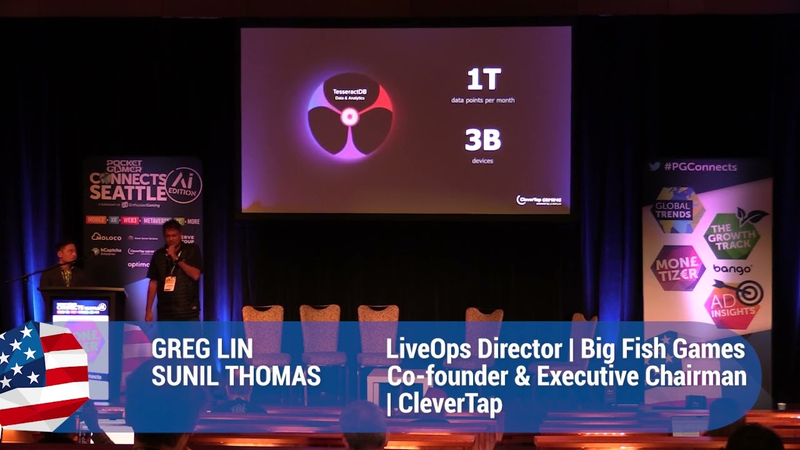
Keynote: Mastering Revenue Growth Using LiveOps & Contextual Personalization, Sunil Thomas/Greg Lin
The gaming industry is currently navigating a challenging landscape defined by rising user acquisition costs and shifting privacy regulations, such as Apple’s App Tracking Transparency.
- Implementing comprehensive personalization strategies can increase player lifetime value (LTV) by approximately 35 percent.
- Rising user acquisition costs and privacy regulations like Apple’s App Tracking Transparency are forcing a strategic shift from new player acquisition toward maximizing the LTV of existing player bases.
- Studios are adopting a 'personalization ladder' that progresses from basic demographic segmentation to behavioral targeting and fully personalized content.
AI Rules At PGC London 2023, Big Fish Games’ Daniel Helmhold On Epic Branding For Every Budget
The mobile gaming industry is currently undergoing a significant transformation driven by the dual pressures of technological advancement and shifting market dynamics.
- The mobile gaming industry is shifting toward AI integration to democratize production and streamline workflows, allowing smaller studios to compete more effectively with larger entities.
- Privacy regulations like Apple’s App Tracking Transparency have created a persistent discovery crisis, significantly inflating user acquisition costs and forcing a move away from traditional growth strategies.
- Developers are increasingly adopting games-as-a-service models to prioritize long-term sustainability, focusing on community building and live operations to extend the lifecycle of titles.
PC Casual Games: Exploring a Vestigial Market
The PC casual games market, once a dominant force in the mid-2000s, persists in 2022 as a specialized, "vestigial" segment of the industry.
- The PC casual games market is a stable, specialized niche primarily serving an older, female-centric demographic that persists despite the industry's shift toward mobile and social platforms.
- Revenue models on legacy portals like Big Fish Games, iWin, GameHouse, and WildTangent are less favorable than Steam, with platforms retaining 60% to 80% of total revenue compared to Steam's 30%.
- Market demand is highly concentrated in three specific genres: Hidden Object games (44%), Match-3 (18%), and Time Management (12%).
These Are the Most Prolific Mobile Game Publishers in App Store History
This analysis identifies the most prolific mobile game publishers on Apple’s App Store during its first decade of operation.
- Big Fish Games is the most prolific publisher in App Store history, having released 1,471 mobile games as of July 2018.
- Approximately 41 percent of all iOS developers have launched more than one app on the platform.
- Electronic Arts ranks fourth among the most prolific publishers with 502 titles, while Tencent ranks sixth with 361 and Ubisoft ranks tenth with 315.
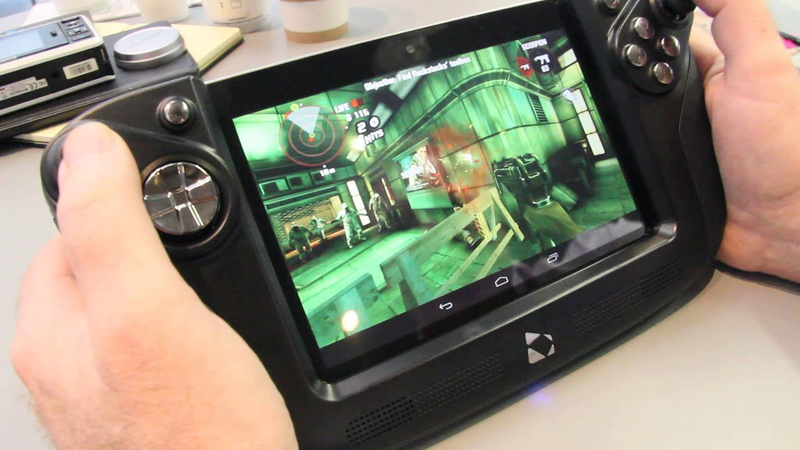
Hands on with 7-inch tablet and joypad combo Wikipad - running Dead Trigger
The Wikipad represents a hybrid approach to mobile gaming, integrating a 7-inch Android tablet with a detachable, physical controller harness.
- The Wikipad is a 7-inch Android tablet hybrid featuring a detachable physical controller with dual joysticks, a D-pad, and four shoulder buttons to improve precision in complex games.
- The device is powered by a quad-core Nvidia Tegra 3 processor and features a 1280 by 800 IPS display.
- Priced at $249 or £249, the hardware is positioned to compete in the mobile gaming market by offering console-style ergonomics to resolve touchscreen 'finger-blocking' issues.