Access
Company
Documents about Access

Announcing Thronefall's Release Date
Thronefall, a medieval base defense game developed by Grizzly Games, is scheduled for an Early Access launch on August 2, 2023.
- Grizzly Games will launch its medieval base defense title, Thronefall, into Early Access on August 2, 2023.
- The initial Early Access release will include four distinct levels, consisting of one tutorial and three primary stages, plus a variety of gameplay perks.
- The developers are adopting a transparent pricing model that reflects the game's current content volume rather than charging for speculative future updates.
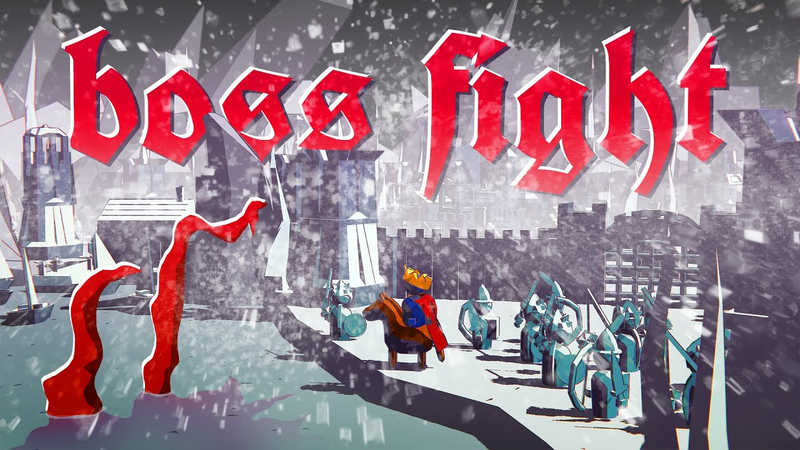
Making an Epic Boss For our Castle Builder Game (Devlog)
The development of the minimalist base defense game Thronefall focuses on expanding player agency and strategic depth through a series of iterative design updates.
- Thronefall transitioned from predefined building paths to a choice-based upgrade system, allowing players to specialize units like spearmen and archers for greater tactical depth.
- Developers replaced passive character scaling with active upgrade choices at the castle center to support diverse playstyles, ranging from aggressive to economic strategies.
- Technical adjustments were implemented to curb gameplay exploits, including the addition of spawn damage to prevent spawn camping and modified unit behavior to stop players from bypassing combat mechanics.
Staying Inside Conference Preview
Independent game developers frequently struggle with counterintuitive marketing dynamics on the Steam platform, often committing avoidable errors that jeopardize long-term commercial success.
- Launching into Steam Early Access prematurely is an irreversible error because Steam treats it as a full launch, exhausting the game's peak visibility and revenue potential.
- Games with an active Steam page for at least six months significantly outperform the median title, making long-term presence a requirement for success.
- Developers should avoid using Early Access for product refinement and instead utilize in-person playtests, remote beta testing, or free demos on platforms like itch.io.
Bringing Peglin to the mobile market | Dylan Gedig from Red Nexus
Dylan Gedig of Red Nexus Games discusses the strategic expansion of the title Peglin, a Pachinko-inspired roguelike, into the mobile market.
- Red Nexus Games is porting its Pachinko-inspired roguelike, Peglin, to mobile using a premium $10 pricing model instead of the industry-standard free-to-play or ad-supported structures.
- The decision to prioritize a mobile port was driven by direct community feedback requesting a portable version of the title, which began development as a PC project in 2019.
- Red Nexus Games is self-publishing the mobile version, relying on organic growth and their existing community rather than traditional user acquisition strategies or external publishing partnerships.

The Married, Full Time Indie Dev Team — Full Time Game Dev Podcast Ep. 002
Operating as a full-time, married indie development team, Black Tabby Games demonstrates a sustainable model for independent production through the creation of the episodic narrative horror title Scarlet Hollow.
- Black Tabby Games sustains long-term project viability by treating marketing as a holistic, ongoing practice that prioritizes deep community integration over traditional press coverage.
- The team drives recurring revenue and wishlist growth by utilizing Early Access and episodic releases, supplemented by consistent Patreon support and A/B testing of store assets.
- The studio maintains complex narrative depth in 'Scarlet Hollow' by using a tracking system that monitors ten character variables across five axes to influence evolving relationship dynamics.
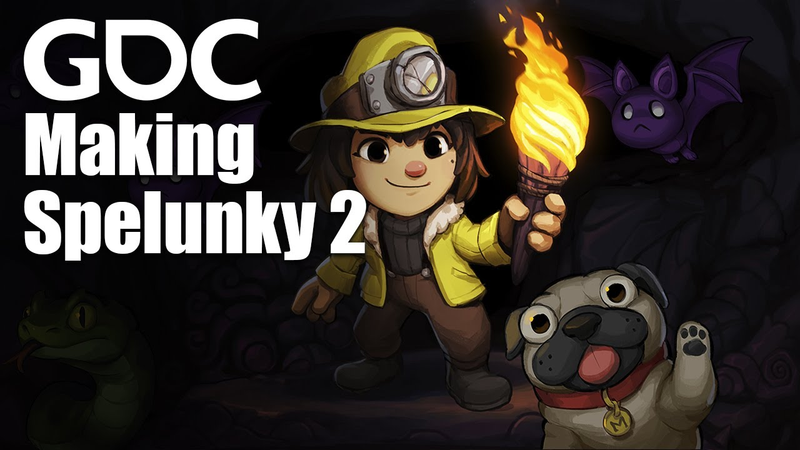
One More Run: The Making of 'Spelunky 2'
Spelunky 2 serves as a deliberate evolution of the roguelike genre, functioning as a framework that prioritizes high interactivity, destructible environments, and emergent gameplay.
- Spelunky 2 was developed with a focus on preserving the core 'spiky' design philosophy of the original, which prioritizes player agency and a world that feels indifferent to the player rather than purely focused on progression.
- The development team utilized custom internal tools to manage complexity, including a system to set game variables, record replays, and manipulate camera and time settings, which served both as a testing suite and a source for marketing assets.
- Level design for the sequel was managed through externalized files edited in text editors with custom flags, a process the developer found more efficient than building a dedicated in-game editor.

Fireside Chat: Amir Rao and Kelly Wallick on 'Hades'
Supergiant Games achieved significant success with Hades by shifting from a philosophy of constant reinvention to one of synthesis, combining successful mechanics from their previous titles, Bastion, Transistor, and Pyre.
- Supergiant Games utilized Early Access as a core development strategy for Hades, allowing the team to iterate based on player feedback and manage complex, overlapping game systems that would have been difficult to test in isolation.
- Before the 2018 Early Access launch, the studio conducted three one-month 'rehearsal' updates to test their internal production pipeline and determine the optimal cadence for content delivery.
- The team transitioned from a four-week update cycle to an eight-to-ten-week cycle during Early Access to better accommodate the needs of development and content integration.
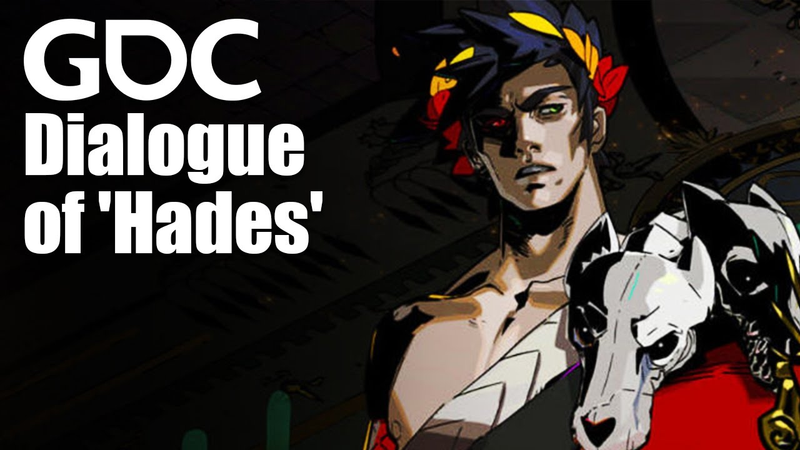
Breathing Life into Greek Myth: The Dialogue of 'Hades'
The development of Hades represents a significant evolution in narrative design for the roguelike genre, demonstrating how extensive voice acting can transform the experience of repeated player failure into a compelling storytelling mechanic.
- Supergiant Games produced a fully voiced experience for 'Hades' featuring over 21,000 lines of dialogue and 30 characters, despite initially underestimating the final scope of the project.
- To differentiate the game's setting, the team utilized a cultural accent divide where characters native to the underworld speak with American accents, while those of Greek or surface origin use British accents.
- The narrative design used extensive voice acting to mitigate the frustration of failure in a roguelike, ensuring that even repetitive gameplay loops remained engaging through constant dialogue updates.
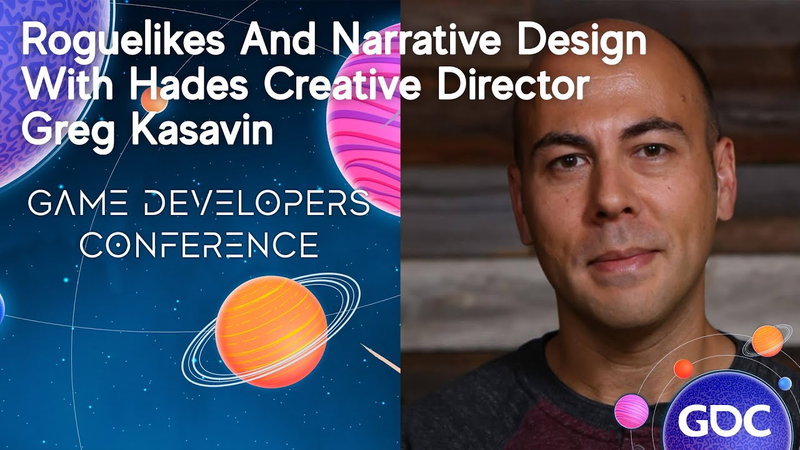
Roguelikes And Narrative Design With Hades Creative Director Greg Kasavin - GDC Podcast
The transition from game journalism to development offers a unique perspective on the industry, emphasizing the importance of analytical rigor in creative production.
- Supergiant Games maintains a small, stable team structure to preserve the long-standing personal relationships and collaborative synergy that define their development process.
- The studio prioritizes the element of surprise in game design, intentionally avoiding sequels to ensure each project offers a distinct and novel experience.
- Supergiant Games utilizes Early Access to shorten the feedback loop, allowing them to test core ideas and validate narrative resonance with players long before a full release.
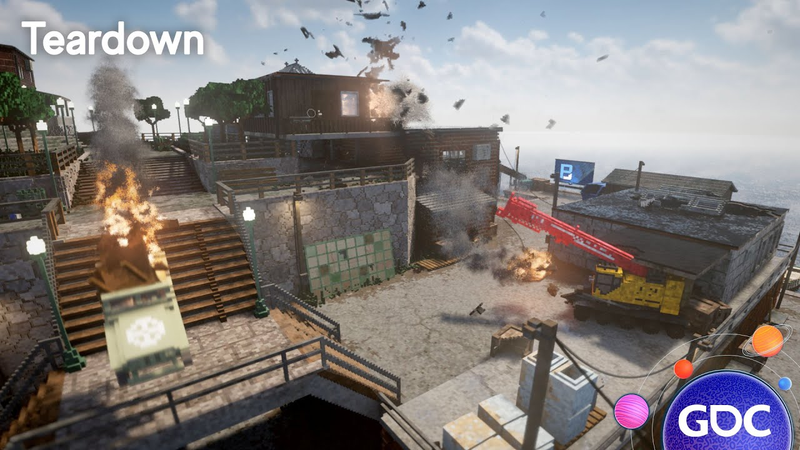
GDC Plays Teardown with Dennis Gustafsson
Teardown represents a significant technical achievement in the gaming industry, originating as an experimental project focused on ray tracing and voxel-based destruction.
- Tuxedo Labs developed a custom engine that replaces traditional polygons with volumetric voxel data, enabling deep integration between physics simulation and ray-traced rendering.
- The engine utilizes ray marching in fragment shaders to achieve high-fidelity lighting and complex environmental interactions, such as advanced fluid dynamics.
- Core gameplay logic was transitioned to Lua scripting to lower the barrier for modding, which facilitated significant community-driven growth and content expansion.
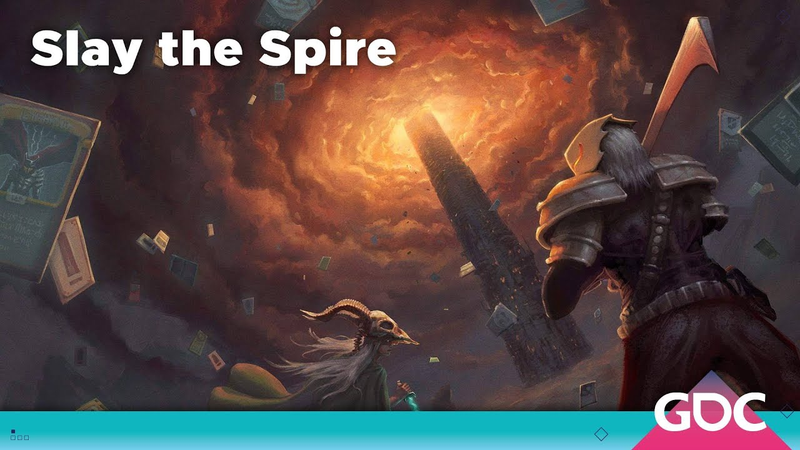
GDC Plays IGF Nominee Slay the Spire with Casey Yano
The success of Slay the Spire stems from a community-driven development philosophy that prioritizes player experience over rigid mathematical balance.
- Slay the Spire utilized Steam Early Access to gauge market interest, releasing with two of three planned characters to determine if the project warranted completion or should be scaled back.
- The developers leveraged gameplay data uploaded by the community to inform balance changes and identify which card mechanics were underperforming or confusing for players.
- The game's map system was inspired by FTL: Faster Than Light, shifting from a blind sequence of encounters to a visible, branching path that allows for strategic, long-term risk-reward decision-making.
Game Discoverability Day: Paid Acquisition for Smartphone Games: A Scrappy, Practical Guide
Smartphone game developers can achieve sustainable growth by prioritizing Google Play as the primary platform for early-stage user acquisition.
- Prioritize Google Play for early-stage user acquisition to leverage organic reach, which can yield an organic-to-paid install ratio as high as 4:1.
- Execute aggressive paid acquisition during the first 30 days of release to capitalize on initial momentum and navigate platform-specific performance cycles.
- Use the open beta phase to optimize keyword density and marketing assets to secure Early Access featuring and improve conversion rates.