Reports in the Market (Mobile) category.
This industry guide provides a strategic framework for mobile game developers to transition from initial organic traction to sustainable, long-term revenue growth. The central thesis argues that while organic "sparks" are invaluable, lasting success requires a rigorous, two-step approach: first, optimizing the game’s internal economy for maximum Lifetime Value (LTV), and second, deploying data-driven paid User Acquisition (UA) campaigns.
The first phase focuses on monetization through ad mediation and in-app purchases (IAP). Key findings suggest that implementing a hybrid ad mediation setup—combining real-time bidding with manual waterfalls—can yield a 10% to 20% uplift in Average Revenue Per Daily Active User (ARPDAU) immediately. The analysis emphasizes the importance of rewarded ads over intrusive interstitials and highlights that personalized, segmented IAP offers can increase player spending by up to 23%. It also advocates for regional pricing, noting that price cuts in lower-purchasing-power markets can boost ARPDAU by as much as 30%.
The second phase details a methodology for scaling through paid UA, emphasizing the necessity of accurate data post-IDFA. The guide recommends a three-step framework of assessment, preparation, and optimization. It advises that while platforms like Meta and TikTok are accessible for smaller budgets, larger networks typically require a minimum monthly spend of $20,000 to exit the "learning phase" effectively. Furthermore, it stresses the role of App Store Optimization (ASO), citing a case where a simple icon change resulted in a 90% install uplift.
The scope of the analysis covers the global free-to-play (F2P) mobile gaming market, applicable to various genres and studio sizes. The methodology relies on industry benchmarks, case studies, and data from SuperScale’s proprietary analytics engine, SuperInsights. The overarching conclusion is that developers must treat monetization and UA as iterative, scientific processes, using predictive modeling to forecast Return on Ad Spend (ROAS) up to a year in advance to ensure business-level profitability.
The 2023 market analysis evaluates global mobile advertising performance, concentrating on the two dominant operating systems, iOS and Android, and the leading social platforms that drive ad spend. Facebook and Instagram continue to command the largest share of the social advertising ecosystem, reinforcing their status as primary channels for marketers seeking broad reach and engagement across diverse audiences.
Video advertising emerged as the pre‑eminent format throughout the year, registering a 16 % increase on iOS and a markedly higher 37 % rise on Android. This divergence underscores Android’s accelerating momentum in video consumption and ad adoption, while iOS maintains steady growth. Interactive ad formats also showed modest gains, with a 2.7 % uplift on iOS, indicating a gradual shift toward more engaging user experiences, though the expansion remains limited compared with video.
Overall, the findings suggest that mobile video continues to dominate revenue generation, with Android delivering the strongest growth trajectory. The incremental rise in interactive formats points to emerging opportunities for richer creative solutions, yet video’s dominance will likely shape strategic allocations for the coming year. These trends highlight the importance of platform‑specific optimization and the need for advertisers to balance high‑impact video placements with exploratory interactive formats to maximize reach and performance across the mobile landscape.
The global mobile economy experienced a significant recovery in 2023, with consumer spending rising 3% to $171 billion and daily engagement surpassing five hours per user in leading markets. While mobile gaming faced a slight 2% contraction in spending due to economic headwinds and a shift toward longer title life cycles, the broader industry was bolstered by a resilient non-gaming sector. This growth was primarily driven by social media "tipping," video streaming subscriptions, and the rapid emergence of generative AI. Mobile advertising also remained a cornerstone of the ecosystem, reaching $362 billion with projections to exceed $400 billion in the coming year.
The landscape is increasingly defined by a shift in consumer behavior and monetization strategies. Non-gaming apps reached a record $64 billion in spend, led by TikTok, which became the first non-game app to surpass $10 billion in lifetime revenue. In contrast, the gaming market saw a decline in new hit releases, with the industry consolidating around established high-fidelity IPs and social multiplayer genres like Creative Sandbox and Battle Royale. Despite this consolidation, breakout successes like Monopoly GO and Honkai: Star Rail demonstrated that high-quality debuts can still disrupt saturated markets.
Across various sectors, mobile integration has reached unprecedented levels. Travel and ticketing apps saw record-breaking demand as consumers returned to in-person events, while the finance sector experienced a surge in personal loan apps and "Super Apps" amid global inflation. Retail also underwent a structural shift as China-based platforms like Temu gained significant global market share. Ultimately, the 2023 data reflects a mature mobile market where growth is increasingly tied to sophisticated AI integration, creator-driven economies, and the transition of traditional services into comprehensive digital hubs.
The global mobile gaming landscape in 2024 is characterized by a high volume of advertising activity, with monthly active advertisers averaging over 63,000. While the total number of advertisers remains robust, the proportion of new market entrants has steadily declined, falling below 7% by late 2024. Conversely, the industry has seen a consistent rise in the deployment of new ad creatives, with over 72% of advertisers releasing fresh content by September, signaling an intensification of competition and a focus on creative iteration to maintain audience engagement.
Analysis of genre-specific performance reveals a shift in marketing priorities. Casual game advertising has experienced a slight decline, whereas the casino genre has seen a notable growth of over 10% in advertiser volume. Across the board, RPG, puzzle, and simulation games remain significant contributors to the advertising ecosystem. The data suggests that successful market penetration increasingly relies on high-frequency creative updates and localized marketing strategies, particularly as developers look to expand beyond domestic borders.
The minigame sector, encompassing H5 and mini-program games, has emerged as a critical growth area. These titles are increasingly adopting a "going global" strategy, moving from initial releases in Asian markets to broader international expansion in North America, Western Europe, and Latin America. Successful minigames often utilize hybrid monetization models and leverage specific sub-genres such as "backpack-like" or "knights-like" games. Marketing for these titles is highly data-driven, with distinct strategies for the Asia-Pacific region—which favors pre-registration and launch-phase intensity—versus Western markets, which prioritize sustained, long-term advertising during a game’s stable period. The industry continues to favor creative formats that emphasize playable, low-friction experiences and culturally localized themes to maximize user retention and acquisition.
The Q1 2024 mobile gaming benchmarks provide a comprehensive analysis of player engagement metrics, specifically retention rates, session lengths, and session counts across 15 game genres. The analysis is based on data from over 10,000 games utilizing the GameAnalytics platform, representing 1.67 billion monthly active users across North America, Europe, the Middle East, and Asia. The primary objective is to offer developers a standardized framework to evaluate game performance, identify areas for optimization, and refine mechanics to improve long-term player retention and engagement.
Key findings indicate that global median retention rates for the first quarter of 2024 were 22.91% for Day 1, 4.20% for Day 7, and 0.85% for Day 28. Classic games—encompassing board, card, casino, and trivia titles—consistently outperformed other genres across most regions and metrics. While North America and Europe generally exhibit higher retention averages, the Middle East shows a distinct preference for classic games, which achieve their highest regional performance there. Puzzle games also demonstrate notable stability, maintaining consistent engagement metrics across all monitored territories.
Regarding session behavior, the global median session length is 4.45 minutes, with most genres averaging 4 to 5 sessions per day. Europe leads in session duration, while the Middle East records the highest frequency of daily sessions, particularly within the puzzle and word genres. The analysis suggests that session length and frequency are highly correlated with game pacing and social features. To optimize these metrics, the findings recommend a data-driven approach involving A/B testing, funnel analysis, and the implementation of LiveOps to adapt to player behavior in real-time.
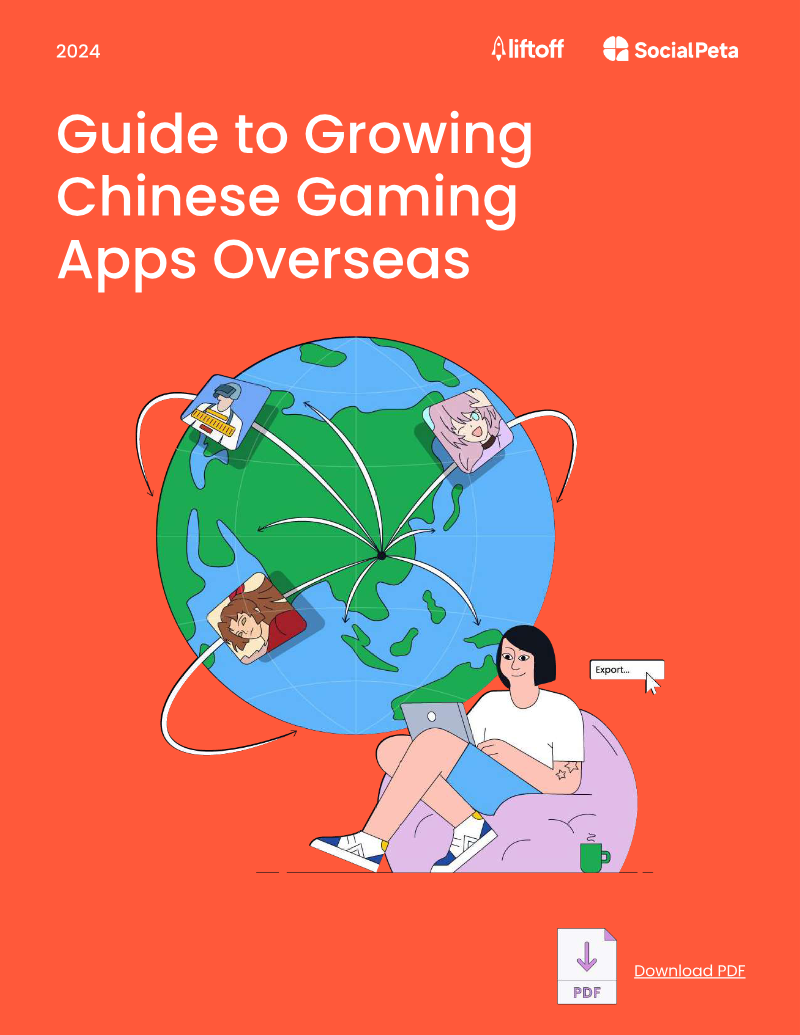
Chinese gaming applications continue to exert a dominant influence on the global stage, particularly within the strategy and role-playing game segments in mature markets such as the United States, Japan, and South Korea. While these regions offer substantial revenue potential, they are characterized by intense competition and elevated costs per install. To navigate these challenges, successful publishers are shifting toward hyper-localized strategies that tailor art styles to regional aesthetic preferences—favoring manga-inspired visuals in Japan and realistic or cartoon aesthetics in Western markets—while utilizing local influencers to establish brand credibility.
Technological innovation serves as a primary driver for operational efficiency and user acquisition. The integration of generative AI has become essential for the rapid localization of ad creative, voice-overs, and marketing copy, ensuring both speed and brand compliance. High-performing titles currently leverage high-volume, innovative campaigns that incorporate minigames and AI-enhanced visuals to capture player attention. Beyond acquisition, long-term retention is increasingly supported by the implementation of social hangout spaces, home-building systems, and character trial models that balance accessibility with monetization.
Monetization strategies have evolved to prioritize engagement through sophisticated, time-limited mechanics. Publishers are frequently employing box gachas, pull-milestone rewards, and gamified event structures such as diceboards and bingo to incentivize spending. Furthermore, the consistent deployment of diverse live events remains a critical requirement for maintaining player interest and competitive viability. By combining these aggressive monetization tactics with a commitment to continuous content updates, Chinese developers are effectively sustaining growth and deepening their footprint across the global gaming landscape throughout 2024.
The global mobile gaming market experienced a period of stabilization in 2023, with total in-app purchase (IAP) revenue reaching $76.7 billion. While this figure represents a 2% year-on-year decline, it remains 22% higher than pre-pandemic levels recorded in 2019. The industry outlook is positive, with revenue projected to rebound to $78 billion in 2024 and surpass $100 billion by 2028, reflecting an anticipated average annual growth rate of approximately 6.8%.
Market performance in 2023 was characterized by a shift in consumer preference away from mid-core and hardcore genres toward casual and hybrid-casual titles. Casual gaming revenue grew by 8% to $28.6 billion, now accounting for 38% of the global market. Within this segment, puzzle and board games performed exceptionally well, with both genres reaching $10 billion in revenue. Notable titles such as Royal Match and MONOPOLY GO! were primary drivers of this growth, with the latter emerging as a significant revenue contributor in the board game category. Conversely, traditional powerhouses like RPG and strategy games saw revenue declines of 10% as the pandemic-driven stay-at-home demand subsided.
Geographically, the United States remains the largest mobile gaming market, generating $22.2 billion in 2023. While the U.S. market remained stable, other key regions experienced varied results; the Chinese iOS market held steady, whereas Japan and South Korea saw revenue contractions of 13% and 7%, respectively. Despite broader genre declines, high-quality new releases—particularly in the RPG sector—continued to secure top positions in growth rankings. The analysis relies on estimated IAP data from the Apple App Store and Google Play, excluding advertising revenue and third-party Android marketplace income.
The report presents a comprehensive analysis of mobile ad creative performance across four key app verticals—gaming, e‑commerce, finance, and entertainment—for the period January 1 2023 to January 1 2024. Using 602 billion impressions, 49.4 billion clicks, and 144 million installs, the study benchmarks cost‑per‑install (CPI), install‑to‑action (ITA) rates, and day‑7 return on ad spend (ROAS) by ad format (banner, native, interstitial, playable, video). Gaming ads that include video or playable elements achieve over 20‑fold higher install likelihood than banner ads, while native remains the most cost‑effective format at $1.80 CPI on average. In e‑commerce, native and banner ads drive the highest ITA rates (>30 %) and lowest CPAs ($2.57–$3.23), whereas video ads incur higher costs, especially on iOS. Finance apps see the lowest overall CPI ($1.84–$5.93) but exhibit a pronounced platform split, with iOS costs exceeding $5 for most formats; native and video ads outperform others in ITI conversion (up to 16×). Entertainment apps benefit from banner and native formats, with CPI ranging $2.79–$6.00, while video and interstitial ads are markedly more expensive on iOS.
Methodologically, the report aggregates data from Liftoff’s Creative Studio and GameRefinery teams, supplemented by a survey of over 500 app marketers. It highlights emerging creative trends: generative AI for rapid asset creation, optimized user‑generated content (UGC) with interactive elements, minigames and leaderboards for gaming acquisition, and longer immersive ad formats (45‑second videos and triple‑page ads) that drive higher engagement. The findings underscore the importance of platform‑specific optimization, format selection based on vertical and performance goals, and leveraging AI tools to scale creative production while maintaining authenticity.
The benchmark study presents a comprehensive snapshot of mobile gaming performance during Q1 2024, focusing on key engagement metrics—retention, session length, and session count—across North America, Europe, the Middle East, and Asia. Data derive from over 10 000 games tracked by GameAnalytics, with each title typically released in at least three regions, yielding a combined monthly active user base of approximately 1.67 billion.
Retention figures reveal that the global median day‑1 retention stands at 22.91 %, day‑7 at 4.20 %, and day‑28 at 0.85 %. Classic games (board, card, casino, trivia, word) dominate retention performance, especially in the Middle East where they lead all regions. Casual and mid‑core titles lag behind, with puzzle games maintaining stable but lower retention across all markets.
Session length analysis shows a global median of 4.45 minutes, with casino and card games achieving the longest sessions in North America (≈20 min) and Europe (card games exceeding 25 min). In the Middle East, casino titles surpass 15 minutes, while Asia’s top casino games reach nearly 23 minutes. Session count averages range from 3–5 daily sessions per game, with puzzle and word games in the Middle East achieving the highest counts (≈10 sessions/day).
Methodologically, metrics are reported in quantiles—top 25 %, median, and bottom 25 %—to illustrate performance across the spectrum of developers. The report underscores that high retention, longer session lengths, and frequent session counts correlate with stronger player engagement, offering actionable insights for studios aiming to benchmark against industry leaders.
Global mobile gaming experienced a minor 2% year-on-year decline in in-app purchase revenue in 2023, totaling $76.7 billion. Despite this slight contraction, the market remains 22% larger than pre-pandemic levels in 2019. Projections indicate a recovery to $78 billion in 2024, with a long-term growth trajectory expected to surpass $100 billion by 2028 at an average annual growth rate of 6.8%. These findings are based on Sensor Tower App Performance Insights, covering the App Store and Google Play across major global markets including the United States, China, Japan, and South Korea.
The industry is currently defined by a shift in consumer spending from mid-core and hardcore titles toward casual and hybrid-casual models. Casual game revenue grew 8% to $28.6 billion in 2023, now accounting for 38% of the global market. Hybrid-casual games showed the most aggressive growth, increasing 30% to exceed $2.1 billion. In contrast, traditional high-revenue genres like RPGs and Strategy games both saw 10% revenue declines as the pandemic-era stay-at-home boost faded. Despite these drops, RPGs and Strategy remain the largest individual segments, generating $20 billion and $14.8 billion respectively.
Geographically, the United States remains the largest market at $22.2 billion, followed by the Chinese iOS market at $15.1 billion. While the Japanese and South Korean markets saw declines of 13% and 7% respectively, specific titles defied broader trends. MONOPOLY GO! and Royal Match emerged as major drivers in the casual sector, with the former generating $1.2 billion and the latter surpassing Candy Crush Saga in monthly revenue. In the mid-core space, new entrants like Honkai: Star Rail and Whiteout Survival achieved significant growth, particularly in APAC markets, by utilizing innovative themes and integrated gameplay mechanics.
The 2024 mobile gaming landscape is defined by a strategic transition from volume-based user acquisition toward high-value retention and diversified monetization. While only 1.83% of users convert to in-app purchases, nearly 29% of those individuals become repeat buyers, with the vast majority of transactions occurring within the first 30 days of installation. To capitalize on this window, developers are increasingly mapping specific products to game stages, utilizing starter bundles for early engagement and limited-time events to sustain mid-to-late-game revenue. This shift reflects a broader industry move away from traditional cost-per-install models in favor of return-on-ad-spend and event-based optimizations.
Monetization strategies are becoming more sophisticated through the integration of rewarded video and offerwalls. Rewarded video engagement is particularly high in Word, RPG, and Casual genres, especially when placements are context-sensitive, such as offering additional moves or resources during critical gameplay moments. However, offerwalls represent a superior revenue driver for non-paying users, generating a monthly ad revenue of $4.04 per converter compared to just $0.15 for rewarded video. Users acquired through offerwalls, specifically via Multi-Reward CPE campaigns with multiple engagement steps, demonstrate significantly higher long-term value and retention.
Advertisers are further diversifying acquisition through Daily Reward CPE to engage casual users with low-friction tasks, which see near-total conversion rates for early milestones like tutorials. On the publishing side, maximizing performance requires prominent UI placements and the strategic use of monthly currency sales, which can increase conversions by up to 46%. These findings, derived from Unity Cloud, Unity Ads, Tapjoy, and ironSource data, cover global markets categorized by purchasing power and English proficiency, providing a comprehensive view of the current mobile ecosystem across Tier 1, Tier 2, and emerging regions.
The mobile gaming landscape is currently defined by a strategic shift toward casual and hybrid-casual experiences, which serve as the primary engine for industry growth and user acquisition. While the market faces significant headwinds in the form of rising acquisition costs—particularly on iOS, where the $4.83 cost-per-install is nearly eight times higher than on Android—high-performing regions like North America continue to deliver a sustainable Day 7 return on ad spend of 5.9%. This economic environment has triggered a transition away from hyper-casual titles toward puzzle games, which now command 37% of installs, and hybrid-casual models that integrate complex meta-layers and sophisticated LiveOps into accessible core mechanics.
Monetization strategies are becoming increasingly diversified as developers move beyond traditional advertising. The rise of "progressive offers" and "engagement offers" has transformed in-app purchases by tying discounts and rewards directly to active gameplay milestones. Furthermore, the industry is seeing a surge in collaborative "partner events" and social mechanics, such as win streaks and digging minigames, to stabilize and boost baseline revenues. These engagement-driven tactics are often paired with the emergence of external web stores, allowing developers to bypass platform fees and foster direct-to-consumer relationships through exclusive loyalty rewards and daily gifts.
The casualization of the market extends even to mid-core titles, which now rely on casual mechanics for 74% of their installs. Emerging subgenres like 3D match and Mahjong Solitaire are gaining significant traction, reflecting a broader trend of deepening gameplay depth within the casual category. By combining simple core loops with complex monetization structures and social event formats, developers are successfully navigating the high-cost acquisition environment to maintain long-term player retention and revenue growth across global markets.