Modern Times Group
Game Co.51 documents
Documents
Report62 pages
Corporate Responsibility Report 2015
MTG’s 2015 corporate responsibility strategy centers on navigating a strategic transition into a global digital entertainment powerhouse while upholding rigorous ethical standards and sustainability commitments. The company prioritizes transparency, governance, and social impact, aligning its reporting with GRI G4 standards to ensure accountability across its diverse operations. By integrating a zero-tolerance policy toward corruption and enforcing a mandatory supplier code of conduct, the organization seeks to mitigate risks associated with its evolving digital and live-event portfolio, including cyber-resilience and intellectual property protection.
Environmental and social performance metrics reveal a complex landscape of progress and ongoing challenges. While total energy consumption and carbon emissions saw a slight uptick, the company successfully reduced emissions per employee by over 2% and improved long-term energy efficiency by 13% since 2010. Air travel remains the primary driver of the company’s carbon footprint, prompting a shift toward virtual collaboration and renewable energy reliance. Socially, the company leverages its media influence to support global causes, donating over €9 million in airtime and fostering social entrepreneurship through initiatives like Reach for Change.
Workforce development remains a critical focus, characterized by a diverse staff of nearly 4,000 employees representing 38 nationalities. Despite a 24% turnover rate and a persistent gender gap in leadership, the company has formalized a commitment to achieve gender parity in management by 2020 through targeted mentorship and internal policy adjustments. As the company expands its digital footprint, it continues to refine its risk management and compliance frameworks, ensuring that its growth is balanced by a commitment to ethical content production, child protection, and robust data privacy standards across its European and global markets.
- MTG has committed to achieving gender parity in management by 2020 through formalized mentorship programs and policy adjustments to address a persistent leadership gender gap.
- The company maintains a workforce of nearly 4,000 employees across 38 nationalities, though it currently faces a 24% annual staff turnover rate.
- MTG donated over €9 million in airtime to support global causes and social entrepreneurship initiatives such as Reach for Change.
- While total carbon emissions increased, the company achieved a 13% improvement in energy efficiency since 2010 and a 2% reduction in emissions per employee.
- Air travel is the primary contributor to MTG’s carbon footprint, leading the organization to prioritize virtual collaboration and increased reliance on renewable energy.
Modern Times Group
Report48 pages
2016 Corporate Responsibility Report
Modern Times Group (MTG) navigated a pivotal digital transformation in 2016 by embedding corporate responsibility into its core business strategy. The organization focused on four primary pillars: media responsibility, social impact, business ethics, and environmental stewardship. By aligning its operational evolution with these values, the company secured recognition in the Dow Jones Sustainability Indices and established a framework for long-term growth. This strategic shift prioritized the integration of ethical standards into digital entertainment services, ensuring that the company’s transition remained consistent with its commitment to regulatory compliance and stakeholder accountability.
Operational performance throughout 2016 reflected a dual focus on internal culture and external resilience. The company successfully reduced its total carbon emissions by 7% and increased its reliance on renewable energy to 16.6%. Simultaneously, MTG bolstered its cybersecurity and anti-corruption frameworks, achieving an 81% completion rate for mandatory information security training and maintaining a record of zero confirmed corruption incidents. Governance was further strengthened through the Corporate Responsibility Advisory Group, which oversaw the implementation of rigorous data protection measures and preparations for upcoming regulatory shifts like GDPR.
Human capital management and social engagement remained central to the company’s mission, despite a workforce reduction to 3,805 employees. MTG actively pursued gender parity in leadership through the "Women Up" initiative, aiming for a 50/50 management split by 2020. Furthermore, the company leveraged extensive consumer research and partnerships, such as "Reach for Change," to ensure content alignment with viewer preferences and broader social impact. While the company acknowledged limitations in HR data granularity, its disclosures adhered to the GRI G4 Core level guidelines, confirming a transparent and disciplined approach to corporate governance across its international operations.
- MTG integrated corporate responsibility into its core business strategy in 2016, earning recognition in the Dow Jones Sustainability Indices while preparing for GDPR compliance.
- The company reduced total carbon emissions by 7% and increased its reliance on renewable energy to 16.6% during the 2016 fiscal year.
- MTG maintained a record of zero confirmed corruption incidents and achieved an 81% completion rate for mandatory information security training.
- The 'Women Up' initiative was launched to achieve gender parity in leadership positions by 2020, despite a total workforce reduction to 3,805 employees.
- Governance was strengthened through the establishment of the Corporate Responsibility Advisory Group, which oversaw the implementation of rigorous data protection measures.
+1
Modern Times Group
Report66 pages
2019 Corporate Responsibility Report
Following its 2019 corporate spinoff, MTG established a comprehensive environmental, social, and governance framework to align its operations with the unique risks and opportunities inherent in the global gaming and esports sectors. The primary objective of this strategy is to foster long-term profitability and sustainable entertainment by prioritizing ethical conduct, the protection of minors, and the mitigation of industry-specific hazards. By implementing a revised Code of Conduct, which achieved a 94% adoption rate among employees and contractors, the company has successfully reinforced its commitment to anti-corruption, privacy compliance, and standardized governance across its international operations.
Social responsibility efforts center on improving diversity and inclusion within a historically male-dominated industry, where women currently comprise 22% of the workforce. To address these disparities and combat toxicity, MTG utilizes targeted recruitment, mentorship programs, and strategic partnerships with organizations like AnyKey and UNICEF. Furthermore, the company maintains a rigorous focus on event safety, employing standardized security protocols and risk assessments at its global tournaments and festivals. These initiatives are complemented by community-focused programs, including support for computer science education and hospital-based gaming initiatives for children.
Environmental stewardship remains a critical operational challenge, as 95% of the company’s 27,390-tonne carbon footprint is attributed to travel associated with global esports events. In response, MTG has established a new carbon emissions baseline and implemented digital tracking tools to monitor environmental impact more effectively. While the spinoff of the Nordic Entertainment Group complicates year-over-year comparisons, the company is actively transitioning toward sustainable event practices, including the use of eco-certified venues. Moving forward, MTG intends to refine its supply chain oversight and continue its commitment to transparent, GRI-compliant reporting to ensure the ongoing integrity of its corporate responsibility initiatives.
- MTG’s 2019 carbon footprint totaled 27,390 tonnes, with 95% of emissions directly attributed to travel associated with global esports events.
- The company achieved a 94% adoption rate for its revised Code of Conduct among employees and contractors to standardize anti-corruption and privacy compliance.
- Women currently represent 22% of MTG’s workforce, prompting the company to implement targeted recruitment and partnerships with organizations like AnyKey and UNICEF to address gender disparity.
- MTG has established a new carbon emissions baseline and is transitioning to eco-certified venues to mitigate the environmental impact of its international tournament operations.
- The company maintains rigorous safety protocols and risk assessments for all global tournaments and festivals as part of its core social responsibility framework.
Modern Times Group
Report185 pages
Annual and Sustainability Report 2024
Modern Times Group (MTG) concluded the 2024 fiscal year as a focused European mobile gaming entity, reporting net sales of SEK 6,015 million, representing a 3% currency-adjusted growth. Despite achieving an adjusted EBITDA of SEK 1,666 million, the group recorded a net loss of SEK 210 million. The company maintains a strong liquidity position with SEK 3,543 million in cash and equivalents and no utilized external debt, supported by a disciplined capital allocation strategy that includes active share buybacks and a commitment to long-term, evergreen game franchises.
The company’s strategic trajectory is defined by its "Gaming Village" model, which emphasizes organic growth and accretive M&A to bolster its portfolio of studios, including InnoGames, Hutch, and Ninja Kiwi. A transformative development in this period was the acquisition of Plarium Global Ltd, finalized in early 2025, which significantly scales the group’s mid-core gaming capabilities and adds the flagship title RAID: Shadow Legends to its offerings. This expansion is supported by the "Flow Platform," a centralized infrastructure designed to share business intelligence and user acquisition tools across the group’s subsidiaries.
Sustainability and governance remain central to the company’s operational framework. In 2024, MTG transitioned its reporting to align with the Corporate Sustainability Reporting Directive (CSRD) and European Sustainability Reporting Standards (ESRS). While this methodological shift resulted in a reported 118.2% increase in location-based greenhouse gas emissions due to expanded accounting scopes, the company has committed to a 50% reduction in value chain emissions by 2032. Furthermore, the group maintains a robust governance structure, reporting no incidents of corruption or bribery, and continues to prioritize consumer safety through transparent odds disclosure and data protection measures. The board remains focused on long-term shareholder value, integrating ESG metrics into executive incentive schemes while maintaining a stable, low-leverage financial foundation.
- MTG finalized the acquisition of Plarium Global Ltd in early 2025, significantly scaling its mid-core gaming capabilities and adding the flagship title RAID: Shadow Legends to its portfolio.
- The company reported 2024 net sales of SEK 6,015 million, reflecting 3% currency-adjusted growth, alongside an adjusted EBITDA of SEK 1,666 million and a net loss of SEK 210 million.
- MTG maintains a strong financial position with SEK 3,543 million in cash and equivalents and zero utilized external debt, supporting a strategy of active share buybacks and evergreen franchise investment.
- The group utilizes a 'Gaming Village' model supported by the 'Flow Platform,' a centralized infrastructure designed to share business intelligence and user acquisition tools across studios like InnoGames, Hutch, and Ninja Kiwi.
- Following a transition to CSRD and ESRS reporting standards, MTG reported a 118.2% increase in location-based greenhouse gas emissions and has committed to a 50% reduction in value chain emissions by 2032.
+1
Modern Times Group
Report136 pages
Annual Report and Accounts 2012
14.59 Moscow Stockholm CEO’s Review 1 CFO’s Review 4 Five Year Summary 6 Modern Responsibility 10 Directors’ Report 16 The MTG Share 46 Corporate Governance Report 50 Board of Directors 60 Executive Management 63 Consolidated Financial Statements 67 Parent Company Financial Statements ...
- In 2012, the Group acquired 80% of Zitius Service Delivery AB (Sweden's leading independent Open Access Communications Operator with ~150,000 connected fibre households), a 53% stake in Paprika Latino (a Central and Eastern European TV production group), and 100% of AS Latvijas Neatkarīgā Televīzija (Latvia's second largest free-TV channel operator).
- The Group sold its Bet24 operations to Unibet Group plc for approximately EUR 13.5 million on May 3, 2012.
- MTG received USD 7.8 million in dividends from CTC Media in December 2012, bringing total dividend payments from CTC Media in 2012 to USD 31.2 million.
- The Group's total operations generated revenues of 2,124 SEK million in 2012, compared to 2,492 SEK million in 2011 and 1,855 SEK million in 2010.
- Asset impairment charges and non-recurring costs were 3,352 SEK million in 2011, primarily due to charges in Bulgaria and Slovenia.
+1
Modern Times Group
Report127 pages
Annual Report & Accounts 2014: Sweden
CEO’s Review 1 Directors’ Report 11 The MTG Share 32 Corporate Governance Report 36 Board of Directors 46 Executive Management 49 Consolidated Financial Statements 54 Parent Company Financial Statements 59 Notes to the Accounts 64 Audit Report 119 Definitions 121 Glossary 12...
- MTG's net sales increased to SEK 15,746 million in 2014 from SEK 14,073 million in 2013, while total net income remained relatively stable at SEK 1,172 million in 2014 compared to SEK 1,168 million in 2013.
- The company's average number of employees grew significantly from 3,361 in 2013 to 4,059 in 2014, with a notable increase in Sweden (from 1,022 to 1,273 employees) and the UK (from 373 to 402 employees).
- MTG faces potential adverse impacts on its business from ongoing legal uncertainties regarding additional rights clearance for satellite TV transmissions and investigations into exclusive broadcasting rights for pay-TV services.
- The share capital of MTG consists of Class A, Class B, and Class C shares, with Class A shares carrying ten voting rights, and Class B and C shares carrying one voting right each; Class C shares do not entitle holders to dividends.
- The gender distribution among senior executives in 2014 showed 71% men and 29% women for the Group, and for the Parent Company, the Board of Directors was 71% men and 29% women, while other senior executives were 67% men and 33% women.
+2
Modern Times Group
Report103 pages
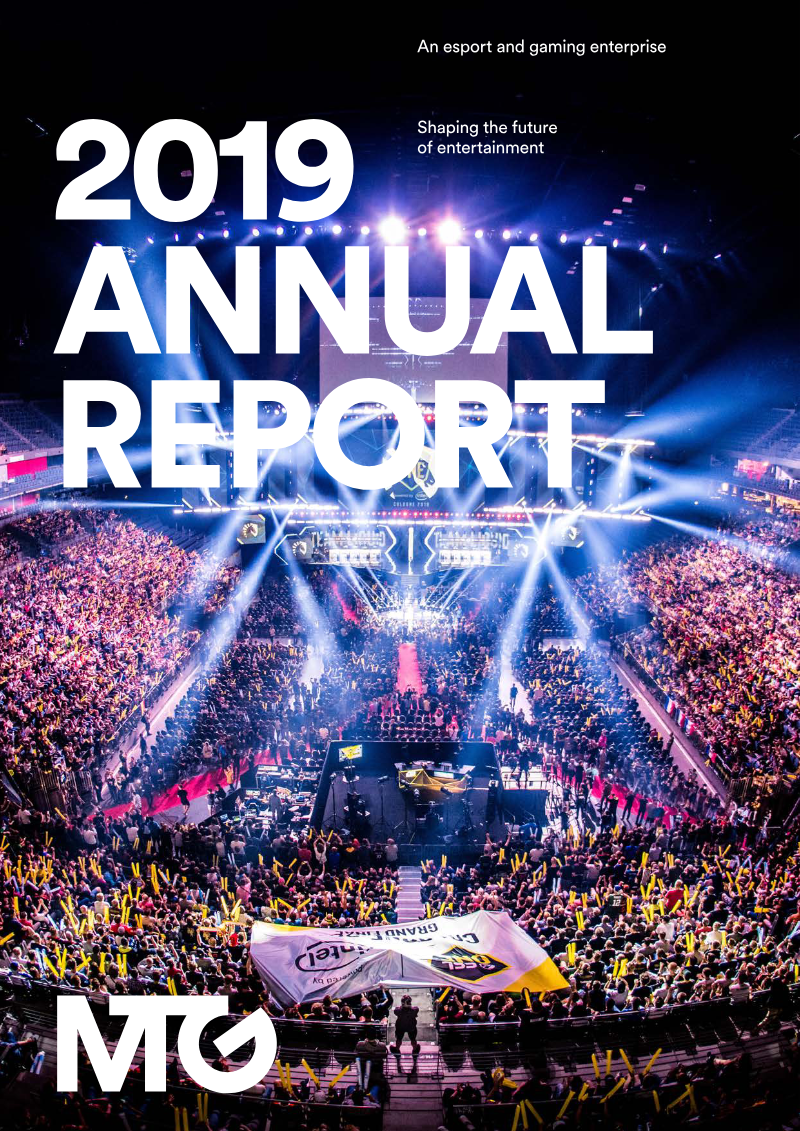
Annual Report 2019: Shaping the Future of Entertainment
Corporate responsibility and sustainability priorities are covered in MTG’s Annual Corporate Responsibility Report, published 19 S EGMENTAL PERFORMANCE 31 Other Group Information 34 Financial Policies and Risk Management 36 Governance and Responsibilities 41 Internal Control Report 101 ALTERNATIVE PERFORMANCE It’s impossible to reflect on 2019 without first commenting on the split of MTG into two companies in March – Nordic Enter- tainment and new MTG.
- MTG's 2019 strategy focused on profitable growth in esports and gaming, driven by the ESL Pro Tour launch, Kongregate's revised strategy, and Innogames' mobile revenue optimization.
- MTG divested Nova Broadcasting Group in Bulgaria for EUR 185 million (SEK 1,917 million) in January 2019 and Zoomin in October 2019, to focus on its core esports and gaming verticals.
- MTG announced annual savings, redundancy costs, and impairment charges in 2019 as part of a strategic review and evaluation of its gaming portfolio.
- MTG's esports vertical, comprising ESL and DreamHack, saw external sales of SEK 1,712 million in 2019, up from SEK 1,515 million in 2018, but reported an EBIT loss of SEK -430 million.
- The gaming vertical generated SEK 2,531 million in external sales in 2019, an increase from SEK 2,296 million in 2018, with an EBIT of SEK 269 million.
+1
Modern Times Group
Report10 pages
Q4 2025 Investor Presentation
The Q4 2025 investor presentation details a period of record financial performance for the company, characterized by significant revenue growth and successful strategic integration. The primary thesis centers on the company’s transformative year, highlighted by the successful consolidation of Plarium and a shift toward a midcore gaming focus. For the fourth quarter of 2025, the company achieved net sales of SEK 3,123 million, representing an 8% organic growth rate and a 108% increase in constant currency year-over-year. Adjusted EBITDA reached SEK 717 million, maintaining a 23% margin, while unlevered free cash flow totaled SEK 878 million with a 66% conversion rate.
The scope of the report covers the global gaming operations of the company throughout the 2025 fiscal year, with specific emphasis on the fourth quarter. Key operational findings indicate that user acquisition (UA) spending rose to 38% of revenue in Q4, a 98% year-over-year increase in constant currency, largely driven by the integration of Plarium and the scaling of casual and racing franchises. Revenue streams showed a notable shift, with direct-to-consumer contributions rising 600 basis points to 32% of the total. Franchise performance was bolstered by strong results in the racing and word game segments, which saw year-over-year growth of 43% and 28%, respectively.
Methodologically, the financial data is presented on a reported basis, with constant currency adjustments applied to isolate organic growth trends. The report incorporates full-year 2025 figures and highlights the impact of the Plarium acquisition, which was integrated into the group starting in February 2025. Looking ahead, the company concludes the period with a stable leverage ratio and a new organizational structure, positioning itself for continued midcore expansion and the potential public offering of its PlaySimple division.
- The company achieved Q4 2025 net sales of SEK 3,123 million, marking 8% organic growth and a 108% year-over-year increase in constant currency.
- Adjusted EBITDA for Q4 2025 reached SEK 717 million with a 23% margin, supported by an unlevered free cash flow of SEK 878 million.
- User acquisition spending surged to 38% of revenue in Q4, representing a 98% year-over-year increase driven by the integration of Plarium and scaling of casual and racing franchises.
- Direct-to-consumer revenue contributions grew by 600 basis points to reach 32% of total Q4 revenue.
- Key franchise segments showed strong momentum, with racing games growing 43% and word games growing 28% year-over-year.
+5
Modern Times Group
Report12 pages
Q1 2025 Investor Presentation
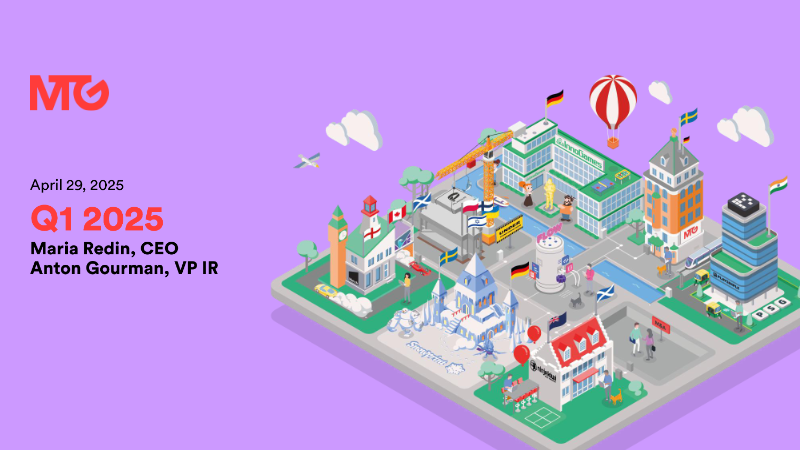
The Modern Times Group Q1 2025 investor presentation outlines a period of significant financial expansion, primarily driven by the strategic acquisition of Plarium. The company reported a 79% year-over-year increase in net sales in constant currencies, reaching SEK 2,557 million for the quarter. This growth is supported by a 6% organic sales increase, reflecting sustained performance across the company’s existing gaming portfolio.
Key operational metrics highlight the impact of the Plarium integration, which contributed to a shift in revenue streams and user development. The company maintained a healthy adjusted EBITDA margin of 24% for the quarter, despite increased investment in marketing to scale new and established titles. Cash flow remains a central pillar of the company’s financial health, with SEK 538 million generated from operations in Q1 2025 and a free cash flow of SEK 143 million after accounting for earnout payments. The company’s leverage ratio stands at 0.82x, supported by an LTM EBITDA of SEK 3,058 million.
The scope of the presentation covers the global gaming operations of the company, with a specific focus on the transition period following the February 1, 2025, consolidation of Plarium. The portfolio includes a diverse range of franchises, such as strategy, simulation, racing, and word games. Looking ahead, the company maintains a positive outlook for the full year 2025, projecting organic sales growth between 3% and 7% and an adjusted EBITDA margin in the range of 21% to 24%. Future performance is expected to depend on disciplined marketing investments, the successful scaling of new game titles, and continued geographical expansion efforts.
- Modern Times Group achieved a 79% year-over-year increase in net sales to SEK 2,557 million in Q1 2025, largely driven by the acquisition of Plarium.
- The company maintained a 24% adjusted EBITDA margin for the quarter while balancing increased marketing investments to scale its gaming portfolio.
- Organic sales grew by 6% in Q1 2025, reflecting stable performance across existing titles alongside the integration of Plarium, which was consolidated on February 1, 2025.
- Operational cash flow reached SEK 538 million, with a free cash flow of SEK 143 million recorded after accounting for earnout payments.
- The company reports a leverage ratio of 0.82x, supported by an LTM EBITDA of SEK 3,058 million.
Modern Times Group
Report26 pages
Q4 2025 Financial Report
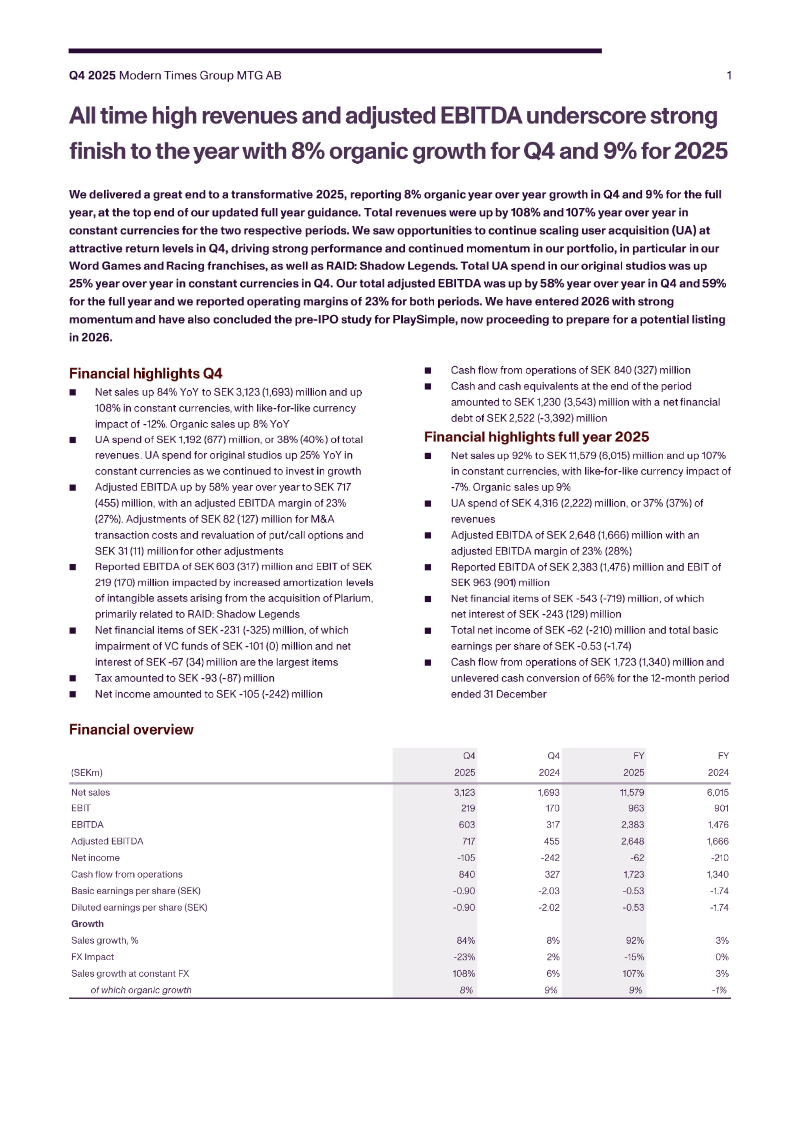
Q4 2025 Modern Times Group MTG AB 1 All time high revenues and adjusted EBITDA underscore strong finish to the year with 8% organic growth for Q4 and 9% for 2025 We delivered a great end to a transformative 2025, reporting 8% organic year over year growth in Q4 and 9 % for the full year ,at the top end of our updated full year guidance .
- MTG AB achieved all-time high revenues and adjusted EBITDA in Q4 2025, with 8% organic growth for the quarter and 9% for the full year 2025. Total revenues were up 108% in Q4 and 107% for the full year in constant currencies, while adjusted EBITDA increased by 58% in Q4 and 59% for the full year.
- Net sales for Q4 2025 reached SEK 3,123 million, an 84% increase year-over-year. Full-year net sales for 2025 were SEK 11,579 million, up 92% from 2024.
- The strong performance was driven by scaling user acquisition (UA) at attractive return levels, particularly in Word Games and Racing franchises, and RAID: Shadow Legends. Total UA spend in original studios increased by 25% year-over-year in Q4 in constant currencies.
- MTG has concluded a pre-IPO study for PlaySimple and is now preparing for a potential listing in 2026, which is seen as an opportunity to accelerate M&A ambitions in the casual gaming market.
- Plarium's consolidation from February 1, 2025, significantly impacted sales growth, contributing SEK 1,464 million to Q4 sales. The acquisition's effect on sales for the full year 2025 was SEK 5,384 million.
+1
Modern Times Group

Financial10 pages
Q4 2025 Interim Report
The interim filing presents the fourth‑quarter 2025 financial results for a midcore‑casual gaming group, emphasizing a record‑setting revenue run and the successful execution of a transformation agenda that includes the integration of the Plarium acquisition and the rollout of a new district structure in early 2026. Revenue reached SEK 3,123 million, reflecting 108 % organic growth year‑on‑year and a 25 % increase on a constant‑currency basis, while adjusted EBITDA rose to SEK 717 million, delivering a 23 % margin that matches the full‑year figure. Unlevered free cash flow amounted to SEK 878 million, with a cash‑conversion rate of 66 % and a leverage ratio of five times EBITDA, underscoring robust liquidity and disciplined capital management.
User‑acquisition spending accelerated, representing 38 % of quarterly revenue—up from 37 % in the prior quarter—and grew 76 % on a reported basis, driven by heightened investment in original studios, new casual titles, and the racing franchise. The direct‑to‑consumer channel expanded by 600 basis points to 32 % of total revenue, reflecting a strategic shift toward higher‑margin in‑app purchases. Across the fiscal year, the company posted a 9 % organic revenue increase, with word‑games, racing, and RAID franchises delivering the strongest quarter‑end performance.
Operating cash flow for the quarter stood at SEK 840 million, while adjusted net income was SEK 1,390 million, translating to an adjusted EPS of SEK 11.33. The financial outcomes exceed guidance and position the firm to meet its medium‑term outlook, with a pre‑IPO study for PlaySimple concluded and the midcore transformation progressing as planned.
- Q4 2025 revenue reached SEK 3,123 million, representing 108% organic year-on-year growth and a 25% increase on a constant-currency basis.
- Adjusted EBITDA for the quarter was SEK 717 million, maintaining a 23% margin consistent with the full-year performance.
- User-acquisition spending grew 76% year-on-year, accounting for 38% of total quarterly revenue to support original studios and key franchises like RAID and racing titles.
- The direct-to-consumer channel grew by 600 basis points to represent 32% of total revenue, signaling a successful strategic pivot toward higher-margin in-app purchases.
- The company reported an adjusted net income of SEK 1,390 million and an adjusted EPS of SEK 11.33, exceeding financial guidance.
+5
Modern Times GroupFeb 2026
Financial26 pages
Q4 2025 Financial Report: Modern Times Group
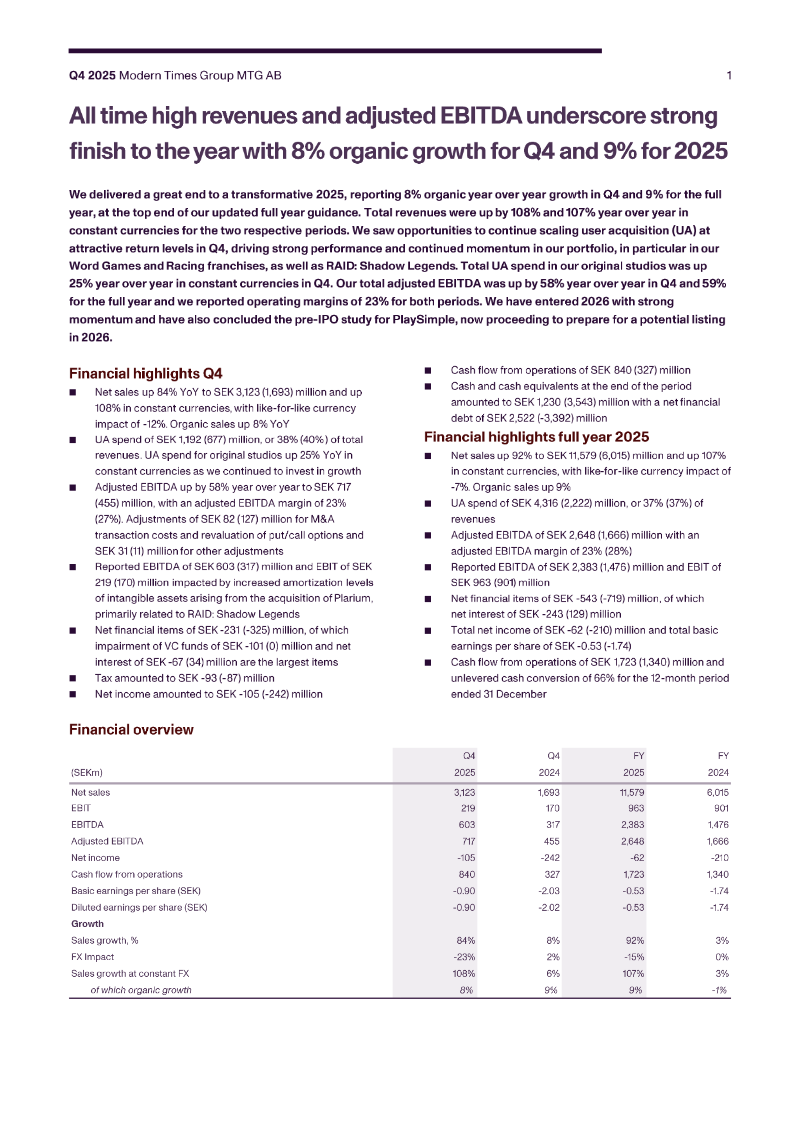
Modern Times Group delivered a record‑setting performance for the fourth quarter of 2025, underscoring the company’s momentum in the digital entertainment sector. Organic revenue expanded by 8 percent, which translates to a 108 percent increase when measured in constant‑currency terms, and net sales reached SEK 3.1 billion. These figures reflect the strength of the group’s core portfolio and its ability to generate growth despite a volatile macro‑economic environment.
A pivotal element of the results was the integration of Plarium, which was completed on 12 February 2025 and consolidated from 31 January. The acquisition contributed SEK 5,384 million in sales for the quarter and produced SEK 495 million of income before tax, after accounting for SEK 786 million of purchase‑price amortisation. When the acquisition is modelled as if it had been in place from the start of the year, total sales for 2025 would have risen to SEK 12,137 million, with pre‑tax income of SEK 398 million, albeit offset by SEK 1,269 million of amortisation.
The combined impact of robust organic growth and the strategic addition of Plarium positions Modern Times Group as a leading player in the global gaming market. The financial outcomes demonstrate that the company’s acquisition strategy is delivering immediate scale and profitability, while its underlying business continues to expand at a pace that exceeds prior expectations. This performance suggests a durable growth trajectory for the remainder of the fiscal year and beyond.
- Modern Times Group achieved record Q4 2025 performance with net sales reaching SEK 3.1 billion and organic revenue growth of 8 percent.
- The acquisition of Plarium, consolidated from 31 January 2025, contributed SEK 5,384 million in sales and SEK 495 million in pre-tax income for the quarter.
- Plarium's integration involved SEK 786 million in purchase-price amortisation during Q4, impacting the reported pre-tax income.
- If the Plarium acquisition had been effective for the full year of 2025, total pro-forma sales would have reached SEK 12,137 million with pre-tax income of SEK 398 million.
- The company's constant-currency revenue growth for Q4 2025 was 108 percent, driven by the combined impact of organic expansion and strategic acquisitions.
+3
Modern Times GroupFeb 2026