
Journal of Games Criticism
Open-access peer-reviewed journal (since 2014) that bridges academic game studies and popular games criticism.
Documents
Across Worlds and Bodies: Criticism in the Age of Video Games
Academic game studies currently suffers from a restrictive purity complex that prioritizes formal, rule-based systems at the expense of the medium’s inherent complexity.
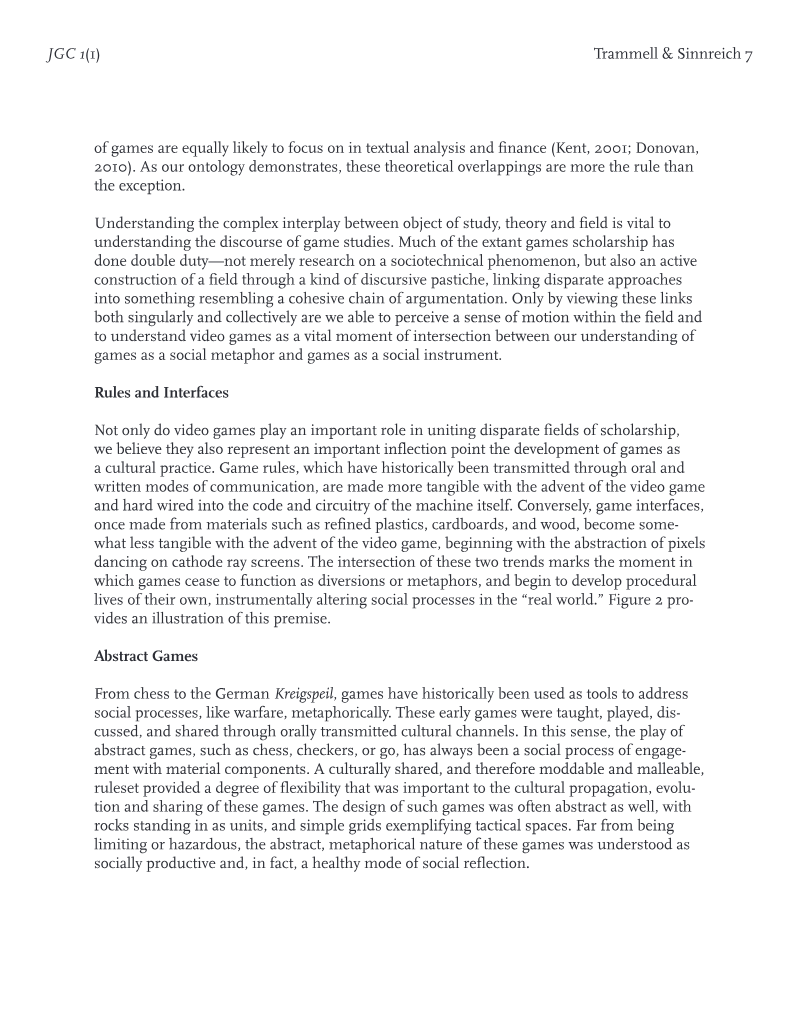
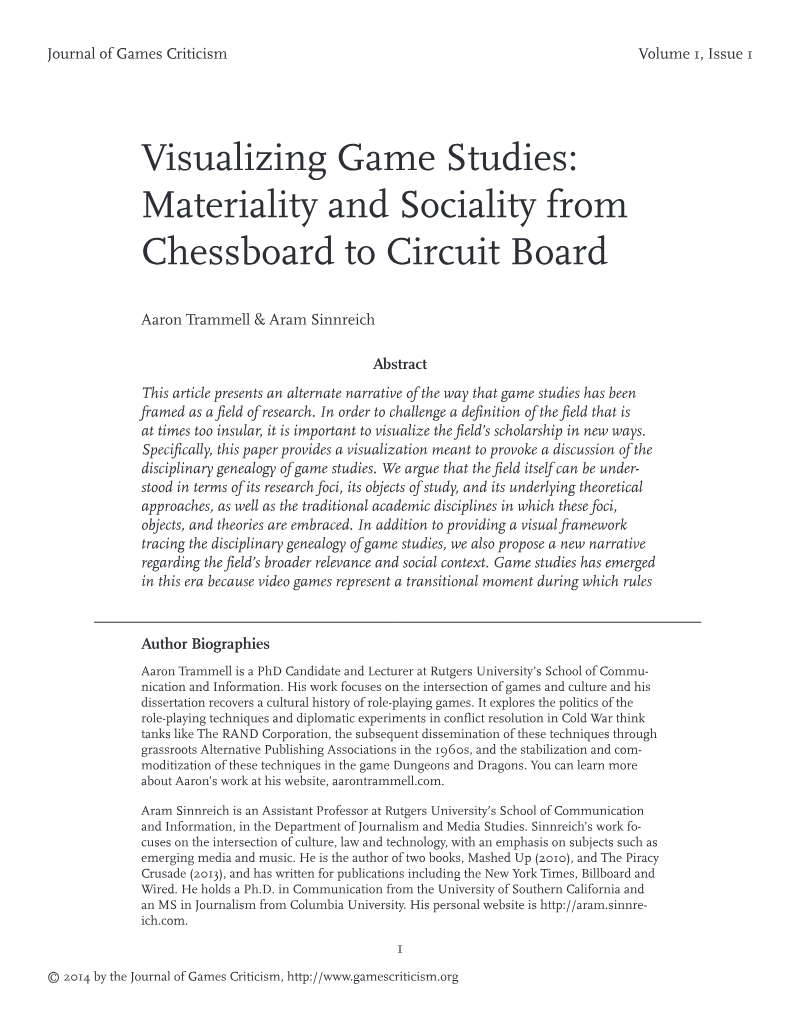
Visualizing Game Studies: Materiality and Sociality from Chessboard to Circuit Board
This analysis examines the disciplinary genealogy of game studies, arguing that the field has historically struggled with an insular, fragmented identity.
The Brechtian, Absurdist, and Poor Video Game: Alternative Theatrical Models of Software-Based Experience
Video games currently operate under a dominant, market-driven paradigm that prioritizes Aristotelian verisimilitude, where the primary goal is to maintain a seamless, immersive illusion.
Beyond Identification: Defining the Relationships Between Player and Avatar
The psychological connection between players and their digital avatars is frequently mischaracterized by the singular, reductive concept of identification.
Do You Feel Like a Hero Yet?: Externalized Morality in Video Games
Traditional video game morality systems frequently fail to facilitate genuine ethical reflection, instead reducing complex dilemmas to binary, utilitarian mechanics that prioritize ludic progression over meaningful choice.
Hermeneutics and Ludocriticism
Ludocriticism functions as a comprehensive framework for evaluating the aesthetic and functional value of videogames, moving beyond traditional textual interpretation to address the medium’s unique interactive nature.
All of Your Co-Workers Are Gone: Story, Substance, and the Empathic Puzzler
Modern narrative-focused video games are undergoing a significant evolution, shifting away from traditional, skill-based ludic mechanics toward experiences that prioritize emotional resonance and environmental storytelling.
Passion as Method: Subjectivity in Video Games Criticism
Video game criticism requires a fundamental shift away from the pursuit of scientific objectivity toward an embrace of the critic’s inherent subjectivity.
What Makes Gêmu Different?: The Distinctive Design Traits of Japanese Video Games
Japanese video games, or gêmu, represent a distinct media ecology that necessitates an analytical framework separate from Western-centric industry standards.
Game Criticism as Tangential Learning Facilitator: The Case of Critical Intel
Explanatory game criticism serves as a structured framework to facilitate tangential learning, addressing the limitations of self-directed education in the digital age.
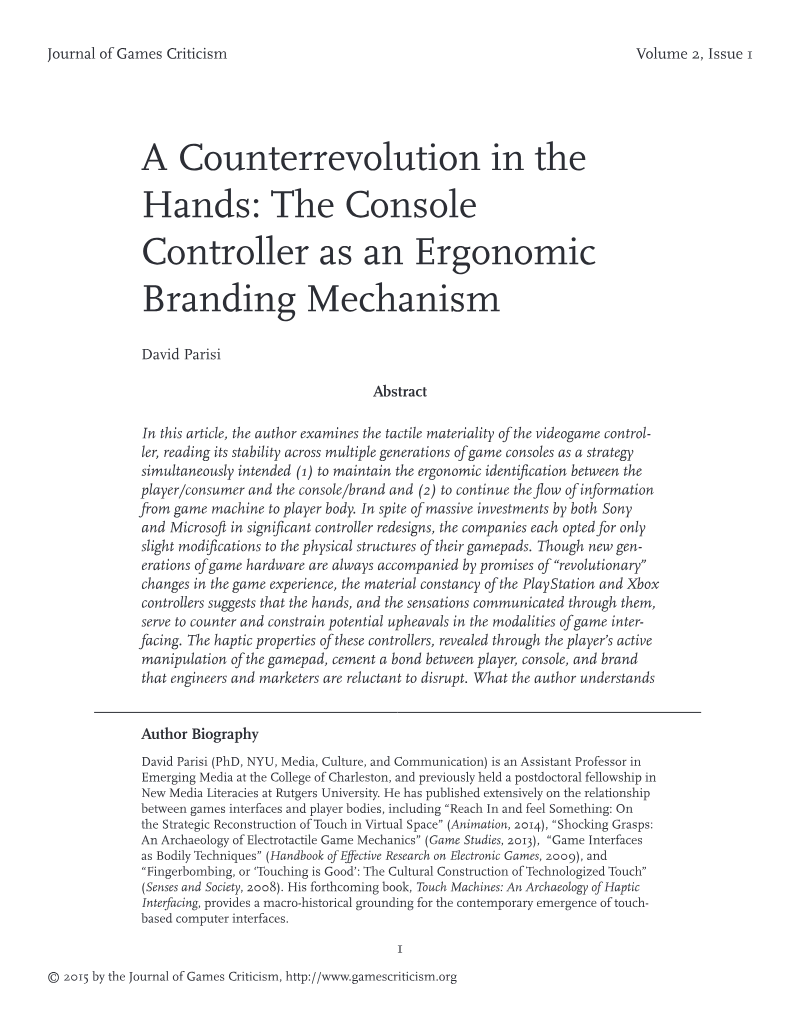
A Counterrevolution in the Hands: The Console Controller as an Ergonomic Branding Mechanism
Console controllers function as critical ergonomic branding mechanisms that prioritize tactile stability over the industry’s frequent rhetoric of technological revolution.
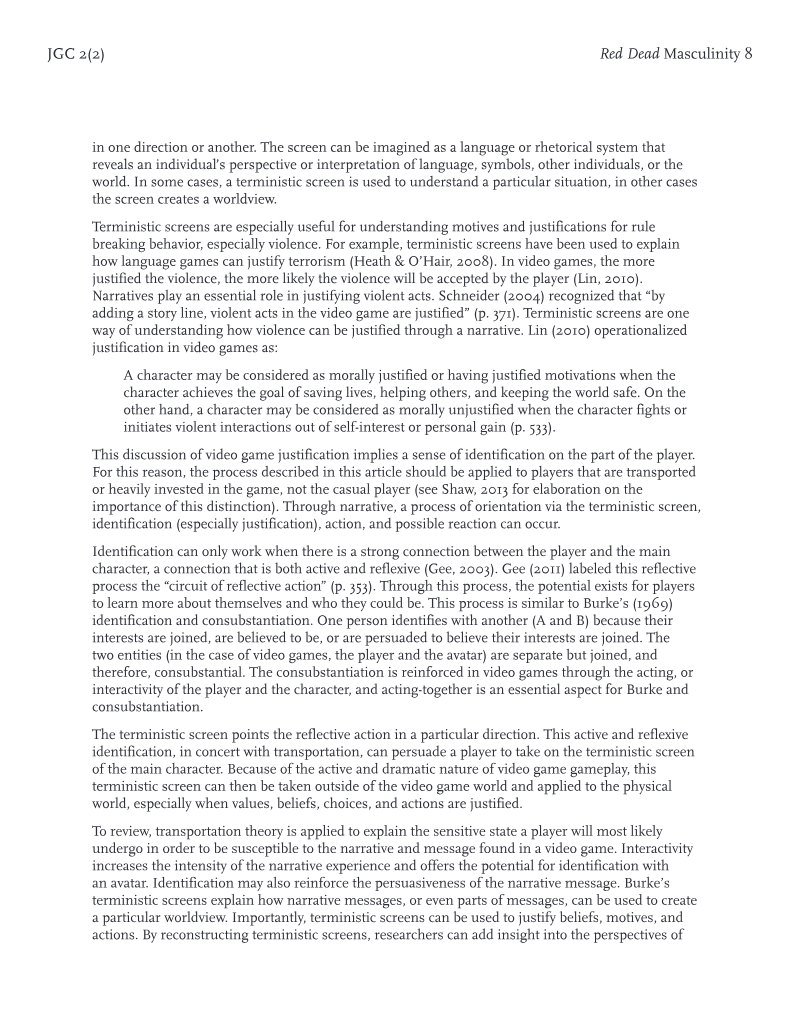
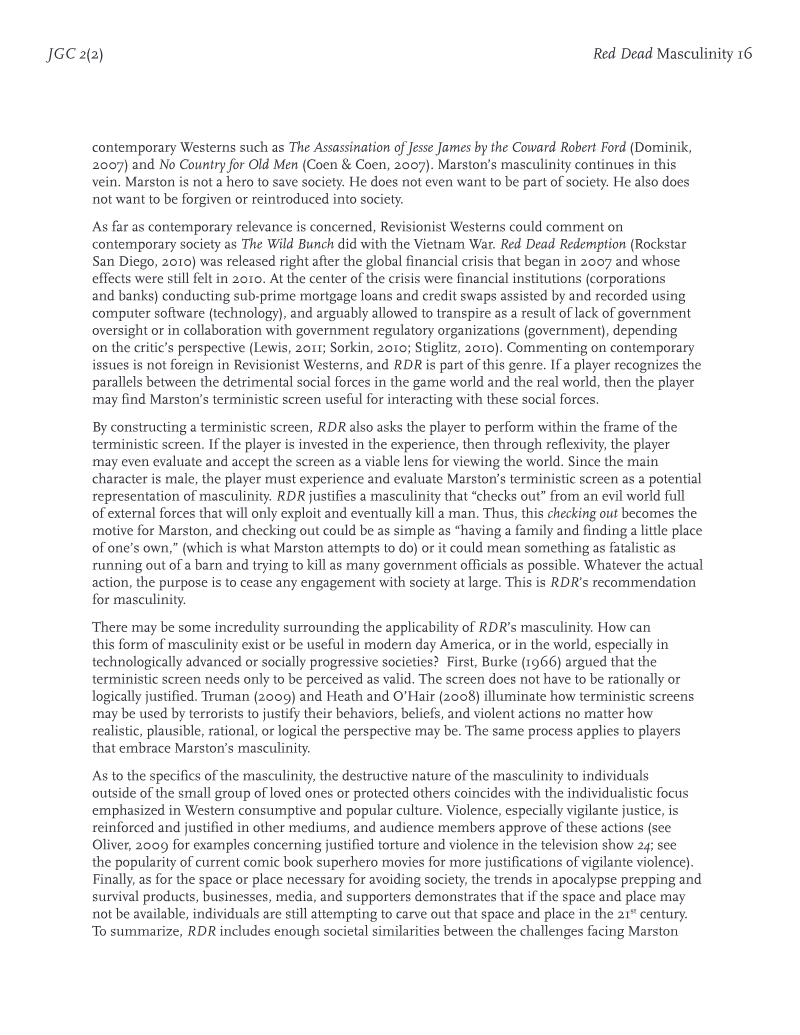
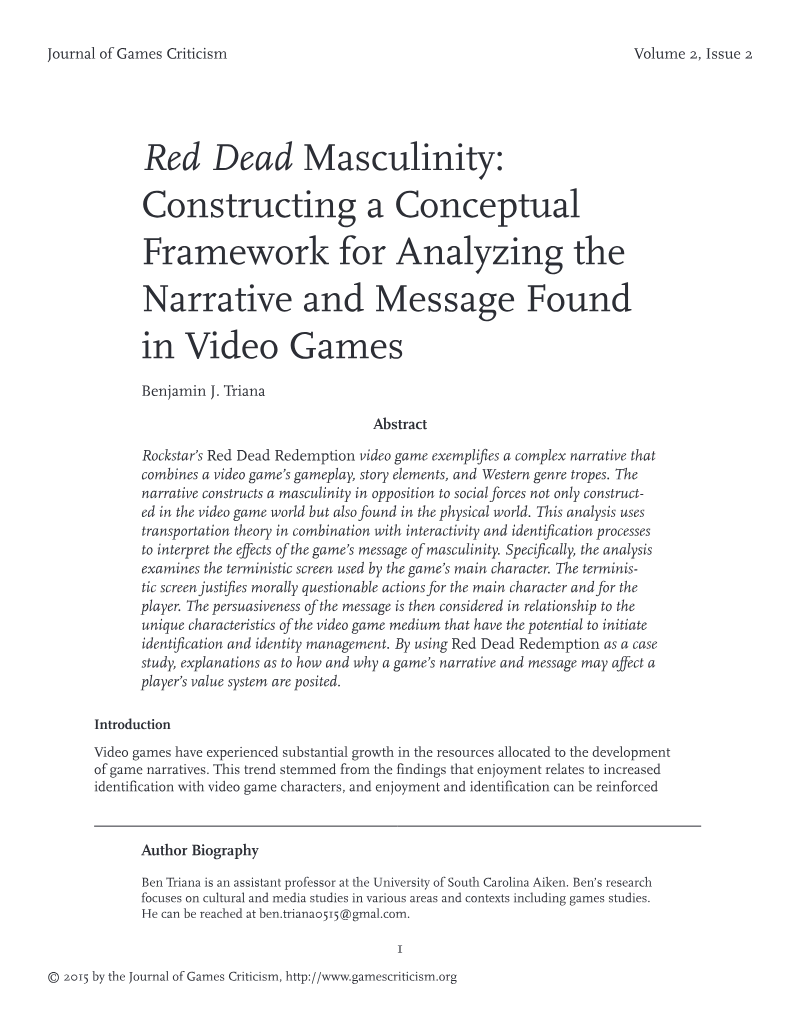
Red Dead Masculinity: Constructing a Conceptual Framework for Analyzing Video Game Narratives
Video game narratives function as powerful ideological conduits that shape player identity and social performance.