
Journal of Games Criticism
Open-access peer-reviewed journal (since 2014) that bridges academic game studies and popular games criticism.
Documents
Dark Entanglement and Visions of the Post-Anthropocene in Battlefield 2042
Battlefield 2042 functions as a critical ecocritical text that illustrates the concept of dark entanglement, defined as the destructive intersection of capitalist, geotechnic, and military-industrial infrastructures.
Posthumanist, Post-apocalyptic, and Post-anthropocentric Possibilities: Kantian Morals and Posthuman Ethics in My Friend is a Raven
The 2019 game My Friend is a Raven serves as a critical site for examining the transition from traditional humanist morality to a posthumanist ethic within post-apocalyptic digital environments.
Beyond Barren Wastelands: The Greening of the Post-apocalypse in Video Games
Post-apocalyptic video games are increasingly moving away from narratives of total destruction to embrace themes of ecological recovery and nonhuman agency.
Character Affectivity in Newton and the Apple Tree
Newton and the Apple Tree serves as a primary case study for a multidisciplinary framework designed to analyze how fictional characters elicit affective responses in players.
Videogame Distribution and Steam's Imperialist Practices: Platform Coloniality in Game Distribution
Steam operates as an imperialist infrastructure that exerts near-monopolistic control over the global videogame industry, effectively displacing local distribution networks and reinforcing Western-centric power structures.
Colonized Morality Mechanics: The Struggle to Be Good in Telltale's The Walking Dead
The Walking Dead series by Telltale Games serves as a critical case study for how interactive media can enforce colonialist moral frameworks upon marginalized protagonists.
Outside the Racist Nostalgia Box: Rethinking Afrikan tähti’s Cultural Depictions
The board game Afrikan tähti serves as a primary case study for examining how ludic racism and colonial entitlement are embedded within European cultural artifacts.
Surviving Whiteness in Games
This collection of scholarly essays examines the pervasive influence of Whiteness and coloniality within the global video game industry, arguing that gaming functions as a colonial project that reinforces European racial hierarchies.
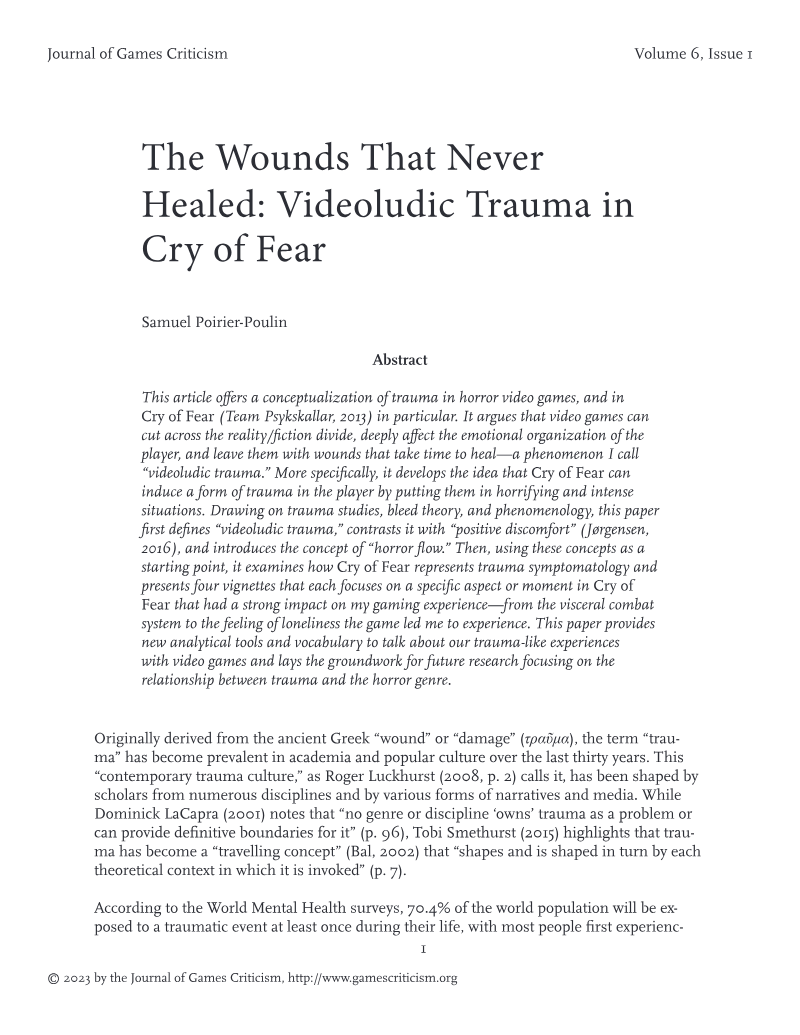
The Wounds That Never Healed: Videoludic Trauma in Cry of Fear
Videoludic trauma represents a significant departure from traditional understandings of play as a safe, bounded activity, characterizing instead those instances where horror games transcend the reality-fiction divide to leave lasting emotional imprints.
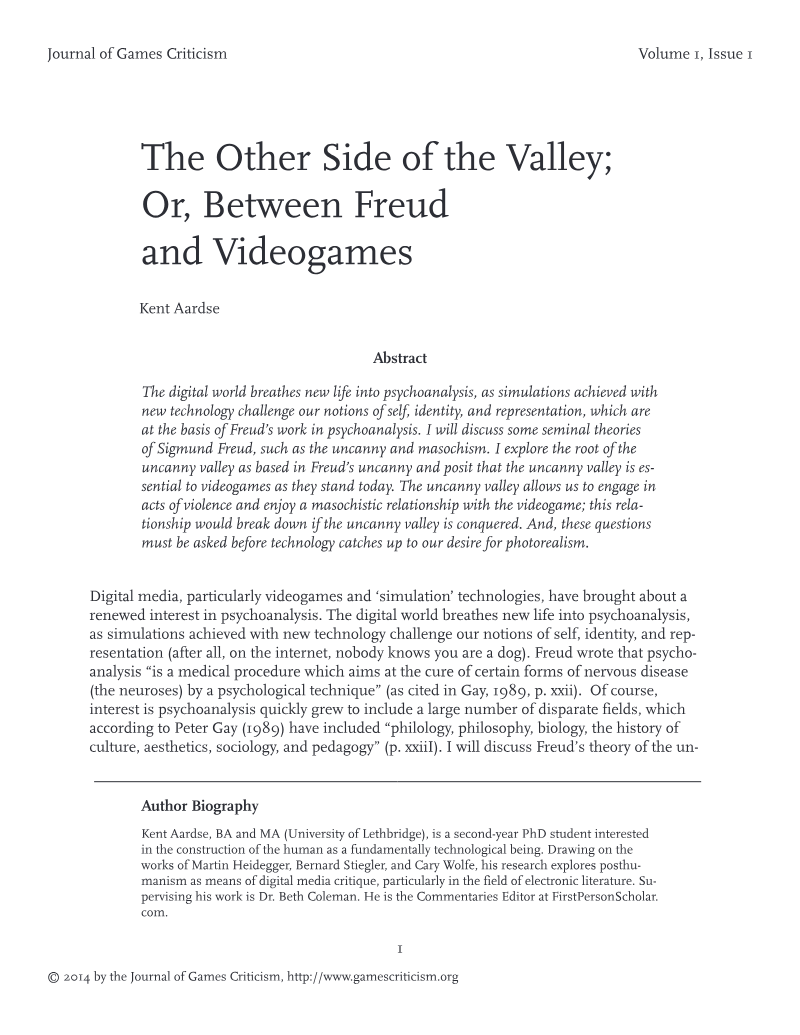
The Other Side of the Valley: Between Freud and Videogames
The uncanny valley functions as a critical psychological boundary within modern interactive entertainment, serving to preserve the essential distinction between virtual fiction and objective reality.
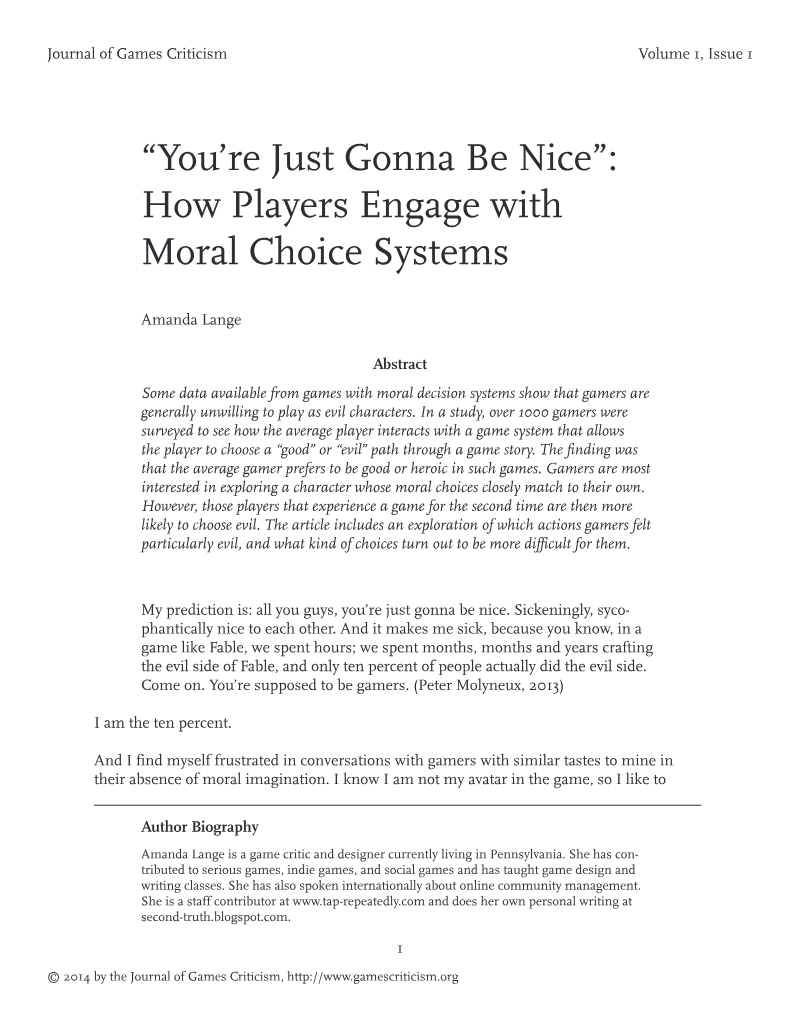
You're Just Gonna Be Nice: How Players Engage with Moral Choice Systems
The vast majority of gamers consistently prioritize altruistic and heroic paths when navigating moral choice systems, frequently aligning their in-game decisions with their real-world ethical frameworks during initial playthroughs.
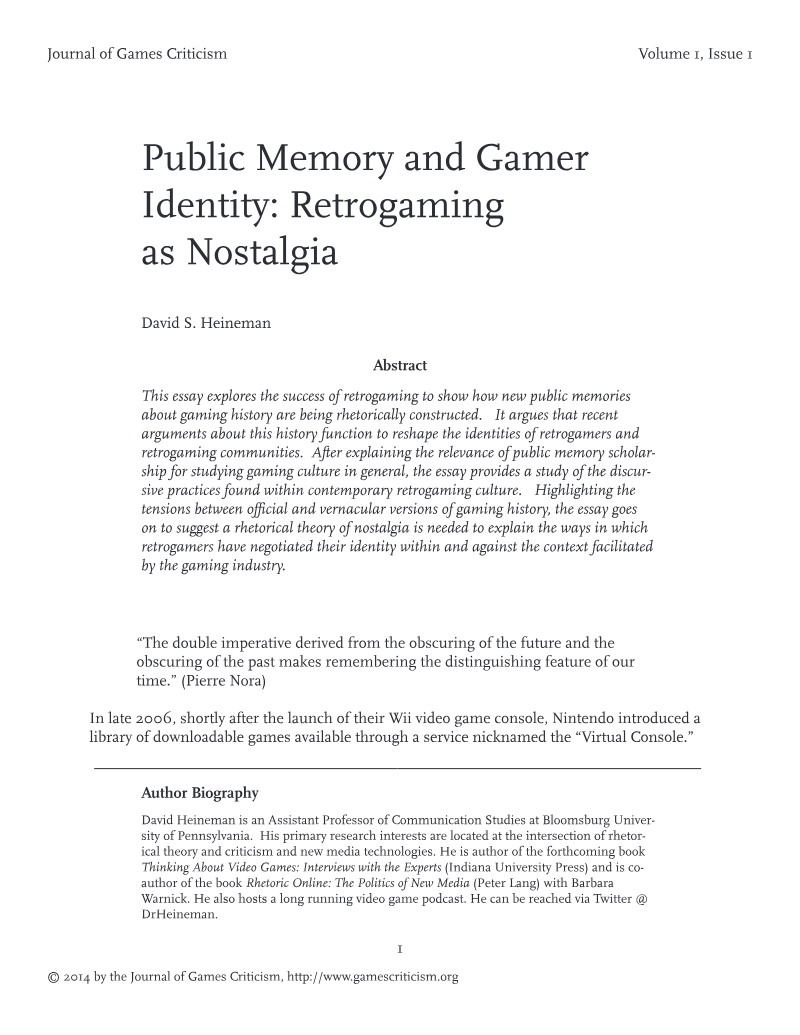
Public Memory and Gamer Identity: Retrogaming as Nostalgia
Retrogaming functions as a critical site of cultural negotiation where the gaming industry’s curated history clashes with the lived experiences of long-term players.